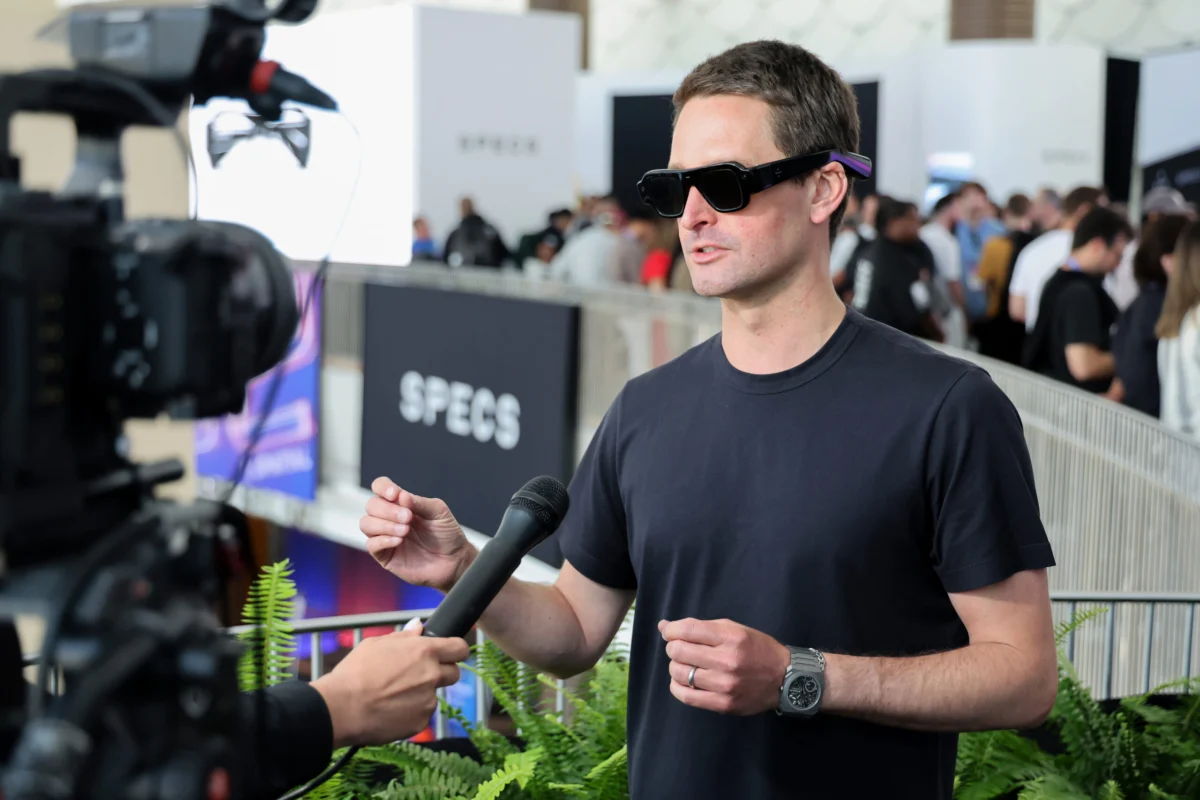
During a recent Monday earnings call, Snap CEO Evan Spiegel conspicuously sidestepped direct inquiries from investors regarding the preorder demand for the company’s highly anticipated Specs smart glasses. This evasion comes just weeks before the device’s pivotal September launch event, intensifying scrutiny on Snap’s ambitious foray into the augmented reality (AR) hardware market. The company, known primarily for its ephemeral messaging app Snapchat, is betting big on Specs, a wearable device that has been over a decade in the making, positioning it as a foundational step towards the next generation of computing.
The Unveiling and Strategic Pricing of Specs
Snap officially unveiled Specs in June, marking a significant milestone in its long-term hardware strategy. The device carries a premium price tag of $2,195, placing it squarely between existing smart glass offerings in the burgeoning AR/VR landscape. This pricing strategy positions Specs considerably higher than more accessible options like Meta’s Ray-Ban smart glasses, which typically start around $350, yet substantially below Apple’s high-end Vision Pro headset, which commands a starting price of $3,500. This strategic placement suggests Snap is targeting early adopters and developers rather than the mass consumer market in its initial phase, a point Spiegel implicitly acknowledged in his responses.
When pressed on preorder numbers, Spiegel pivoted to the experiential aspect of the device. "What we’re hearing from folks is really that they want to try Specs," Spiegel told investors. He elaborated on the high-consideration nature of the purchase at its price point, stating, "Obviously, developers and folks who are familiar with the platform really understand it and understand the technical leaps we’ve made with this generation. I think for the broader public and consumers, it’s going to be really important for folks to go hands-on. Our upcoming launch event will be an important sort of starting point for that consumer-oriented journey." This emphasis on hands-on experience and a developer-first approach underscores the experimental and foundational nature of Specs within Snap’s broader vision.
Spiegel’s Defense: Vision vs. Viability in a Competitive Arena
Investors on the call pressed Spiegel on several critical fronts, questioning the financial viability of Snap’s hardware strategy for a company of its size, its decision to pursue this venture independently rather than through partnerships, and the rationale behind his confidence in competing with established tech behemoths like Apple, Meta, and Alphabet. These concerns are not unfounded, given Snap’s history with previous hardware endeavors and the immense resources commanded by its competitors.
Spiegel’s response was resolute, framing the long-term opportunity to develop the next computing platform as "enormous." He articulated Snap’s perceived advantage as a "first mover" in this specific category, contrasting it with the company’s origins in social media. "I think what some folks maybe don’t understand yet, especially because Specs are so new and we’re really the first mover in this category, is how difficult the product is to execute from a technical perspective," Spiegel stated. He drew a parallel to Snap’s early days, noting, "When we started innovating in the social space, we were a late entrant. So, most of the apps at the time, whether it was Facebook or Instagram or Twitter, were already in existence, and we had to really innovate to continue to grow. What’s so unique about this opportunity for us is really that we’re a first mover, and that really plays to our strengths as an innovator."
This "first-mover" claim, while strategically important for Snap, requires careful contextualization. While Specs might represent a specific form factor or AR integration that precedes some competitors, companies like Google had earlier attempts with Google Glass, and Meta has been iterating on its smart glasses. Apple’s Vision Pro, though a mixed-reality headset, also occupies a significant space in the nascent spatial computing market. Snap’s innovation lies perhaps more in its continuous dedication to AR glasses over a prolonged period and its integration with the Snapchat ecosystem, rather than being the absolute pioneer in the broader smart glasses category.
A Decade in the Making: Snap’s Hardware Journey and Chronology
Snap’s journey into wearable technology is not new; it dates back to 2016 with the launch of its first-generation Spectacles. These initial camera-equipped sunglasses were designed to record short video clips directly for Snapchat. While they generated considerable buzz and initial sales, they ultimately faced challenges with sustained consumer interest and inventory management. Subsequent iterations, Spectacles 2 and 3, introduced minor improvements, including new designs and some AR capabilities, but none achieved widespread adoption. The truly "long-awaited" aspect of Specs refers to the company’s decade-long investment in developing true augmented reality glasses capable of overlaying digital content onto the real world in a meaningful way.
- 2016: Launch of Spectacles 1, camera-equipped sunglasses.
- 2017-2019: Release of Spectacles 2 and 3, with minor design and feature updates, including some 3D photo/video capabilities.
- 2021: Introduction of the first true AR Spectacles (developer edition), which were not for sale to the general public, signaling Snap’s serious commitment to advanced AR. These required tethering to a phone and were largely proof-of-concept for developers.
- June 2026: Official unveiling of Specs, the culmination of over a decade of R&D, featuring more advanced standalone AR capabilities.
- September 2026: Scheduled launch event for Specs, marking their commercial availability for consumers and developers.
This chronology highlights a persistent, often financially challenging, commitment to AR hardware. Snap’s long-term vision under Spiegel has consistently emphasized AR as a core future technology, investing heavily in its Lens Studio for AR content creation and fostering a vibrant developer community.
The Market Landscape: A Battle of Giants and Niche Strategies
The smart glasses and spatial computing market is rapidly evolving, attracting some of the world’s largest technology companies. Understanding Snap’s position requires a brief comparison with its formidable competitors:
- Meta’s Ray-Ban Smart Glasses: These devices, starting around $350, are primarily camera-equipped glasses focused on social sharing and integrated with Meta’s ecosystem (Facebook, Instagram). They prioritize discreet design and accessibility over immersive AR capabilities, targeting a broad consumer base looking for enhanced photography and communication tools. Their lower price point and stylish design make them a more approachable entry into wearable tech.
- Apple Vision Pro: Positioned as a "spatial computer," Apple’s Vision Pro, priced at $3,500, is a full mixed-reality headset offering an immersive experience for productivity, entertainment, and communication. It aims to replace traditional screens and create entirely new computing paradigms. Its high price and more robust form factor target prosumers, developers, and early adopters willing to invest in cutting-edge, high-fidelity experiences.
- Alphabet (Google): While Google Glass had an early, somewhat ill-fated run, Alphabet continues to invest in AR through various initiatives, including ARCore for mobile AR and partnerships. Its long-term strategy for a consumer-facing smart glass device remains less clear but its R&D capabilities are immense.
Snap’s Specs, at $2,195, sit in a unique middle ground. They aim to offer true AR overlays, differentiating them from Meta’s camera glasses, but in a more glasses-like form factor than Apple’s bulkier Vision Pro. This positioning suggests Snap is trying to carve out a niche for lightweight, everyday AR experiences that are more immersive than simple camera glasses but less isolating than full headsets. The challenge lies in convincing consumers that this specific blend of features and form factor justifies its premium price.
Developer Ecosystem and Long-Term Vision for Mass Adoption
A critical component of Snap’s strategy, and one Spiegel highlighted, is its robust developer ecosystem. He noted, "we do have, I think, a real advantage here in that developers have been building on the Specs platform now for several years." This refers to the prior developer-focused AR Spectacles and the Lens Studio platform, which allows creators to build AR experiences (Lenses) for Snapchat. By having an established community of AR developers, Snap hopes to seed the Specs platform with compelling content from day one, which is crucial for any new computing platform.
However, Spiegel also tempered expectations for immediate mass-market adoption. When asked about product-market fit, he projected that it would likely be closer to the end of the decade before the company sees widespread consumer uptake. This realistic, albeit long-term, outlook acknowledges the significant hurdles that remain for AR glasses. "I think things, for example, like weight and cost are going to have to come down to see you know unit volumes really meaningfully pick up," Spiegel stated. This aligns with industry consensus that for AR glasses to become a mainstream consumer device, they need to be lighter, more powerful, more energy-efficient, and significantly more affordable.
Investor Sentiment and Analyst Perspectives: A Cautious Optimism
The cautious responses from Spiegel regarding preorder demand and the protracted timeline for mass adoption are likely to keep investor sentiment mixed. While some investors may be encouraged by Snap’s unwavering long-term vision and its "first-mover" claim in a technically challenging space, others will likely remain skeptical until tangible sales figures and clearer paths to profitability emerge. Analysts will be closely watching several key metrics following the September launch:
- Initial Sales Figures: While Spiegel emphasized experiential trials, any early sales data will be crucial to gauge developer and early adopter interest.
- Developer Engagement: The richness and variety of AR experiences developed for Specs will be a strong indicator of platform health and future potential.
- User Feedback: Real-world reviews regarding comfort, battery life, AR fidelity, and practical utility will be vital.
- Roadmap Clarity: Investors will seek more detailed insights into Snap’s plans for cost reduction, weight optimization, and future iterations of Specs.
Snap’s financials have often been scrutinized, and continued investment in hardware without immediate significant revenue generation can be a point of concern. The company has demonstrated a willingness to invest heavily in innovation, sometimes at the expense of short-term profitability, a strategy that has yielded both successes (like the growth of Snapchat itself) and challenges (like past Spectacles performance).
Challenges and Opportunities Ahead
The path for Snap’s Specs is fraught with both immense challenges and tantalizing opportunities. The challenges include:
- High Price Point: The $2,195 cost is a significant barrier for mainstream consumers, limiting initial adoption to a niche market.
- Technological Maturity: Despite a decade of development, AR technology is still evolving. Miniaturization, battery life, field of view, and processing power remain areas for significant improvement.
- Competition: Battling Apple, Meta, and Alphabet, companies with vastly greater resources and existing ecosystems, is an uphill battle.
- Product-Market Fit: Discovering compelling use cases that transcend novelty and integrate seamlessly into daily life is crucial for sustained adoption.
- Privacy Concerns: Wearable cameras and AR overlays raise complex privacy questions that need careful navigation.
Conversely, the opportunities are substantial:
- First-Mover Advantage (in specific niche): If Snap can establish itself as the go-to platform for lightweight, everyday AR glasses before competitors fully mature their offerings, it could gain significant mindshare and market share.
- Developer Ecosystem: Leveraging its existing Lens Studio community is a powerful asset for content generation.
- Integration with Snapchat: Specs can enhance the Snapchat experience, potentially drawing existing users deeper into Snap’s ecosystem.
- Long-Term Vision: If AR truly becomes the next computing platform, Snap’s early and persistent investment could pay off handsomely in the long run.
- Innovation Potential: Snap’s history of innovation in social media suggests it has the creative capacity to carve out unique AR experiences.
In conclusion, Snap’s Specs represent a bold and significant bet on the future of augmented reality. Evan Spiegel’s measured responses to investor queries reflect both the company’s long-term conviction and the realistic understanding of the nascent stage of the AR hardware market. The September launch event will not only be a showcase for the device but a critical juncture for Snap to articulate its detailed strategy for overcoming the inherent challenges and realizing the "enormous" opportunity it envisions for Specs in the coming decade. The tech world, and particularly Snap’s investors, will be watching closely to see if this decade-long endeavor can finally translate into a viable and impactful product.