California, the economic powerhouse of the U.S. and home to the nation’s busiest containership port complex, has become a critical choke point in the American supply chain, where soaring diesel prices are creating a ripple effect of inflation felt by consumers nationwide. As the protracted conflict in Iran enters its sixth month, coupled with escalating attacks on Russian refining infrastructure by Ukraine, global petroleum product markets, particularly diesel, have tightened considerably, pushing fuel costs to unprecedented levels in the Golden State. This localized surge in prices is not merely a regional issue; it translates into higher freight costs for nearly one-third of all U.S. containership imports and exports, ultimately impacting the price of everyday goods across the country.
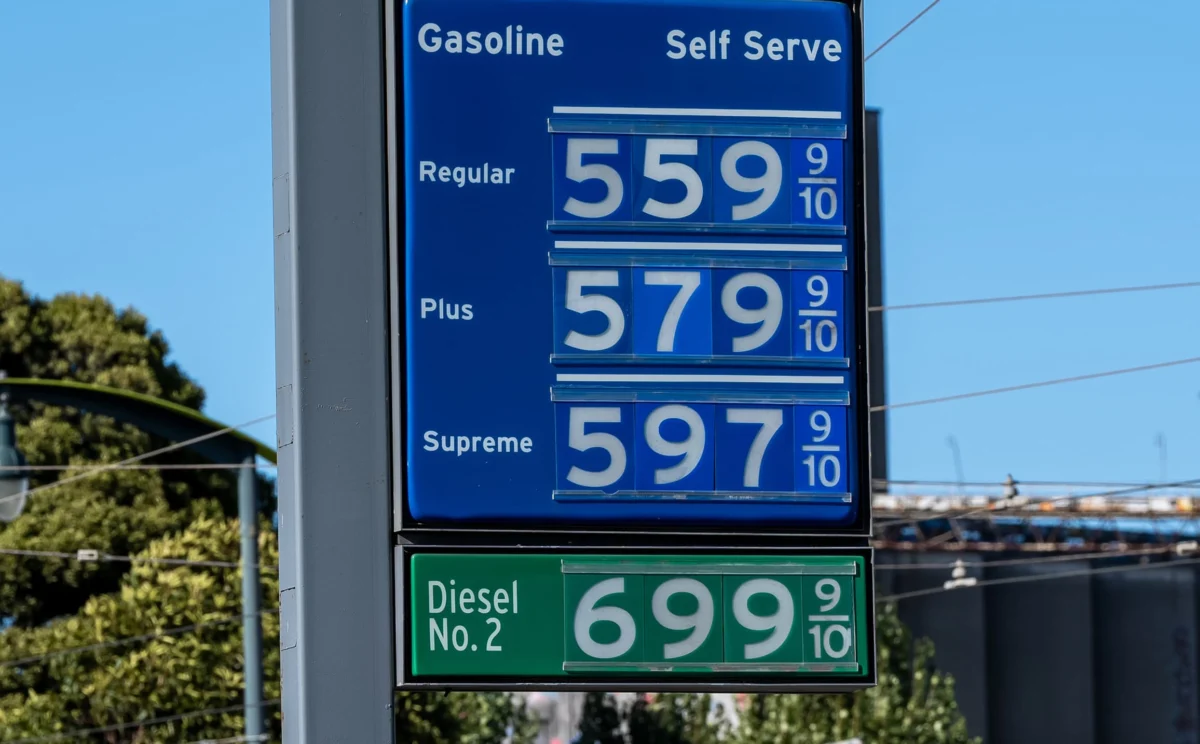
The San Pedro Bay port complex, encompassing the Port of Los Angeles and the Port of Long Beach, serves as the primary gateway for trans-Pacific trade, handling millions of twenty-foot equivalent units (TEUs) annually. Before products reach store shelves from New York to Nebraska, they are first offloaded in Southern California and then transported by diesel-powered trucks and trains, which operate under the burden of California’s elevated fuel prices. Currently, the average price for a gallon of diesel in the U.S. stands at approximately $5.36, according to AAA, but in California, this figure jumps significantly to $6.92 – a stark increase from the $5.10 recorded before the Iran conflict began. This substantial premium paid by transporters in California acts as a "hidden tax" on consumers, embedded within the final cost of countless products.
Geopolitical Storms: The Dual Impact on Global Diesel Supply
The current crisis in refined petroleum products is deeply rooted in a confluence of geopolitical events. The ongoing war in Iran, now in its sixth month, has cast a shadow of uncertainty over global oil supplies and, more critically, the stability of refined product markets. While initial concerns often center on crude oil, industry experts, including ExxonMobil CEO Darren Woods, highlight that the refining sector faces more acute and persistent challenges. In a recent statement to CNBC, Woods articulated, "I think this refining challenge is going to be with the world for a while," emphasizing that even a potential stabilization of product flow through critical waterways like the Strait of Hormuz would not immediately resolve the systemic issues. He further pointed to the "Russia capacity that’s been lost" and the unpredictable export policies of China as significant contributing factors to the global tightness.
This "lost capacity" from Russia is largely a direct consequence of the escalating conflict in Ukraine. Over recent months, Ukrainian forces have intensified their drone attacks on Russian refining infrastructure, targeting key facilities deep within Russian territory. These attacks, which have reportedly damaged several major refineries, have curtailed Russia’s ability to process crude oil into refined products, including diesel, for both domestic consumption and export. Russia, a major global energy producer and exporter, traditionally plays a significant role in supplying diesel to European and Asian markets. The disruption of this supply chain further exacerbates an already strained global market. According to Andy Lipow of Lipow Oil Associates, the combined effect of the Iran conflict and the attacks on Russian refineries has led to a global deficit of approximately 8% of global diesel demand. This substantial shortfall underscores the precarious balance of the world’s energy supply and its vulnerability to geopolitical instability.
The Global Refining Crunch: A Persistent Structural Issue
The current diesel supply crunch is not solely a function of immediate geopolitical conflicts; it also reflects a longer-term structural challenge in global refining capacity. Over the past decade, and particularly accelerated by the demand shocks of the COVID-19 pandemic and the subsequent energy transition pressures, numerous refineries worldwide have either shut down or converted to producing biofuels. This reduction in conventional refining capacity has left the global market less resilient to sudden supply disruptions. When geopolitical events like the Iran and Ukraine wars occur, the system struggles to compensate for the lost output, leading to exaggerated price spikes for refined products.
Moreover, the types of crude oil available and the specifications for refined products also play a role. Different regions have varying environmental standards, requiring specific fuel blends. California, for instance, has some of the most stringent environmental regulations globally, necessitating a unique "boutique fuel" blend that fewer refineries are equipped to produce. This specialized production adds another layer of cost and complexity, making the state particularly susceptible to supply shocks. The global refining sector, therefore, faces a multifaceted challenge: recovering from past closures, adapting to evolving environmental mandates, and navigating persistent geopolitical risks.
California’s Policy Landscape: A Confluence of Factors Driving High Prices
California’s exceptionally high fuel prices are not merely a reflection of global market dynamics; they are significantly influenced by a unique combination of state-specific policies, geographical isolation, and market characteristics. The state’s ambitious climate goals have led to a gradual reduction in its fossil fuel industry. Over the years, several refineries have closed, and investment in expanding existing capacity has been limited. This trend has reduced in-state refining capabilities, making California more reliant on imported refined products or products transported from other states, which incurs additional costs.
Furthermore, California operates largely as an "energy island" when it comes to refined fuels. The state lacks major fuel pipelines that connect it directly to the broader U.S. energy grid, particularly from the Gulf Coast refining hub. This isolation means that fuel must often be transported by ship or truck, adding significant logistical expenses and limiting flexibility during supply disruptions.
The state’s strict environmental regulations, particularly those enforced by the California Air Resources Board (CARB), also contribute to higher prices. CARB mandates specific fuel formulations designed to reduce emissions, such as cleaner-burning diesel with lower sulfur content. Producing these "boutique fuels" is more complex and costly for refiners, and fewer facilities globally are capable of meeting these precise specifications. This reduced supply pool for compliant fuel makes the California market highly sensitive to any disruptions or increases in demand. Additionally, California has some of the highest state-level fuel taxes in the nation, which are layered on top of federal taxes and other charges, further inflating pump prices. This combination of reduced in-state refining, geographical isolation, stringent regulations, and high taxation creates a perfect storm for elevated fuel costs.

The Ripple Effect: From Port to Pantry, A Hidden Tax on Consumers
The elevated diesel prices in California have a profound and far-reaching impact on the entire U.S. economy, functioning as a "hidden tax" on consumers. As JPMorgan analysts, led by Natasha Kaneva, highlighted in a June note to clients, "[A] meaningful share of America’s supply chain pays West Coast fuel prices." Their analysis underscores how these prices directly influence freight costs, transportation margins, and, critically, the ultimate delivered cost of goods nationwide.
Consider the journey of a product: A container ship arrives at the Port of Los Angeles carrying goods from Asia. These goods are then offloaded and placed onto trucks or trains for distribution across the country. The trucking companies and railroads operating out of California pay the state’s premium diesel prices. These higher fuel expenses are not absorbed by the transporters; rather, they are passed on to the retailers, who in turn incorporate them into the final price consumers pay. This inflationary pressure affects virtually every sector of the economy, from agriculture, where machinery and transport rely heavily on diesel, to manufacturing, construction, and retail.
For example, fresh produce grown in California, a major agricultural state, is transported to markets across the U.S. in diesel-powered refrigerated trucks. Higher diesel costs mean higher prices for fruits, vegetables, and other perishables. Similarly, electronics, apparel, and industrial components imported through the San Pedro Bay complex will carry the burden of these increased transportation costs. This phenomenon contributes to broader inflationary trends, eroding consumer purchasing power and potentially slowing economic growth. Businesses, particularly those with tight margins in logistics and retail, are forced to make difficult decisions between absorbing costs, passing them on to consumers, or reducing services.
A Deeper Dive into Diesel: The Economy’s Unsung Workhorse
Diesel is often referred to as the "workhorse" of the American economy, a testament to its indispensable role in almost every facet of commerce and infrastructure. Unlike gasoline, which primarily fuels passenger vehicles, diesel powers the heavy machinery and transportation networks essential for economic activity. Trucks, trains, buses, ships, agricultural equipment, construction vehicles, and even backup generators all rely on diesel fuel.
The sheer volume of goods moved by diesel-powered transport is staggering. The vast majority of freight in the U.S. travels by truck at some point in its journey, covering millions of miles daily. Railroads, which are incredibly fuel-efficient for long-haul freight, also depend entirely on diesel locomotives. Disruptions to diesel supply or significant price increases, therefore, do not merely affect a niche market; they send reverberations throughout the entire economic ecosystem, impacting productivity, efficiency, and ultimately, the cost of living for every American. The current deficit of 8% in global diesel demand, as cited by Lipow Oil Associates, is a critical figure because it indicates a substantial strain on the very fuel that underpins global trade and domestic economies.
Stakeholder Perspectives and Policy Debates
The escalating diesel crisis and its implications invariably spark robust discussions among various stakeholders and policymakers. Trucking associations, for instance, frequently voice concerns about fuel costs representing one of their largest operating expenses. High diesel prices can lead to increased freight rates, reduced profit margins, or even force smaller operators out of business, potentially impacting the availability of transportation services. Consumer advocacy groups, on the other hand, highlight the regressive nature of such "hidden taxes," noting that higher prices for essential goods disproportionately affect lower-income households.
Policymakers are faced with a complex dilemma. In California, the state’s commitment to environmental sustainability clashes with the immediate economic pressures of high fuel prices. There are ongoing debates about whether to reconsider certain regulations, invest more heavily in alternative fuel infrastructure, or explore ways to mitigate the economic impact on businesses and consumers. At the federal level, discussions revolve around national energy security, diversifying supply chains, and the strategic petroleum reserve, specifically for refined products like diesel. The long-term implications of geopolitical instability on global energy markets necessitate a comprehensive and coordinated policy response that balances environmental goals with economic realities and national security interests.
Looking Ahead: Navigating an Uncertain Energy Future
The current scenario paints a clear picture of the interconnectedness of global events and local policies, demonstrating how a conflict thousands of miles away can directly influence the price of groceries in an American supermarket. The immediate outlook suggests continued volatility in diesel prices, particularly as geopolitical tensions persist and global refining capacity remains constrained.
In the long term, the crisis underscores the urgent need for greater supply chain resilience and diversification. This could involve exploring alternative freight routes, investing in advanced logistics technologies, and accelerating the transition to alternative fuels and electric vehicles for commercial transport, though such transitions are capital-intensive and time-consuming. For California, the challenge lies in balancing its pioneering environmental policies with the practical economic demands of being a critical gateway for national commerce. The "hidden tax" imposed by high diesel prices is a tangible reminder that energy policy, environmental regulation, and geopolitical stability are inextricably linked, shaping the economic landscape for businesses and consumers alike across the United States.