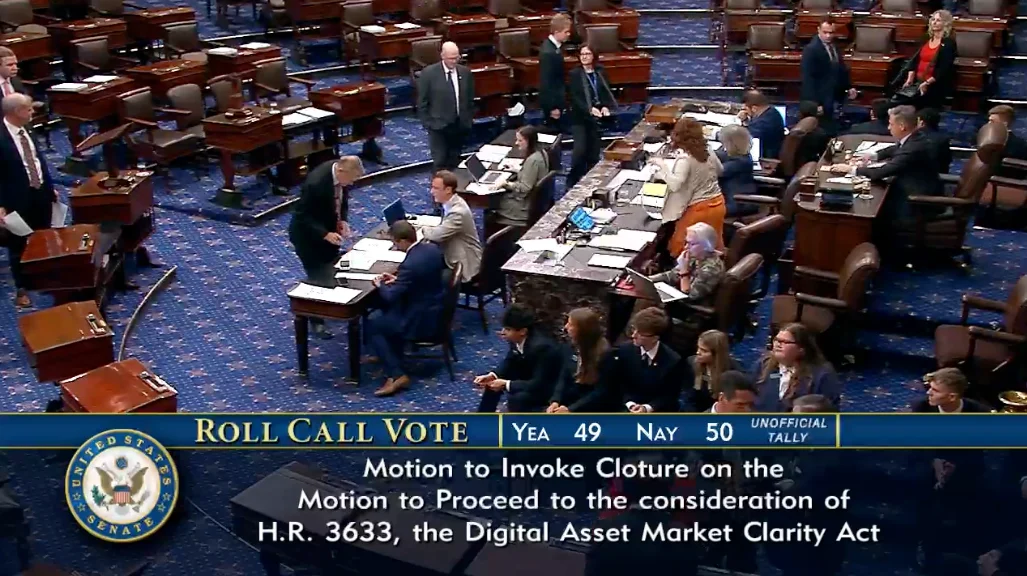
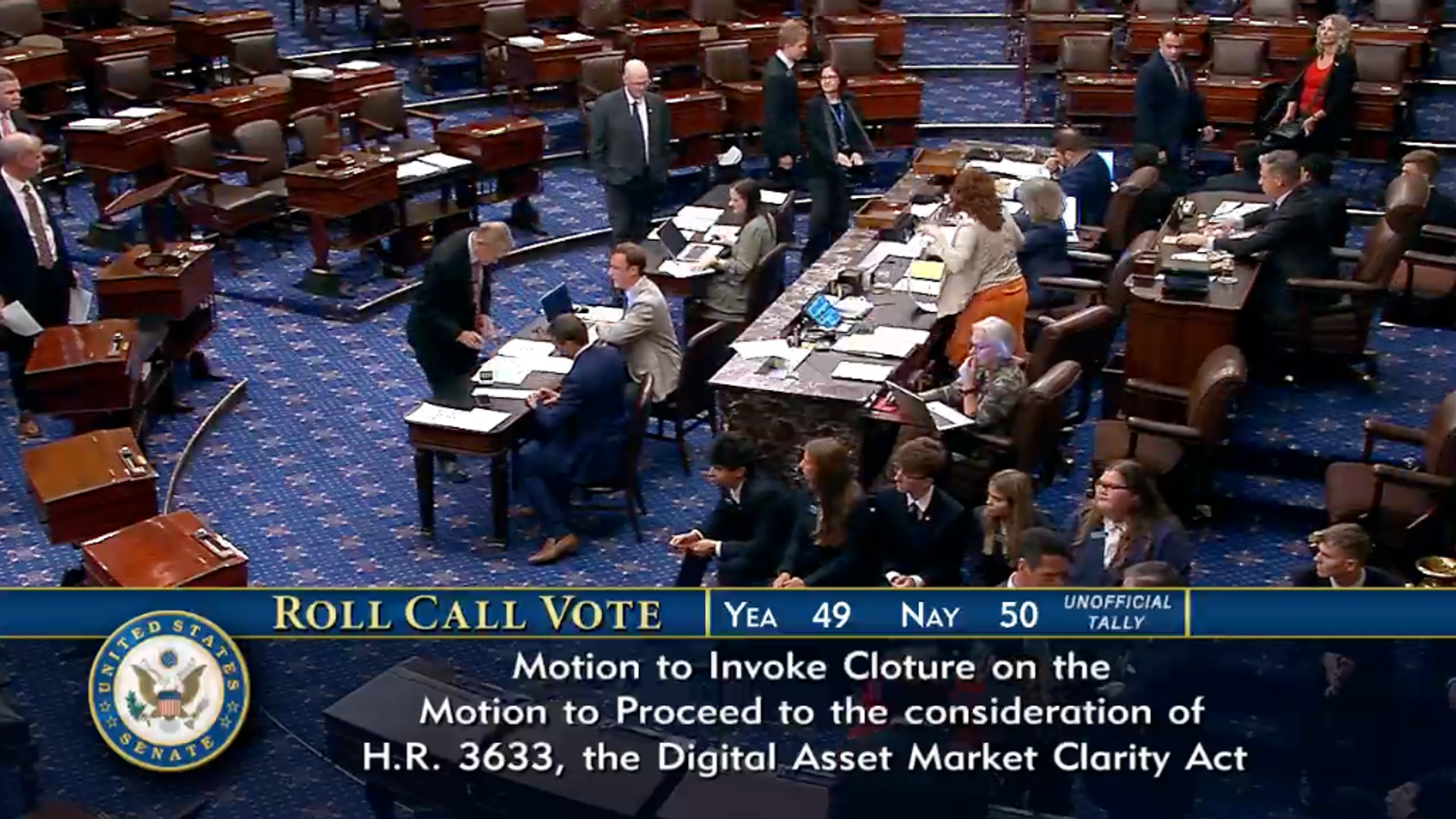
The U.S. Senate’s rejection of the Digital Asset Market Clarity Act on Tuesday marked a definitive and bitter conclusion to years of intensive lobbying and bipartisan negotiation, leaving the cryptocurrency industry’s most ambitious legislative hope in a state of paralysis. The final vote of 49–51 fell significantly short of the 60-vote threshold required to overcome a filibuster and advance the bill, a result that followed a series of high-stakes, last-minute disputes over ethics, executive influence, and the fundamental structure of the digital asset market. For Senator Cynthia Lummis (R-Wyo.), the bill’s primary architect, the defeat was the culmination of a five-year effort that she had hoped would define her legislative legacy before her upcoming retirement.
The atmosphere in the Senate leading up to the vote was charged with a sense of impending failure. Despite months of optimism that a compromise could be reached, the final 48 hours were characterized by a breakdown in communication between Republican leadership and Democratic negotiators. While the bill aimed to provide a comprehensive regulatory framework for digital assets—delineating the jurisdictions of the Securities and Exchange Commission (SEC) and the Commodity Futures Trading Commission (CFTC)—it was ultimately derailed by concerns that had little to do with market mechanics and everything to do with the personal financial interests of the executive branch.
The Ethical Impasse and the Trump Conflict of Interest
At the heart of the legislative collapse was a fierce debate over ethics provisions related to President Donald Trump’s personal cryptocurrency holdings. Throughout the first year of his second term, the President’s involvement in the crypto industry became a focal point for Democratic opposition. Reports indicating that Trump had earned over $1 billion from various crypto-related ventures while in office fueled demands for unprecedented transparency and divestment requirements.
Senator Mark Warner (D-Va.), a key figure in the illicit-finance portions of the bill, expressed a sentiment shared by many in his caucus: the fear that the presidency could be used as a tool for personal enrichment. Warner argued that any serious market structure legislation must include ironclad ethics constraints to prevent the president and senior administration officials from profiting from the very policies they oversee.
In an attempt to salvage the bill, Republican negotiators presented what they described as a "final offer" over the weekend. This proposal included a second round of concessions from the White House, with President Trump reportedly agreeing to historic ethics constraints on his holdings. However, Democratic negotiators, led by Senator Ruben Gallego (D-Ariz.), viewed these concessions as insufficient. Gallego characterized the Republican proposal as a maneuver to allow the executive branch to "evade real responsibility," famously stating that he would not support legislation that he believed enabled the President to "time to crime."
A Timeline of Missed Opportunities
The path to Tuesday’s failed vote was paved with missed milestones and internal industry friction. The Digital Asset Market Clarity Act was originally envisioned as the companion to the Guiding and Establishing National Innovation for U.S. Stablecoins (GENIUS) Act, which successfully passed into law earlier in the congressional session. While the GENIUS Act focused narrowly on stablecoin issuance, the Clarity Act sought to address the broader "market structure"—the rules governing how tokens are traded, listed, and classified.
The bill’s momentum first slowed significantly during the Senate Banking Committee markup. In a surprising move, Coinbase CEO Brian Armstrong publicly withdrew his support for the bill, citing concerns over how the legislation treated stablecoin rewards programs. Armstrong argued that the bill’s language could inadvertently classify rewards as securities, thereby stifling a key component of the retail crypto experience. This opposition from the nation’s largest crypto exchange caused a weeks-long delay, pushing the bill into the high-pressure environment of the late-session legislative calendar.
By the time negotiations resumed in earnest, the upcoming midterm elections had begun to cast a long shadow over the proceedings. The bipartisan spirit that had carried the GENIUS Act to the President’s desk had evaporated, replaced by partisan posturing. Senate Minority Leader Chuck Schumer (D-N.Y.) accused Republican leadership of abruptly ending negotiations just as a deal on ethics was within reach. According to Schumer, a bipartisan group was in a room finalizing the details on Tuesday afternoon when Republican leaders "walked in, broke up the discussion, and killed it."
The Defection of Crypto Allies
One of the most striking aspects of the vote was the loss of support from long-time crypto advocates within the Democratic Party. Senator Kirsten Gillibrand (D-N.Y.), who had co-authored early versions of market structure legislation with Lummis, ultimately joined her caucus in voting against the bill. The mass defection of Democrats signaled that the ethics concerns surrounding the President had become a "red line" that outweighed the perceived benefits of regulatory clarity.
Senator Elizabeth Warren (D-Mass.), the most vocal critic of the industry in the Senate, maintained her steadfast opposition throughout the process. On the Senate floor, Warren argued that the bill would "turbocharge" corruption, pointing to the deep financial ties between the administration and the crypto industry. While some moderate Democrats had initially attempted to distance themselves from Warren’s hardline stance, the lack of a robust ethics agreement eventually pushed them back into her camp.
The Republican side was not entirely unified either. Senator Josh Hawley (R-Mo.) had signaled his opposition weeks prior, raising concerns about the bill’s impact on traditional banking deposits. Hawley and other critics argued that allowing stablecoins to offer rewards that mimic interest-bearing bank accounts could destabilize the traditional financial system, a point of contention that resonated with both progressive Democrats and populist Republicans.
Industry Reaction and Economic Data
The failure of the Clarity Act sent immediate ripples through the digital asset markets. Analysts had priced in a "clarity premium," expecting that a defined regulatory path would lead to increased institutional investment. Following the vote, the price of major assets saw a modest decline as the prospect of continued "regulation by enforcement" became a reality.
Data from the digital asset sector suggests that the lack of legislative progress has real-world economic consequences. According to a recent industry report, over 20% of blockchain-based startups founded in the U.S. have relocated their primary operations to jurisdictions like the European Union or the United Arab Emirates, citing regulatory uncertainty as the primary driver. The EU’s Markets in Crypto-Assets (MiCA) regulation, which began full implementation this year, was frequently cited during Senate debates as the standard the U.S. was failing to meet.
Furthermore, the illicit finance concerns raised by Senator Warner remain a significant hurdle. Treasury Department data indicates that while the total volume of illicit crypto transactions remains a small percentage of overall market activity, the use of decentralized protocols by state actors for sanctions evasion has increased. Democrats argued that the Clarity Act did not go far enough in providing the Treasury with the tools needed to police these high-tech financial frontiers.
Future Outlook: The Lame Duck and Regulatory Partnership
Despite the dismal showing in the Senate, some lawmakers hold out hope for a "lame duck" session. Senator John Kennedy (R-La.) suggested that the bill could be resurrected in the brief window between the November elections and the end of the year. Historically, the lame-duck period allows for more flexible voting patterns as retiring members and those not facing immediate reelection are more willing to cross party lines. However, given the vitriol exchanged on Tuesday, the odds of a sudden reconciliation appear slim.
In the House of Representatives, where support for crypto legislation has historically been stronger and more bipartisan, leaders are already pivoting. The chairmen of the House Agriculture and Financial Services Committees issued a joint statement emphasizing that they would not wait for the Senate to act. Instead, they plan to "partner with federal financial regulators" to develop rules and guidance using existing authorities. This approach suggests a shift toward empowering the SEC and CFTC to fill the legislative vacuum, though this path is fraught with the same jurisdictional turf wars that the Clarity Act was designed to solve.
Conclusion and Broader Implications
The failure of the Digital Asset Market Clarity Act represents more than just a legislative stalemate; it is a symptom of the deep-seated distrust currently permeating the U.S. government regarding the intersection of technology and executive power. The crypto industry, which had spent tens of millions of dollars on campaign contributions and lobbying efforts, now faces a prolonged period of uncertainty.
For Senator Lummis, the "Queen of Crypto," the vote was a "palpable" disappointment. Her accusation that Democrats were being "anti-American" reflects the frustration of a lawmaker who saw a career-defining project collapse at the finish line. On the other side, Democrats view the vote as a successful defense of ethical standards and a check on potential executive overreach.
As the 2026 midterm elections approach, the "crypto vote" will likely become a weaponized issue on the campaign trail. Republicans will point to the failed vote as evidence of Democratic hostility toward innovation, while Democrats will frame their opposition as a necessary stand against corruption. Meanwhile, the U.S. digital asset market remains in a state of regulatory limbo, waiting for a consensus that, for now, remains out of reach.