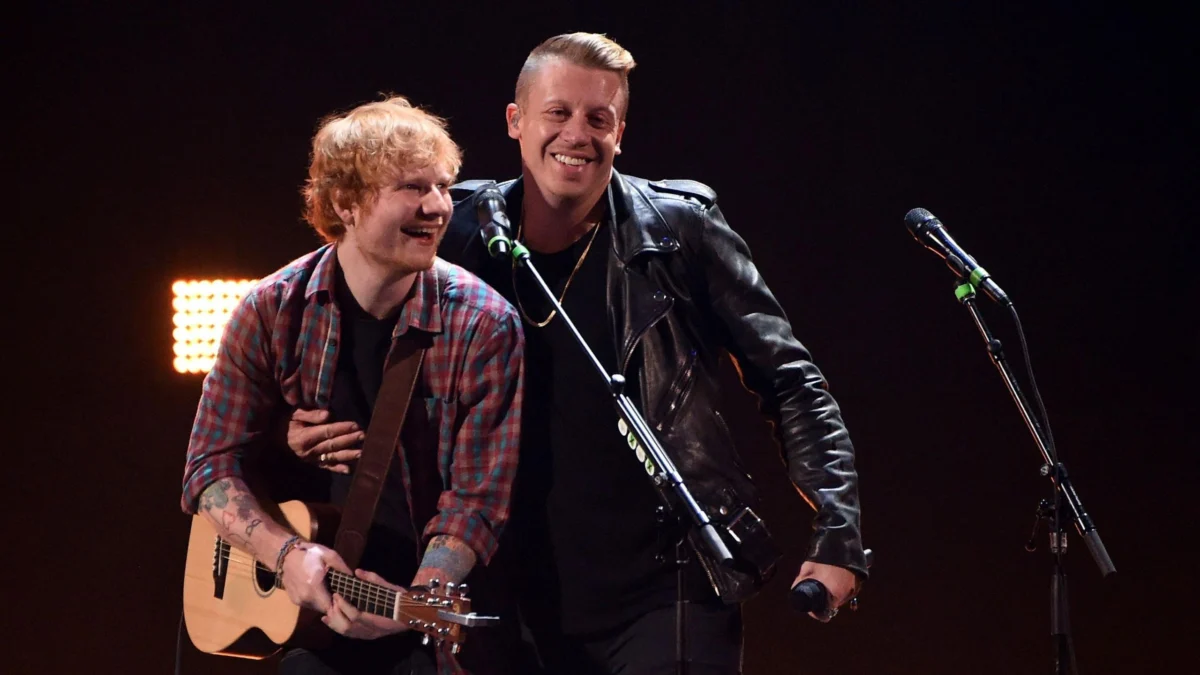
A significant ripple effect has swept through Ed Sheeran’s ongoing US tour, as all remaining support acts announced their withdrawal following the contentious removal of rapper Macklemore from the lineup. The decision to drop Macklemore, real name Benjamin Haggerty, stemmed from his public pro-Palestinian remarks and imagery displayed during two concerts in New Jersey earlier this month, igniting a broader debate about artistic freedom, political expression, and the commercial pressures within the entertainment industry. The cascading departures underscore the increasing tension faced by artists navigating global geopolitical conflicts on public platforms.
The Exodus of Support Acts
The immediate fallout saw a unanimous decision by the remaining scheduled performers to exit the tour. Among the first to announce his departure was Finneas O’Connell, the Grammy-winning producer and brother of pop superstar Billie Eilish, who issued a strong statement asserting, "Artists must not be silenced when they speak up for the oppressed." His words resonated across the music community, highlighting a principle many artists hold dear regarding their platforms.
Following suit were Irish singer-songwriter Aaron Rowe and the popular Danish band Lukas Graham, both citing their solidarity with Macklemore and a belief in the importance of artists’ voices on humanitarian issues. Even Irish folk band Beoga, who have been a consistent presence on stage performing alongside Sheeran every night, chose to withdraw, signaling the depth of feeling among the supporting artists. This collective action transformed what might have been an isolated incident into a full-blown tour crisis for the acclaimed British singer.
These announcements came mere hours after Ed Sheeran himself had released a statement attempting to distance himself from the controversy. Sheeran, known for his generally apolitical public persona, stressed that the decision to remove Macklemore was made by the tour promoter, Messina Touring Group, and not by him personally. He emphasized his commitment to his fans, touring crew, and other musicians, stating, "I would never let down the fans who had made plans, nor would I abandon the touring crew and the other support acts and musicians who rely on me for work and to make a living." His efforts to de-escalate the situation, however, proved insufficient in preventing the mass exodus.
Macklemore’s Stand and the Backlash
The genesis of the controversy traces back to September 4, when Macklemore performed during Sheeran’s concert at the MetLife Stadium in New Jersey. During his set, the rapper addressed the audience directly, proclaiming, "A big part of the reason why I wanted to do this tour in the first place is so that I could stand up in stadiums like this and say two words that are very, very dear to my heart: Free Palestine." He then performed his song "Hind’s Hall," a track explicitly dedicated to pro-Palestinian student protestors at Columbia University, which also contains strong condemnation of Israel’s military actions in Gaza. This performance was accompanied by video footage depicting the devastation in Gaza displayed on the large screens, ensuring maximum visibility for his message.
While a segment of the audience cheered in response, the reaction online was swift and largely critical from certain quarters. The Israeli American Council promptly launched a petition demanding Macklemore’s removal from the tour. The campaign group StopAntisemitism accused the musician of ambushing fans with propaganda, a claim that gained further traction when pop star Pink reposted it on Instagram, amplifying the criticism to her vast following. These organized responses quickly mounted pressure on the tour organizers and venues.
The following night, Macklemore returned to the same stage and directly addressed the brewing controversy. He made an effort to clarify his stance, speaking to his "Jewish brothers and sisters" in the audience. "Criticism of Israel, criticism of apartheid, being against genocide, is in no way a criticism of you," he stated, reiterating his intention to ensure that people in Gaza and the West Bank felt remembered and seen. This attempt at nuance, however, did little to quell the underlying discontent among his detractors.
The Promoter’s Decision and Sheeran’s Dilemma
After several days of intense media scrutiny and internal discussions, Macklemore announced on Monday that he had officially been dropped from the tour lineup. In his Instagram statement, he implicated Robert Kraft, the billionaire owner of the Gillette Stadium in Massachusetts, as a key figure behind the boycott. Kraft, a prominent businessman known for his extensive philanthropic work and influence, particularly within the Jewish community, has a history with Ed Sheeran, having hired him to perform at his wedding.

Robert Kraft subsequently confirmed his involvement, stating that his venue would not "provide a platform for hate speech," and further accused Macklemore of "a broader history of antisemitic rhetoric." While he acknowledged the suffering in the region, Kraft asserted that "only sharing selective information and ignoring the actions of Hamas is not honest and only advances more divisiveness and hate." Notably, Kraft did not explicitly address the claim that he had actively pressured other venues to follow suit, though the implication of his influence was clear.
Messina Touring Group, the tour promoter, later corroborated the narrative, informing Rolling Stone magazine that various venues had communicated their refusal to allow Macklemore to perform. This, they explained, would have inevitably led to the "cancellation of the tour and impact hundreds of thousands of fans," leaving them with no choice but to remove the rapper to safeguard the broader tour schedule and its massive logistical and financial commitments.
Ed Sheeran’s statement, released shortly after, sought to explain his position and navigate the highly sensitive situation. He confessed to being "appalled by the conflict between Israel and Palestine" and acknowledged the "suffering and pain caused on both sides is a human tragedy." However, he firmly maintained his decision to keep political issues separate from his professional platform. "I am not complicit," he wrote. "I have my personal views on this devastating conflict. Just because I choose not to speak publicly, it doesn’t mean I don’t have them, and it doesn’t mean I don’t care."
Sheeran articulated his rationale for maintaining neutrality, citing his diverse audience, which includes young people and children, who attend his shows not for political discourse but for entertainment. He stressed his belief in "multiple approaches to the same end: Peace," choosing to use his fame to create "a place of safety and sanctuary, to maintain diplomacy and keep conversations open, not closed." He commended Macklemore’s "strength of purpose to stand up and shout for what he believes" but underscored his own preference for a different, less confrontational form of advocacy. Sheeran also confirmed that, as with all his support acts, Macklemore had been granted full autonomy over his setlist, implying no prior censorship.
Voices of Dissent: Artists Speak Out
The carefully worded statement from Ed Sheeran, intended to placate and clarify, ultimately had the opposite effect on his fellow artists. The subsequent withdrawal of Finneas, Lukas Graham, Aaron Rowe, and Beoga demonstrated a collective stance that transcended individual career considerations, prioritizing solidarity and freedom of expression over contractual obligations.
Lukas Graham, in their Instagram post, articulated their reasoning: "We should be able to speak about war, about civilians being killed, about children who deserve to grow up. Wherever they live. Whatever flag flies over them." This statement directly challenged the notion that artists should remain silent on humanitarian crises, especially when their platform offers a unique opportunity for visibility. They also directly critiqued the perceived influence of financial power, adding, "Money doesn’t give you the right to own the conversation. Nobody’s bank balance should decide who gets to speak or which suffering we’re allowed to acknowledge." This was a thinly veiled reference to Robert Kraft’s role in the affair, suggesting that economic leverage should not dictate artistic and political speech.
Aaron Rowe, who had previously opened for Sheeran’s Australian leg and joined the US tour in June, expressed the difficulty of his decision. He acknowledged Sheeran’s personal impact on his career, stating, "Ed has been a friend to me and has changed my life, I could never thank him enough for this." Despite this gratitude, Rowe felt compelled to align with the principle of artistic freedom and humanitarian advocacy, indicating the profound moral dilemma faced by the artists involved.
The Broader Geopolitical Context
The controversy is inextricably linked to the ongoing, deeply entrenched conflict between Israel and Palestine. The current escalation began with an unprecedented Hamas-led attack on southern Israel on October 7, 2023, which resulted in the deaths of approximately 1,200 people and the taking of 251 hostages. In response, Israel launched a comprehensive military campaign in Gaza. According to the Hamas-run health ministry in the territory, whose figures are considered reliable by the UN, more than 73,780 people have been killed during Israel’s military operations in Gaza. Israel consistently rejects allegations of genocide, maintaining that its actions in Gaza and the occupied West Bank are self-defense operations conducted in accordance with international law.
The immense human cost and the highly polarized international discourse surrounding this conflict have created an environment where public figures face intense pressure to take a stance, and any statement, or lack thereof, can become a flashpoint. This context makes Macklemore’s "Free Palestine" declaration and the subsequent reactions understandable, albeit highly contentious.

The Power Dynamics of the Music Industry
This incident shines a harsh light on the intricate power dynamics within the global music industry. Major stadium tours, like Ed Sheeran’s, are colossal logistical and financial undertakings, involving hundreds of crew members, massive production costs, and millions in revenue. Promoters like Messina Touring Group act as crucial intermediaries, balancing artist demands, venue requirements, audience expectations, and commercial viability.
The revelation that venue owners, particularly influential figures like Robert Kraft, can exert significant pressure to remove artists from a tour raises serious questions about freedom of speech in commercial entertainment spaces. While venues are private entities with the right to set terms, the implication that a powerful owner could effectively "cancel" an artist’s participation across multiple venues due to their political views has sent a chilling message. It underscores the financial leverage that can be wielded to silence dissenting voices, especially when those voices touch upon politically sensitive topics.
Macklemore, in his statement, directly addressed this reality. He acknowledged the personal and professional cost of taking a political stance: "Taking a side can cost you. Money, brand deals, sponsorships, festivals, private shows, relationships and access. I’ve lost all of those things. But there is no neutral position between the oppressor and the oppressed." His defiant stance, despite the financial repercussions, suggests a commitment to his principles that he views as paramount. He concluded by asserting that if his words succeeded in "turning the conversation back to Palestine, then it was the most successful tour I’ve ever been on," reframing his removal as a victory for advocacy.
Implications for Future Tours and Artist Activism
The Ed Sheeran tour saga is likely to have far-reaching implications for the music industry. It highlights a growing dilemma for artists: how to balance their artistic expression and personal convictions with the commercial realities of large-scale touring and the expectations of a diverse audience. While some artists, like Macklemore, may choose to use their platforms for overt political statements, others, like Sheeran, prefer to maintain a degree of neutrality, often citing the need to provide an escape for fans or to avoid alienating segments of their audience.
The incident could lead to stricter clauses in tour contracts regarding political speech, or conversely, it could galvanize more artists to use their voices, recognizing the power of collective action. It also raises the question of whether audiences will increasingly demand political engagement from their idols, or if they will continue to prefer entertainment devoid of contentious issues.
For Ed Sheeran, the immediate challenge is to navigate the remainder of his US tour without the intended support acts, potentially affecting the overall experience for hundreds of thousands of ticket holders. Beyond the logistical hurdles, the incident poses a test to his public image, forcing him into a public debate he sought to avoid, and placing him in the unenviable position of appearing to be on the "wrong side" of artistic solidarity, despite his stated reasons.
Ultimately, this episode serves as a powerful reminder that in an increasingly interconnected and politicized world, the lines between entertainment and activism are becoming ever more blurred, and the stage, whether by design or by default, frequently transforms into a forum for global discourse. The events surrounding Ed Sheeran’s tour are a microcosm of a larger societal tension, where individual conscience, corporate interests, and geopolitical realities collide, leaving artists, promoters, and fans to grapple with the consequences.