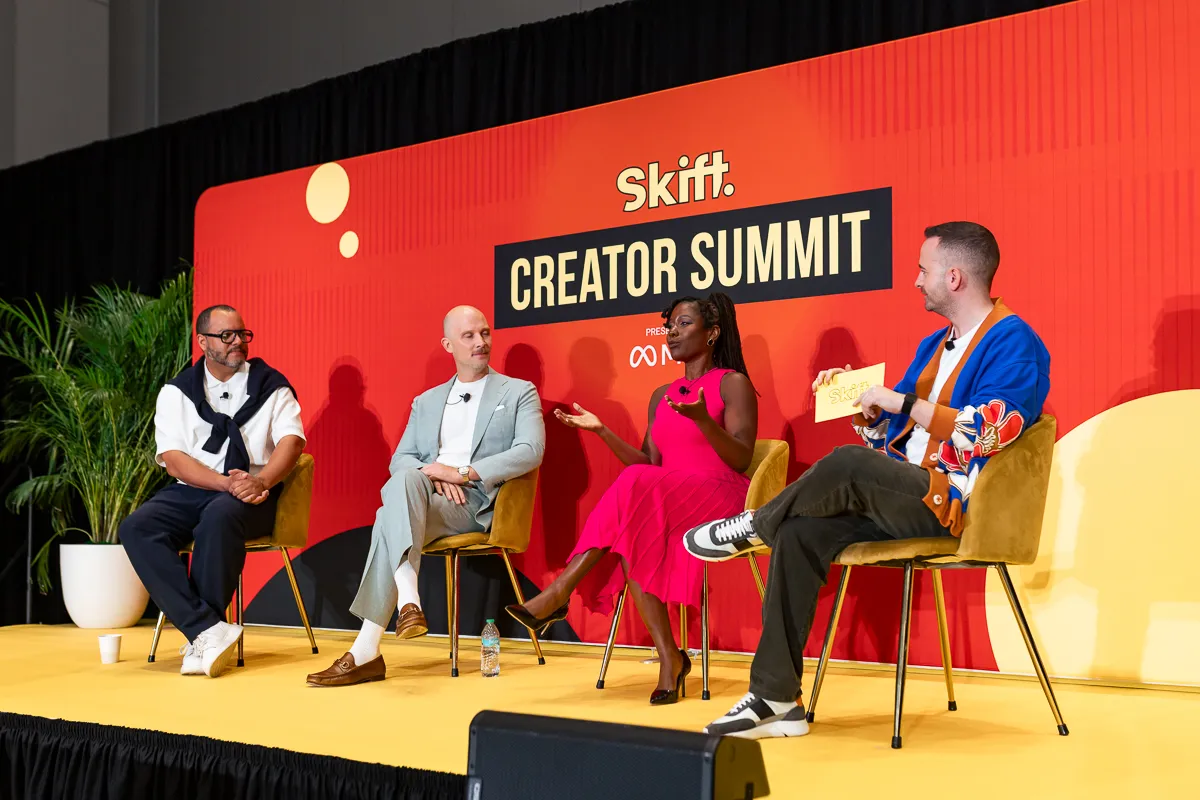
The landscape of global hospitality marketing is undergoing a fundamental transformation as traditional brand guardianship yields to the decentralized power of the creator economy. At the Skift Creator Summit held in New York City on September 22, 2026, Connor Smith, Senior Vice President of Global Brands for IHG Hotels & Resorts, addressed a room of industry executives and digital content creators to discuss a significant pivot in the company’s promotional strategy. Smith, who has spent more than a decade meticulously building and protecting the visual and narrative identity of over 7,000 hotels across IHG’s 21 diverse brands, admitted that the modern media environment now requires a surrender of that very control. For a corporation that manages a portfolio ranging from the luxury InterContinental and Six Senses to the ubiquitous Holiday Inn, the decision to empower independent creators armed with iPhones and ring lights represents a departure from decades of centralized brand management.
The Paradigm Shift in Brand Guardianship
For most of the 21st century, hotel marketing was defined by high-production-value photography, strictly controlled press releases, and a top-down approach to storytelling. As the head of global brands for IHG, Smith’s primary mandate was once the enforcement of brand standards—ensuring that the "vibe" and "voice" of a Kimpton remained distinct from a Crowne Plaza. However, the rise of short-form video and the ubiquity of social media platforms have rendered traditional "perfect" imagery less effective among younger, more skeptical demographics.
During the summit, Smith reflected on this transition, noting that his realization came from the necessity of reaching fragmented audiences that no longer consume traditional media. He stated that in order to build the level of trust required to convert a viewer into a guest, the brand had to "let go." This admission highlights a broader industry trend where authenticity is valued over polished art direction. By allowing creators to film their own experiences without a script or a heavy-handed corporate filter, IHG is betting that the creator’s personal relationship with their audience will translate into brand loyalty for the hotel group.
Chronology of the Creator’s Rise in Hospitality
The integration of creators into the travel marketing mix has evolved through several distinct phases over the last fifteen years. In the early 2010s, the "influencer" was largely a novelty, often characterized by static Instagram posts featuring posed photos in luxury settings. By 2018, travel brands began to formalize these relationships, moving away from one-off stays toward long-term brand ambassadorships.
The pivotal shift occurred between 2022 and 2025, a period during which TikTok and Instagram Reels became the primary discovery engines for travel. During this time, IHG and its competitors, such as Marriott International and Hilton, began to realize that the "unfiltered" look of user-generated content (UGC) frequently outperformed multi-million-dollar commercial campaigns in terms of engagement and booking intent. By 2026, as evidenced by the discussions at the Skift Creator Summit, the creator has moved from the periphery of the marketing budget to the center of the brand’s global strategy.
Supporting Data: The Economic Impact of Content Creators
The strategic shift described by Smith is supported by a growing body of data indicating that social media is now the primary influence on travel decisions for Gen Z and Millennials. According to 2025 industry reports, approximately 75% of travelers in these age brackets use social media for destination inspiration, and nearly 50% have booked a specific hotel based on a creator’s recommendation.
Furthermore, the "trust deficit" in traditional advertising is widening. Market research indicates that consumers are 2.4 times more likely to view user-generated content as authentic compared to content created by brands. For a massive entity like IHG, which operates across 100 countries, the ability to tap into localized, niche audiences through creators provides a level of granularity that a centralized marketing team cannot achieve. The "iPhone and ring light" approach is not just a cost-saving measure; it is a response to a market that demands relatability.
Perspectives from the Skift Creator Summit Panel
The panel at the Skift Creator Summit featured a diverse cross-section of the industry, providing a holistic view of how this "letting go" of brand control manifests in practice. Alongside IHG’s Connor Smith were Alex Zeitz, Senior Director of Global Operations, Experience, and Belonging at Virgin Voyages; content creator Oneika Raymond; and Skift Airlines Editor Gordon Smith.
Alex Zeitz discussed how Virgin Voyages utilizes creators to emphasize the brand’s focus on "belonging." For a cruise line that targets a modern, adult-only audience, showing a diverse range of real people enjoying the onboard experience is more effective than a traditional brochure. Zeitz noted that creators help bridge the gap between the brand’s operational goals and the guest’s emotional experience. By allowing creators to document the "real" experience—including the small, unscripted moments—the brand builds a narrative of inclusivity that feels earned rather than manufactured.
Oneika Raymond, a veteran travel creator, provided the perspective from the other side of the lens. She emphasized that the most successful partnerships occur when brands provide clear objectives but leave the creative execution entirely to the creator. Raymond argued that when a brand tries to micromanage the lighting, the angles, or the script, the audience immediately senses the lack of authenticity, which devalues the content for both the creator and the hotel brand.
Strategic Implications for the Global Hotel Industry
The implications of IHG’s shift are significant for the broader travel sector. As one of the world’s largest hotel groups, IHG’s embrace of creator-led marketing signals a permanent change in how hospitality brands will allocate their budgets in the coming years.
1. The Redefinition of Brand Standards
The traditional "brand book"—a thick manual detailing every allowed color, font, and photo angle—is becoming more fluid. Brands are now creating "creator guidelines" that focus on values and messaging rather than strict visual aesthetics. This allows for a variety of visual styles that can coexist under a single brand umbrella, appealing to different sub-cultures on platforms like TikTok and YouTube.
2. Operational Integration
As Smith noted, handing over pieces of branding to "strangers" requires a high degree of internal trust. This shift is forcing marketing departments to work more closely with legal and operational teams to streamline the process of hosting creators and managing the rights to the content they produce. The goal is to move from a "transactional" relationship (a free room for a post) to a "partnership" model where the creator is an extension of the brand’s storytelling arm.
3. Measuring ROI Beyond the "Like"
The industry is moving toward more sophisticated metrics for measuring the success of creator campaigns. While engagement remains important, brands like IHG are increasingly looking at "down-funnel" metrics, such as direct booking links, promo code usage, and long-term brand sentiment. The ability to track a guest from a creator’s video to a confirmed reservation at a Holiday Inn in London or an InterContinental in Dubai is the current "holy grail" of travel marketing technology.
Broader Impact and Future Outlook
The Skift Creator Summit served as a milestone for the travel industry’s recognition of the creator economy as a professionalized, essential sector. The willingness of an executive like Connor Smith to publicly acknowledge the need to "let go" reflects a maturity in the market. It suggests that the most successful brands of the late 2020s will not be those that shout the loudest through traditional channels, but those that successfully integrate their identity into the organic conversations happening across social platforms.
As the industry looks toward 2027 and beyond, the challenge for IHG and its peers will be maintaining a cohesive brand identity while allowing for thousands of individual interpretations. The tension between corporate control and creative freedom is unlikely to disappear, but the balance of power has clearly shifted. For the 7,000 hotels under Smith’s purview, the future of their brand identity is no longer held solely in the hands of corporate directors in Atlanta or London; it is being shaped, one frame at a time, by travelers with a story to tell and a mobile phone to capture it.
The move toward creator-centric marketing is a recognition that in the modern world, "brand" is not what a company says about itself, but what its customers—and the creators they trust—say about it. By embracing this reality, IHG is positioning itself to remain relevant in an era where authenticity is the ultimate currency.