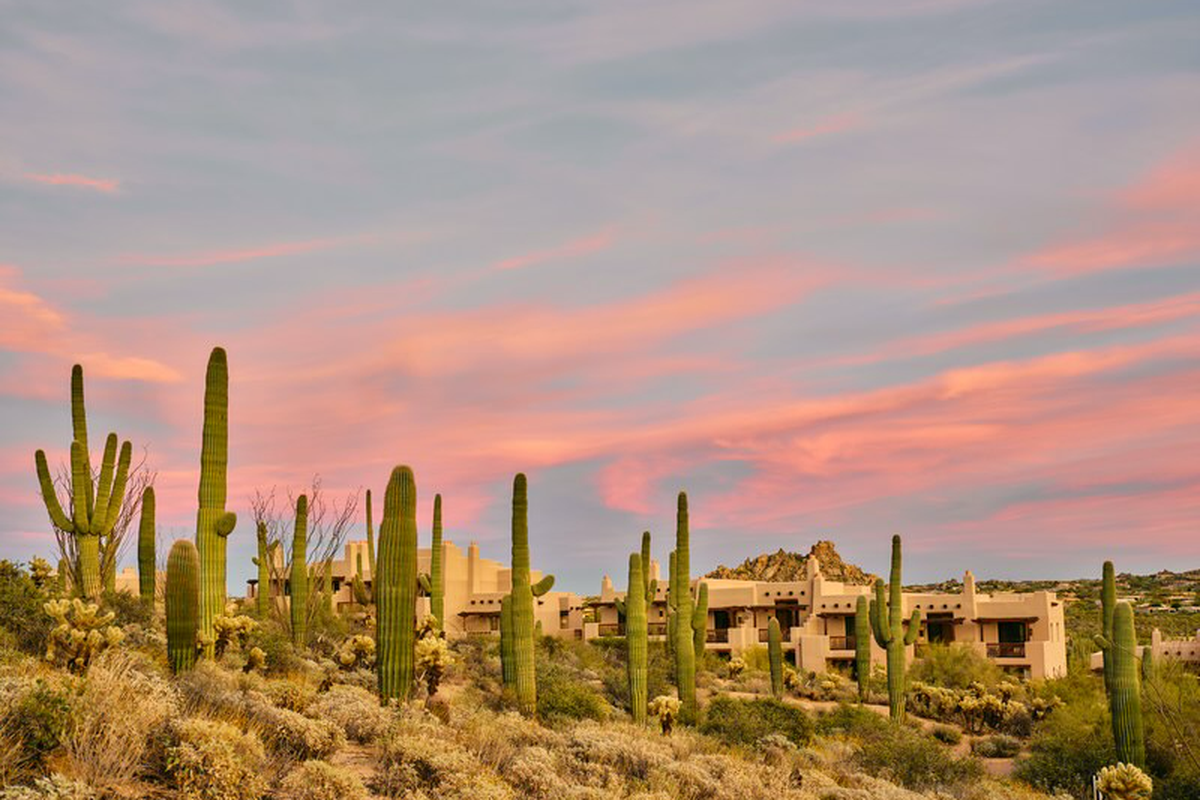
The tension between maximizing real estate efficiency and preserving the soul of a luxury property was recently encapsulated during a strategic walk-through at the Four Seasons Resort Scottsdale at Troon North. As investors and architects surveyed the lobby, a proposal was tabled to install a permanent bar in the center of the arrival area. The logic from a commercial standpoint was sound: a lobby bar would drive immediate beverage revenue, activate a high-traffic zone, and create a sense of social energy that modern travelers often crave. However, Jerome Arribas, the resort’s general manager, halted the proposal with a definitive stance. He argued that the addition would obstruct the unobstructed sightline of the Sonoran Desert and the towering granite formations that define the resort’s identity.
"There will never be a bar here," Arribas told the group, emphasizing that the proposed structure would hide the "million-dollar view" that serves as the core essence of the guest arrival experience. This exchange highlights a critical and growing friction in the global luxury hospitality sector: the "push and pull" between the need for commercial optimization and the preservation of the intangible elements that define a high-end stay. As luxury hotel brands expand and standardize their operations, the role of the General Manager (GM) has evolved into that of a primary defender against the erosion of a property’s unique character.
The Evolution of the General Manager’s Role
Historically, the General Manager of a luxury hotel was primarily an operational figurehead, focused on staff management, service standards, and local community relations. However, as the hospitality industry has become increasingly institutionalized, the GM’s role has shifted toward asset management and brand stewardship. Today, luxury brands have become highly proficient at codifying service, design, and commercial practices. This consistency is a hallmark of brands like Four Seasons, providing a reliable "safety net" for high-net-worth travelers who expect a specific level of quality regardless of their global location.
Yet, this drive toward standardization often clashes with the "sense of place" that modern luxury travelers seek. Industry analysts note that while brand standards ensure quality, they can also lead to a "homogenization" of luxury, where every lobby, spa, or restaurant begins to feel interchangeable. In this environment, the GM’s sharpened point of view becomes the final line of defense. The decision in Scottsdale to prioritize a view over a revenue-generating bar is a testament to the belief that the long-term value of a property’s "soul" outweighs the short-term gains of floor-space monetization.
The Economic Context of the "Million-Dollar View"
The financial implications of such decisions are significant. In the luxury segment, the "arrival experience" is considered a critical touchpoint that justifies premium room rates, which at the Four Seasons Scottsdale can often exceed $1,000 per night depending on the season. According to data from STR, a leader in hospitality market analytics, luxury hotels in the Phoenix-Scottsdale market have seen a steady increase in Average Daily Rate (ADR) over the last five years, driven largely by the demand for "experiential" luxury.
When an investor looks at a lobby, they see "dead space" that could be converted into a profit center. In major urban markets, lobby bars can contribute between 10% and 20% of a hotel’s total Food and Beverage (F&B) revenue. However, Arribas’s argument rests on the psychological impact of luxury. If a guest’s first impression is a crowded bar rather than the serene, expansive landscape of Troon North, the perceived value of the entire stay may diminish. The "million-dollar view" is not just an aesthetic preference; it is a brand equity asset that supports the resort’s pricing power and guest loyalty.
Chronology of the Luxury Hospitality Pivot
To understand the current state of luxury management, one must look at the timeline of the industry’s evolution:
- The Era of Grandeur (Pre-1980s): Luxury was defined by opulence and individualistic management. Hotels were often independent, and the GM was an autocratic "host."
- The Rise of the Global Brands (1980s–2000s): Companies like Four Seasons and Ritz-Carlton began to scale. They introduced rigorous SOPs (Standard Operating Procedures) that guaranteed a consistent "luxury" experience globally.
- The Lifestyle and Boutique Shift (2000s–2015): The industry saw a move toward "lifestyle" hotels that prioritized design and social scenes. This is when the "lobby activation" trend began, turning quiet arrival halls into bustling social hubs.
- The Experiential and "Quiet Luxury" Movement (2016–Present): Travelers began to favor authenticity and nature over manufactured social scenes. This era re-emphasized the importance of a property’s unique physical environment and architectural harmony with its surroundings.
The standoff at Troon North reflects the current transition between the third and fourth eras. While the "lifestyle" trend suggests adding a bar to every lobby, the "experiential" movement demands that the natural environment remains the protagonist of the guest’s journey.
Supporting Data: The Value of Place in Luxury Travel
A 2023 report by Skift Research on luxury travel trends found that 68% of high-net-worth individuals prioritize "uniqueness of location" and "natural beauty" when selecting a resort, ranking these factors higher than "on-site amenities" like bars or retail outlets. Furthermore, a study by Cornell University’s School of Hotel Administration suggests that "view quality" in resort settings is one of the top three drivers of guest satisfaction scores.
For a property like Four Seasons Resort Scottsdale, which is situated on 40 acres of high Sonoran Desert, the landscape is the primary product. The resort was designed to blend into the environment, with low-slung buildings and a color palette that mimics the surrounding desert. Introducing a modern bar into the lobby’s direct line of sight would, in the eyes of the GM, be a violation of the architectural intent and the guest’s psychological transition from the outside world into a desert sanctuary.
Stakeholder Perspectives: The Investor vs. The Operator
The tension in the Scottsdale boardroom is a microcosm of a wider industry debate between asset managers and operators.
- The Investor/Asset Manager View: Their primary responsibility is to the owners or shareholders. They look for "under-utilized" square footage. If a lobby is 3,000 square feet and only serves as a pass-through, it represents a missed opportunity for RevPASH (Revenue Per Available Seat Hour). From their perspective, a bar is a "productive use of space" that also serves the local community, bringing in non-resident revenue.
- The Operator/GM View: Their responsibility is to the brand’s long-term health and the guest’s emotional connection to the property. They argue that luxury is often defined by what is not there—space, silence, and unobstructed views. They believe that over-commercializing common areas can "cheapen" the brand and lead to guest fatigue.
In this instance, the GM’s perspective prevailed. By protecting the sightline, the resort maintains its "arrival ritual"—a moment of awe that sets the tone for the entire guest experience.
Broader Impact and Implications for the Industry
The decision at Four Seasons Scottsdale serves as a case study for other luxury properties facing similar pressures. It underscores the necessity of a "sharpened point of view" among leadership. As AI and data-driven management become more prevalent, there is a risk that hotel design will become a product of algorithms designed to maximize every cent of revenue. The human element—the GM who understands the "core essence" of a place—acts as a vital check against this trend.
This "defensive" approach to management is likely to become more common as the definition of luxury continues to skew toward exclusivity and privacy. In an era where every mid-scale hotel has a "social lobby," true luxury may increasingly be found in the preservation of quietude and the celebration of the natural world.
The implications for future architectural projects are also clear. Architects and designers must work more closely with operational leaders early in the process to ensure that revenue-generating features do not compromise the property’s "sense of place." The "push and pull" will continue, but as Jerome Arribas demonstrated, the most successful luxury properties will be those that recognize when a "million-dollar view" is worth more than a million dollars in cocktail sales.
Ultimately, the preservation of the Four Seasons Scottsdale’s lobby view is a reminder that in luxury hospitality, the most important asset is often the one that cannot be built, only protected. The GM’s role as a "defender of the experience" ensures that even as the industry evolves, the fundamental promise of luxury—to provide a unique and transformative environment—remains intact.