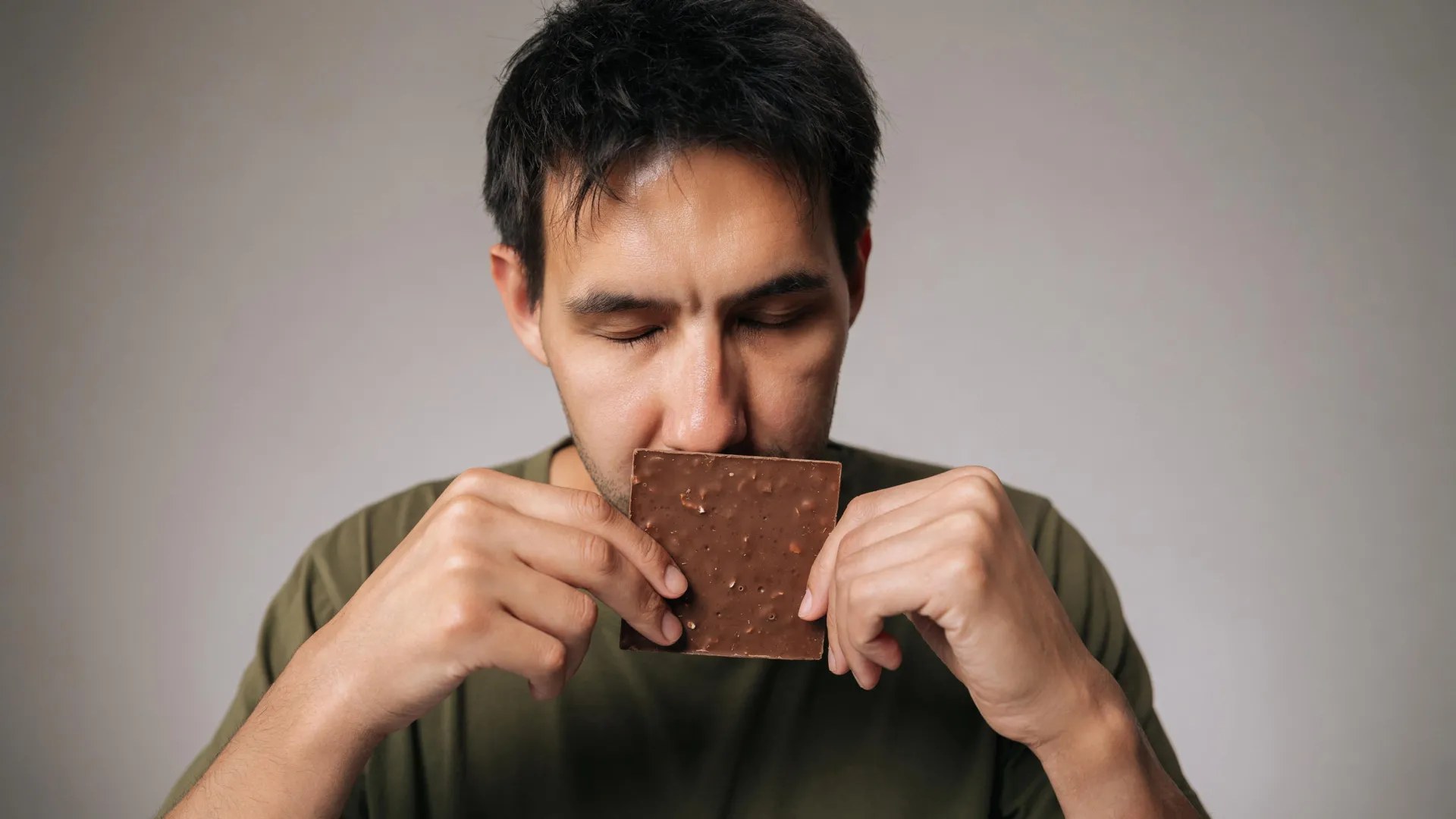
A groundbreaking study published in the esteemed journal Frontiers in Physiology has unveiled a surprisingly simple yet potent factor that can enhance physical performance: the aroma of chocolate. Researchers have discovered that exposing moderately trained men to the scents of dark and milk chocolate before and during resistance exercise significantly increased the volume of their workouts without making the activity feel any more strenuous. This finding opens a fascinating window into the psychobiological interplay between olfaction, appetite, and physical capacity, suggesting that the anticipation of pleasure or satiation can profoundly influence our bodies’ responses to exertion.
Unlocking Hidden Performance Potential: The Chocolate Aroma Effect
The core of this research, conducted by a team from the University of Malaya, centered on understanding how olfactory cues, specifically those associated with familiar and rewarding foods like chocolate, could impact athletic performance. Dr. Mohamed Nashrudin bin Naharudin, the senior author of the study and an assistant professor at the Faculty of Sports and Exercise Science, articulated the significance of their findings. "Exposing moderately trained men to chocolate odors right before and between sets of resistance exercise significantly increased their overall training volume without increasing their perceived exertion," he stated. "Seeing a substantial increase in repetitions without the athletes feeling like they were exerting themselves any harder is a fascinating psychobiological outcome."
This outcome is particularly intriguing because it challenges conventional understanding of exercise physiology, which often focuses on metabolic and biomechanical factors. The study introduces a psychological dimension, suggesting that the brain’s response to sensory stimuli can directly influence the body’s willingness and ability to push its limits.
The Experimental Design: A Multi-faceted Approach to Olfactory Influence
The study involved 23 healthy men, all in their early to mid-20s and possessing a moderate level of training. These participants were divided into three distinct groups. Each group was then exposed to one of three specific samples: a liquified form of dark chocolate containing a robust 90% cocoa content, a liquified milk chocolate with 60% cocoa, or plain water, which served as the control condition.
The researchers recognized the potent connection between olfaction and the brain’s fundamental appetite and emotion networks. However, as Dr. Nashrudin Naharudin pointed out, the specific synergistic relationship between smell, appetite regulation, and actual resistance exercise capacity had remained largely unexplored. "We know olfaction is powerfully wired into the brain’s appetite and emotion networks, but surprisingly, no study has systematically looked at the three-way interaction between smell, appetite, and actual resistance exercise capacity," he explained.
A crucial element of the experimental protocol was ensuring a controlled state of appetite among the participants. Before commencing any exercise, each individual underwent a fasting period of at least 10 hours. This ensured that any perceived changes in hunger or appetite could be more directly attributed to the olfactory stimuli rather than the presence of food in their digestive system.
The primary exercise chosen for the study was the leg extension. This is a common resistance training movement where an individual sits and straightens their lower legs against resistance, effectively lifting a weight. This exercise provided a standardized and measurable form of resistance training.
Researchers meticulously measured participants’ leg extension performance both before the training session commenced and again during the session itself. This allowed for a direct comparison of baseline performance against performance influenced by the olfactory cues. Furthermore, prior to engaging in any physical activity, participants were asked to rate their current levels of hunger, fullness, their desire to eat, and their intention to eat in the immediate future. This provided a baseline assessment of their appetite state.
Throughout the exercise session, after each 30-second exposure to one of the scent samples (dark chocolate, milk chocolate, or water), researchers continued to monitor and record participants’ hunger levels and their desire to eat. This continuous monitoring was vital for capturing the dynamic impact of the aromas on appetite perception during the exercise itself.
Divergent Effects: Dark vs. Milk Chocolate and Their Impact on Appetite and Performance
The study revealed fascinating distinctions in how the two chocolate aromas influenced appetite. The aroma of dark chocolate, particularly the 90% cocoa variety, demonstrated a significant effect on appetite regulation. Compared to both the water control and the milk chocolate conditions, the scent of dark chocolate was consistently associated with a marked decrease in reported hunger. Participants also experienced a reduced desire and intention to eat, coupled with an increased feeling of fullness before commencing their exercise. This suggests that the dark chocolate aroma primarily acted to suppress appetite by directly reducing hunger signals and enhancing the perception of satiety.
In contrast, the milk chocolate aroma elicited a different set of responses. While participants generally rated the milk chocolate scent as more pleasant than either the dark chocolate or the water, it did not lead to any significant changes in their reported hunger or overall appetite levels. This indicates that the pleasantness of the aroma, while a factor, did not translate into a direct modulation of core appetite-regulating mechanisms in the same way as the dark chocolate scent.
However, the influence of the chocolate aromas was not confined to appetite modulation alone; they also demonstrably impacted how much exercise the participants were able to complete. This is where the performance-enhancing aspect of the study became particularly evident.
"Sniffing a 90% dark chocolate odor added about 18 more repetitions to participants’ leg extensions, while a 60% milk chocolate odor added about nine repetitions compared to the water control," Dr. Nashrudin Naharudin reported. This quantitative data highlights a clear performance benefit derived from both chocolate aromas, with dark chocolate providing a more substantial increase in workout volume. The fact that these gains were achieved without an increase in perceived exertion underscores the subtle yet powerful nature of olfactory influence on our physical capabilities.
The Neurobiological Underpinnings: Learned Associations and Anticipatory States
The researchers propose that learned associations play a pivotal role in explaining these observed effects. From a very early age, individuals repeatedly encounter specific smells in conjunction with the act of eating. Over time, these aromas can become deeply ingrained as signals that trigger the brain and body to anticipate the physiological and psychological responses typically associated with food consumption.
This anticipatory mechanism can, in turn, shift a person’s internal state from one of hunger towards one of fullness, even before any actual food has been ingested. Dr. Nashrudin Naharudin elaborated on this concept: "The dark chocolate scent serves as a learned cue for a rich, bitter, and highly satiating food, which essentially tricks the system into an anticipatory state of fullness." This suggests that the brain, upon detecting the dark chocolate aroma, accesses a pre-programmed response associated with consuming a food known for its satiating properties, thereby preemptively reducing the sensation of hunger.
Conversely, the milk chocolate aroma appears to operate through a different pathway. "Conversely, the sweeter milk chocolate scent acts more like a hedonic reward cue, enhancing training volume by creating a highly pleasant sensory environment rather than by shifting basic metabolic hunger signals," the study’s senior author explained. In this instance, the pleasure derived from the aroma, rather than a direct suppression of hunger, seems to be the primary driver of the performance enhancement. The positive sensory experience could lead to a more enjoyable workout, indirectly boosting motivation and endurance.
These findings carry significant implications, particularly considering that the observed effects occurred while the participants were in a fasted state. This raises the intriguing possibility that the mere anticipation of food, triggered by its aroma, can initiate physiological and psychological responses that mimic those experienced during actual food consumption. Food aromas, therefore, might serve as preparatory signals for the digestive system, initiating a cascade of changes that ready the body for an upcoming meal. Some of these responses could even mirror the physiological shifts that normally occur after a meal has been consumed.
Acknowledging Limitations: Navigating the Nuances of the Research
Despite the compelling results, the researchers are keen to highlight certain limitations of their study. The biological mechanisms underlying these observed changes remain speculative, as the study did not involve the measurement of specific blood hormones or neural activity. Consequently, the precise biological pathways responsible for the observed shifts in appetite and exercise performance could not be definitively identified.
Further limitations include potential inconsistencies in the intensity of the dark and milk chocolate aromas used in the experiment. It is also possible that the participants, being aware they were in a controlled experiment, could discern when they were exposed to the odorless water control, potentially influencing their responses.
The study’s scope was also relatively narrow, involving a small sample size comprising only healthy, moderately trained young men. This raises questions about the generalizability of the findings to broader populations, including women, individuals with different training statuses, or those with varying dietary habits and preferences. Future research involving larger and more diverse cohorts will be essential to ascertain the extent to which these results can be applied across the general population.
Beyond Chocolate: The Potential of Other Food Aromas
An open and exciting question stemming from this research is whether chocolate possesses unique properties, or if other familiar food aromas could elicit similar performance-enhancing effects. Dr. Nashrudin Naharudin expressed a cautious optimism on this front: "We don’t think chocolate is entirely unique, though it is a food cue with incredibly strong, universally recognized reward associations."
It is plausible that other foods that are strongly associated with feelings of satisfaction and satiety after consumption could potentially trigger comparable physiological and psychological responses. However, this hypothesis has yet to be empirically tested. The key factor, according to the researchers, likely lies in the individual’s personal relationship with the aroma. "A person likely needs to find the odor familiar and appealing – or at least not repulsive – to trigger the psychological shift in appetite that’s needed to see a performance boost," Dr. Nashrudin Naharudin concluded. This suggests that the effectiveness of an aroma is highly subjective and dependent on individual learned associations and preferences.
Broader Implications: A New Frontier in Performance Enhancement
The findings from this study suggest a potential paradigm shift in how we approach performance enhancement. While traditional methods often focus on nutritional intake, training regimens, and pharmacological interventions, this research points towards the often-overlooked power of sensory cues. The ability to enhance workout volume and potentially endurance through the simple act of smelling certain aromas opens up a novel, non-invasive, and psychologically driven avenue for improving physical performance.
For athletes, fitness enthusiasts, and even individuals looking to make exercise more manageable, incorporating familiar and appealing aromas into their training environment could offer a simple yet effective boost. This could range from using scented diffusers in gyms to consuming food items with strong, pleasant aromas before or during workouts.
Furthermore, the implications extend beyond just athletic performance. The study’s findings on appetite modulation could have relevance for weight management strategies and the treatment of eating disorders. By understanding how olfactory cues influence hunger and satiety, interventions could be developed to help individuals better regulate their appetite and food intake.
However, it is crucial to reiterate that this is an emerging area of research. While the initial findings are promising, further investigation is needed to fully elucidate the underlying mechanisms, confirm the generalizability of the results, and explore the potential of a wider range of food aromas. Nevertheless, this study marks a significant step forward in our understanding of the intricate connections between our senses, our brains, and our physical capabilities, suggesting that sometimes, the sweetest path to success is simply a matter of scent.