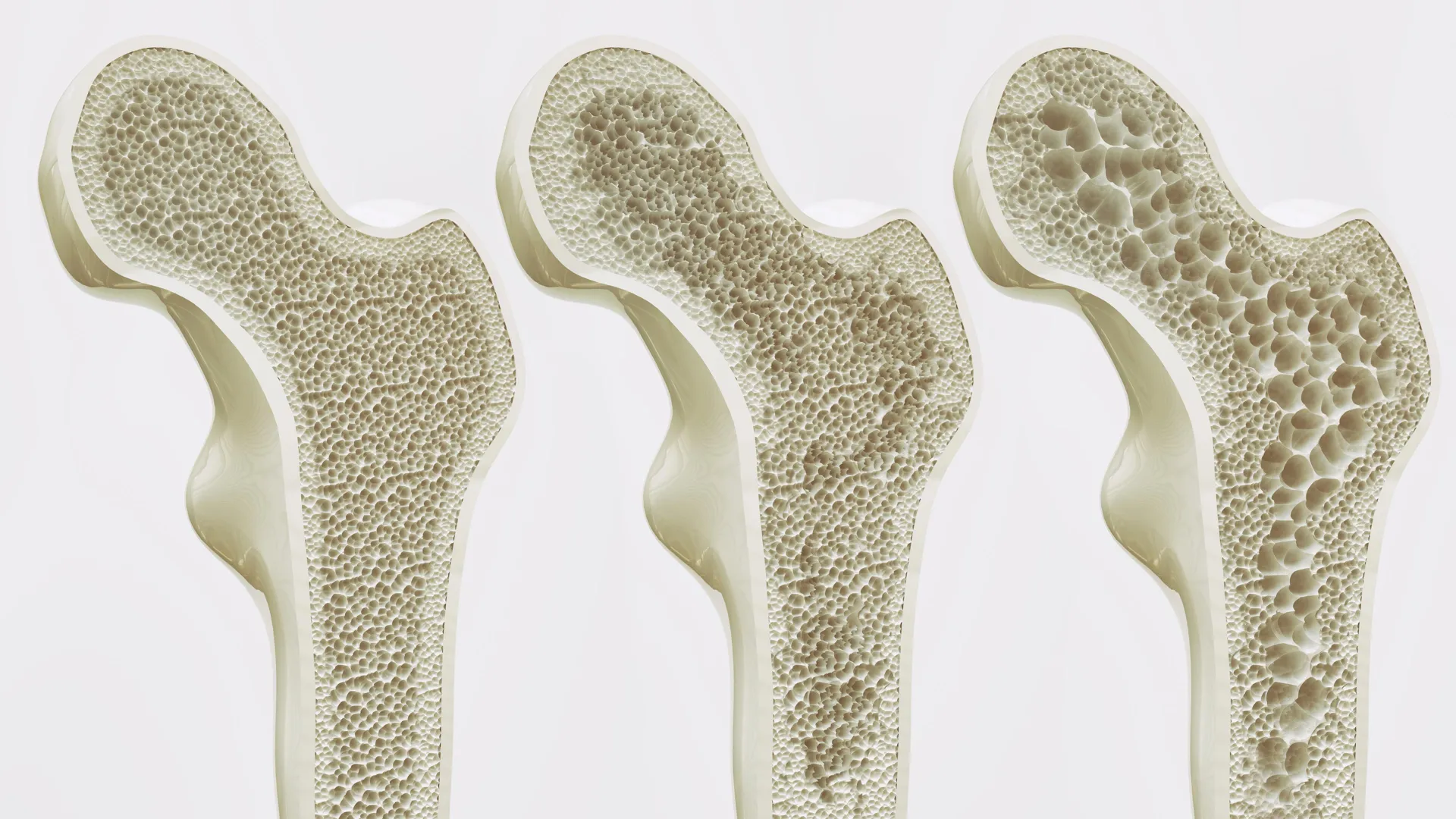
Researchers at Flinders University have unveiled compelling new evidence suggesting a nuanced and distinct relationship between habitual coffee and tea consumption and bone health in postmenopausal women. The groundbreaking study, published in the esteemed journal Nutrients, meticulously tracked nearly 10,000 women aged 65 and above for a decade, examining the long-term impact of their daily beverage choices on bone mineral density (BMD), a critical indicator for assessing osteoporosis risk. This extensive longitudinal analysis offers valuable insights into how commonly consumed beverages may influence skeletal integrity in a demographic particularly vulnerable to bone loss.
Unraveling the Complexities of Bone Health and Beverage Consumption
Osteoporosis stands as a formidable global health challenge, disproportionately affecting women. It is estimated that approximately one in three women over the age of 50 will experience an osteoporotic fracture, leading to millions of debilitating injuries annually. Given the ubiquitous nature of coffee and tea consumption worldwide, with billions of individuals incorporating these beverages into their daily routines, even subtle effects on bone health can carry significant public health implications. Previous scientific investigations into this association have yielded conflicting results, underscoring the need for more robust, long-term studies to clarify these relationships. The Flinders University study, with its decade-long follow-up period and large participant cohort, directly addresses this gap in the scientific literature.
The Methodology: A Decade of Data Collection
The Flinders University research team leveraged the rich dataset provided by the Study of Osteoporotic Fractures (SOF), a renowned observational cohort study designed to investigate risk factors for osteoporosis and fractures in older women. Over the 10-year observational period, participants regularly provided detailed information about their dietary habits, including the frequency and quantity of their coffee and tea intake. Simultaneously, researchers employed advanced dual-energy X-ray absorptiometry (DXA) scanning, a gold-standard imaging technique, to meticulously measure BMD at two key skeletal sites: the total hip and the femoral neck. These areas are particularly crucial as they are common sites for fractures, and changes in their bone density are strongly correlated with an individual’s risk of experiencing such debilitating events.
The data collection process was designed to capture the dynamic nature of beverage consumption and its potential impact over time. Participants were prompted to report their usual intake of coffee and tea at regular intervals throughout the study, allowing researchers to account for potential shifts in habits. The repeated BMD measurements provided a longitudinal perspective, enabling the identification of trends and associations that might not be evident in cross-sectional studies. This rigorous approach ensured that the findings were based on a comprehensive understanding of participants’ beverage consumption patterns and their skeletal health over an extended period.
Tea’s Subtle Yet Significant Contribution to Bone Density
The findings from the Flinders University study revealed a noteworthy positive association between regular tea consumption and bone mineral density in older women. Specifically, women who consistently drank tea exhibited slightly higher total hip BMD compared to their counterparts who abstained from tea. While the observed difference in BMD was modest, it achieved statistical significance, indicating that it was unlikely to have occurred by chance. This statistical robustness is particularly important when considering the potential impact on a population level.
Adjunct Associate Professor Enwu Liu, a leading researcher from the College of Medicine and Public Health at Flinders University and a senior author on the study, emphasized the public health relevance of these incremental changes. "Even small improvements in bone density can translate into fewer fractures across large groups," stated Professor Liu. "Given the widespread consumption of tea, this suggests that incorporating it into one’s diet could represent a simple, accessible, and potentially impactful strategy for supporting skeletal health in older women." The findings align with the growing body of research exploring the health benefits of tea, which is rich in bioactive compounds.
The Science Behind Tea’s Potential Benefits
The proposed mechanism behind tea’s beneficial effect on bone health is attributed to its rich content of polyphenols, particularly catechins. These potent antioxidants, abundant in various types of tea, including green and black varieties, are believed to play a crucial role in bone metabolism. Research suggests that catechins may promote osteoblast activity, the cells responsible for bone formation, while simultaneously inhibiting osteoclast activity, the cells involved in bone resorption or breakdown. This dual action could lead to a net increase in bone mass or a slower rate of bone loss over time.
"The compounds found in tea, especially catechins, are thought to positively influence the delicate balance of bone remodeling," explained Ryan Liu, a co-author of the study and a researcher at Flinders University. "They may facilitate the building of new bone tissue and slow down the processes that lead to its deterioration. This could be particularly beneficial for older women who are naturally experiencing a decline in bone density due to hormonal changes."
Furthermore, the study observed that the apparent benefits of tea consumption were more pronounced among women who were classified as having obesity. This finding suggests a potential synergistic effect, where tea may offer additional skeletal support to individuals who are at a higher risk of bone density loss due to weight-related factors. While the precise reasons for this enhanced effect require further investigation, it hints at a more complex interplay between beverage components, body composition, and bone metabolism.
Coffee’s Dual Nature: Moderate Consumption Appears Safe, High Intake Poses Risks
In contrast to the consistent positive association observed with tea, the relationship between coffee consumption and bone health presented a more intricate picture. The Flinders University study indicated that moderate coffee intake, defined as consuming approximately two to three cups per day, did not appear to be associated with any detrimental effects on bone mineral density. This finding offers reassurance to the vast majority of coffee drinkers who consume these beverages in moderation.
However, the study did identify a concerning trend for individuals with very high coffee consumption. Women who reported drinking more than five cups of coffee daily exhibited lower BMD at the hip and femoral neck compared to non-coffee drinkers. This suggests that excessive caffeine intake, a primary component of coffee, may indeed have negative implications for bone health in older women, particularly when consumed in large quantities.
Exploring the Mechanisms of Coffee’s Impact
The potential negative effects of high coffee consumption are often linked to its caffeine content. Laboratory studies have indicated that caffeine can interfere with calcium absorption and the body’s overall bone metabolism. Calcium is an essential mineral for building and maintaining strong bones, and impaired absorption can lead to a net loss of calcium from the skeletal system. Additionally, caffeine can increase urinary calcium excretion, further depleting the body’s calcium stores.
"While the caffeine in coffee has been shown in laboratory settings to potentially hinder calcium absorption and influence bone metabolism, these effects are generally considered small," noted Ryan Liu. "Crucially, these negative impacts can often be mitigated by simple dietary adjustments. For instance, adding milk to coffee introduces calcium and vitamin D, which can help to counteract some of the potential negative effects of caffeine on bone health." This observation underscores the importance of a balanced dietary approach rather than focusing solely on individual beverage components.
The study also highlighted that the relationship between coffee and bone health can be modulated by other lifestyle factors. Notably, women who reported higher lifetime alcohol consumption experienced more pronounced negative effects associated with heavy coffee intake. Alcohol is independently known to have detrimental effects on bone health, and its combination with excessive coffee consumption may create a synergistic risk profile for bone loss. This finding emphasizes the need to consider the cumulative impact of various lifestyle choices on skeletal integrity.
Broader Implications and Future Directions
The findings from the Flinders University study carry significant implications for public health recommendations and individual dietary choices, particularly for older women. The research suggests that regular, moderate consumption of tea could serve as a simple, enjoyable, and potentially beneficial adjunct to established strategies for maintaining bone health in later life.
"Our results suggest that incorporating tea into one’s daily routine could offer a straightforward way to support bone health as women age," stated Adjunct Associate Professor Enwu Liu. "Conversely, while moderate coffee drinking appears to be safe for bone health, very high consumption might not be advisable, especially for women who also consume alcohol regularly. This highlights the importance of personalized dietary advice based on individual health profiles and lifestyle habits."
It is crucial to reiterate that the observed differences in BMD, while statistically significant, were modest in magnitude. The researchers are careful to emphasize that their findings do not necessitate drastic changes to established dietary habits. "Our results do not mean that individuals need to abandon their favorite coffee or tea rituals," Professor Liu clarified. "Instead, they offer a more nuanced understanding. They suggest that moderate tea consumption could be a positive factor for bone health, and that limiting very high coffee intake, particularly for those with other risk factors like alcohol consumption, might be a prudent consideration."
The study reinforces the foundational importance of calcium and vitamin D supplementation and intake for maintaining skeletal strength. However, it also introduces the possibility that beverages, often consumed in large volumes, could play a complementary role. For older women, the daily cup of tea may offer more than just comfort; it could represent a small, yet meaningful, step towards preserving bone density and reducing the risk of fractures.
The study’s acknowledgment of funding from the National Institute on Aging (NIA) and the National Institute of Arthritis and Musculoskeletal and Skin Diseases (NIAMS) underscores the significant investment in understanding and combating age-related bone diseases. The grants supporting the SOF study (AG05407, AR35582, AG05394, AR35584, and AR35583) highlight a long-standing commitment to advancing research in this critical area of public health.
Future research endeavors could delve deeper into the specific types of tea and coffee that may have varying effects on bone health, explore the impact of preparation methods (e.g., brewing time, addition of milk or sweeteners), and investigate the interplay of genetic factors with beverage consumption and bone density. Further longitudinal studies with even larger and more diverse cohorts, including men and younger populations, will be invaluable in building a more comprehensive understanding of the intricate relationship between dietary beverages and skeletal well-being across the lifespan. This ongoing scientific inquiry promises to refine our dietary recommendations and empower individuals to make informed choices for optimal bone health.