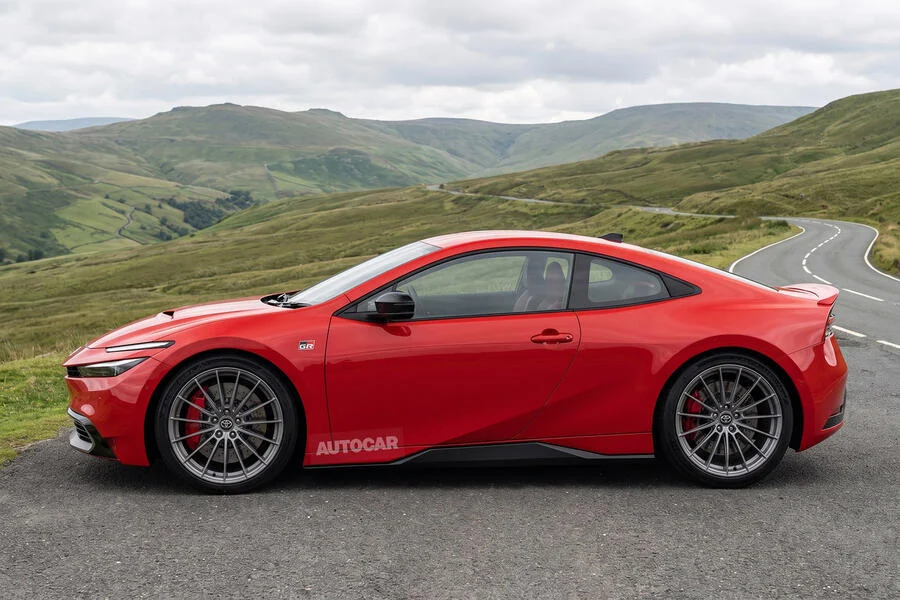
Toyota is officially moving toward the resurrection of the Celica, marking the return of one of the most storied nameplates in automotive history. Poised to debut as the eighth generation of the iconic model, the new Celica is being developed as a cornerstone of the Gazoo Racing (GR) performance brand. This move follows more than two decades of absence from the market, with the last Celica rolling off production lines in 2006. The revival is driven by a strategic mandate from Toyota Chairman Akio Toyoda to reunite the "three brothers"—a nickname for the trio of sports cars that defined Toyota’s performance era in the 1980s and 1990s: the Supra, the MR2, and the Celica.
With the Supra already established in its fifth generation through a technical partnership with BMW, and a mid-engined MR2 successor currently in the advanced stages of development, the Celica represents the final piece of Toyoda’s personal ambition to restore the brand’s sporting soul. The new model, internally referred to as the Celica Sport, is expected to serve as an accessible yet high-performance entry point into the GR lineup, bridging the gap between the rally-bred GR Yaris and the flagship GR Supra.
The Strategic Vision: Reuniting the Three Brothers
The return of the Celica is not merely a nostalgic exercise but a calculated component of Toyota’s broader "no more boring cars" philosophy. Under Akio Toyoda’s leadership, the company has transitioned from a manufacturer primarily known for reliability and efficiency to one that actively courts driving enthusiasts. The "three brothers" strategy aims to capture different segments of the sports car market. While the Supra occupies the grand tourer and high-output rear-wheel-drive space, and the upcoming MR2 is expected to focus on mid-engined balance and lightweight agility, the Celica is being positioned as a versatile, front-engined sports coupé with strong ties to Toyota’s rallying heritage.
Market analysts suggest that the Celica revival is also a response to a shifting competitive landscape. Honda recently confirmed the return of the Prelude, a front-wheel-drive-based hybrid coupé. By bringing back the Celica, Toyota creates a direct rival for the Prelude, leveraging its own hybrid expertise and the prestige of the GR brand to secure a foothold in the revitalized sports coupé segment.
Historical Context and Rallying Heritage
The Celica’s return is deeply rooted in its history as a dominant force in the World Rally Championship (WRC). Throughout the 1990s, the Celica GT-Four became a global icon, securing drivers’ titles for legends like Juha Kankkunen and Didier Auriol in 1993 and 1994. The decision to phase out the Celica in the mid-2000s coincided with a broader industry shift toward SUVs and a temporary withdrawal from high-level motorsport.
The timeline for the new Celica’s development has been accelerated by upcoming changes in WRC regulations. Starting in 2027, the WRC will no longer require competing cars to be strictly based on the bodywork of an existing production subcompact road car. This regulatory shift provides Toyota with the flexibility to move away from the GR Yaris body style currently used in competition and return to a sleek, two-door coupé silhouette. Industry observers recently spotted a "test mule" featuring a radical new two-door body during shakedowns for Toyota’s 2027 WRC contender, fueling speculation that the new Celica is already being used as the aerodynamic and structural template for the firm’s future racing efforts.
Technical Specifications and Engineering Foundation
While the new Celica will honor its past, its mechanical underpinnings will be thoroughly modern. Toyota is expected to utilize the TNGA (Toyota New Global Architecture) platform, specifically the version that supports the upcoming, radically redesigned Corolla. This shared architecture allows for significant cost efficiencies while providing a rigid, low-center-of-gravity base suitable for a performance vehicle.
A critical component of the new Celica will be its powertrain. As global emissions standards become increasingly stringent, Toyota’s GR division has acknowledged the limitations of the 1.6-liter three-cylinder turbocharged engine found in the GR Yaris and GR Corolla. Mikio Hayashi, marketing manager for Toyota’s GR division, indicated that while the three-cylinder engine is a marvel of engineering, it struggles to meet future Euro 7 and similar global emissions targets without significant hybridization that might compromise its weight and character.
Consequently, the new Celica is tipped to feature a newly developed 2.0-liter four-cylinder turbocharged engine. This powerplant is part of a new family of engines Toyota is developing alongside Subaru and Mazda, designed to be compact, powerful, and "carbon neutral" through the use of synthetic fuels and advanced hybridization. In the Celica Sport, this 2.0-liter engine is expected to be paired with a high-output hybrid system, potentially delivering power figures that exceed the current 300 hp threshold of the GR Corolla, while maintaining a lower profile to accommodate the car’s low-slung hood line.
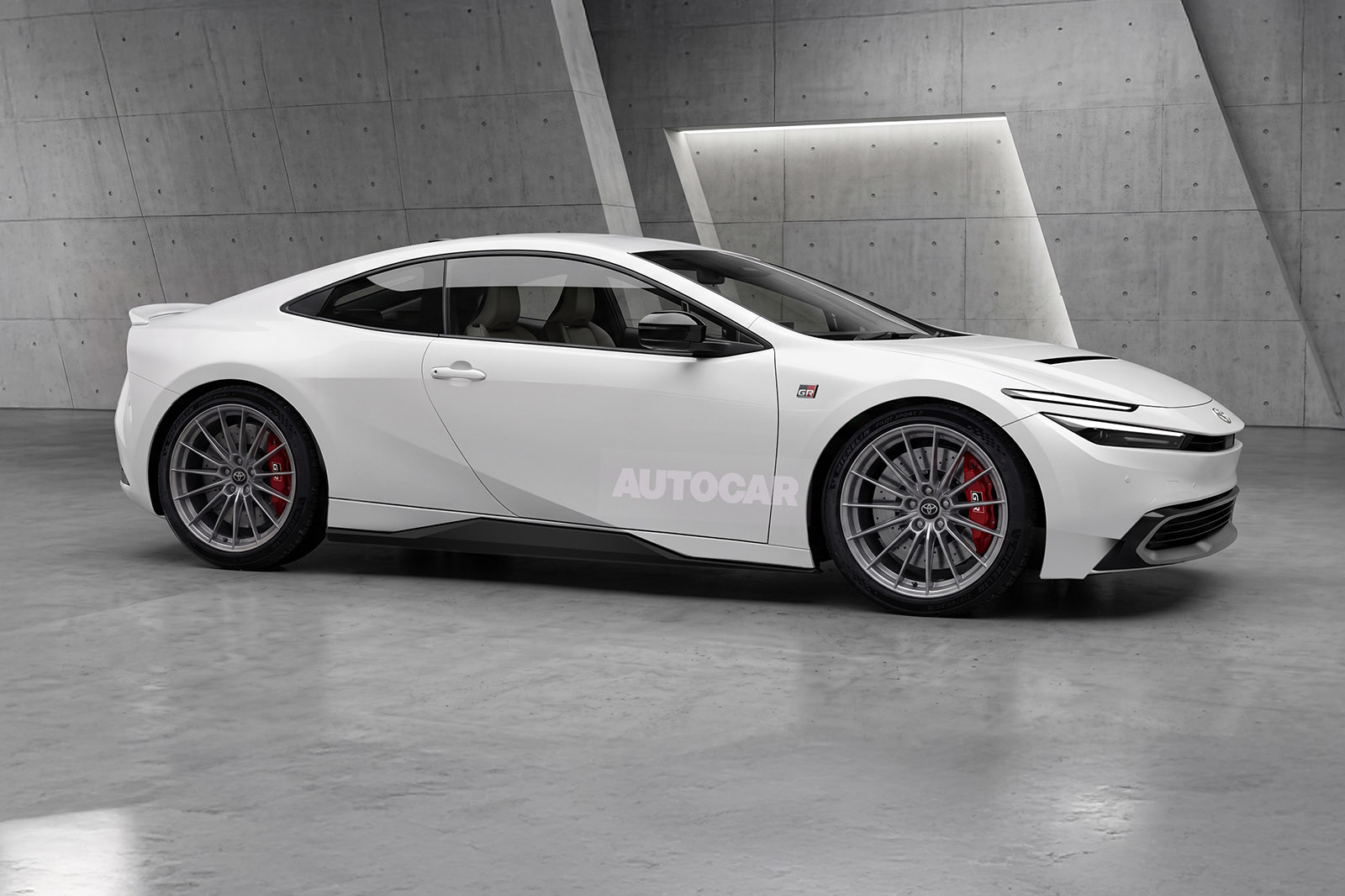
Chronology of the Celica Revival
The path to the eighth-generation Celica can be traced through several key milestones over the last five years:
- 2019: The launch of the GR Supra marks the beginning of Toyota’s performance car renaissance. Akio Toyoda first publicly mentions his desire to see the "three brothers" return.
- 2021: Toyota files a trademark renewal for the "Celica" name in several international jurisdictions, sparking initial rumors of a comeback.
- 2023: At the Tokyo Motor Show (Japan Mobility Show), Toyota unveils a futuristic Corolla concept with a sleek, coupé-like silhouette. Around the same time, Akio Toyoda tells fans at a rally event that he has "asked the engineers" to look into a new Celica.
- Early 2024: Toyota showcases the GR Yaris M concept, a "mule" used to test a new 2.0-liter engine and advanced all-wheel-drive components.
- Late 2024: Reports emerge of a two-door prototype being tested at Toyota’s Higashi-Fuji Technical Center, believed to be the silhouette for the 2027 WRC car and the production Celica.
- 2025–2026 (Projected): Official concept reveal and pre-production testing.
- 2027 (Projected): Market launch of the road car to coincide with the debut of the Celica-bodied WRC challenger.
Market Positioning and Competitive Analysis
The new Celica will occupy a unique space in the Toyota lineup. Unlike the GR86, which is a lightweight, rear-wheel-drive enthusiast car co-developed with Subaru, the Celica is expected to offer a more "sophisticated" performance experience. It will likely feature Toyota’s sophisticated GR-Four all-wheel-drive system, providing all-weather traction and a link to its rally-winning ancestors.
By positioning the Celica as a hybrid-assisted coupé, Toyota is targeting a demographic that desires a sporty aesthetic and engaging driving dynamics without the uncompromising nature of a dedicated track car. Its primary competitor, the Honda Prelude, is expected to focus heavily on efficiency and sleek design; Toyota’s response with the Celica will likely lean more heavily into "hardcore" performance, leveraging the GR brand’s reputation for aggressive tuning and motorsport-derived technology.
Official Responses and Internal Sentiment
While Toyota’s official communications department remains tight-lipped about specific release dates, the sentiment within the company is one of high energy. Executives have noted that the GR brand has become a significant profit center and a powerful tool for brand loyalty.
"We are at a stage where we are exploring the best fit for our future lineup," Mikio Hayashi stated in a recent interview regarding the expansion of the GR family. "The challenge is balancing the emotional requirements of a sports car—the sound, the response, the feel—with the social responsibility of emissions and sustainability. A 2.0-liter high-performance hybrid is a very strong candidate for meeting those needs."
Chairman Akio Toyoda’s influence cannot be overstated. Often participating in races under the pseudonym "Morizo," Toyoda has personally tested various prototypes. His public endorsement of the Celica project has essentially greenlit the engineering team to pursue a car that stays true to the "fun to drive" mantra that has become Toyota’s internal North Star.
Broader Impact and Industry Implications
The revival of the Celica signifies a broader trend in the automotive industry: the return of the "emotional" vehicle in an era dominated by electrification and autonomous technology. As many manufacturers pivot exclusively to electric SUVs, Toyota’s investment in a combustion-hybrid sports coupé is a bold contrarian move.
This strategy serves two purposes. First, it preserves the brand’s enthusiast base during the transition to a multi-pathway energy future. Second, it ensures that Toyota remains a dominant name in global motorsport, which continues to drive "halo" sales for its more mainstream models like the RAV4 and Camry.
The eighth-generation Celica is set to be more than just a car; it is a statement of intent. By leveraging its WRC history, its latest hybrid innovations, and a shared platform strategy, Toyota is preparing to prove that the sports coupé is not a relic of the past, but a vital part of the brand’s future. For enthusiasts who have waited since 2006, the return of the Celica represents the completion of a journey that brings Toyota back to its performance roots, ensuring that the legacy of the "three brothers" continues for a new generation of drivers.