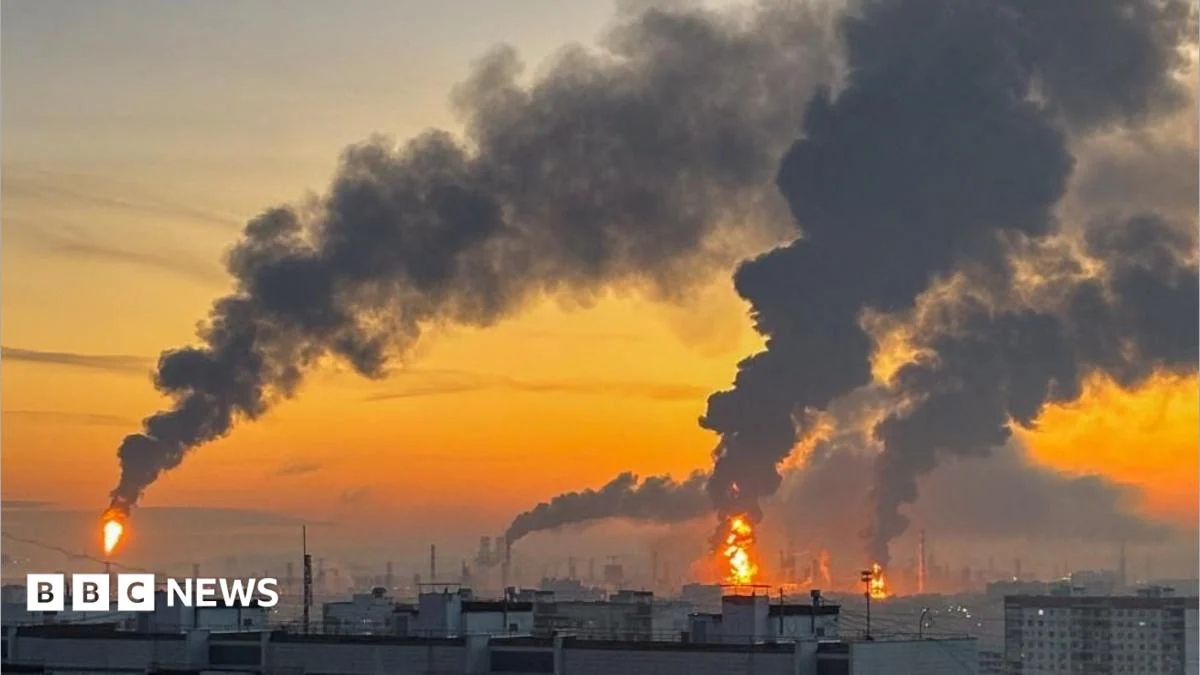
A wave of "massive" overnight Ukrainian drone attacks struck the Moscow region, resulting in at least two fatalities and six injuries, according to Governor Andrei Vorobyev. The coordinated assault saw an unprecedented number of unmanned aerial vehicles (UAVs) targeted at the Russian capital and surrounding areas, leading to widespread disruption, fires, and damage to critical infrastructure. Simultaneously, Ukrainian officials reported a devastating toll from Russian attacks on Saturday, with seven people, including two children, killed in the Kyiv and Sumy regions, underscoring the escalating and reciprocal nature of deep strikes in the ongoing conflict.
Intense Drone Barrage Over Moscow Region
The early hours of Sunday witnessed an extraordinary aerial assault, described by Moscow Mayor Sergei Sobyanin as "unprecedented." Governor Vorobyev stated that 249 drones were successfully intercepted and shot down by Russian air defense systems across the region. Despite these defensive efforts, several residential houses caught fire, and a local warehouse was engulfed in flames. The attacks also reached the capital itself, where an oil refinery sustained damage, and flight restrictions were temporarily imposed at Moscow’s two major airports, Sheremetyevo and Vnukovo.
Detailing the casualties, Governor Vorobyev confirmed the death of a 44-year-old woman in Sofyino after a drone directly impacted a three-storey residential building. In this incident, five other individuals, including two children, sustained injuries. Separately, in the Orekhovo-Zuevo district, an elderly man tragically lost his life when a private house was hit by a drone. These incidents highlight the direct and devastating impact of the strikes on civilian lives and property, bringing the realities of the conflict closer to Russia’s most populous region.
Social media platforms were flooded with videos purportedly showing explosions illuminating the night skies over the Moscow region, alongside footage of the burning warehouse. While the authenticity of these videos could not be independently verified by major news outlets, they contributed to a pervasive sense of alarm and disruption among residents.
Mayor Sobyanin provided a higher figure for the intercepted drones, reporting that 450 UAVs heading for Moscow were neutralized. The discrepancy in the reported numbers of intercepted drones between regional and city officials (249 by Vorobyev, 450 by Sobyanin) suggests the sheer scale and complexity of the defensive operation, potentially reflecting different reporting zones or criteria. The mayor also confirmed the drone strike near one of the capital’s boulevards and the damage to a facility at an oil refinery, indicating the strategic targeting of both symbolic and economic assets.
Disruption to Air Travel and Infrastructure
The drone attacks severely impacted air travel in and out of Moscow. Sheremetyevo, Moscow’s largest airport, issued warnings to passengers about "temporary restrictions" that were put in place, while Vnukovo airport experienced a complete halt to all arrivals and departures. These measures, aimed at ensuring aviation safety amidst the aerial threat, caused significant delays and inconvenience for thousands of travelers. Although restrictions at both airports were lifted by Sunday morning, warnings of potential continued flight delays persisted, reflecting the operational backlog created by the overnight events. The targeting of major transportation hubs underscores Ukraine’s apparent strategy to disrupt Russian logistics and impose economic costs.
The damage to an oil refinery facility, while not fully specified in its extent, represents a blow to Russia’s energy infrastructure. Such facilities are crucial for the processing and distribution of fuel, and their disruption can have ripple effects on military logistics and the broader economy. This aligns with a broader pattern of both sides targeting critical energy and industrial sites as part of their respective war efforts.
Ukrainian Casualties from Russian Retaliatory Strikes
Hours before the extensive drone attack on Moscow, Ukraine had already borne the brunt of Russian aggression. On Saturday, Russian attacks in the Kyiv and Sumy regions claimed the lives of seven people, including two children. These casualties highlight the relentless and brutal nature of the conflict, where civilian populations continue to suffer severe losses.
In the city of Fastiv, located in the Kyiv region, a mother and her two young children – a boy and a girl – were killed in a Russian attack, as confirmed by Kyiv regional head Tymur Tkachenko. Several private houses in the area were also damaged, painting a grim picture of destruction and loss for the affected communities.
Further north-east, in the Sumy region, four individuals died when a Russian drone struck the car they were travelling in, according to Oleh Hryhorov, a top local official. These incidents underscore the pervasive threat posed by drones and other aerial munitions to civilians, even those attempting to navigate daily life away from the immediate front lines. The targeting of vehicles on roads has become a tragic feature of the conflict, demonstrating the wide reach of modern warfare.
Context of Escalating Deep Strikes
The recent intensification of strikes by both Russia and Ukraine, targeting energy-generating facilities, transport infrastructure, and major logistics hubs, marks a significant phase in the conflict. This shift towards deep strikes aims to degrade the enemy’s capacity to wage war, disrupt supply lines, and inflict economic and psychological pressure. The attacks on Moscow’s region represent a notable escalation in Ukraine’s strategy, demonstrating an increased capability to strike deep within Russian territory and challenge the Kremlin’s narrative of domestic security.
Since the full-scale invasion launched by Russian President Vladimir Putin in February 2022, the conflict has seen periods of intense ground combat interspersed with strategic aerial campaigns. Initially, Russian forces focused on rapidly seizing key Ukrainian cities, including Kyiv. However, Ukrainian resistance, bolstered by Western military aid, pushed back the initial offensive. The conflict subsequently evolved into a grinding war of attrition, with both sides seeking to undermine the other’s military and economic foundations.
Ukraine’s drone program has grown significantly since the start of the full-scale invasion, evolving from largely commercial off-the-shelf drones adapted for reconnaissance and light strikes to sophisticated long-range attack UAVs capable of reaching targets hundreds of kilometers inside Russia. These domestically developed drones, alongside some provided by allies, have become a critical tool for Ukraine to project power beyond the front lines and respond to relentless Russian missile and drone attacks on its own cities and infrastructure.
Conversely, Russia has consistently employed a wide array of missiles and drones, including Iranian-supplied Shahed-series UAVs, to target Ukrainian energy infrastructure, military facilities, and civilian areas. These attacks often aim to overwhelm Ukrainian air defenses, disrupt power supplies, and demoralize the population. The systematic targeting of Ukraine’s energy grid, particularly during colder months, has been a recurring feature of Russia’s strategy, aiming to exert maximum pressure on the country.
Disputed Agreements and Strategic Implications
Interestingly, the continued targeting of energy infrastructure by both Russia and Ukraine in the past week occurred despite former US President Donald Trump’s claim on social media that the two sides had agreed not to. There has been no official confirmation from either Kyiv or Moscow regarding such an agreement, and the reality on the ground, as evidenced by these recent attacks, contradicts Trump’s assertion. This highlights the complex geopolitical landscape surrounding the conflict and the often-unverified claims circulating amidst the information war.
The implications of these intensified strikes are multifaceted. For Russia, the attacks on the Moscow region shatter any illusion of invulnerability for the capital. They demonstrate Ukraine’s growing capability to project force and inflict damage on strategic targets far from the front lines, raising questions about the effectiveness of Russian air defenses and potentially impacting public morale within Russia. The psychological impact of having the war brought directly to Moscow, a symbol of Russian power, cannot be underestimated. It forces the Russian populace to confront the costs of the ongoing conflict more directly.
For Ukraine, these deep strikes serve multiple purposes. They aim to degrade Russia’s military-industrial complex, disrupt its logistical chains, and reduce its capacity to wage war. They also act as a form of retaliation for the incessant Russian attacks on Ukrainian cities and infrastructure, asserting Ukraine’s ability to strike back. Furthermore, by demonstrating its long-range strike capabilities, Ukraine might be signaling to its Western allies the necessity of continued and even enhanced military support, particularly in air defense systems and offensive weaponry.
The humanitarian cost remains immense. The civilian casualties in both Russia and Ukraine underscore the tragic reality that non-combatants continue to bear the brunt of the escalating violence. The destruction of residential buildings, the loss of life, and the disruption of daily routines inflict deep and lasting scars on communities caught in the crossfire.
Looking ahead, the pattern of reciprocal deep strikes suggests a likely continuation of this strategic approach by both belligerents. As the conflict enters its third year, the emphasis on degrading enemy capabilities through long-range attacks on infrastructure and strategic assets is becoming a defining characteristic. The international community continues to call for de-escalation and adherence to international humanitarian law, particularly regarding the protection of civilians, but these calls have largely gone unheeded amidst the brutal realities of the ongoing war. The events of this weekend serve as a stark reminder of the conflict’s expanding reach and its devastating human toll.