This stark warning from a senior Kremlin-affiliated figure signals a significant escalation in rhetoric and potential actions as the United Kingdom deepens its military support for Ukraine. Fedorov’s comments, made on BBC Newsnight, directly followed the UK’s decision to share critical blueprints for British-made components of the Scalp missile – a French counterpart to the UK’s Storm Shadow cruise missile – enabling Kyiv to domestically produce these long-range weapons. The move is designed to bolster Ukraine’s self-sufficiency in defense, but it has provoked a furious reaction from Moscow, which views it as a direct and dangerous intervention in the ongoing conflict.
The Kremlin’s veiled threat comes amidst heightened tensions and a renewed diplomatic push by UK Prime Minister Andy Burnham. Burnham announced plans to travel to the United States next month, alongside other European leaders, to lobby US President Trump on Ukraine’s critical defense needs, particularly concerning air defense systems. This trip, slated to coincide with the UN General Assembly in New York, marks Burnham’s first official visit to the US since assuming the premiership in July and underscores the urgency of the situation.
Kremlin’s Escalatory Warning and "Semi-Military" Operations
Andrei Fedorov, a former Russian deputy foreign minister, articulated the potential for a "semi-military" response, a term that carries ominous implications for non-state actors or covert operations. When pressed on BBC Newsnight about the nature of such a response, Fedorov suggested it "could take the form of something might happen with enterprises, with factories which are producing drones for Ukraine." Crucially, he added, "They could be attacked not by Russia, but by from unknown sources." This phrasing immediately brings to mind historical precedents of plausible deniability, cyberattacks, or sabotage operations attributed to groups without direct state affiliation, often making attribution difficult and retaliation complex.
Fedorov indicated that Russian President Vladimir Putin was under "serious" domestic pressure "to undertake certain measures against UK." He attributed this pressure to "public opinion polls, it’s coming from journalists, from mass media," suggesting a groundswell of nationalist sentiment within Russia demanding a forceful response to perceived Western aggression. While the extent of genuine public influence on Kremlin decision-making is often debated by analysts, such statements serve to justify potential escalatory actions domestically and internationally.
These comments align closely with earlier statements made by Kremlin spokesman Dmitry Peskov. On Monday, Peskov strongly criticised the UK’s decision to share the missile blueprints, asserting that it "prevented even the slightest progress" towards achieving peace. He further informed reporters that the Russian military was already "gathering data to locate any missile production sites to destroy them," a direct and unambiguous threat of military action against facilities involved in arms production for Ukraine. Peskov’s remarks, "Britain is involved in this war on the side of the Kyiv regime. Britain methodically and regularly adds fuel to the fire," underscore Moscow’s perception of the UK as an active belligerent.
In response to Peskov’s accusations, Prime Minister Burnham sharply retorted, "Who started the fire? That’s the question, isn’t it?" This rhetorical question serves to redirect blame back to Russia for its full-scale invasion of Ukraine, a consistent message from Kyiv and its Western allies.
UK’s Strategic Deepening of Support: Blueprints and Self-Sufficiency
The UK’s decision to hand over blueprints for British-made components of the Scalp missile represents a significant shift in its military aid strategy. Until now, Western assistance has largely focused on providing finished weapons systems, training, and financial aid. Enabling Ukraine to produce advanced long-range weapons domestically offers several strategic advantages:
- Reduced Reliance on External Supply Chains: Domestic production lessens Ukraine’s dependency on the unpredictable pace of foreign military aid and the logistical challenges of transporting weaponry across borders.
- Sustained Warfighting Capability: As the conflict grinds on, the ability to replenish and expand its arsenal independently becomes critical for Ukraine’s long-term defense.
- Economic Benefits: Establishing local production can stimulate Ukraine’s defense industry, creating jobs and fostering technological expertise, which will be vital for post-war reconstruction and security.
- Operational Security: Less reliance on external shipments potentially reduces vulnerabilities to Russian interdiction efforts.
The Scalp/Storm Shadow cruise missile is a highly capable, stealthy, long-range weapon with a range exceeding 250 kilometers (155 miles), capable of striking high-value targets deep behind enemy lines. Ukraine has already used these missiles, supplied by the UK and France, with notable success against Russian command posts, logistics hubs, and naval assets in occupied territories. The ability to produce these locally would significantly enhance Ukraine’s offensive capabilities and its capacity to degrade Russian military infrastructure.
Prime Minister Burnham’s Diplomatic Offensive and the Patriot Missile Crisis
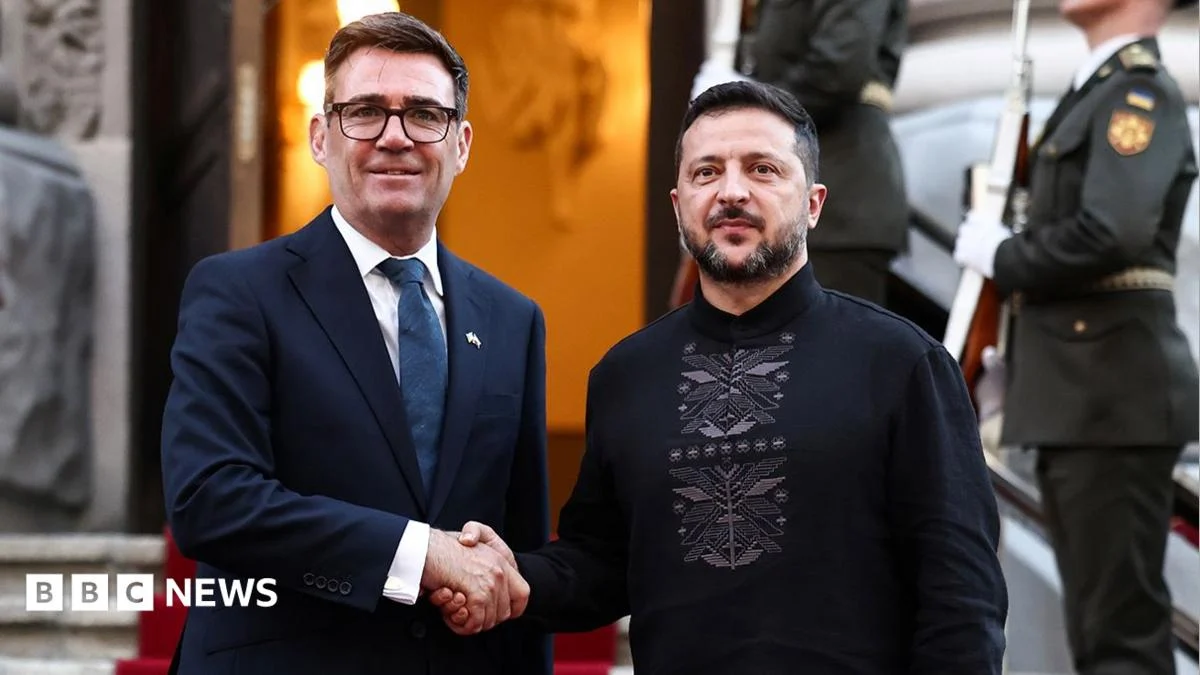
Prime Minister Andy Burnham’s first official international visit as leader took him to Kyiv, where he met with Ukrainian President Volodymyr Zelensky. During this visit, he also chaired his first meeting of the "coalition of the willing," a group established by the UK and France under his predecessor, Sir Keir Starmer, aimed at coordinating and enhancing military support for Ukraine. Burnham has consistently reaffirmed the UK’s unwavering support for Ukraine, particularly in the wake of escalating Russian strikes in recent weeks, including a devastating attack on a shopping centre that killed at least 16 people.
A primary focus of Burnham’s upcoming US trip will be to address Ukraine’s urgent need for more Patriot interceptor missiles. These advanced air defense systems are crucial for combating Russia’s ballistic missiles, which Moscow has increasingly deployed against Ukrainian cities and critical infrastructure. Ukraine has been heavily reliant on American supplies of Patriot missiles, but stockpiles are reportedly running low. The original text mentions this is "due to the war in Iran," which is an unusual phrasing and might be an error or refers to broader geopolitical tensions and US military commitments globally, straining the availability of such high-demand systems for Ukraine. Regardless, the shortage leaves Ukraine significantly vulnerable to further Russian aerial attacks, particularly as winter approaches.
President Zelensky has explicitly stated his hope to secure 300 Patriot missiles before winter, anticipating a repeat of Russia’s strategy from previous years to increase attacks on energy infrastructure, aiming to plunge the country into cold and darkness. In his interview with Bloomberg, Burnham expressed confidence that the Patriot issue was "fixable," but he stressed that the United States was not the sole potential supplier. "There are other players who could help in the mix who we have influence with," he noted, suggesting a broader, multi-layered diplomatic effort would be required. "It’s probably going to be a solution that involves a lot of layers and a lot of negotiation."
This diplomatic challenge is compounded by past statements from former President Trump. In July, just three weeks after initially offering Ukraine the right to produce Patriots itself, Trump backtracked, stating, "We have not agreed to that. We’re talking about it. But it’s a hard thing to give away, that kind of technology." He emphasized the highly sensitive nature of the technology, telling a cabinet meeting, "These weapons are incredible. We have to be very careful about letting somebody build them." Trump’s historical hesitancy and transactional approach to international alliances could pose a significant hurdle to Burnham’s lobbying efforts, especially given the upcoming US presidential election cycle.
Broader European Unity and Condemnation
Burnham’s visit to Ukraine culminated in a joint statement with co-chairs French President Emmanuel Macron and German Chancellor Friedrich Merz. The statement highlighted the group’s commitment to strengthening Kyiv’s air defenses "as a matter of urgent priority." This collective emphasis on air defense reflects the shared understanding among European leaders of Ukraine’s most pressing military need.
The leaders also issued a strong condemnation of Moscow’s "systemic and escalating strikes against Ukraine’s cities, critical infrastructure and civilians." They pledged to continue efforts to "constrain Russia’s war chest through sanctions and actions against the ‘shadow fleet’," referring to the clandestine network of tankers Russia uses to circumvent oil sanctions. This commitment underscores the multifaceted approach of Western allies, combining military aid with economic pressure.
Ahead of his visit, Prime Minister Burnham released a statement marking Ukraine’s 35th anniversary of independence, offering a powerful message of solidarity: "The Ukrainian people should be in no doubt: the UK is behind you today and for as long as it takes." He reiterated the UK’s pride in its contribution to Ukraine’s defense and pledged unwavering support, asserting, "Ukraine’s security is our security." Burnham concluded by stating that the friendship between the two nations would "long outlast Russia’s illegal war" and warned Moscow, "Russia should be in no doubt of our resolve. We will not back down until there is a just and lasting peace."
Implications and Future Outlook
The Kremlin’s "semi-military" threat, coupled with Peskov’s explicit warning to target production sites, represents a dangerous escalation in rhetoric. While the term "unknown sources" offers plausible deniability, the context clearly points to state-sponsored actions, potentially broadening the conflict beyond the direct battlefield. Such actions could range from sophisticated cyberattacks aimed at disrupting production to physical sabotage operations on British soil or against UK interests abroad. The implications for international law and norms of warfare are profound, challenging the conventional understanding of state responsibility.
The UK’s strategy of sharing blueprints, while a bold move towards Ukrainian self-reliance, directly challenges Russia’s military superiority and its attempts to control Ukraine’s access to advanced weaponry. This long-term investment in Ukraine’s defense industrial base signals a commitment that extends beyond immediate battlefield needs, fostering a more resilient Ukraine. However, it also raises the stakes, inviting more direct and potentially covert retaliation from Moscow.
Prime Minister Burnham’s diplomatic offensive in the US and Europe is critical for maintaining Western unity and ensuring a steady flow of vital military aid, especially air defense systems. The challenge of securing Patriot missiles highlights the complexities of international arms transfers, geopolitical rivalries, and domestic political considerations in supplier nations. Trump’s past statements demonstrate the fragility of these agreements and the potential for shifts in US policy to undermine collective defense efforts.
As Ukraine braces for another harsh winter, likely accompanied by intensified Russian attacks on energy infrastructure, the availability of effective air defense remains paramount. The ongoing war in Ukraine continues to test the resolve of the international community, pushing the boundaries of military aid, diplomatic engagement, and the deterrence of an increasingly aggressive Russia. The coming months will reveal whether the combined efforts of the UK, its European partners, and the US can effectively counter Russia’s escalating threats and secure a more stable future for Ukraine.