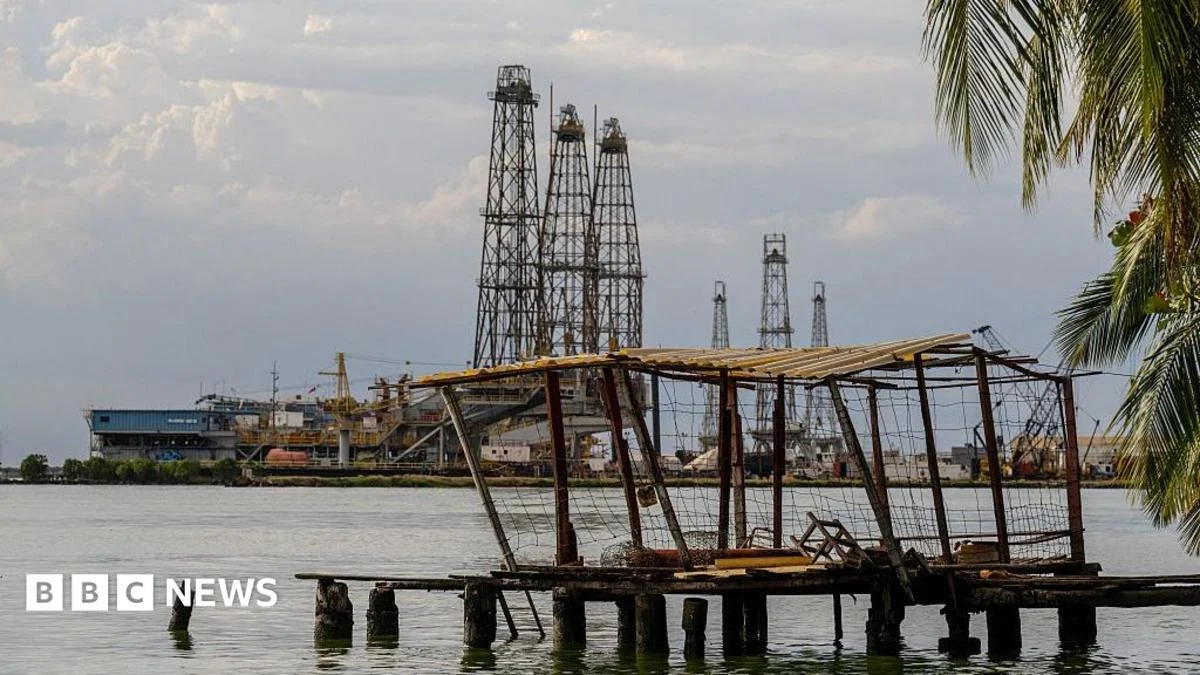
The United States has formalized an agreement with Venezuela to gain control over more than 65 billion barrels of its proven oil reserves, a development announced by President Donald Trump. This significant transaction, which President Trump declared on social media, is projected to substantially augment American oil reserves and supply, leading to a considerable reduction in domestic gasoline prices for consumers nationwide. The deal follows months of intense diplomatic and strategic maneuvers by the US administration after the arrest of Venezuela’s former President Nicolás Maduro earlier this year, an action that saw Trump pledge to unlock the vast potential of Venezuela’s petroleum wealth—the largest proven reserves globally.
Secretary of State Marco Rubio, a key architect of the agreement, lauded the deal as "a huge win for both the American and Venezuelan people." While specific terms and detailed commitments remain undisclosed, Rubio provided initial insights into the potential benefits for Venezuela. He stated via social media that the agreement is expected to attract nearly $100 billion in private investment, foster the creation of thousands of high-paying jobs, and serve as a critical catalyst for the extensive reconstruction of Venezuela’s severely distressed economy. President Trump’s post credited Secretary Rubio and Defence Secretary Pete Hegseth with brokering the agreement with Venezuela’s interim president, Delcy Rodriguez, emphasizing that the arrangement was forged "through a partnership with private business" and crucially, "at no cost to the American Taxpayer." The nature of this private business partnership and the precise commitments from the US remain subjects of intense speculation and ongoing inquiry.
A New Chapter in US-Venezuelan Relations: From Confrontation to Collaboration
The announcement marks a dramatic pivot in the often-turbulent relationship between the United States and Venezuela. For decades, the two nations have navigated a complex dynamic characterized by periods of cooperation, ideological clashes, and, more recently, escalating tensions and stringent US-imposed sanctions. Venezuela, a founding member of OPEC, sits atop an estimated 300 billion barrels of proven oil reserves, the largest in the world, making its energy sector a perpetual focal point of international geopolitical interest. However, mismanagement, corruption, and a protracted economic crisis under the previous administration had led to a drastic decline in its oil production capacity, from over 3 million barrels per day (bpd) in the late 1990s to less than 500,000 bpd in recent years, stifling its primary source of national income and plunging its populace into widespread poverty and humanitarian crisis.
The United States, historically a significant importer of Venezuelan crude, had gradually reduced its reliance on Venezuelan oil amidst political disagreements and the implementation of sanctions aimed at pressuring the Maduro government. These sanctions targeted Venezuela’s state-owned oil company, Petróleos de Venezuela, S.A. (PDVSA), and individual officials, contributing further to the country’s economic woes but failing to dislodge the previous leadership. The strategic shift initiated by the Trump administration, culminating in the recent events, represents a bold and unprecedented approach to resolving the long-standing impasse and leveraging Venezuela’s immense natural resources for mutual benefit.
Chronology of a Geopolitical Shift
The path to this landmark oil deal has been swift and decisive, beginning with a significant military operation earlier this year:
- January 3rd: A US-authorized military operation leads to the arrest of then-President Nicolás Maduro and his wife, Cilia Flores, in Venezuela. This action sent shockwaves across the international community, fundamentally altering the political landscape of the South American nation.
- Hours Post-Raid: Following the arrests, President Trump publicly declared that his administration would oversee Venezuela until a "safe, proper and judicious transition" could be established. Crucially, he announced that the US would assume indefinite control over the sale of the country’s oil, signaling an immediate intent to harness Venezuela’s energy assets.
- Subsequent Weeks/Months: While specific dates and details remain scarce, it is understood that intense diplomatic engagements and strategic planning ensued. Secretary of State Marco Rubio and Defence Secretary Pete Hegseth were instrumental in these negotiations, working with Venezuela’s newly installed interim president, Delcy Rodriguez, and engaging with private sector entities. The objective was clear: to devise a framework for stabilizing Venezuela and integrating its vast oil reserves into the global energy market, with significant benefits earmarked for the US.
- Present Day: President Trump formally announces the successful conclusion of the deal, confirming the US control over a substantial portion of Venezuela’s proven oil reserves and outlining the anticipated economic advantages for both nations.
Unpacking the Deal: Scope, Mechanics, and Economic Projections
The agreement to control "more than 65 billion barrels" represents a significant portion of Venezuela’s estimated total proven reserves. While this figure is a subset of Venezuela’s overall 300 billion barrels, it nonetheless more than doubles the current certified oil reserves under American influence, which stand at approximately 47 billion barrels, primarily located in the US and Canada (excluding strategic petroleum reserves). This influx of crude oil is poised to profoundly impact US energy independence and global market dynamics.
The mechanism described as a "partnership with private business" suggests a model where US-based or internationally recognized private energy corporations will be granted concessions, drilling rights, and operational control over specified oil fields in Venezuela. This approach, as opposed to direct state-to-state ownership or operation, aligns with the Trump administration’s emphasis on private sector-led growth and efficiency. It also aims to circumvent the bureaucratic and operational challenges that historically plagued PDVSA. The claim that the deal comes "at no cost to the American Taxpayer" implies that the financial outlays for developing these reserves, including capital expenditures for exploration, drilling, infrastructure repair, and logistics, will be borne by the private companies involved, with the US government facilitating the regulatory and security frameworks.
Economically, the implications are vast:
- US Energy Security and Consumer Prices: The primary stated goal for the US is to "substantially lower Gas Prices for all Americans." By increasing the readily available supply of crude oil directly accessible to US refiners, the deal could exert downward pressure on wholesale gasoline prices. Energy analysts suggest that a sustained increase in supply of this magnitude could lead to a reduction of 15 to 30 cents per gallon at the pump within 12-18 months, depending on global market conditions and the speed of production ramp-up. Furthermore, it significantly bolsters US energy independence, reducing reliance on volatile regions and diversifying import sources.
- Venezuelan Economic Reconstruction: The promised "nearly $100 billion in private investment" is a lifeline for Venezuela’s shattered economy. This capital injection is expected to revive the defunct oil infrastructure, modernize extraction techniques, and re-establish the country as a major global oil producer. The creation of "thousands of high-paying jobs" will be critical in addressing Venezuela’s dire unemployment crisis and stemming the exodus of its skilled workforce. Beyond the oil sector, the cascading effects of this investment could stimulate growth in ancillary industries, logistics, and services, laying the groundwork for broader economic recovery and potentially alleviating the humanitarian crisis that has gripped the nation.
- Global Oil Market Impact: The reintroduction of significant Venezuelan production into the global market could influence international oil prices. While initial impacts might be muted as production ramps up, a sustained increase of several million barrels per day from Venezuela could contribute to a global oversupply scenario, potentially driving down benchmark crude prices. This prospect would likely be met with mixed reactions from OPEC+ members, particularly Saudi Arabia and Russia, who have previously coordinated production cuts to stabilize prices.
Official and Inferred Reactions
The deal has elicited strong reactions, both official and anticipated:
- Interim Venezuelan Government: Interim President Delcy Rodriguez, though not quoted directly, is understood to have hailed the agreement as a pivotal moment for Venezuela. Sources close to the interim administration suggest she views it as the most viable path to national renewal, economic stability, and the restoration of essential public services, which have crumbled under years of neglect and sanctions. The promise of massive investment and job creation offers a tangible vision of recovery for a weary populace.
- US Political Landscape: Beyond President Trump and Secretary Rubio, reactions from other US political figures are expected to be diverse. Congressional leaders from both parties may cautiously welcome the potential economic benefits for American consumers and the strategic bolstering of US energy security. However, some voices, particularly from the opposition, might raise questions about the long-term geopolitical implications of such a deal following regime change, the lack of transparency regarding the "private business partnership," and the precedent it sets for international relations and sovereignty. Concerns about environmental impact and the potential for corruption in the massive reconstruction efforts could also surface.
- International Community: The deal’s reception on the global stage is likely to be complex. While nations grappling with high energy costs might appreciate the potential for stabilized or lower oil prices, others may express reservations regarding the circumstances leading to the agreement. Concerns about national sovereignty, the principle of non-intervention, and the legal framework surrounding the transfer of control over national resources after a leadership change could be raised by some international bodies and states, particularly those with historical grievances against US foreign policy. Neighboring Latin American countries might view the situation with a mixture of apprehension and hope, observing closely the stability and economic recovery that could follow in Venezuela.
- Energy Analysts and Economists: Industry experts largely foresee a significant, albeit gradual, impact on global energy markets. "The reintegration of Venezuelan oil, even a portion of it, is a game-changer," commented Dr. Alistair Finch, a senior energy economist at the Global Energy Institute. "While the timeline for full production recovery will be years, the psychological effect on futures markets and the tangible increase in available crude will be substantial. The devil, however, will be in the details of the private partnerships and the security environment for these operations."
Broader Impact and Geopolitical Implications
The US-Venezuela oil deal extends far beyond mere economics; it carries profound geopolitical ramifications:
- Precedent for International Law: The manner in which the US gained influence over Venezuelan reserves, following a military operation and the installation of an interim government, could set a controversial precedent in international law and state sovereignty. This aspect is likely to be debated vigorously in international forums and could influence future diplomatic engagements.
- Regional Stability: A stable and economically recovering Venezuela, supported by US investment and energy cooperation, could contribute significantly to regional stability in Latin America. The reduction of economic migration pressures and the potential for democratic institution-building could be positive outcomes. Conversely, if the reconstruction efforts falter or if political grievances persist, the region could face continued instability.
- Shifting Global Alliances: The deal could alter existing geopolitical alliances, particularly those involving major oil producers and consumers. Countries that have historically relied on Venezuelan oil or maintained close ties with the previous administration might need to recalibrate their foreign policy.
- Environmental Concerns: The rapid expansion of oil production in Venezuela will inevitably raise environmental concerns. International environmental groups and local communities will likely demand stringent environmental safeguards and transparent oversight to mitigate the impact of increased drilling and refining activities.
In conclusion, the agreement between the United States and Venezuela represents a seismic shift in global energy politics and US foreign policy. While promising substantial benefits for American consumers and a pathway to recovery for Venezuela, its long-term implications, both economic and geopolitical, will be closely scrutinized as the world watches the unfolding consequences of this historic transaction. The success of this ambitious undertaking will hinge on the transparent execution of the "private business partnership," the effective management of the projected investments, and the ability of the interim Venezuelan government to foster enduring stability and prosperity for its people.