

The Spanish enclave of Ceuta, nestled on Morocco’s northern coast, has been plunged into an unprecedented humanitarian and diplomatic crisis following a massive surge of irregular migrant crossings from Morocco. In scenes described as chaotic and unsustainable, thousands of individuals, many swimming across the maritime border, overwhelmed the city’s defenses, prompting an immediate deployment of Spanish armed forces and drawing offers of assistance from European partners, including leaders from the United Kingdom and France. The influx, which local officials estimate amounted to approximately 70% of Ceuta’s permanent population of around 83,600, represents a critical challenge to Spain’s territorial integrity and highlights the volatile dynamics of migration at Europe’s southern frontier.
A Deluge at Europe’s Southern Gate
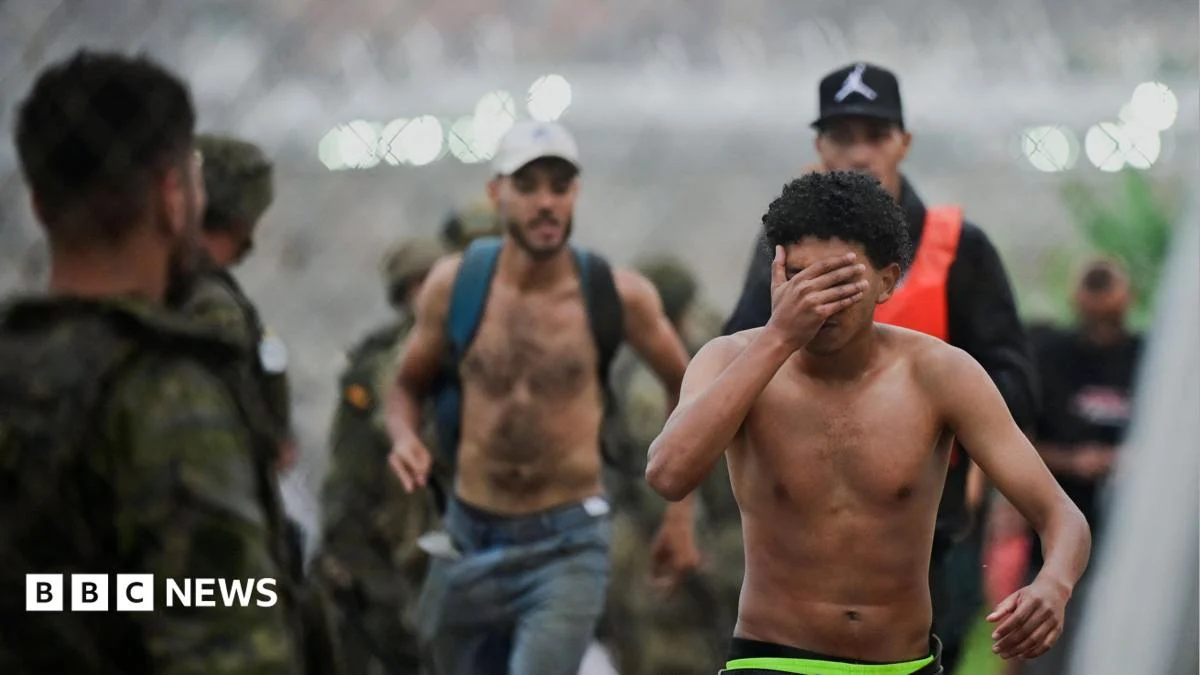
The crisis escalated dramatically on Thursday, as thousands of people began to cross into Ceuta from Morocco. Videos and images widely circulated across media platforms depicted a continuous stream of individuals, including families and unaccompanied minors, braving the waters of the Mediterranean to reach Spanish soil. The border controls, typically robust, appeared to break down under the sheer volume of arrivals, leading to widespread disorder. Local media reported that the crossings continued unabated into Friday, painting a grim picture of a city struggling to cope.
Jesús Vivas, a prominent local official, articulated the gravity of the situation, labeling it "unsustainable" given the staggering number of new arrivals relative to the city’s existing population. This sudden demographic shock placed immense pressure on Ceuta’s infrastructure, social services, and security apparatus. The situation was further compounded by concurrent reports of between 300 to 400 crossings overnight into Melilla, Spain’s other North African enclave, underscoring a broader, coordinated pressure on Spain’s borders.
In response to the escalating crisis, Spanish Prime Minister Pedro Sánchez swiftly condemned the events during a visit to Ceuta on Friday, characterizing the mass crossings as an "attack on Spain’s territorial integrity." He announced the deployment of Spain’s armed forces to bolster security in both Ceuta and Melilla and pledged to reinforce the border with Morocco. Sánchez attributed the dangerous events to "criminal networks manipulating the Supreme Court’s recent ruling," suggesting that "incorrect information had spread like wildfire in recent hours," though specific details of the ruling and its alleged manipulation were not immediately elaborated upon. He also affirmed that Moroccan authorities were cooperating with plans to return those who had entered illegally, signaling a complex and often strained relationship between the two nations.
Chronology of a Crisis: From Tensions to Overwhelm
The events in Ceuta did not emerge in a vacuum but were the culmination of simmering diplomatic tensions and long-standing migration pressures.
- Early Week: Local officials in Ceuta had already appealed to Madrid for increased assistance, citing a noticeable rise in attempted crossings. This signaled a growing apprehension about the stability of the border and the potential for a larger influx.
- Thursday: The situation dramatically deteriorated. Border controls, which typically rely on a combination of fences, surveillance, and Moroccan cooperation, appeared to be deliberately relaxed or overwhelmed. Thousands of individuals, predominantly young men but also entire families and numerous unaccompanied minors, began to enter Ceuta, with many swimming around the breakwater fences that extend into the sea. The sheer volume created chaotic scenes, with Spanish police and Guardia Civil struggling to contain the flow. Aid organizations and local volunteers quickly became overwhelmed by the humanitarian needs.
- Friday: The crossings continued, albeit with increased resistance from Spanish forces. Prime Minister Pedro Sánchez flew to Ceuta to assess the situation firsthand, delivering a forceful condemnation of the events. His government activated a crisis protocol, deploying units from the Spanish Army, including specialized engineering and logistics corps, to assist border police and manage the humanitarian fallout. Efforts to identify and process the new arrivals began, with a strong emphasis on returning those deemed to have entered illegally. Concurrently, international attention began to focus on the enclaves, with expressions of concern and offers of support from European capitals and international bodies.
- Subsequent Days (Inferred): The immediate aftermath saw Spanish forces working to push back new attempts at crossing and repatriate those who had entered. Humanitarian efforts focused on providing basic necessities, shelter, and medical care, particularly for vulnerable groups like children. The diplomatic fallout between Madrid and Rabat intensified, with both public statements and behind-the-scenes negotiations taking place to de-escalate the situation and re-establish border cooperation.
Historical Context: Ceuta, Melilla, and the Spain-Morocco Dynamic
The Spanish enclaves of Ceuta and Melilla are unique geopolitical entities, tracing their Spanish past to the 15th Century. These cities have enjoyed a limited degree of self-government since 1995 and represent the European Union’s only land borders with Africa. Their strategic location has historically made them coveted by Morocco, transforming them into persistent flashpoints in diplomatic relations between the two countries.
The complex relationship between Spain and Morocco is often characterized by periods of cooperation interspersed with moments of intense strain. Migration is a constant underlying factor, with Morocco serving as a crucial gatekeeper for Europe, often acting as a buffer against irregular migration in exchange for EU aid and political cooperation. However, Rabat has also, at times, used its control over migration flows as leverage in diplomatic disputes.
A significant precedent for the current crisis occurred in 2021 when approximately 8,000 people crossed into Ceuta over a few days. That surge was widely seen as a retaliatory measure by Moroccan authorities following a dispute with Madrid over the sovereignty of the Western Sahara. The recent flare-up in this long-standing diplomatic quarrel—specifically, Prime Minister Sánchez’s visit to Algeria, a staunch backer of independence for the Western Sahara—is widely considered to be a direct catalyst for the current loosening of Moroccan border controls. The Western Sahara, a territory rich in phosphates and potential offshore oil, has been a source of regional instability since Spain withdrew in 1975, with Morocco claiming sovereignty and the Polisario Front, backed by Algeria, advocating for self-determination.
The Human Cost and Supporting Data
The immediate human impact of the crisis has been profound. The sheer number of arrivals, estimated to be around 70% of Ceuta’s population, created an instantaneous humanitarian emergency. Resources for shelter, food, and medical attention were stretched thin.
One migrant, speaking to Reuters news agency amidst the chaos, delivered a stark warning: "It’s not good at all, and it’s not fun either. I mean, people are dying here. I beg you, please, if you haven’t come yet, don’t come. Don’t do it." This raw testimony underscores the extreme risks taken by those attempting the journey and the harsh realities awaiting them.
Local residents of Ceuta also expressed deep fear and anxiety. One resident told Spain’s ABC that people were scared: "Nobody is going out on the street. They’re afraid." A hospital security guard added, "This is stronger and more aggressive than what we’ve experienced before," highlighting the unprecedented nature of the influx and the disruption to daily life. The sudden appearance of thousands of new individuals, many in distress, led to widespread concern over public safety, health risks, and the city’s ability to maintain order.
Beyond the immediate crisis, the broader context of migration flows to Europe provides additional perspective. Frontex, the European Border and Coast Guard Agency, consistently reports high levels of irregular crossings across various routes, including the Western Mediterranean route that encompasses Ceuta and Melilla. While the overall numbers fluctuate, the pressure on these enclaves remains constant due to their unique position as the EU’s only land borders with Africa, making them attractive entry points for migrants from sub-Saharan Africa, North Africa, and increasingly, those affected by instability in the Sahel region.
Official Responses and Broader Implications
The crisis has triggered a flurry of official responses and carries significant diplomatic, security, and humanitarian implications.
Spanish Government: Prime Minister Sánchez’s firm stance reflects Spain’s determination to assert control over its borders and territorial integrity. The deployment of the armed forces, typically reserved for national defense, signals the gravity with which Madrid views the situation. Spain has also appealed to the European Union for solidarity and support, emphasizing that this is an external border of the entire bloc. The government’s immediate focus on repatriations, while asserting the right to control its borders, also raises concerns among human rights organizations regarding due process and the rights of asylum seekers, particularly unaccompanied minors.
Moroccan Authorities: While the Spanish Prime Minister acknowledged Moroccan cooperation in returning those who entered illegally, the initial circumstances of the mass crossings suggest a deliberate easing of border controls on the Moroccan side. This tactic, previously observed, underscores Morocco’s willingness to use migration as a tool in its diplomatic engagements, particularly regarding the Western Sahara dispute. The incident puts pressure on Rabat to re-establish strict border controls and engage constructively with Madrid to prevent future recurrences, a crucial aspect of their bilateral and EU relations.
European Union: The European Commission and various EU leaders have expressed solidarity with Spain, offering both political backing and practical assistance. The crisis in Ceuta serves as a stark reminder of the vulnerability of the EU’s external borders and reignites debates surrounding shared responsibility for migration management, border security, and relations with key third countries like Morocco. The EU’s migration pact, currently under negotiation, aims to address these challenges, but incidents like Ceuta highlight the urgency and complexity of finding sustainable solutions. Frontex is likely to increase its monitoring and support in the region.
International Organizations and Human Rights: UN agencies such as UNHCR and IOM have expressed concern over the humanitarian situation, calling for the humane treatment of migrants and the protection of vulnerable individuals, especially children. Human rights organizations have voiced alarm over potential pushbacks and the swift return of individuals without proper assessment of their asylum claims, emphasizing the principle of non-refoulement. The sheer number of unaccompanied minors, in particular, poses significant legal and ethical challenges regarding their care, protection, and legal status.
Long-Term Impact and Analysis:
The Ceuta crisis is more than just a migration event; it is a multi-faceted challenge with far-reaching consequences.
- Humanitarian Crisis: The immediate needs of thousands of individuals, many traumatized and vulnerable, will require sustained effort and resources. The long-term integration or repatriation of these individuals presents complex logistical and ethical dilemmas.
- Diplomatic Fallout: The incident has undoubtedly strained Spain-Morocco relations, potentially jeopardizing cooperation on other critical issues, including counter-terrorism and trade. It also forces the EU to re-evaluate its relationship with Morocco and its strategy for managing migration partnerships.
- Security Implications: The breakdown of border controls exposes vulnerabilities and raises questions about the effectiveness of current border management strategies. It also highlights the role of "criminal networks," as alluded to by PM Sánchez, in exploiting such situations.
- EU Migration Policy: The crisis will inevitably fuel renewed calls for a more robust and unified European approach to migration, including stronger external border controls, more effective return mechanisms, and enhanced solidarity among member states. It also underscores the need for a comprehensive strategy that addresses the root causes of migration.
- Socio-Economic Impact: For Ceuta, the crisis has caused significant disruption, fear among residents, and placed an immense strain on local services. The economic life of the city, heavily reliant on cross-border trade and tourism, has been severely affected.
The events in Ceuta stand as a powerful symbol of the enduring challenges at the intersection of migration, geopolitics, and human rights, demanding a coordinated and compassionate response from all stakeholders.