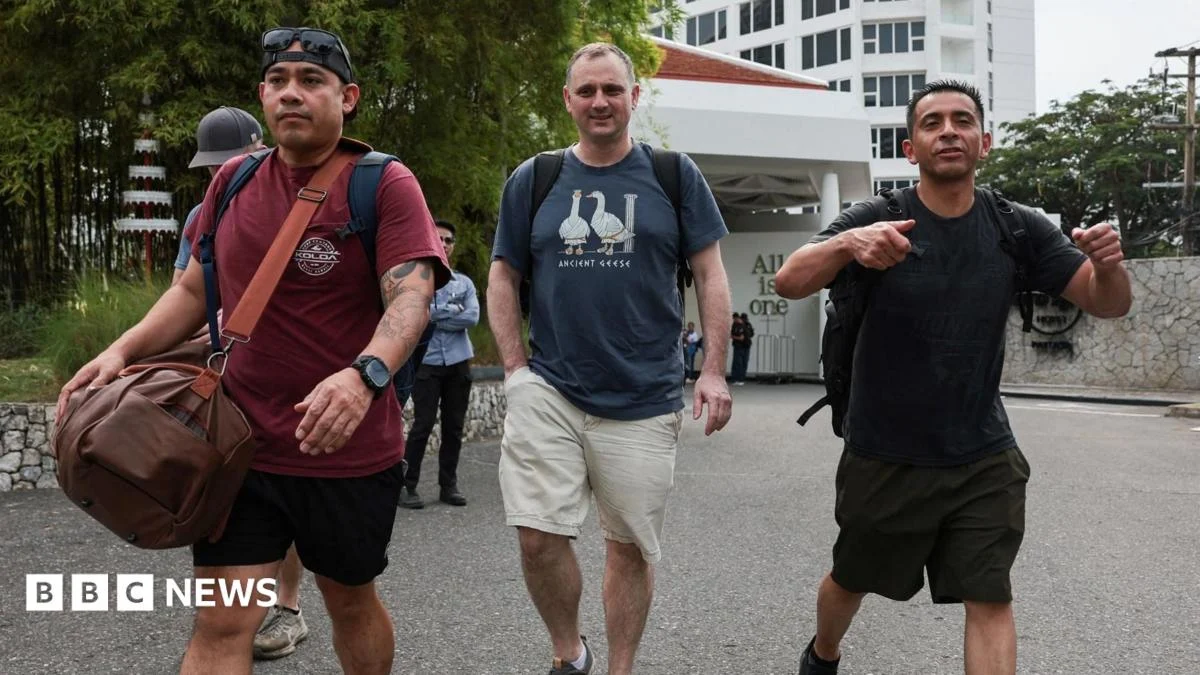
PATTAYA, Thailand – After an arduous nine-month deployment at sea, primarily in the volatile Middle East, thousands of sailors from the USS Abraham Lincoln Carrier Strike Group found a much-needed respite in the vibrant, neon-lit city of Pattaya, Thailand. The port call, which began on a Wednesday night, offered a riotous spectacle of noise, entertainment, and a temporary escape from the confines of life aboard an aircraft carrier, even as it underscored the complex interplay of geopolitical tensions, sailor welfare, and local economies.
The arrival of the Carrier Strike Group (CSG) in Pattaya was a significant event for both the weary sailors and the Thai resort city. For the crew, it marked an opportunity to decompress from the intense operational tempo of a combat deployment. For Pattaya, a city heavily reliant on tourism, the influx of thousands of service members represented a welcome economic boost, particularly following a period of reduced international travel attributed to regional instabilities.
A Deployment Defined by Tensions and Endurance
The USS Abraham Lincoln, a Nimitz-class aircraft carrier, along with its associated strike group, had been operating in a highly sensitive region, primarily the Middle East, as part of operations aimed at deterring aggression and ensuring maritime stability amidst heightened tensions with Iran. This protracted deployment, stretching for nine months, placed immense physical and psychological demands on the approximately 5,000 to 7,500 personnel aboard the carrier and its escort ships.
Life at sea, especially during a combat deployment, is characterized by relentless routines, limited personal space, and a constant state of readiness. Sailors often work 12-hour shifts or longer, seven days a week, with little distinction between weekdays and weekends. The sheer scale of the vessel, despite being one of the largest warships in the world, can still feel constricting when shared by thousands of individuals for extended periods. As one older crew member candidly shared amidst the pounding music of Pattaya, "The news says we’ve been at sea for nine months. To be honest, I’ve lost track of time. It got boring. It’s never big enough on board. It’s big but it still feels like a boat, especially when you’re sharing it with thousands of people." This sentiment encapsulates the profound sense of isolation and monotony that can accompany such deployments.
The deployment’s duration was extended due to evolving geopolitical circumstances, particularly after hostilities broke out in the Middle East. This period was described by family members back home as "uncertain" and "scary." Shakeira Fairfax, mother of 25-year-old crew member Jada Fairfax, expressed the collective anxiety felt by families: "There had been moments over the past few months when ‘morale was low’." She eagerly awaited her daughter’s return, articulating a universal maternal longing: "I just can’t wait to see her smile. I can’t wait to hear ‘mum,’ I know that’s the first thing she’s gonna say." Such personal accounts highlight the immense human cost and emotional strain endured by both service members and their loved ones during prolonged military operations.
Pattaya: A Haven and a Hotbed of Activity
Pattaya, located on Thailand’s eastern Gulf coast, has long cultivated a reputation as a vibrant, sometimes notorious, resort city. Its economy is deeply intertwined with tourism, attracting a diverse range of visitors from around the globe. Historically, it has also served as a popular "rest and recreation" (R&R) destination for military personnel, particularly from the United States Navy, a legacy that dates back to the Vietnam War era. This history has shaped a significant portion of the city’s nightlife and hospitality sector, which is adept at catering to the specific needs and desires of sailors on shore leave.
The city truly comes alive at night, transforming into a riotous spectacle of neon lights, pulsating music, and a myriad of entertainment venues. Walking Street, Pattaya’s most famous promenade, was very much open to the sailors. A huge, illuminated sign at its entrance specifically welcomed the crew of the US carrier, a clear signal of the city’s readiness to embrace its temporary visitors. By midnight, the street buzzed with activity, with some younger sailors already visibly inebriated, needing to prop each other up. Others, perhaps more cautiously, edged into the red-lit caverns of go-go bars, where gyrating, barely-clothed pole dancers performed to deafening music. This scene, while a stark contrast to the disciplined environment of a warship, represented a much-anticipated release for many.
However, not all parts of Pattaya were accessible to the visiting crew. The few small establishments making up the heart of Pattaya’s overt sex industry, particularly in areas like Soi 6, had been declared off-limits by naval authorities. This decision, aimed at upholding US military conduct standards and protecting service members, was a disappointment for some local businesses, especially the bikini-clad women who had hoped for a significant "windfall" from the sailors’ nine months of unspent salary. This restriction underscores the delicate balance naval commands must strike between providing genuine rest and recreation and maintaining discipline and adherence to regulations.
Naval Regulations and the Role of the Shore Liaison Group
The US Navy has stringent policies governing port calls, designed to ensure the safety and good conduct of its personnel while fostering positive relations with host nations. Sailors are expected to conduct themselves "in accordance with US law, US naval regulations, and the laws of Thailand," as affirmed by US Naval Attache Kristopher Robinson. He emphasized the Navy’s objective to provide "as much opportunity for rest as they can" for the sailors, acknowledging the physical and mental toll of their deployment.
To enforce these regulations and coordinate with local authorities, the Shore Liaison Group (SLG) plays a crucial role. Visible everywhere in Pattaya were men wearing t-shirts emblazoned with the letters SLG. Their job is multifaceted: to maintain discipline on land, watch out for crew members—some of whom are very young and inexperienced—and act as a bridge between the US Navy and Thai officials. This includes addressing any incidents, ensuring curfews are met, and guiding sailors to appropriate establishments. The presence of the SLG is a constant reminder that while on shore leave, service members remain under military jurisdiction and are representatives of the United States.
Sailors, particularly those returning from sensitive operations, are often well-drilled not to discuss specific conditions on board or operational details with the media. During this port call, some sailors were wary of making any conversation at all, while others referred journalists’ questions to their media teams, a standard operating procedure for managing public information during deployments that have been the subject of criticism back in the US. This caution reflects the strategic importance of information security and the sensitivity surrounding military operations.
Economic Impact and Broader Implications
The arrival of a US Navy Carrier Strike Group is invariably a significant economic event for any port city. With thousands of personnel coming ashore, often with substantial unspent wages, local businesses from taxis and restaurants to souvenir shops and entertainment venues experience a surge in revenue. For Pattaya, which had seen a decline in tourist numbers due to the broader impact of conflict in the Middle East and general global travel advisories, the USS Abraham Lincoln’s visit offered a much-needed financial injection. Many of the tourists the city typically depends on had chosen to stay at home, making the naval port call even more critical for local commerce. The anticipation of a "windfall" among local establishments, despite some restrictions, was palpable and understandable.
Beyond the immediate economic benefits, naval port calls carry broader diplomatic and strategic implications. They serve as tangible demonstrations of international partnerships and alliances. The long-standing relationship between the United States and Thailand, particularly in defense cooperation, is reinforced through such visits. These interactions, while seemingly focused on sailor welfare and recreation, are subtle yet powerful instruments of soft power, fostering goodwill and strengthening bilateral ties.
The experience of the USS Abraham Lincoln’s crew in Pattaya also highlights the critical importance of morale and mental health in military operations. Long deployments, especially those in high-stress environments, can lead to burnout, isolation, and diminished morale. Shore leave, despite its occasional controversies, is a vital component of maintaining crew readiness and well-being. It provides a necessary psychological break, allowing sailors to reconnect with a sense of normalcy, enjoy recreational activities, and relieve stress before returning to the demanding environment of sea duty. The expressions of profound weariness from the sailors and the anxieties of their families underscore that while military service demands extraordinary resilience, it also necessitates periods of genuine rest and recuperation to sustain the fighting force.
As the USS Abraham Lincoln’s crew eventually departed Pattaya, they left behind a city that had benefited from their presence and carried with them memories of a brief but potent escape from the rigors of their mission. Their journey home to California, as one sailor noted, would still be "too long," but the interlude in Thailand undoubtedly provided a renewed sense of purpose and the strength to endure the final leg of their demanding deployment. The episode in Pattaya serves as a microcosm of the complex realities of modern naval power projection: a blend of geopolitical necessity, human endurance, economic exchange, and the perennial need for respite.