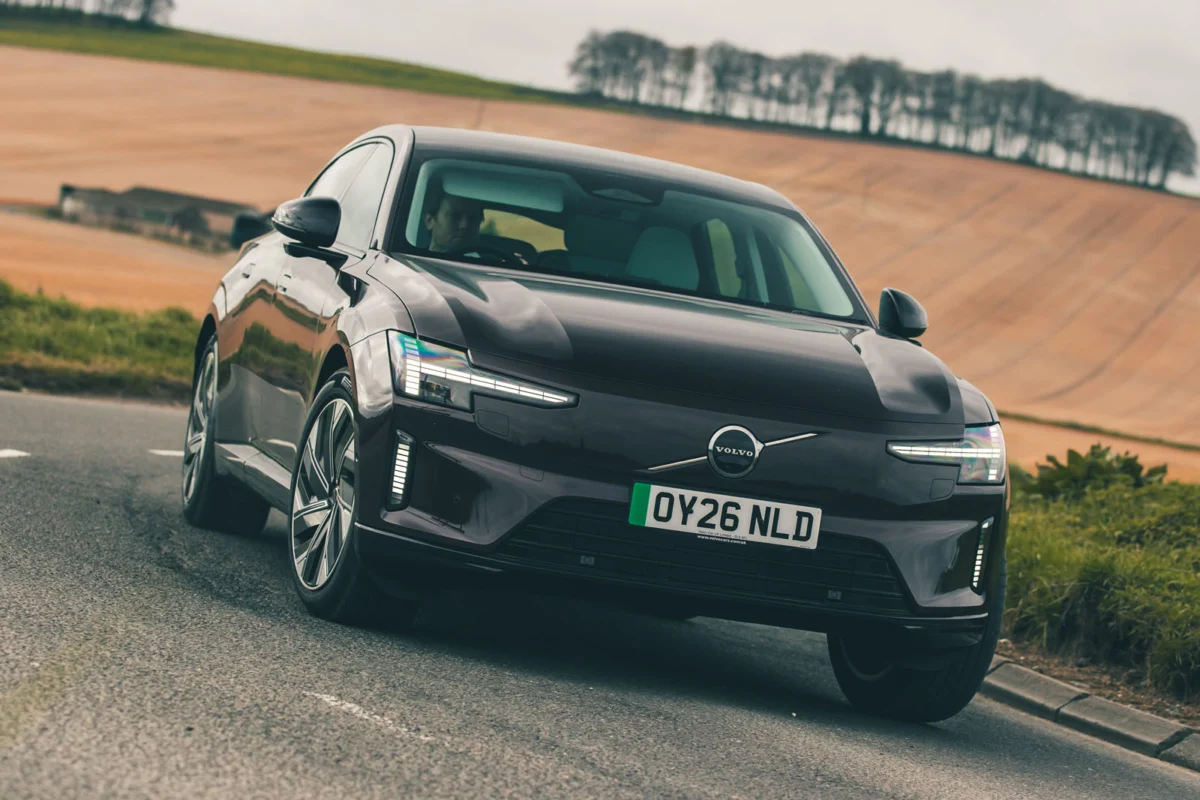
The automotive landscape is currently witnessing a paradigm shift where software-defined capabilities are becoming as critical to vehicle safety as traditional structural engineering. Volvo Cars, a long-standing pioneer in automotive safety, has announced a significant software update for its latest generation of electric vehicles, including the EX60, EX90, and ES90. This update introduces an advanced hazard-detection ecosystem designed to alert drivers to the presence of large animals, such as deer and sheep, as well as vulnerable road users and infrastructure changes. By leveraging high-fidelity sensors and cloud-based communication, Volvo aims to create a collective intelligence network that extends a vehicle’s "vision" far beyond the driver’s immediate line of sight.
The Mechanics of Collaborative Safety: Sensors and the Cloud
The core of this new functionality lies in the integration of the vehicle’s onboard sensor suite—comprising high-resolution cameras, radar, and, in some models, LiDAR—with a sophisticated cloud-based data-sharing platform. When a Volvo EX60, EX90, or ES90 identifies a large animal by the roadside or an upcoming road hazard, the system does more than just apply local safety measures. It captures the precise GPS coordinates of the detection and uploads this data to the Volvo cloud.
Once the data is processed, it is disseminated to other compatible Volvo vehicles in the immediate vicinity. As another driver approaches the same location, their vehicle provides a proactive warning, allowing for increased reaction time. This "connected safety" approach is particularly effective for hazards that are difficult to spot at night or behind blind bends, such as wildlife or pedestrians. Beyond animal detection, the update encompasses alerts for roadworks, cyclists, and pedestrians, providing a comprehensive safety net for diverse driving environments.
Integration with the European Data for Road Safety Programme
Volvo’s commitment to safety extends beyond its own fleet. The data generated by these new systems will be shared through the European Data for Road Safety (EDRS) programme. This initiative is a multi-brand partnership involving various car manufacturers, service providers, and national road authorities across Europe. The goal of the EDRS is to facilitate the exchange of safety-related data in a brand-neutral format.
By contributing to this ecosystem, Volvo ensures that drivers of other connected vehicles—regardless of the manufacturer—can receive alerts generated by Volvo’s advanced sensors. This collaborative model recognizes that road safety is a collective responsibility and that the benefits of real-time hazard detection are maximized when data is shared across the entire transport network. The inclusion of roadworks alerts and vulnerable road user data into this program represents a significant step toward a fully integrated intelligent transport system (ITS).
A Chronology of Volvo’s Safety Innovation
To understand the significance of this latest update, it is essential to view it within the context of Volvo’s historical trajectory. The Swedish automaker has often prioritized safety over being "first to market" with unproven gadgets.
- 1959: Volvo introduced the three-point safety belt, later waiving its patent rights so other manufacturers could adopt the life-saving technology.
- 2008: The launch of "City Safety" introduced autonomous emergency braking (AEB) as standard, a move that significantly reduced low-speed rear-end collisions.
- 2016: Volvo introduced "Large Animal Detection" with auto-brake, which was initially a localized system confined to the vehicle’s own sensors.
- 2020: The company implemented a 180 km/h (112 mph) speed cap on all new cars to spark a conversation about the dangers of speeding.
- 2024-2025: The transition to the SPA2 and future core computing platforms allows for the current software-driven update, moving from localized detection to cloud-based, fleet-wide intelligence.
This latest development marks the transition from "passive" and "active" safety to "predictive" safety, where the vehicle anticipates hazards before they are even visible to the human eye.
Supporting Data: The Impact of Wildlife and Pedestrian Collisions
The rationale behind prioritizing animal and pedestrian detection is supported by sobering global statistics. Wildlife-vehicle collisions (WVCs) are a major safety and economic concern. In the United States alone, the Federal Highway Administration estimates that there are over one million collisions with large animals annually, leading to more than 200 human fatalities and billions of dollars in property damage. In Europe, deer-related accidents are a primary cause of road incidents in rural areas, particularly during the dawn and dusk hours when visibility is compromised.
Furthermore, the safety of vulnerable road users (VRUs)—pedestrians and cyclists—remains a critical focus for urban planners. According to the World Health Organization (WHO), more than half of all road traffic deaths are among vulnerable road users. By providing early warnings of pedestrians or cyclists near the roadway, Volvo’s new system addresses a demographic that has historically been the most at risk in the transition toward higher vehicle densities.
The Philosophy of Trust: Insights from Åsa Haglund
The implementation of these systems is not merely a technical challenge but a psychological one. Volvo safety chief Åsa Haglund emphasized that the effectiveness of any driver assistance system is entirely dependent on the driver’s trust. If a system produces frequent "false positives"—warning the driver when no hazard exists—the driver is likely to ignore the alerts or disable the system entirely.
"We need to make sure that whenever we warn you, it makes sense to you," Haglund told Autocar. "If every second time it doesn’t make sense, that’s when you’re going to stop trusting the system."
Haglund explained that the computational power of Volvo’s new models is the key enabler for this precision. Older platforms lacked the processing speed and data bandwidth required to analyze complex environments in real-time with high accuracy. The new technological platforms are designed to collect vast amounts of data and train software models to be "mature" enough to distinguish between a genuine hazard and a non-threatening roadside object.
"Only when you know drivers trust the system will it actually have an impact," Haglund added. This philosophy explains why Volvo may appear slower than some competitors in releasing certain automated features; the company prioritizes the "quality and preciseness" of the alert over the novelty of the function.
Technical Analysis: Moving Toward the "Vigilant Machine"
The shift toward software-defined vehicles allows for a more nuanced relationship between the driver and the car. Haglund suggested that Volvo’s ambition is not to remove the driver from the equation but to provide a "vigilant" partner that compensates for human limitations.
Humans are prone to fatigue, distraction, and limited peripheral vision. In contrast, a machine equipped with a 360-degree sensor suite and cloud connectivity does not get tired and can monitor multiple vectors simultaneously. The goal is to ensure that "as long as the driver is in the loop, it’s very clear what is needed and what is expected from them."
This approach aligns with the industry-wide move toward Level 2+ and Level 3 autonomy, where the car handles significant portions of the driving task but requires a "ready" driver. By focusing on "trustworthy" warnings, Volvo is building the foundation for more advanced autonomous systems in the future.
Broader Implications for the Automotive Industry
Volvo’s update carries several implications for the broader automotive market:
- Data as a Commodity: The success of the European Data for Road Safety programme suggests that safety data is increasingly viewed as a public good rather than a competitive advantage. This could lead to more standardized communication protocols between different car brands.
- The End of Hardware-Locked Safety: Traditionally, a car’s safety features were fixed at the time of purchase. With over-the-air (OTA) updates, vehicles can become safer over their lifespan, potentially increasing their resale value and longevity.
- Insurance and Liability: As vehicles become better at documenting and preventing accidents through cloud data, insurance companies may begin to offer lower premiums for vehicles equipped with such "connected safety" features. The precision of the data could also assist in accident reconstruction.
- Infrastructure Synergy: These systems pave the way for Vehicle-to-Infrastructure (V2I) communication. In the future, "smart" road signs or traffic lights could communicate directly with the Volvo cloud to alert drivers of icy patches or temporary speed limit changes.
Conclusion
The latest software update for the Volvo EX60, EX90, and ES90 represents a sophisticated fusion of hardware, software, and collaborative data sharing. By addressing the specific risks posed by wildlife, pedestrians, and roadworks through a lens of reliability and driver trust, Volvo is reinforcing its position as a leader in automotive safety. As these systems become more prevalent, the goal of a "collision-free future" moves closer to reality, driven by the realization that a car is no longer just a physical cage of steel, but a node in a vast, intelligent, and protective digital network.