The wife of a prominent US scholar, Min Zin, who is currently imprisoned in China on serious charges of spying and endangering national security, has made an impassioned plea to President Donald Trump. Sylvia Zin, in a poignant testimony before a congressional committee, urged the President to prioritize her husband’s release during his anticipated meeting with Chinese President Xi Jinping at the White House next week. This appeal underscores growing concerns in Washington about what many describe as China’s increasing use of arbitrary detentions as diplomatic leverage.
Min Zin, a respected director at a think tank focused on Myanmar, was apprehended on June 3 after traveling to the Chinese city of Kunming to attend an academic conference. His arrest, coming just weeks before a high-stakes bilateral summit, has ignited fears among human rights advocates and policymakers that Beijing is strategically targeting foreign nationals to exert pressure on the United States. "I’m deeply hopeful that President Trump will raise my husband’s case with President Xi Jinping at the summit next week," Sylvia Zin stated to Congress on Wednesday, her voice conveying a mix of hope and desperation.
A Crucial Summit and Mounting Pressure
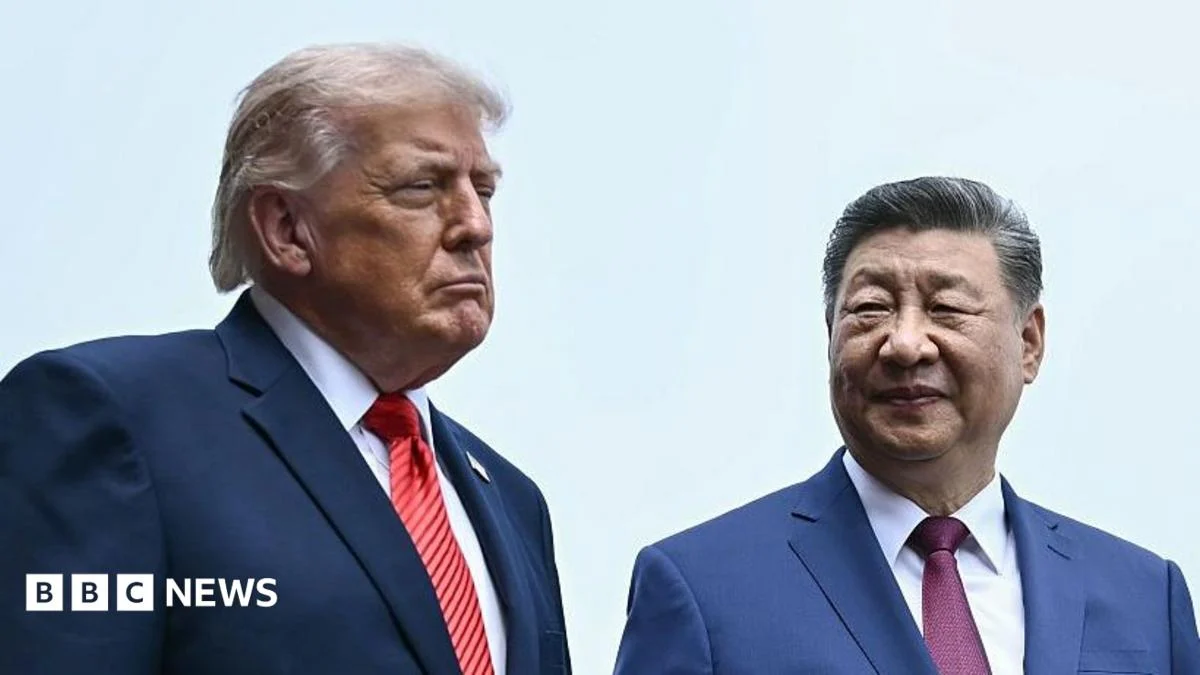
Chinese President Xi Jinping is scheduled to commence a state visit to Washington D.C. on Wednesday, following a previous visit where he hosted Trump in Beijing in May. These high-level meetings are typically opportunities for diplomatic breakthroughs on trade, security, and global issues, but they are increasingly overshadowed by human rights concerns and the fate of detained citizens. Ahead of this critical engagement, families of individuals held in Chinese prisons have converged on the US capital, intensifying their advocacy for the release of their loved ones. Their collective presence serves as a powerful reminder of the human cost of geopolitical tensions.
Sylvia Zin’s testimony was delivered before the House Foreign Affairs Committee’s East Asia and Pacific Subcommittee during a hearing aptly titled "Lives, Not Leverage: The Long Arm of China and North Korea’s Repression." This title itself reflects a hardening stance in Congress regarding the tactics employed by authoritarian regimes in the region. During her remarks, Zin expressed confidence in President Trump’s ability to secure her husband’s freedom, drawing parallels to his past successes. She also voiced optimism that Trump could facilitate the release of Chen Youlin, another US citizen and seismologist who has been held in China for two years after tracking nuclear tests, a field of research Beijing views with extreme sensitivity.
"Knowing the president’s historic record on bringing wrongfully detained Americans home has reassured me that he will also be able to secure the swift release of Min Zin and other wrongfully detained citizens," she affirmed, referencing instances where presidential intervention has yielded positive results in similar situations.
Congressional Warnings and the Shadow of "Hostage Diplomacy"
Congresswoman Young Kim, the chairwoman of the subcommittee, set a stark tone for the hearing by issuing a sobering warning to all Americans: "If you travel to China, Beijing may take you hostage as leverage in diplomatic negotiation." This statement reflects a growing consensus within the US legislative body that detentions of foreign nationals in China are not merely legal matters but often politically motivated acts.
Speaking specifically about Min Zin’s arrest, Congresswoman Kim elaborated, "Beijing wanted to send a message to those whose research inconvenienced it, and detained Mr. Zin ahead of the upcoming Trump-Xi summit." This analysis suggests a calculated move by the Chinese government, using the scholar’s detention as a bargaining chip in upcoming negotiations, potentially related to trade disputes, technology restrictions, or other areas of friction between the two global powers. The timing of the arrest, just weeks before the summit, lends credence to this interpretation.
Min Zin’s Background and the Nature of the Charges
Min Zin is not merely an academic; he is a figure with a significant history of advocating for democracy. He was a student activist during Myanmar’s pivotal 1988 pro-democracy movement, a period marked by widespread protests against military rule and subsequent violent crackdowns. His background as a pro-democracy advocate makes him a potentially sensitive target for an authoritarian state like China, which is highly sensitive to any perceived foreign influence on internal political affairs or human rights.
Currently, Min Zin directs the Myanmar Institute for Strategic and Policy Studies (ISP-Myanmar), a prominent think tank dedicated to analyzing China’s multifaceted role in Myanmar. His research encompasses Chinese interests, bilateral relations, and Beijing’s burgeoning regional influence. This area of study is inherently delicate, as it scrutinizes China’s geopolitical strategies and economic footprint in a neighboring country. While such research is standard for academic institutions globally, it could be perceived as "inconveniencing" or even threatening by Beijing, particularly if it highlights aspects of Chinese influence that are controversial or critical. The charges of "spying and endangering national security" are notoriously broad in China, often used to prosecute individuals whose activities are deemed politically undesirable, without requiring concrete evidence that would stand up in a Western court of law.
Broader Context: Other Cases and White House Response
The plea for Min Zin’s release is not an isolated incident. The son of Hong Kong media mogul Jimmy Lai, a prominent pro-democracy activist and critic of Beijing, also appeared on Capitol Hill to advocate for his father’s release. Jimmy Lai himself has been imprisoned under Hong Kong’s draconian national security law. While President Trump previously raised Lai’s case with Xi, he later told reporters that his Chinese counterpart "told me that would be a tough one," indicating the complexities and resistance encountered when addressing such high-profile political cases.
On Thursday, a senior White House official, who requested anonymity due to the sensitive nature of the discussions, responded to inquiries from the BBC. The official stated, "Resolving the wrongful detentions of US citizens is always a top priority for the President." This official reassurance, while standard, highlights the diplomatic tightrope walk inherent in these situations, balancing human rights concerns with broader geopolitical interests.
The "Wrongfully Detained" Designation and its Impact
A significant development in these cases occurred last month when the US State Department officially designated both U Min Zin and Chen Youlin as "wrongfully detained" in China. This designation is not merely semantic; it triggers a crucial shift in how the US government handles such cases. It allows their files to be transferred to the office of the Special Envoy for Hostage Affairs, a specialized unit within the State Department dedicated to securing the release of Americans held captive abroad.
This transfer immediately elevates the profile of each case, signaling that the US government views these detentions as illegitimate and politically motivated, rather than purely criminal matters. Crucially, it also enables the US government to allocate more resources – diplomatic, intelligence, and financial – to the concerted effort of securing their release. This includes engaging with foreign governments at the highest levels, coordinating with international partners, and potentially exploring various avenues for negotiation. The "wrongfully detained" label carries significant weight, explicitly stating that the US believes these individuals are being held unjustly and potentially as political pawns.
The Human Cost and Prison Conditions
The personal toll of these detentions is immense. Sylvia Zin, who resides in Thailand, revealed to the committee on Wednesday that she has been unable to speak directly with her husband since his incarceration. Her only contact comes through consular visits, which she anxiously awaits each month. "So every month, we anxiously await his consular visits because they reassure us that he is alive," she shared, painting a stark picture of the uncertainty and emotional anguish faced by families.
US officials have informed Sylvia Zin that her husband was subjected to up to six hours of interrogations each day during his initial period in jail. Such prolonged interrogations, often without legal representation, raise serious concerns about due process, potential coercion, and the psychological impact on detainees. "I’m trying to be strong for our daughter, but I’m constantly wondering if he’s OK and how to get him back home to us," she confided, underscoring the profound personal struggle behind the diplomatic headlines.
Precedent and the Path Forward
The history of presidential intervention offers a glimmer of hope. During a previous formal meeting between Trump and Xi, the US President pressed for the return of another American citizen held in China, underground church leader Jin Mingri. Two months after Trump’s direct request, Jin Mingri was indeed freed. This precedent fuels the optimism of families like the Zins, suggesting that direct, high-level engagement can sometimes cut through bureaucratic and political obstacles.
However, each case is unique, and the current geopolitical climate adds layers of complexity. The US-China relationship is fraught with tensions over trade imbalances, technological competition, human rights abuses in Xinjiang and Hong Kong, and regional security issues. Against this backdrop, the detention of academics and activists serves as a potent reminder of the challenges inherent in navigating relations with an increasingly assertive China.
The upcoming summit between President Trump and President Xi Jinping will therefore be closely watched, not just for its implications on global economics and security, but also for its potential impact on the lives of individuals like Min Zin and Chen Youlin. Their freedom may hinge on the delicate balance of diplomacy and the resolve of the US administration to prioritize human lives over political leverage. The global academic community, human rights organizations, and countless families will be listening intently to see if President Trump’s "historic record" can once again bring wrongfully detained Americans home.