Warning: This article contains details of violent death that some readers may find distressing.
More than a quarter-century after it ignited global outrage and cast a chilling shadow over India’s secular fabric, one of the nation’s most horrific incidents of anti-Christian violence has resurfaced in the highest echelons of its judiciary. The Supreme Court of India is currently seized with a petition seeking early release from prison by Dara Singh, the man convicted of the brutal 1999 murders of Australian Christian missionary Graham Staines and his two young sons. This legal development has not only reopened old wounds for India’s minority Christian community but has also sparked a crucial national conversation about justice, forgiveness, the nature of punishment, and the state’s role in safeguarding its diverse population.
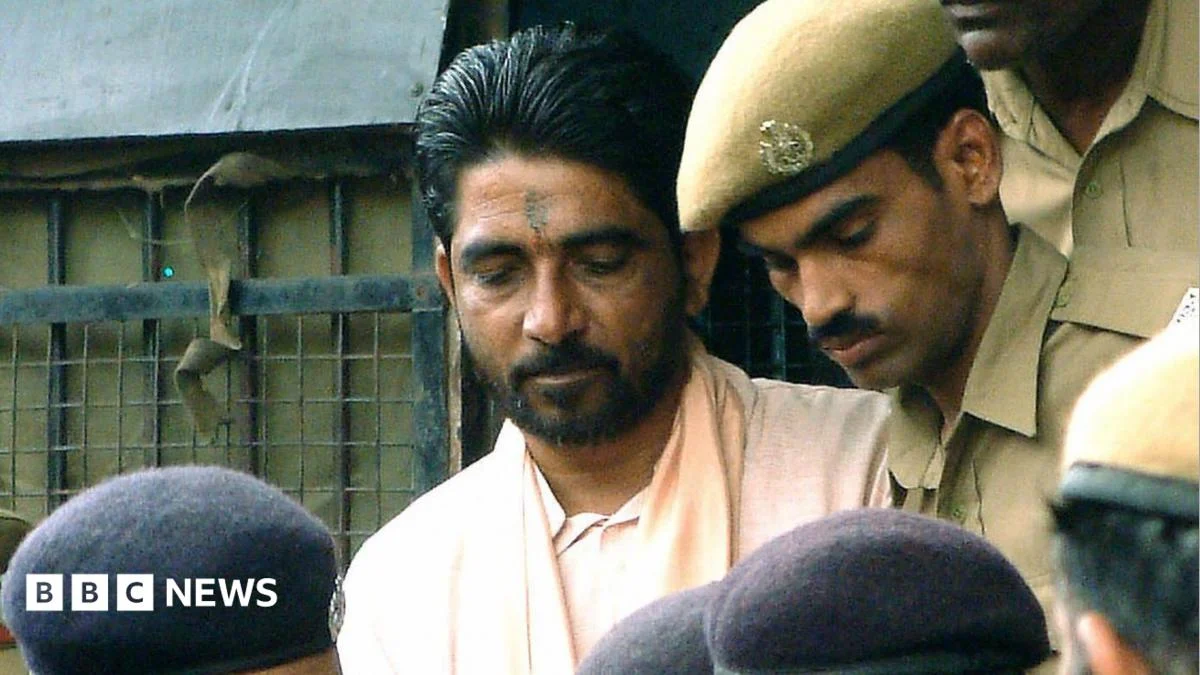
Rabindra Kumar Pal, famously known as Dara Singh, has been incarcerated since his arrest in 2000, serving a life sentence for the heinous act of burning alive Graham Staines and his children, Philip (aged 6) and Timothy (aged 10), inside their vehicle in a remote village in the eastern state of Odisha (then Orissa). The sheer barbarity of the crime, which targeted a man dedicated for three decades to caring for leprosy patients, sent shockwaves across India and drew condemnation from international bodies and human rights organizations worldwide. As reports circulate that Singh, now 62, may be granted remission, the memories of that grim night and the complex issues it raised have been starkly brought back into public consciousness.
The Horrific Night of January 22, 1999: A Detailed Account
The events leading to the tragic demise of Graham Staines and his sons unfolded against a backdrop of increasing religious tensions in certain pockets of India. Staines, originally from Queensland, Australia, had dedicated 30 years of his life to serving the underprivileged in Odisha, particularly focusing on the care of those afflicted with leprosy. Operating from Baripada in the Mayurbhanj district, he ran a leprosy home and was deeply involved in community welfare, earning respect from many for his selfless work. His efforts, however, became entangled in a contentious national debate surrounding religious conversions.
In India, particularly since the late 20th century, the issue of religious conversions, especially from Hinduism to Christianity or Islam, has been a flashpoint for communal friction. Hardline Hindu nationalist groups often accuse Christian missionaries of using humanitarian aid and social services as a guise for "forcible conversions" or "conversions by inducement" among vulnerable populations, particularly from disadvantaged castes and tribal communities. This narrative, despite consistent denials from Staines and the broader Christian community, fueled deep suspicion and animosity towards missionary work. Dara Singh and his associates from Hindu hardline groups publicly accused Staines of engaging in such activities, transforming his humanitarian mission into a perceived threat to Hindu identity.
On the night of January 22, 1999, Staines, accompanied by his two young sons, had attended an annual jungle camp, a Christian gathering, in Manoharpur, a secluded village nestled in the neighbouring district of Keonjhar. After the day’s proceedings, they had settled down to sleep in their jeep, a common practice during their outreach trips to remote areas. In the late hours of the night, a mob estimated to be between 60 and 70 individuals, reportedly led by Dara Singh, descended upon their parked vehicle. The mob surrounded the jeep, doused it with petrol, and set it ablaze. Eyewitness accounts and subsequent investigations revealed the horrifying detail that the mob actively prevented Staines and his children from escaping the inferno, effectively burning them alive. The gruesome nature of the crime was not merely an act of murder but a public spectacle, intended to instill fear and send a chilling message to the Christian missionary community operating in the region.
The immediate aftermath was one of profound shock and revulsion across India and the world. The charred remains of Staines and his sons served as a stark testament to the brutality unleashed. The incident triggered a national outcry, with then-Prime Minister Atal Bihari Vajpayee of the Bharatiya Janata Party (BJP) describing it as a "ghastly crime" that brought shame upon the nation. Internationally, the Vatican, the Australian government, and numerous human rights organizations condemned the act, demanding swift justice and expressing grave concerns about religious intolerance and the safety of minority communities in India. The murder underscored the escalating tensions surrounding religious identity and freedom in a country proud of its secular constitution.
The Manhunt and the Ideology of Dara Singh
Following the murders, Dara Singh became the prime suspect and immediately went into hiding. The police launched an extensive manhunt across Odisha, offering a substantial reward of 800,000 rupees (approximately $18,000 at the time) for information leading to his capture. During his year-long evasion, reports emerged that Singh was aided by sympathetic villagers and tribal communities in certain areas, some of whom reportedly glorified him as "a modern-day Tarzan who plays with elephants and rides tigers," highlighting a localized perception of him as a protector of Hindu interests. This narrative, while alarming to many, illustrated the complex social dynamics and differing interpretations of his actions within the region. His run from justice finally ended in January 2000, when he was apprehended during an overnight raid on a jungle hideout.
Upon his arrest, and even during his early days in prison, Singh remained largely unrepentant, at least publicly. In a sensational interview with India Today magazine’s Ruben Banerjee a few months after his arrest, he denied direct involvement in the killings but openly admitted his deep animosity towards Graham Staines and his role in "spearheading the movement against missionaries." His statements laid bare the ideological motivations behind his actions and those of his associates. "Missionaries have been targeting our religion. They have been converting Hindus by deceit and inducements. Our religion is under siege. As a true Hindu, it was my responsibility to oppose them," he declared. He further asserted, "Since I was possibly the most famous name in the region, the police implicated me in the killings," and chillingly added that he was "prepared to be a martyr for the cause of Hindus" but optimistically believed he would never be convicted. This public defiance underscored the depth of his conviction in his cause and the prevailing narrative among some hardline groups that missionary activity constituted an existential threat to Hinduism.
A Pattern of Violence: Singh’s Other Heinous Crimes
The murder of Graham Staines and his sons, horrific as it was, was not an isolated incident in Dara Singh’s criminal record. Investigations and subsequent trials revealed a chilling pattern of violence against religious minorities. In 2007, Singh was convicted for two other heinous crimes, both committed in 1999, the same year as the Staines murders:
- Murder of Catholic Priest Arul Das: Singh was found guilty of leading a mob that set fire to a church and killed Catholic priest Father Arul Das with an arrow as he attempted to flee the burning building. This incident further demonstrated his targeting of Christian clergy and institutions.
- Murder of Muslim Garment Trader Shaikh Rahaman: In another instance, Singh was convicted for the brutal beating and burning to death of Shaikh Rahaman, a Muslim garment trader. This crime highlighted his animosity towards the Muslim community as well, extending his violent agenda beyond Christian targets.
Beyond these murders, police registered at least 10 other cases accusing Singh of involvement in hijacking trucks belonging to Muslim traders transporting cows, an animal revered by many Hindus. The seized cows were then set free. While Singh denied personal involvement in these hijackings, he openly admitted to being "actively involved in the movement against illegal trade in cows and cow slaughter," stating that it "had to be stopped at any cost." This aspect of his activities placed him squarely within the growing phenomenon of cow vigilantism, a contentious issue in India that often targets Muslim traders and has led to numerous incidents of violence across various states.
These multiple convictions painted a portrait of Dara Singh not merely as a perpetrator of a single, isolated act of violence, but as a figure central to a broader campaign of intimidation and terror against religious minorities, driven by a radical interpretation of Hindu nationalism. While church leaders initially alleged that the attacks were carried out at the behest of the hardline Hindu organization Bajrang Dal, an enquiry commission led by retired Supreme Court judge D.P. Wadhwa later concluded that Singh had acted alone, albeit with associates. This finding, however, did not diminish concerns about the broader ecosystem of religious extremism that such individuals operate within.
The Long Road to Justice: Legal Proceedings and Precedents
The legal journey for Dara Singh was protracted and complex, navigating various levels of the Indian judiciary:
- Trial Court (2003): After years of investigation and trial, a lower court sentenced Dara Singh to death for the Staines murders, characterizing it as a "rarest of rare" case deserving of the harshest penalty. Twelve other individuals were also handed life imprisonment for their roles in the mob violence, reflecting the collective nature of the crime.
- High Court (2005): Two years later, the Odisha High Court commuted Dara Singh’s death sentence to life imprisonment. While confirming the life term for his accomplice, Mahendra Hembram, the court acquitted 11 others, citing insufficient evidence for their convictions. The High Court’s decision on Singh’s death penalty sparked considerable debate. Legal experts noted that while the crime was undoubtedly heinous, Indian jurisprudence on the "rarest of rare" doctrine for capital punishment requires careful consideration of individual intent and the absence of any mitigating circumstances.
- Supreme Court (2011): The prosecution appealed the High Court’s decision to the Supreme Court, seeking the reinstatement of the death penalty for Singh. However, in January 2011, the apex court upheld Singh’s life sentence, declining to reinstate capital punishment. The Supreme Court observed that while the "ghastly murder" was "orchestrated to teach a lesson" to the missionary for his perceived conversions, there was no evidence that Singh himself had intended to kill Staines or his sons. This observation, though not absolving him of guilt, became a point of contention and legal analysis, particularly regarding the nuances of culpability in mob violence and the strict criteria for imposing the death penalty in India.
The legal process highlighted the intricate challenges of prosecuting communal crimes, where collective frenzy often blurs individual intent and makes attribution of specific acts difficult. Throughout his imprisonment, Singh continued to serve his multiple life sentences, a testament to the Indian legal system’s commitment to holding him accountable for his actions within the bounds of its established legal principles.
The Plea for Remission: A Test of Justice and Forgiveness
Now, more