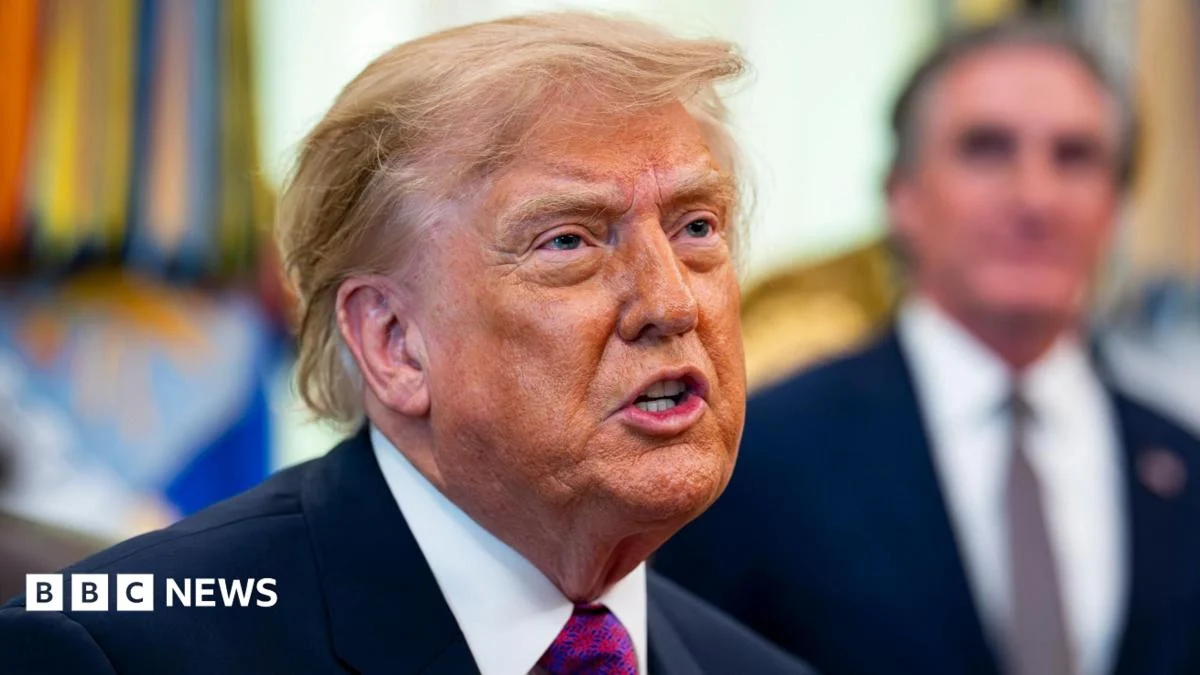
A significant confrontation between the U.S. government and major news organizations intensified this week, marked by a federal lawsuit filed against the White House over the revocation of press credentials for several outlets, and an unprecedented unified withdrawal from critical White House press pool duties by major television networks. The actions stem from the administration’s decision to ban CNN, Politico, and MS NOW from White House access, a move the media organizations contend is an unconstitutional assault on press freedom and a direct response to unfavorable reporting. President Donald Trump, in turn, has vehemently defended his administration’s stance, dismissing the affected news outlets as "Third Rate Clowns" and "Crooked and Corrupt Press" engaged in "Fake News."
The White House Ban and Unprecedented Media Solidarity
The immediate catalyst for the current crisis occurred last week when the White House announced the indefinite ban of CNN, Politico, and MS NOW from official press access. While specific stories prompting the move were not initially cited, President Trump later attributed the decision to "cumulative stories over the last few years," hinting that "there may be others to join them," specifically naming The New York Times and The Washington Post as "fake news." This unilateral action effectively barred journalists from these organizations from attending press briefings, accessing restricted areas, and participating in the vital White House press pool, which provides shared coverage of presidential events.
In a powerful show of solidarity and concern for press freedom, major U.S. television networks responded on Monday morning by collectively pulling out of White House pool duties. The TV pool system is a cornerstone of White House coverage, where a rotating group of media organizations shares visual and audio material with each other to manage costs and logistics for broadcasting presidential events to the American public. Fox News Washington bureau chief Bryan Boughton, currently responsible for organizing media TV crews, communicated in an email, later seen by the BBC, that "effective today, the TV pool will not be covering designated as pool coverage" of President Trump. This decision was directly prompted by the White House "preventing" CNN from fulfilling its scheduled pool duties for the President’s trip to New York, with the crucial addition that "there will be no replacement pool put in place."
The five primary networks — ABC, CBS, CNN, Fox News, and NBC — which possess the extensive financial and infrastructural capacity to distribute live coverage from the White House and presidential events, issued a joint statement underscoring their unified position. "The public has a vital interest in receiving accurate, independent information about its government," their statement read. "No administration should restrict a news organisation because it objects to its reporting." This collective action, especially the participation of Fox News, an outlet generally perceived as sympathetic to the administration, underscored the gravity of the situation and the perceived threat to established norms of press access.
Legal Challenge and Constitutional Stakes
In response to the ban, CNN, Politico, and MS NOW filed a lawsuit on Monday in the U.S. District Court in Washington. The legal action seeks a swift judicial ruling declaring the White House ban unconstitutional and an injunction to prevent presidential aides from enforcing it. The core of their legal argument rests on the First Amendment, which unequivocally forbids the government from "abridging" the freedom of the press. Courts have historically interpreted this language as a crucial safeguard, preventing the government from discriminating against media organizations based on the content or viewpoint of their coverage.
The media organizations articulated their legal position clearly: "Without notice or process, the White House revoked our journalists’ credentials because it objected to our reporting. Left unchallenged, this threatens press freedom and the public’s right to independent journalism free from government interference." They argue that the White House’s actions constitute a punitive measure against critical reporting, thereby chilling speech and undermining the public’s access to diverse and independent information about its government.
President Trump, upon learning of the lawsuit, reacted with characteristic defiance on his Truth Social platform. He reiterated his condemnation of the news organizations as "Fake News people and publications that only write negatively," accusing them of violating "our National Security by writing false and defamatory stories with unknown ‘sources.’" He asserted that such outlets "shouldn’t be allowed access to the most important Office anywhere in the World" and indicated that his team would "almost without question" file an appeal if the initial ruling goes against them. This declaration signals a protracted legal battle, placing the judiciary at the center of defining the boundaries of press access and executive power.
A History of Friction: Trump and the Press
This latest escalation is not an isolated incident but rather the culmination of an ongoing, often acrimonious relationship between the Trump administration and a significant portion of the news media. From the earliest days of his 2016 presidential campaign, Donald Trump frequently labeled critical reporting as "fake news," a term that became a rallying cry among his supporters and a tool to discredit unfavorable coverage. This rhetoric intensified during his presidency, with regular attacks on individual journalists, specific news outlets, and the media as an institution.
The administration’s approach has often been characterized by an overt challenge to the traditional role of the press as a government watchdog. President Trump has repeatedly accused journalists of bias, dishonesty, and even treason, creating an environment of mistrust and hostility. He has utilized social media platforms, particularly Truth Social, as a direct channel to communicate with his base, often bypassing traditional media filters and amplifying his critiques of mainstream news organizations. This strategy has contributed to a polarized media landscape, where public trust in journalism has become increasingly fragmented along political lines.
Beyond rhetoric, the administration has also pursued legal action against several news organizations, including The New York Times, The Wall Street Journal, and the BBC. While some of these lawsuits have reportedly resulted in multi-million-dollar settlements in favor of the administration, others, such as the lawsuit against the BBC, remain ongoing. These legal battles, coupled with the recent credential revocations, underscore a pattern of using various mechanisms—rhetorical, administrative, and legal—to control the narrative and exert pressure on the press.
Precedents and the Shifting Landscape of Press Access
While the current confrontation is notable for its scale and the unified media response, it is important to examine it within the historical context of government-press relations. Administrations throughout history have, at times, attempted to limit or control media access, though typically with less overt and broad-reaching measures.
One notable instance occurred in February when the White House announced it was taking control of the press pool, a responsibility that had for over a century been managed by the White House Correspondents’ Association (WHCA). This move was seen by many as an attempt to centralize control over who gained access to the President and presidential events, further eroding traditional journalistic independence. The WHCA, an organization of journalists that covers the White House, has historically played a crucial role in negotiating access and maintaining professional standards, acting as a buffer between the press corps and the administration. The administration’s decision to bypass this long-standing arrangement signaled a significant shift in power dynamics.
In the same month, the administration moved to bar Associated Press (AP) reporters and photographers from limited-access spaces, such as the Oval Office or Air Force One. This ban was reportedly enacted because of the outlet’s usage of the term "Gulf of Mexico" instead of "Gulf of America," a seemingly minor stylistic preference that escalated into a significant access dispute. AP subsequently filed a lawsuit, which remains ongoing, highlighting the administration’s willingness to use credentialing as a tool for enforcing its preferred narratives, even on seemingly trivial matters.
Looking further back, the Obama administration also attempted to exclude Fox News from participating in a press pool interview with an administration official in 2009. However, after significant pushback from the other four networks in the pool, Fox News was ultimately granted access. A key distinction here is that the Obama administration’s attempt was limited to a single specific interview, not a wholesale ban from all pool coverage or the revocation of credentials across the board, as seen in the current Trump administration’s actions against CNN, Politico, and MS NOW. This historical comparison underscores the unprecedented nature and scope of the current administration’s measures.
Implications for Press Freedom and Public Discourse
The ongoing dispute carries profound implications for the state of press freedom in the United States and the health of public discourse. The First Amendment’s protection of a free press is not merely a privilege for journalists; it is fundamentally designed to ensure that the public has access to diverse, independent information necessary for informed self-governance. When an administration selectively revokes credentials based on the content of reporting, it creates a chilling effect, potentially pressuring journalists to self-censor to maintain access. This directly undermines the press’s role as a critical check on government power.
The unified response from the major television networks, including Fox News, demonstrates a shared understanding among a broad spectrum of media outlets regarding the foundational principles at stake. The withdrawal from pool duties is a powerful symbolic and practical act, highlighting the importance of collective action in defending press access against perceived executive overreach. However, the vacancy left by the traditional media in the White House media slot, now partially filled by conservative outlets like Real America’s Voice for presidential trips, raises concerns about the potential for a fragmented media landscape where access is granted based on ideological alignment rather than journalistic merit.
Legally, the outcome of the lawsuit filed by CNN, Politico, and MS NOW could set a significant precedent. A ruling in favor of the media organizations would reaffirm the constitutional limits on presidential power to control press access, reinforcing the principle that credentials cannot be used as a weapon against critical reporting. Conversely, a ruling favoring the administration could embolden future administrations to further restrict access, potentially leading to a more compliant press corps and diminished public accountability.
Beyond the legal and practical implications, the rhetorical attacks by President Trump on the press contribute to a broader erosion of trust in institutions. By consistently labeling established news organizations as "fake news" and "enemies of the people," the administration risks undermining the public’s ability to distinguish between credible reporting and disinformation. This polarization makes it harder for citizens to engage with complex issues, fostering an environment where facts are contested and objective truth is increasingly elusive.
As the legal battles unfold and the media landscape continues to adapt to these challenges, the fundamental questions about the balance between government power and press freedom will remain at the forefront. The resolution of this conflict will not only shape the future of White House coverage but also profoundly impact the very definition of a free and independent press in a democratic society.