

The global hospitality landscape is witnessing a fundamental shift in how legacy brands position themselves within the broader digital economy, a transition epitomized by Hilton’s recent strategic maneuvers. Christopher Nassetta, President and CEO of Hilton, has introduced a new guiding philosophy for the century-old hotel giant: "people-led, tech-powered." This paradigm shift was the central theme of Hilton’s third-quarter 2026 earnings call on Tuesday, following a month of high-profile announcements that included a change in stock listing and the appointment of a high-level technology executive from the ride-sharing industry. By aligning its corporate identity with the world’s most prominent technology innovators, Hilton is signaling that its future growth will be as much about software and artificial intelligence as it is about real estate and guest services.
The most visible sign of this transformation is Hilton’s decision to move its stock listing from the New York Stock Exchange (NYSE) to the Nasdaq. While the company initially stated the move would have no impact on its day-to-day operations, Nassetta clarified during the earnings call that the transition is a calculated effort to reposition Hilton in the minds of investors. By joining the Nasdaq—the home of tech titans like Apple, Microsoft, and Nvidia—Hilton is placing itself within a marketplace defined by innovation and high-growth technology. This move is intended to narrow the valuation gap between traditional hospitality companies and technology platforms, emphasizing that Hilton’s proprietary systems and data-driven approach are now central to its competitive advantage.
A Strategic Timeline of Hilton’s Technological Pivot
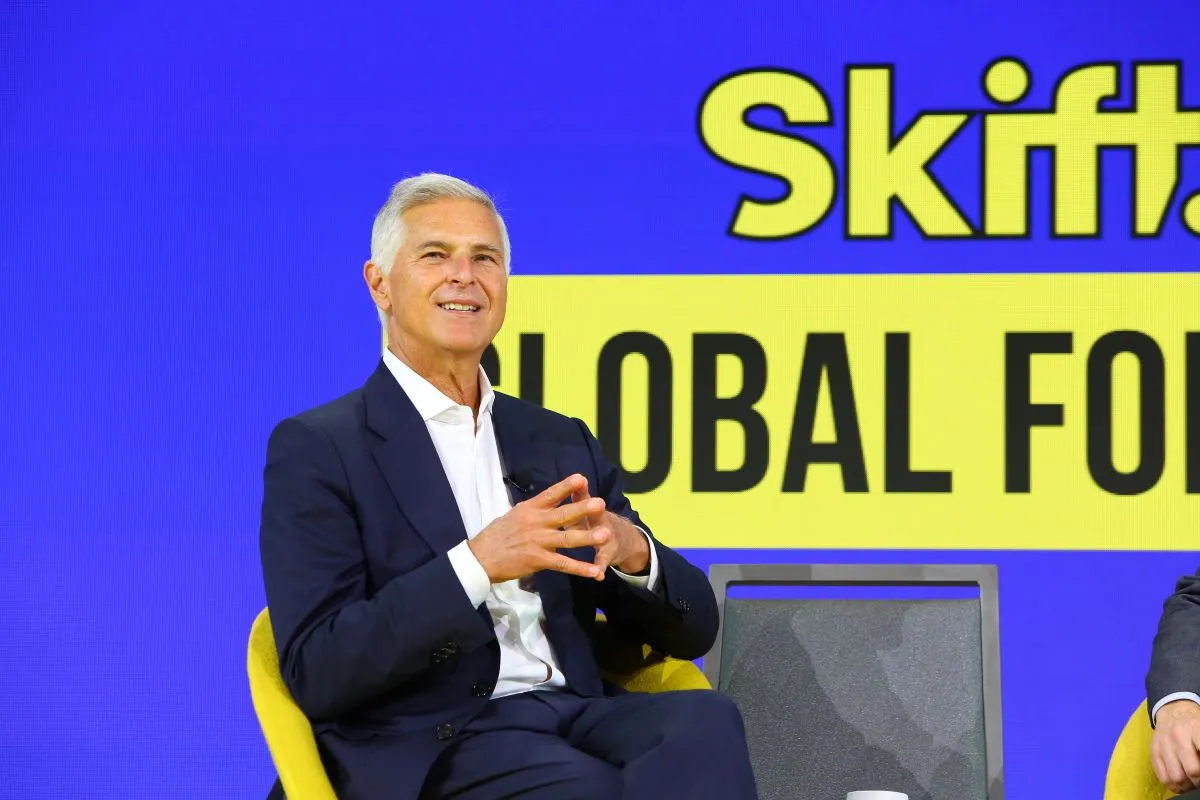
The momentum toward this "tech-powered" future has built rapidly over the second half of 2026. In late September, Nassetta appeared at the Skift Global Forum in New York City, where he first teased the idea of a more integrated digital ecosystem. During that appearance, he emphasized that the human element of hospitality remains irreplaceable, but argued that technology must "remove the friction" that often hampers the guest experience.
In early October, the company took a major step toward realizing this vision by appointing Jeff Moore as its new Chief Technology Officer. Moore’s background is telling; he joined Hilton directly from Uber, where he managed a global engineering organization of more than 2,500 personnel. At Uber, Moore was responsible for the complex logistics and real-time data processing that power millions of rides and deliveries daily. His move to Hilton suggests that the hotel company is looking to implement similar levels of real-time optimization, platform scalability, and mobile-first consumer interactions across its global portfolio of more than 7,000 properties.
Following the Moore appointment, Hilton announced its intention to switch to the Nasdaq. On the October 27 earnings call, Nassetta reiterated that the Nasdaq represents "the world’s most innovative companies," a peer group Hilton now considers itself a part of. This chronological sequence—from vision at a major forum to the hiring of a Silicon Valley veteran and finally to a market-listing change—demonstrates a cohesive strategy to rebrand Hilton as a technology-forward enterprise.
Financial Performance and Operational Data
The third-quarter 2026 earnings report provided the financial backdrop for these strategic shifts. Hilton reported a steady increase in Revenue Per Available Room (RevPAR), driven largely by a resurgence in international group travel and a robust performance in the Asia-Pacific region. Net income for the quarter exceeded analyst expectations, a feat Nassetta attributed to increased operational efficiencies derived from the company’s digital platforms.
Data shared during the call highlighted the growing importance of the Hilton Honors app, which has become the primary interface for millions of travelers. The company reported that digital check-ins and the use of "Digital Key" technology reached record highs in Q3 2026, with over 20% of all guests now bypassing the front desk entirely. This automation not only improves the guest experience by reducing wait times but also allows hotel staff to focus on high-touch service roles, reinforcing the "people-led" portion of the company’s new mantra.
Furthermore, Hilton’s development pipeline continues to expand, with a significant portion of new signings concentrated in its "Spark" and "LivSmart" brands. These newer, more streamlined offerings are designed with a digital-first mindset, requiring less on-site overhead and utilizing centralized tech stacks to manage everything from inventory to maintenance. This lean operational model is a key component of Hilton’s pitch to the Nasdaq investor base, highlighting a scalable business model that mimics the high-margin structures of software companies.
The Role of Artificial Intelligence and Emerging AI Agents
A significant portion of the Q3 earnings discussion focused on the role of Artificial Intelligence (AI). As the travel industry grapples with the rise of AI agents—autonomous digital assistants that can plan, book, and manage complex itineraries—Hilton has positioned itself as an early adopter. Nassetta informed investors that the company is already "plugged into each and every one" of the emerging AI agents in the travel space.

This integration is critical as consumer behavior shifts away from traditional search engines toward conversational AI. By ensuring that Hilton’s inventory and loyalty benefits are seamlessly accessible to AI agents developed by companies like OpenAI, Google, and specialized travel startups, the company is future-proofing its distribution strategy. This "plugged-in" approach ensures that when an AI agent searches for a hotel based on a user’s specific preferences, Hilton’s properties are prioritized and the booking process is frictionless.
Internally, Hilton is also leveraging generative AI to personalize marketing and enhance the Hilton Honors program. By analyzing vast amounts of guest data, the company can now offer hyper-personalized stay recommendations and "choose your room" options that were previously impossible at scale. This use of AI is a primary reason for the hiring of Jeff Moore, whose experience in large-scale data engineering is expected to accelerate Hilton’s internal AI capabilities.
Official Responses and Market Reactions
Industry analysts have largely reacted positively to Hilton’s rebranding efforts, though some remain cautious about the execution of such a large-scale technological overhaul. During the Q&A session of the earnings call, analysts questioned how Hilton would balance the high costs of tech investment with the need to maintain shareholder returns. Nassetta responded by emphasizing that these investments are "not just costs, but catalysts for long-term margin expansion."
Market observers have noted that the move to Nasdaq is a symbolic break from the traditional "bricks and mortar" perception of the hotel industry. By aligning with tech-heavy indices, Hilton may attract a different class of institutional investors who prioritize innovation and digital infrastructure. This shift is also seen as a competitive move against Marriott International and Hyatt Hotels, as the major players in the sector vie for the title of the most technologically advanced hospitality brand.
While the NYSE has traditionally been the home of blue-chip industrial and service companies, the Nasdaq’s reputation for hosting "disruptors" fits Hilton’s current narrative. The company’s leadership believes that by embracing this identity, they can better attract top-tier tech talent—like Jeff Moore—who might otherwise choose to work in Silicon Valley rather than at a traditional hospitality firm in McLean, Virginia.
Broader Implications for the Hospitality Sector
Hilton’s pivot toward a "tech-powered" model has profound implications for the wider hospitality industry. It signals the end of an era where technology was merely a back-office function. Today, technology is the product itself, influencing everything from the way a room is booked to the way the lights and temperature are controlled via a guest’s smartphone.
This transition also addresses a critical challenge in the post-pandemic hospitality world: the labor shortage. By using technology to automate routine tasks, Hilton is attempting to solve the staffing crunch without sacrificing service quality. If successful, this model could become the blueprint for the entire industry, leading to a more bifurcated market where "luxury" is defined by human interaction, while "efficiency" is defined by seamless digital execution.
Furthermore, Hilton’s focus on AI agents suggests a coming revolution in travel distribution. If AI agents become the primary gatekeepers for travel bookings, the importance of a hotel’s own digital ecosystem and its ability to communicate with these agents will be the difference between growth and obsolescence. Hilton’s proactive stance in this area puts pressure on smaller hotel groups and independent properties to either invest heavily in their own tech or become increasingly dependent on third-party platforms.
Conclusion: The Road Ahead for Hilton
As Hilton prepares to officially debut on the Nasdaq, the company stands at a crossroads. The "people-led, tech-powered" strategy is an ambitious attempt to modernize one of the world’s most recognizable brands. By integrating the logistical precision of a company like Uber with the hospitality expertise of a century-old institution, Hilton is betting that the future of travel lies at the intersection of high-tech and high-touch.
The success of this transition will depend on the company’s ability to maintain its service standards while rapidly iterating on its digital offerings. With Jeff Moore at the helm of technology and Christopher Nassetta steering the corporate strategy, Hilton has the leadership in place to execute this vision. However, the true test will be whether the "Nasdaq effect" results in the higher valuation the company seeks and whether guests truly feel the benefits of a "tech-powered" stay. For now, Hilton has clearly stated its intentions: it no longer views itself as just a hotel company, but as a global technology platform that happens to provide world-class hospitality.