



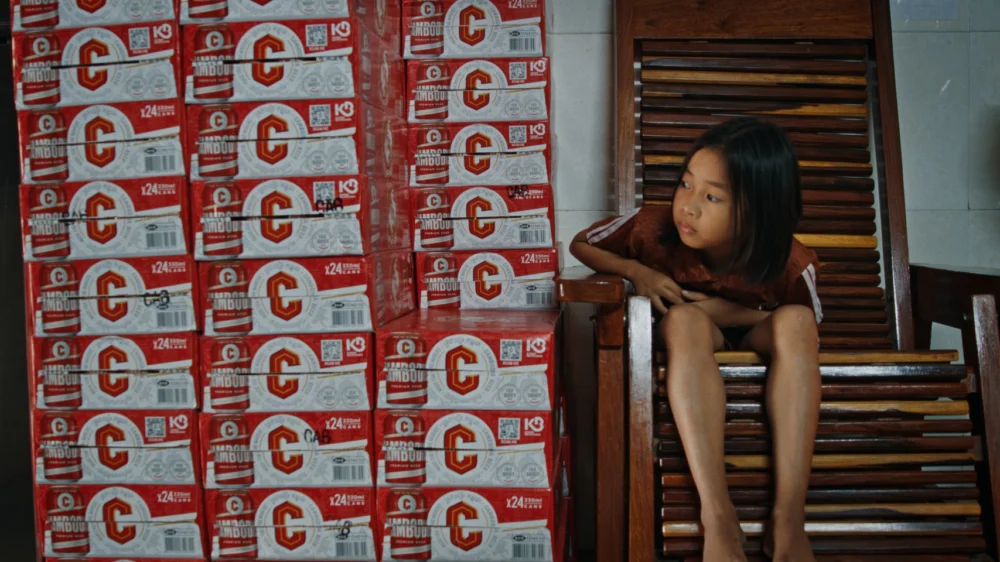
The Copenhagen International Documentary Film Festival (CPH:DOX) is set to host the world premiere of Laurits Nansen’s latest film, Cambodian Beer Dreams, on March 12th. This powerful documentary, screening in the F:act Award section of the festival’s 23rd edition (March 11-22), delves into the complex and often disturbing intersection of unchecked capitalism, the alcohol industry, and societal vulnerability in Cambodia. Nansen, known for his previous impactful works like Welcome to the Frontline, Emilie Meng – An Investigation Gone Wrong, and The Town Where Children Disappear, turns his lens on a nation grappling with rapid economic growth and a burgeoning beer market, raising critical questions about ethics, morality, and the human cost of aggressive commercial practices.
The Battle for Cambodia’s Thriving Beer Market
Cambodian Beer Dreams meticulously unpacks the fierce competition between major international and local breweries vying for dominance in Cambodia’s rapidly expanding beer market. The film’s synopsis poses a stark inquiry: "What happens to people, ethics, and morals when alcohol and capitalism are unleashed in a poor and corrupt country with few restrictions?" This central question underscores the narrative as the documentary explores how this pursuit of profit appears to disregard the profound social and health consequences for the Cambodian population.
The film highlights aggressive marketing strategies employed by the industry, which include the widespread use of young "beer girls" and the allure of cash prizes. These tactics, according to the synopsis, are designed to encourage increased alcohol consumption among a vulnerable populace, sometimes leading to dire outcomes, including death. The narrative asserts that the prevailing ethos within this competitive landscape often seems to be that the ends justify the means, with little apparent concern for the ethical implications of their marketing endeavors.
A Lone Activist’s Fight Against "Neo-Colonial Alcohol Capitalism"
At the heart of Cambodian Beer Dreams is the courageous stand taken by Kim Eng, a solitary activist who challenges the pervasive influence of the beer industry and what he terms "neo-colonial alcohol capitalism." His fight is centered on advocating for a national alcohol law in Cambodia, a country currently lacking a legally defined drinking age and possessing only minimal, seldom-enforced directives regarding alcohol consumption.
The absence of robust legal frameworks has contributed significantly to a dramatic surge in alcohol consumption. According to information provided in the press notes for the film, alcohol consumption in Cambodia has increased fivefold over the past two decades. This alarming trend provides a stark backdrop to Kim Eng’s efforts, illustrating the urgent need for regulatory measures to protect public health and well-being.
Director’s Personal Reflections and Global Parallels
Director Laurits Nansen shares that his initial encounter with the scale of the beer industry’s marketing efforts in Cambodia was a profound revelation. "When I first arrived in Phnom Penh, the city was completely covered in beer advertisements," Nansen states in his director’s statement. He observed the pervasive presence of cash prizes on beer cans, the systematic recruitment of young women as "beer girls," and the industry’s burgeoning influence across popular culture and political spheres.
Nansen draws a critical parallel between the marketing practices in Cambodia and those employed by major international breweries, such as Carlsberg and Heineken, in their home markets. He points out the striking disparity, noting that "some of the methods they use in Cambodia would be entirely unacceptable if applied in Europe under their own codes of conduct." This observation raises questions about double standards in corporate social responsibility and the ethical implications of exploiting less regulated markets.
The filmmaker’s motivation for creating Cambodian Beer Dreams is also deeply rooted in personal experience. Nansen reveals that his father died after years of battling alcohol abuse, a tragedy that has made him acutely aware of alcohol’s destructive potential. "When I was young, my father died after several years of alcohol abuse, and like many Danes and Europeans, I have seen how alcohol can destroy a person and have devastating consequences for those close to them," he explains. He further reflects on the pervasive nature of alcohol in his own culture, where its presence is so normalized that it "almost becomes invisible."
This personal connection, coupled with his observations in Cambodia, provided Nansen with a unique lens through which to explore the darker facets of a rapidly growing alcohol market. "It presented an opportunity to explore what happens to people, ethics, and morality when alcohol and capitalism are unleashed like two wild animals," he articulates.

Exclusive Trailer Premiere: From Dreams to Nightmares
The Hollywood Reporter is exclusively premiering the trailer for Cambodian Beer Dreams (mistakenly referred to as Cambodian Beer Girls in the original source’s concluding paragraph, but the trailer title clarifies it is for Cambodian Beer Dreams). Produced by Malene Flindt Pedersen of Hansen & Pedersen and Signe Skov Thomsen, the trailer offers a visceral glimpse into the film’s narrative arc. It navigates the journey from the alluring "dreams" of financial gain, success, and a life of revelry, often promoted through industry campaigns, to the harsh "nightmares" that can follow, including instances of harassment and threats. The trailer serves as a compelling preview of the documentary’s exploration of the stark realities behind the glossy facade of aggressive beer marketing.
Background and Chronology of Cambodia’s Alcohol Market
Cambodia’s journey towards a liberalized market economy, initiated in the late 1980s and accelerating in the 1990s, paved the way for increased foreign investment and the expansion of various industries, including the beverage sector. The post-socialist transition meant that regulatory frameworks often lagged behind rapid economic development.
- Late 1980s – 1990s: Cambodia begins its economic reforms, opening up to foreign investment. This period sees the gradual introduction and expansion of international consumer brands.
- Early 2000s: Alcohol consumption begins to see a noticeable increase, coinciding with rising disposable incomes for some segments of the population and the aggressive entry of international breweries.
- Mid-2000s onwards: The beer market intensifies with significant marketing campaigns. The lack of a strict legal drinking age and limited enforcement of existing alcohol-related regulations become increasingly apparent.
- 2010s: Alcohol consumption in Cambodia reportedly increases by approximately 500% over this decade, drawing international attention and concern. This period also sees the emergence of local activism highlighting the detrimental effects of unchecked alcohol consumption.
- Present: Cambodian Beer Dreams premieres at CPH:DOX, bringing critical global attention to the issue. Activist Kim Eng continues his advocacy for a national alcohol law, facing the formidable influence of a well-entrenched industry.
Supporting Data and Societal Impact
The surge in alcohol consumption in Cambodia is not merely a statistical anomaly; it carries profound societal implications. Beyond the individual health risks associated with excessive alcohol intake—including liver disease, cardiovascular problems, and increased susceptibility to infectious diseases like HIV/AIDS—the widespread availability and aggressive promotion of alcohol contribute to a range of social ills. These include domestic violence, accidents, impaired productivity, and strain on healthcare systems.
Data from the World Health Organization (WHO) consistently highlights the growing burden of alcohol-related harm in Southeast Asia. While specific Cambodian statistics are often difficult to pinpoint due to reporting challenges, regional trends indicate a significant increase in hazardous drinking patterns. The lack of a legal drinking age is particularly concerning, as it exposes young people to alcohol consumption at an age when their brains and bodies are still developing, increasing their risk of long-term addiction and health problems.
The "beer girl" phenomenon, as depicted in the film, is a tactic that leverages vulnerable populations, often young women from impoverished backgrounds, for marketing purposes. This practice can lead to exploitation, sexual harassment, and a normalization of alcohol as a central element of social interaction, particularly in entertainment venues.
Broader Implications and Analysis
Cambodian Beer Dreams shines a spotlight on a critical global issue: the ethical responsibilities of multinational corporations operating in developing economies. The film’s focus on Cambodia raises important questions about the role of international breweries in shaping public health landscapes and the effectiveness of voluntary codes of conduct versus legally binding regulations.
The film’s analysis of "neo-colonial alcohol capitalism" suggests a critique of how global economic forces, driven by profit motives, can perpetuate or exacerbate existing inequalities and vulnerabilities in less developed nations. The power imbalance between large international corporations with significant financial resources and nascent national regulatory bodies is a recurring theme in discussions of globalization.
The advocacy of individuals like Kim Eng underscores the vital role of civil society in holding corporations accountable and advocating for public interest. His fight for a national alcohol law in Cambodia is a crucial step towards establishing a framework that prioritizes public health over unfettered market expansion. The film’s premiere at CPH:DOX provides a platform for international dialogue and potentially galvanizes support for such legislative efforts.
The film’s exploration of the personal and societal costs of alcohol abuse, contrasted with the profit-driven strategies of the industry, serves as a potent reminder of the human dimension often obscured by economic statistics. It challenges viewers to consider the ethical frameworks that should govern commerce and the responsibility that comes with wealth and influence, especially in contexts where populations are particularly susceptible to predatory marketing practices. The international attention generated by Cambodian Beer Dreams could be instrumental in pushing for greater transparency and accountability within the global alcohol industry and encouraging policy reforms in nations like Cambodia.