

The burgeoning commercial space sector is experiencing an unprecedented surge in investor interest, particularly from retail participants, as anticipation mounts for the highly anticipated initial public offering (IPO) of Elon Musk’s aerospace giant, SpaceX. This speculative fervor has catalyzed a rapid inflow of capital into exchange-traded funds (ETFs) designed to capture the "new space" economy, with one fund in particular demonstrating explosive growth driven by its unique exposure to the privately held SpaceX shares. This phenomenon underscores a broader market trend where thematic investing, often fueled by technological innovation and high-profile companies, captures the imagination and capital of a diverse investor base.
The Astounding Ascent of Space Innovators ETF
At the forefront of this investment trend is Tema ETFs’ Space Innovators ETF, trading under the ticker symbol NASA. Launched merely on March 30, the fund achieved a remarkable milestone, crossing the $1 billion mark in assets under management (AUM) within an astonishing 37 trading days. By the close of the most recent trading week, its AUM had soared further, reaching an impressive $2.6 billion. This rapid accumulation of assets is largely attributed to retail investors actively seeking avenues to gain exposure to SpaceX before its eventual public debut, illustrating a keen appetite for pre-IPO access to potentially transformative companies.
Unlike many conventional ETFs that track public indices, the NASA fund offers a distinct advantage by directly holding privately traded shares of SpaceX. Currently, SpaceX constitutes approximately 7.5% of the fund’s portfolio, making it one of the few investment vehicles available to individual investors that provides such direct access. Maurits Pot, founder and CEO of Tema ETFs, articulated the fund’s strategic imperative on CNBC’s "ETF Edge," stating, "If we’re going to invest in space… We have to offer exposure to SpaceX." Pot further clarified that the fund has no intention of divesting its SpaceX holdings once the IPO materializes, viewing the public offering merely as a re-marking of the position to market price rather than an exit event. This approach suggests a long-term conviction in SpaceX’s growth trajectory and its pivotal role in the space economy.
SpaceX IPO: A Catalyst for the New Space Economy
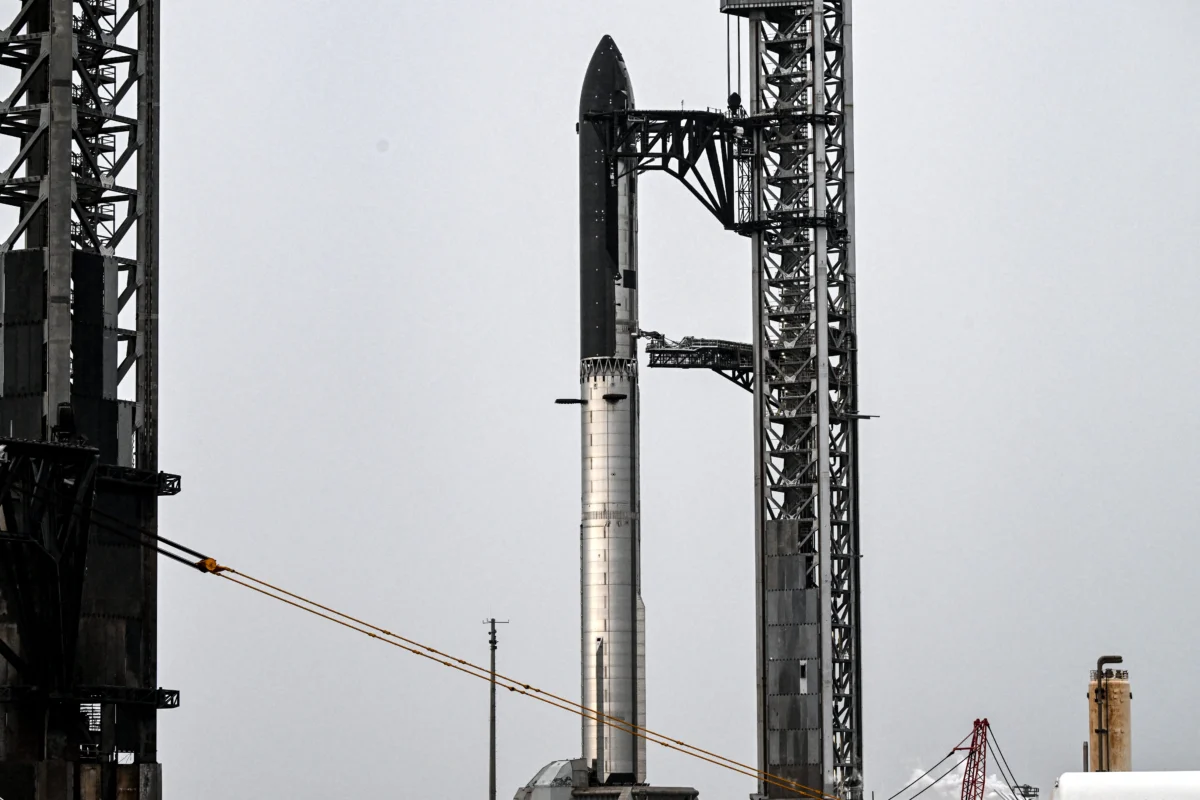
SpaceX, a privately held company renowned for its advancements in reusable rocket technology, satellite internet constellation Starlink, and ambitious plans for lunar and Martian exploration, has long been a subject of intense market speculation regarding its IPO. The company, founded by Tesla CEO Elon Musk, has taken an unconventional route to its offering, notably setting up direct access for retail investors through major brokerage platforms. This move is atypical for new deals, which are traditionally dominated by institutional investors, signaling a deliberate effort to democratize access to one of the most anticipated public listings in recent memory.
However, the precise valuation for the SpaceX deal remains a significant point of contention among market participants and investors. Estimates vary widely, reflecting the company’s multifaceted operations, its disruptive technologies, and the inherent uncertainties of pioneering a new industrial frontier. While some optimistic projections, such as those cited by the ERShares Private-Public Crossover ETF, suggest an expected IPO valuation potentially exceeding $1.5 trillion, the market consensus is still coalescing. Elon Musk himself is widely projected to become the world’s first trillionaire following the IPO, underscoring the immense financial implications of SpaceX’s public listing. This valuation debate highlights the challenge of assessing a company that is simultaneously a launch provider, a satellite operator, and a deep space exploration entity, each with distinct revenue models and risk profiles.
Broader Landscape of Space-Themed Investing
The phenomenon extending beyond the NASA ETF, with several other funds also offering various degrees of exposure to the space sector, including SpaceX. Billionaire mutual fund manager Ron Baron, a long-time investor in both Tesla and SpaceX, holds the rocket company through his actively managed First Principles fund (RONB). SpaceX represents close to 2% of the RONB fund’s assets, alongside a significant 14% holding in Tesla. Similarly, the ERShares Private-Public Crossover ETF (XOVR), designed to provide access to late-stage private companies, also includes SpaceX shares in its portfolio.
The accessibility offered by the ETF structure is a critical factor driving this trend. Mike Akins, founding partner at ETF Action, highlighted this transformative aspect on "ETF Edge," noting, "Ten, twenty years ago, you talked about a space theme like this, an investor would have to go out and look up all these companies. Now there’s a ticker." This ease of access has democratized investment in complex, high-growth sectors, allowing ordinary investors to participate in thematic trades previously reserved for sophisticated institutional players.
The past few months have witnessed a flurry of new space-themed ETFs entering the market, signaling a broader industry expectation that space will be the "next big thing" in thematic investing. Todd Sohn, chief ETF strategist at Strategas, drew parallels to the AI boom, remarking, "It’s a very similar idea to what AI was a few years ago and continuing on." Among the newly launched funds are the Van Eck Space ETF (WARP), the Global X Space Tech ETF (ORBX), and Roundhill Investments’ Space & Technology ETF (MARS). In total, six new space-themed ETFs have debuted over the past three months, reflecting a clear industry response to anticipated retail demand.
A Deep Dive into the Space Economy: Past, Present, and Future
The current enthusiasm for space investing is not merely a speculative bubble but a reflection of a profound transformation underway in the global space economy. For decades, space exploration and utilization were predominantly the domain of government agencies like NASA and the Soviet/Russian space programs. The "Space Race" of the mid-20th century was driven by geopolitical competition and national prestige, with commercial applications largely secondary.

However, the last two decades have ushered in the "New Space" era, characterized by the increasing involvement of private companies, innovative technologies, and a focus on commercial viability. SpaceX’s pioneering efforts in reusable rocket technology, drastically reducing launch costs, have been a major catalyst. Other private companies like Blue Origin, Rocket Lab, and Virgin Galactic are also pushing the boundaries in launch services, satellite manufacturing, and space tourism.
Analysts project staggering growth for the global space economy. Morgan Stanley, for instance, has estimated that the global space industry could generate over $1 trillion in revenue by 2040, up from approximately $350 billion currently. Bank of America and UBS have offered similarly bullish outlooks, citing key drivers such as:
- Declining Launch Costs: SpaceX’s Falcon 9 and Starship dramatically cut the cost of sending payloads to orbit, enabling more frequent launches and making space more accessible.
- Satellite Internet Constellations: Starlink (SpaceX) and Project Kuiper (Amazon) aim to provide global broadband internet access from low-Earth orbit, creating a massive new market for satellite services.
- Space Tourism: Companies like Virgin Galactic and Blue Origin are developing suborbital and orbital tourism experiences, tapping into a niche but potentially lucrative market.
- In-Orbit Manufacturing and Servicing: The ability to manufacture, assemble, and repair assets in space could revolutionize industries from telecommunications to defense.
- Resource Extraction: While still nascent, the long-term potential for asteroid mining and lunar resource utilization presents a colossal opportunity.
- National Security and Earth Observation: Governments and private entities increasingly rely on satellite imagery and data for defense, environmental monitoring, and disaster management.
This robust background provides a strong fundamental thesis for long-term investment in the space sector, moving beyond the immediate excitement surrounding a single IPO.
Navigating the Complexities: Due Diligence and Risks
Despite the compelling growth narrative, investors must approach space-themed ETFs with careful due diligence. As Todd Sohn cautioned, "Not all funds are created equal. It all depends on how pure or watered down the ETF is." This necessitates a thorough examination of each fund’s investment strategy, underlying holdings, and expense ratios.
Diversity in Fund Strategies:
- Pure-Play vs. Diversified: Some ETFs aim for a "pure-play" exposure to companies directly involved in space exploration, satellite technology, or launch services. Others adopt a broader definition, including companies that benefit indirectly from the space economy, such as those involved in advanced materials, cybersecurity for space assets, or even agriculture technology that utilizes satellite data. For example, the ARK Space and Defense Innovation ETF (ARKX) exemplifies a broader interpretation, including holdings in companies like Amazon (for its cloud services supporting space data and Project Kuiper) and Deere (for its GPS-enabled precision agriculture).
- Established vs. New Players: Funds vary in their allocation to established aerospace and defense giants versus newer, high-growth, but often higher-risk, startups. The Procure Space ETF (UFO), launched in 2019 with over $1.2 billion in assets, holds companies like Rocket Lab, Firefly Aerospace, and Planet Labs among its top holdings, focusing on next-generation space companies. Similarly, the SPDR S&P Kensho Final Frontiers ETF (ROKT), launched in 2018, includes Intuitive Machines and Redwire. Investors should consider how much overlap a fund has with more traditional defense industry names if their primary interest is in the "new space" frontier.
- Concentration Levels: Sohn also noted the varying concentration levels, with some funds having around 30 holdings and others closer to 50 or more. A highly concentrated fund, while potentially offering higher returns if its few bets pay off, also carries significantly higher risk.
Active vs. Passive Management:
Another crucial distinction lies between actively managed and passively managed ETFs. Actively managed funds, like Tema’s NASA, rely on a fund manager’s expertise to select and adjust holdings, aiming to outperform a benchmark. This active approach typically comes with higher expense ratios. NASA, for instance, has an annual net expense ratio of 0.87%. In contrast, passively managed ETFs, such as ORBX (0.50%) and ROKT (0.45%), aim to replicate the performance of a specific index and generally have lower fees. Investors must weigh the potential benefits of active management against the increased cost, which can erode long-term returns.
Inherent Volatility and Risks:
Perhaps the most critical factor for retail investors to consider is the inherent volatility of investing in early-stage, technologically intensive industries like space. Todd Sohn’s advice is unequivocal: "Expect volatility. That is usually what happens with very early-stage industries. There will be companies that outperform and companies within ETFs that fall apart because the business model doesn’t make sense."
This volatility was starkly illustrated recently by the launchpad explosion of Blue Origin’s New Glenn rocket during a test, serving as a vivid reminder of the significant operational and technological risks associated with rocket development and space missions. Failures, delays, and unexpected challenges are common in this sector, and they can have a substantial impact on company valuations and investor confidence. Furthermore, the regulatory landscape for commercial space is still evolving, posing another layer of uncertainty.
Looking Ahead: The Future Trajectory of Space Investing
As the SpaceX IPO draws closer and eventually materializes, the landscape of space-themed ETFs is likely to evolve further. Sohn anticipates that "once SpaceX is public and trading for some time, you’re going to see some of these funds morph into more concentrated bets, depending on how they are managed." This suggests a potential shift towards funds taking more definitive positions in key players once market valuations stabilize post-IPO.
The current enthusiasm for space investing mirrors historical trends where groundbreaking technological advancements, from the internet to artificial intelligence, captured public imagination and investor capital. While the long-term potential of the space economy is undeniably vast, driven by fundamental shifts in technology and commercialization, the immediate investment environment is characterized by speculative interest and significant risks. For retail investors navigating this exciting yet complex frontier, a clear understanding of fund strategies, a disciplined approach to due diligence, and a realistic expectation of volatility will be paramount to successfully participating in the commercial space race. The journey into space investing, much like space exploration itself, promises both extraordinary rewards and formidable challenges.