


A dangerous escalation of hostilities unfolded between neighboring Pakistan and Afghanistan on Friday, as Pakistan initiated retaliatory air strikes against targets within Afghanistan. This aggressive response came hours after the Afghan Taliban announced a significant offensive targeting Pakistani military posts along their volatile shared border. The events mark a perilous new chapter in the already strained relationship between the two nations, raising concerns about regional stability and the potential for wider conflict.
Immediate Onset of Hostilities and Retaliation
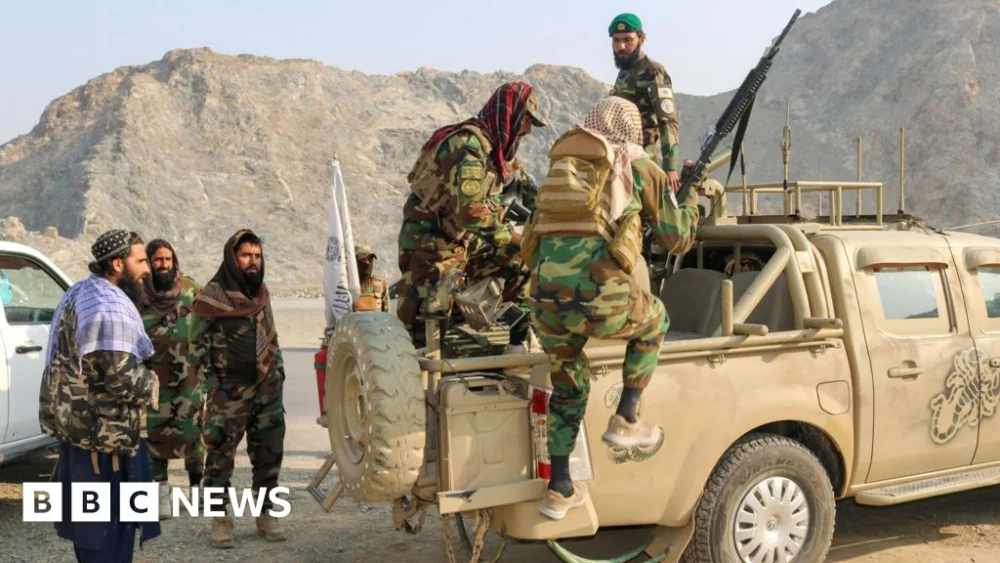
The chain of events commenced on Thursday, February 26, with the Afghan Taliban launching what they described as a major offensive. According to statements from Taliban officials, coordinated attacks began around 20:00 local time (15:30 GMT) across a broad swathe of the 2,600-kilometer (1,615-mile) border. Afghan forces targeted Pakistani military positions in provinces including Nangarhar, Nuristan, Kunar, Khost, Paktia, and Paktika. These areas are strategically important and have historically been flashpoints for cross-border skirmishes.
Pakistan swiftly condemned the offensive, characterizing it as "unprovoked fire on multiple locations" in its north-western province of Khyber Pakhtunkhwa. Islamabad asserted that its security forces delivered an "immediate and effective response" to the initial Taliban incursions. However, the retaliation did not stop at ground-level defense. In the early hours of Friday morning, Pakistan launched a series of bombing raids deep into Afghan territory. Targets reportedly included areas in the Afghan capital, Kabul, as well as the southern province of Kandahar and the eastern province of Paktika – both situated close to the border.
Further outbreaks of violence were reported near the critical Torkham border crossing, a vital trade artery linking Pakistan’s Peshawar with Afghanistan’s Jalalabad. AFP journalists at the scene witnessed renewed clashes, underscoring the intensity and widespread nature of the confrontation. While details remain fluid and largely unconfirmed by independent sources, the BBC has reported that there are no immediate confirmed casualty figures from either side. However, the sheer scale and targeting of these attacks suggest a significant potential for loss of life and infrastructure damage.
In a remarkable development, Zabihullah Mujahid, the chief spokesman for the Afghan Taliban, initially posted on X (formerly Twitter) that the group had launched strikes early Friday morning on Pakistani military positions in Afghanistan’s Kandahar and Helmand provinces. This post was subsequently deleted, adding to the confusion surrounding the rapidly unfolding situation. Later, sources within the Taliban government informed the BBC that these strikes were carried out using drones launched from Afghan territory, targeting locations within Pakistan.
A Pakistani military officer confirmed that Afghan Taliban drones had indeed targeted three specific locations: the army’s artillery school in Nowshehra, an area near a military academy in Abbottabad, and another that fell close to a primary school in Swabi. However, the Pakistani official maintained that all these drones were intercepted and destroyed before causing significant damage. This claim, if verified, would represent an unprecedented tactical shift, as the Taliban’s drone capabilities are generally believed to be limited to commercially available models fitted with improvised explosives, restricting their range and precision. The BBC has not yet been able to independently verify all claims made by either side.
A History of Volatility and Broken Ceasefires
This latest conflagration is not an isolated incident but rather the most significant escalation in a protracted period of animosity between Islamabad and the Taliban administration in Kabul. The two nations had only recently agreed to a fragile ceasefire in October of the previous year, following a week of deadly cross-border clashes. That truce, reportedly brokered by regional powers such as Turkey and Qatar, had offered a brief respite from a cycle of violence that has plagued the border region for decades. Its collapse underscores the deep-seated mistrust and unresolved issues that continue to fuel instability.
The underlying cause of these recurrent tensions largely revolves around Pakistan’s accusations that the Afghan Taliban government provides sanctuary and support to "anti-Pakistan terrorists," most notably the Tehrik-i-Taliban Pakistan (TTP), also known as the Pakistani Taliban. The TTP is a distinct but ideologically aligned group with the Afghan Taliban, and it has been responsible for numerous deadly attacks within Pakistan, including a recent devastating suicide bombing at a mosque in Islamabad. Pakistan asserts that TTP militants operate with impunity from Afghan soil, using it as a staging ground for attacks against Pakistani security forces and civilians.
The Afghan Taliban government, for its part, vehemently denies these allegations. It has consistently stated that it does not permit its territory to be used to threaten the security of any other country. Instead, the Taliban administration accuses Pakistan of carrying out unprovoked attacks that have resulted in civilian casualties within Afghanistan. Pakistan, in response, maintains that its operations are precisely targeted at militant hideouts and not against innocent civilians. This conflicting narrative forms the bedrock of their diplomatic deadlock and military confrontations.
Conflicting Claims and Military Posturing
The aftermath of the recent attacks has been characterized by sharp rhetoric and conflicting claims from both capitals. Pakistan’s Prime Minister Shehbaz Sharif issued a stern warning, stating that his country’s forces possess the capability to "crush" its foes. In an even more direct challenge, Pakistan’s defense minister reportedly declared "open war" on the Taliban in Afghanistan, signaling a definitive shift in Islamabad’s policy toward its western neighbor.
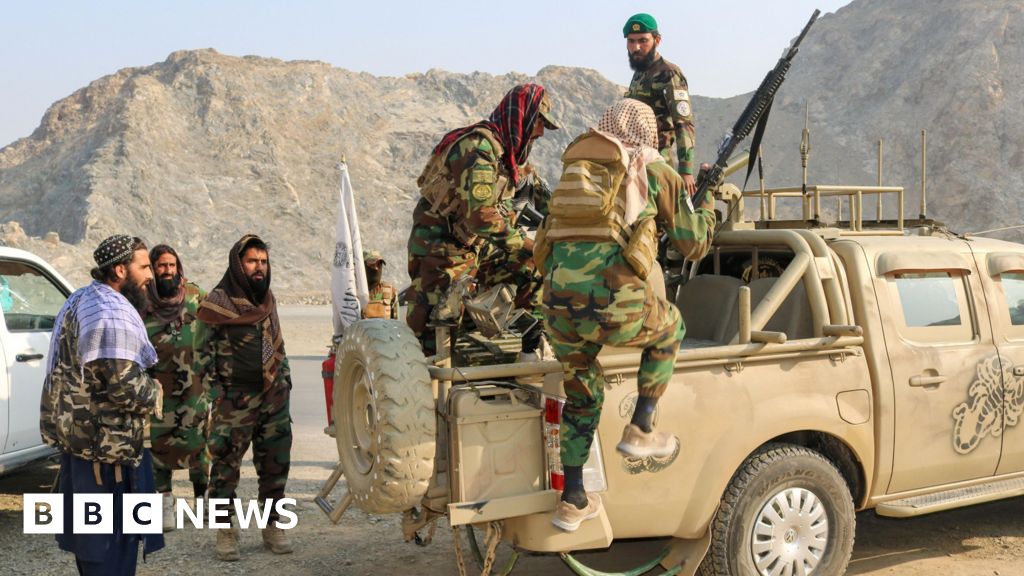
The Afghan Taliban, while acknowledging the offensive, adopted a more measured public stance regarding direct retaliation. A Taliban military spokesperson told the BBC that while the group "will retaliate if we are attacked, we won’t start clashes at the moment." However, chief spokesman Zabihullah Mujahid initially claimed that the offensive had killed "numerous" Pakistani soldiers and led to the capture of others – claims that were swiftly denied by Pakistani authorities.
Conversely, Mosharraf Zaidi, a spokesperson for Pakistan’s prime minister, provided figures claiming that Pakistani forces had killed 133 Afghan Taliban fighters and wounded over 200 by Thursday evening (22:50 GMT). These figures, like those from the Taliban, have not been independently verified, highlighting the information vacuum and propaganda efforts often accompanying such conflicts.
International Calls for De-escalation
The rapidly deteriorating situation has drawn urgent attention from the international community, with several nations and organizations calling for an immediate de-escalation of hostilities. United Nations officials have voiced profound concern, urging both sides to exercise restraint and pursue dialogue.
Iran, a country sharing borders with both Afghanistan and Pakistan, has stepped forward to offer its mediation services. Iranian Foreign Minister Abbas Araqchi emphasized the timing, noting that it was currently Ramadan, "the month of self-restraint and strengthening of solidarity in the Islamic world," implicitly urging a peaceful resolution.
China, a significant regional power with considerable economic interests in both Afghanistan and Pakistan through its Belt and Road Initiative (BRI), also called for an immediate ceasefire. Chinese foreign ministry spokeswoman Mao Ning urged both nations to "remain calm and exercise restraint," underscoring Beijing’s desire for stability in a region crucial for its strategic projects.
Pakistan’s close ally, Saudi Arabia, also engaged diplomatically. Its foreign minister met with his Pakistani counterpart to discuss ways to reduce the escalating tensions, reflecting broader concerns among Muslim-majority nations about the fratricidal nature of the conflict.
Deeper Analysis and Implications
Analysts believe that a conventional war between the nuclear-armed Pakistan and the Afghan Taliban, primarily experienced in guerrilla warfare, is unlikely. The Taliban, while formidable in asymmetric conflict, is vastly outgunned by Pakistan’s modern military. However, the Afghan Taliban’s extensive experience in insurgency and its deep familiarity with the rugged border terrain present a unique challenge.
A critical aspect of the current Pakistani strikes, as highlighted by Michael Kugelman, a senior fellow for South Asia at the Atlantic Council, is their target selection. Kugelman noted that Pakistan is now "targeting the [Taliban] regime itself" rather than exclusively focusing on presumed terrorist targets within Afghanistan. This shift signifies a more confrontational approach and suggests that Islamabad may be losing patience with the Taliban’s perceived inaction against the TTP. Such a strategy carries significant risks, potentially hardening the Taliban’s resolve and diminishing any remaining prospects for diplomatic engagement.
The rhetoric emanating from the Afghan Taliban also suggests a commitment to a sustained confrontational stance. Qari Muhammad Fasihuddin, the Afghan Taliban’s military chief, declared in a video message on Friday that Pakistan could expect "an even more decisive response" in the future. This defiant posture, coupled with Pakistan’s aggressive retaliation, creates a "precarious situation" that could indeed lead to a more prolonged and destructive conflict.
The implications of this escalation are far-reaching. Regionally, it threatens to further destabilize an already volatile area, potentially drawing in other actors or creating new avenues for extremist groups to exploit. Economically, prolonged border closures, especially at vital crossings like Torkham, would severely impact trade between the two countries, which is crucial for Afghanistan’s landlocked economy and for certain Pakistani industries. Humanitarian concerns are also paramount, with the potential for increased displacement of populations already reeling from decades of conflict and economic hardship.
For Pakistan, the failure of the Afghan Taliban to curb the TTP’s activities poses a significant internal security threat and places immense pressure on the government to act decisively. For the Afghan Taliban, being seen as capitulating to Pakistani demands could undermine its authority and legitimacy among its hardline elements, making any compromise extremely difficult.
As the situation remains highly fluid and information difficult to verify, the international community watches with bated breath, hoping for a return to diplomacy and de-escalation before the latest round of hostilities plunges the region into a deeper and more intractable conflict. The immediate future of Pakistan-Afghanistan relations hinges on whether either side is willing to step back from the brink of open warfare.