


The United States and Israel have initiated extensive military operations against Iran, marking a dramatic escalation in long-standing tensions centered on Iran’s nuclear ambitions. US President Donald Trump confirmed the "massive and ongoing" combat operations, issuing a direct call for Iranian government forces to disarm and for the Iranian populace to seize control of their nation. Earlier, Israel’s defense minister stated that Israel had undertaken a "pre-emptive attack" against Iran, with reports of widespread explosions across the Islamic Republic. This coordinated offensive follows weeks of intense diplomatic deadlock, heightened threats, and stalled negotiations concerning Tehran’s controversial nuclear program.
Escalation Unfolds Across Iran
The morning of the strikes saw widespread chaos and alarm across Iran. Shortly after 09:30 Tehran time (06:00 GMT), Iranian state media, corroborated by international news agencies, reported a series of powerful explosions reverberating through the capital. Verified images and videos, later analyzed by independent verification units, depicted thick plumes of smoke ascending over Tehran’s prominent Jomhouri Square and Hassan Abad Square, signaling significant impacts. One particularly striking video was geolocated by BBC Verify to within a kilometer of Leadership House, the official residence and office of Iran’s Supreme Leader, Ayatollah Ali Khamenei. While the precise target of that particular strike could not be definitively confirmed from the video angle, the proximity underscored the strategic audacity of the attack.
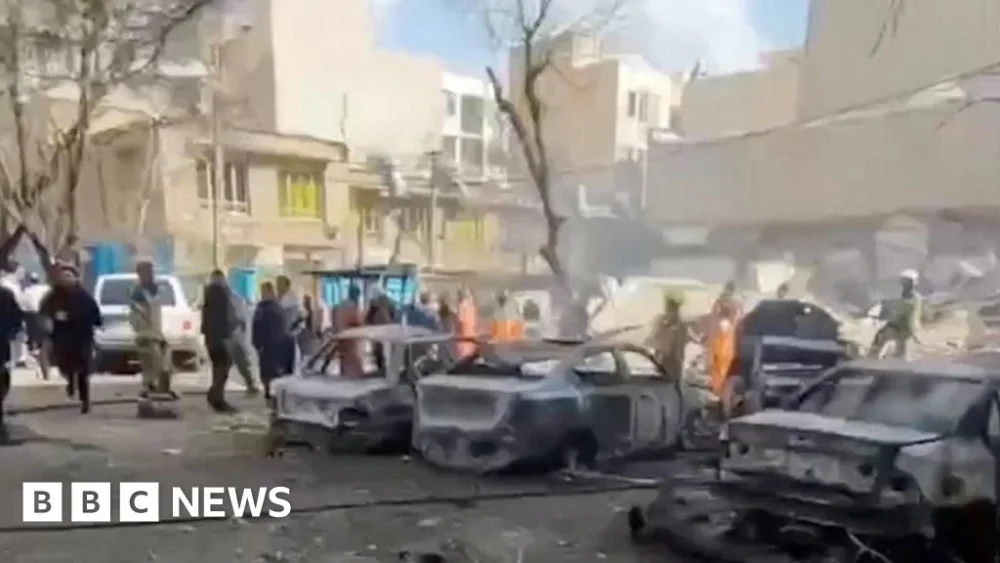
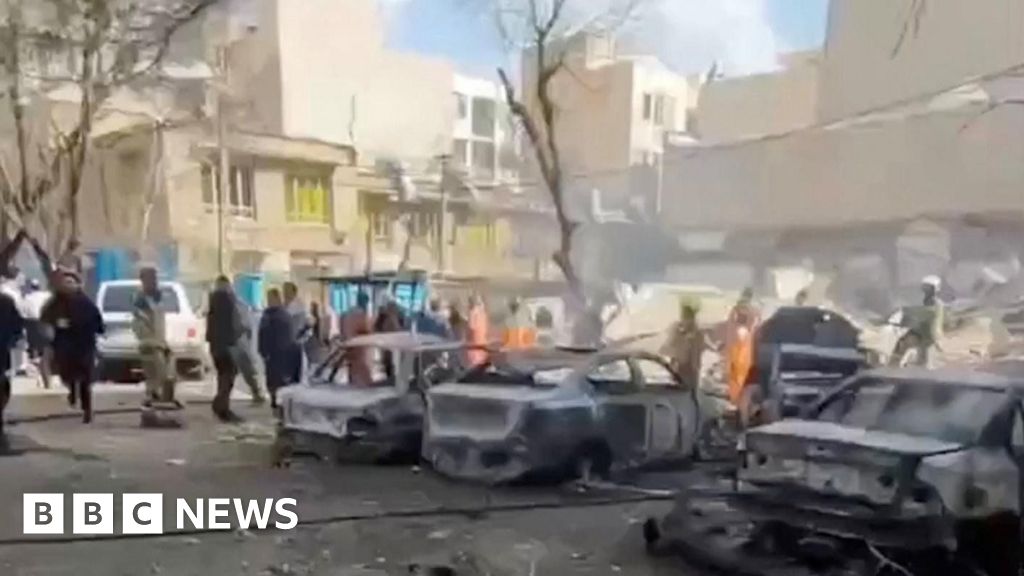
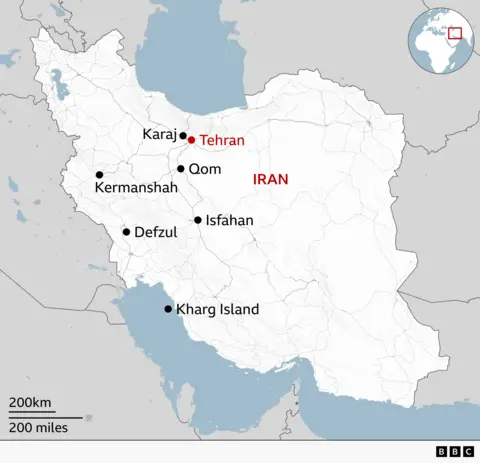
Beyond Tehran, the scale of the offensive became apparent as explosions were simultaneously reported in multiple other major Iranian cities. These included Isfahan, a city crucial for its nuclear facilities and military bases; Qom, a significant religious and political center; Karaj, a populous city west of Tehran; and Kermanshah, located in western Iran. The immediate aftermath left the extent of casualties and structural damage unknown, with initial reports focusing on the sheer breadth of the strikes. In response to the unfolding crisis, Iranian airspace was promptly closed to all civilian flights, as reported by Tasnim News Agency, indicating a severe security posture. The visual evidence of destruction, including burnt vehicles near impact sites, painted a grim picture of the immediate consequences of the US-Israeli action.
US and Israeli Justifications and Directives
Both the United States and Israel were quick to confirm their involvement and articulate their strategic objectives. US President Donald Trump, utilizing his preferred social media platform, Truth Social, released a video statement acknowledging the commencement of "major combat operations in Iran." His justification was unequivocal: "Our objective is to defend the American people by eliminating imminent threats from the Iranian regime," adding a critical dimension by stating Washington’s aim to "ensure that Iran does not obtain a nuclear weapon." The President’s address also contained a stark message for the Iranian populace, advising them to "remain in shelter and not leave their homes." He then urged them to "take over your government," asserting that "It will be yours to take. This will be probably your only chance for generations." This rhetoric suggested a clear intention to encourage internal dissent and regime change, an unprecedented public declaration in such a direct military context.
Echoing President Trump’s sentiments, Israeli Prime Minister Benjamin Netanyahu issued his own powerful statement. He appealed directly to the Iranian people "to throw off the yoke of tyranny and bring about a free and peaceful Iran." Netanyahu reiterated Israel’s core security concern, stressing that Iran "must not be armed with nuclear weapons that would allow it to threaten all of humanity." He asserted that the "joint action" undertaken by the US and Israel would "create the conditions for the courageous Iranian people to take their destiny into their own hands." Domestically, the Israeli Prime Minister also advised Israeli citizens to meticulously follow guidance from security authorities, underscoring the potential for retaliation. Preceding these statements, Israel’s defense minister had already declared a "special and permanent state of emergency" across Israel, a measure reflecting the gravity of the situation and the anticipated blowback.
A Decades-Long Shadow: The Nuclear Program and Regional Tensions
The roots of this dramatic military confrontation lie deep in decades of geopolitical friction, with Iran’s nuclear program serving as the most persistent and acute flashpoint. The international community’s concerns escalated significantly in the early 2000s, culminating in the 2015 Joint Comprehensive Plan of Action (JCPOA), commonly known as the Iran nuclear deal. This landmark agreement, signed by Iran and the P5+1 group of world powers (China, France, Germany, Russia, the United Kingdom, and the United States), aimed to prevent Iran from developing nuclear weapons in exchange for sanctions relief. It imposed strict limits on Iran’s uranium enrichment capacity, plutonium reprocessing, and intrusive international inspections.
However, the JCPOA’s future became precarious with the 2018 decision by the Trump administration to unilaterally withdraw the United States from the agreement, reimposing crippling sanctions on Iran. In response, Iran gradually began to scale back its commitments under the deal, steadily increasing its uranium enrichment levels and stockpiles, installing advanced centrifuges, and limiting international inspectors’ access to certain sites. This trajectory brought Iran closer to levels of enrichment that could, theoretically, be further refined to weapons-grade material, intensifying fears in Washington and Jerusalem.
Israel, viewing Iran’s nuclear program as an existential threat, has consistently advocated for a more aggressive stance, including military options, to prevent Iran from acquiring nuclear weapons. For years, Israel has been widely suspected of conducting covert operations, cyberattacks, and targeted assassinations of Iranian nuclear scientists to slow Tehran’s progress. The US, while often preferring diplomatic pressure, maintained a "maximum pressure" campaign of sanctions and military deterrence, but the latest actions represent a significant departure from previous strategies, moving from deterrence to direct kinetic action. Weeks of recent threats and failed negotiations, likely over the specifics of Iran’s enrichment activities or perceived breaches of international non-proliferation norms, appear to have pushed both nations to opt for military intervention.
Iranian and Regional Repercussions
The US-Israeli strikes quickly triggered a complex web of reactions across the Middle East. Israel’s military reported identifying missiles launched towards its territory by Iran, activating its robust air defense systems to "intercept and strike threats where necessary." Explosions were subsequently heard in the Israeli port city of Haifa and other areas, though it remained unclear whether these were successful interceptions by systems like the Iron Dome or actual impacts. Israeli authorities immediately issued severe guidance, warning citizens against large gatherings, and advising them to avoid non-essential travel to school or work until at least Monday evening. Israel’s airspace was also closed to civilian flights as a precautionary measure.
Beyond Israel, the ripple effects were felt across the Persian Gulf. Bahrain, home to the US Navy’s 5th Fleet, reported that the fleet’s service center had been "subjected to a missile attack." Emergency sirens blared across the island nation, with the interior ministry urging residents to remain calm and seek immediate shelter. Similarly, Qatar’s defense ministry confirmed that it had "successfully countered a number of attacks targeting the country’s territory," following explosions heard in its capital, Doha. Qatar hosts Al Udeid Air Base, the largest US military facility in the region, making it a critical strategic asset and potential target. The United Arab Emirates also reported being targeted, condemning Iran’s attack on its territory. The UAE confirmed one fatality from falling debris following its air defense intercepts, indicating that several missiles had been successfully engaged. These widespread retaliatory strikes underscore the immediate and volatile regionalization of the conflict, extending beyond direct Iranian-Israeli confrontation.
Global Outcry and Calls for Restraint
The sudden escalation drew immediate and widespread condemnation from the international community, coupled with urgent calls for de-escalation. United Nations Human Rights Chief Volker Türk issued a grave statement, deploring the military strikes and the subsequent retaliatory actions. He passionately called for "restraint and implore all parties to see reason, to de-escalate, and for a return to the ‘negotiating table’." Türk emphasized the devastating impact of armed conflict on civilians, reminding all parties that their protection is "paramount" under international law.
The European Union’s top diplomat, Kaja Kallas, characterized the developments as "perilous," highlighting the EU’s consistent efforts to address the Iranian nuclear issue through sanctions and diplomacy. In a statement on X, Kallas confirmed speaking with Israeli and other regional foreign ministers, reiterating the EU’s priority for "protection of civilians and international humanitarian law."
The United Kingdom government, while acknowledging its strong alliance with the US, clarified that it was not involved in the US-Israeli strikes. A spokesperson stated the UK’s primary concern was "the safety of UK nationals in the region," expressing a strong desire not to see "further escalation into a wider regional conflict." Prime Minister Keir Starmer chaired an emergency Cobra committee meeting and was expected to engage in a series of calls with international allies throughout the day to coordinate responses.
Germany, a key European power, confirmed it had been informed of the attack in advance, with Chancellor Friedrich Merz consulting relevant security ministers. Italian Prime Minister Giorgia Meloni’s office announced that it would be consulting with allies and regional leaders to support efforts aimed at easing tensions. Australia’s premier, Anthony Albanese, voiced support for the US, stating his country backed efforts "to prevent Iran from obtaining a nuclear weapon and to prevent Iran continuing to threaten international peace and security."
Conversely, Russia, a traditional ally of Iran and a signatory to the JCPOA, vehemently condemned the US-Israeli strikes, labeling them a "reckless move." The Russian foreign ministry’s statement also criticized the timing, asserting that the attacks were "once again being carried out under the guise of a renewed negotiation process," referencing ongoing US-Iran nuclear talks that had reportedly taken place just the day prior. Russia called on the international community to scrutinize these "irresponsible actions aimed at undermining peace, stability, and security" in the region.
Travel Disruptions and Broader Implications
The immediate aftermath of the strikes saw significant disruptions to international travel across the Middle East. Several global airlines announced flight suspensions and route adjustments. German carrier Lufthansa suspended all flights to and from Dubai for the upcoming weekend, extending cancellations to the capital cities of Israel, Lebanon, and Oman until March 7. Budget airline Wizz Air followed suit, suspending flights until March 7 for destinations in Israel, Dubai, Abu Dhabi, and Amman, Jordan. Virgin Atlantic announced it would temporarily reroute flights to avoid Iraqi airspace and canceled a scheduled Saturday flight from London Heathrow to Dubai. Kuwait’s aviation authority, according to state media, halted all flights to Iran until further notice.
Regional airspace closures further compounded the travel chaos. Iraq and Jordan fully closed their airspaces, while the UAE announced a "partially and temporarily" closed airspace as a precautionary measure. The UK Foreign Office updated its travel guidance for a broad swathe of the Middle East, including Jordan, Syria, Lebanon, Iraq, Yemen, Turkey, Saudi Arabia, and Oman, advising travelers to "remain vigilant, follow local authority advice and take shelter if advised."
The ramifications of this direct military confrontation extend far beyond immediate travel disruptions. The strikes represent a perilous escalation, moving the US-Iran rivalry from proxy conflicts and economic sanctions to direct military engagement, raising the specter of a wider regional war. Such a conflict could have devastating humanitarian consequences, leading to widespread civilian casualties and displacement, further destabilizing an already volatile region. Economically, the immediate impact on global oil prices is likely to be significant, given the region’s critical role in global energy supply. The stability of international shipping lanes, particularly through the Strait of Hormuz, could also be severely threatened.
From a strategic perspective, the effectiveness of the US-Israeli objective to dismantle Iran’s nuclear capabilities or incite regime change remains highly uncertain and fraught with risk. The response from Iran and its network of regional proxies, including Hezbollah in Lebanon, Houthi rebels in Yemen, and various militias in Iraq and Syria, will be critical in determining the conflict’s trajectory. The international community faces an immense challenge in de-escalating the situation, with diplomatic channels severely strained but more essential than ever. The coming days will be crucial in determining whether this marks a decisive shift in Middle Eastern geopolitics or the prelude to an even more profound regional conflagration.