


In a monumental declaration signaling an invigorated commitment to lunar exploration, NASA announced Friday a significant acceleration of its Artemis program, designed to achieve the national objective of returning American astronauts to the Moon and establishing a sustainable human presence. This ambitious new strategy includes standardizing vehicle configurations, introducing an additional mission in 2027, and committing to at least one lunar surface landing annually thereafter. The announcement marks a pivotal moment in what agency leaders describe as a "Golden Age of exploration and discovery," reinforcing the United States’ leadership in space amidst a rapidly evolving global landscape.
A Refined Timeline for Lunar Re-entry
The revised Artemis timeline introduces a crucial new mission, Artemis III, slated for 2027. Originally conceived as the first crewed lunar landing mission, Artemis III will now serve as a comprehensive test flight, operating in low Earth orbit. This strategic recalibration aims to rigorously evaluate critical systems and operational capabilities before the subsequent Artemis IV mission, which is now scheduled for 2028 and will mark the program’s inaugural crewed lunar landing. Following Artemis IV, NASA has committed to an unprecedented cadence of at least one crewed surface landing on the Moon every year, underscoring a long-term vision for sustained lunar habitation and scientific endeavor.
This strategic shift follows the successful uncrewed Artemis I mission, which launched in November 2022. Artemis I, utilizing the Space Launch System (SLS) rocket and Orion spacecraft, completed a 25-day journey around the Moon and back, validating the integrated systems’ performance in deep space. The mission provided invaluable data on Orion’s heat shield re-entry, propulsion, and guidance systems, setting the stage for future crewed missions. The upcoming Artemis II mission, a crewed lunar flyby, remains on track for launch opportunities in April, with teams currently addressing identified issues.
Standardization: Learning from Apollo’s Legacy
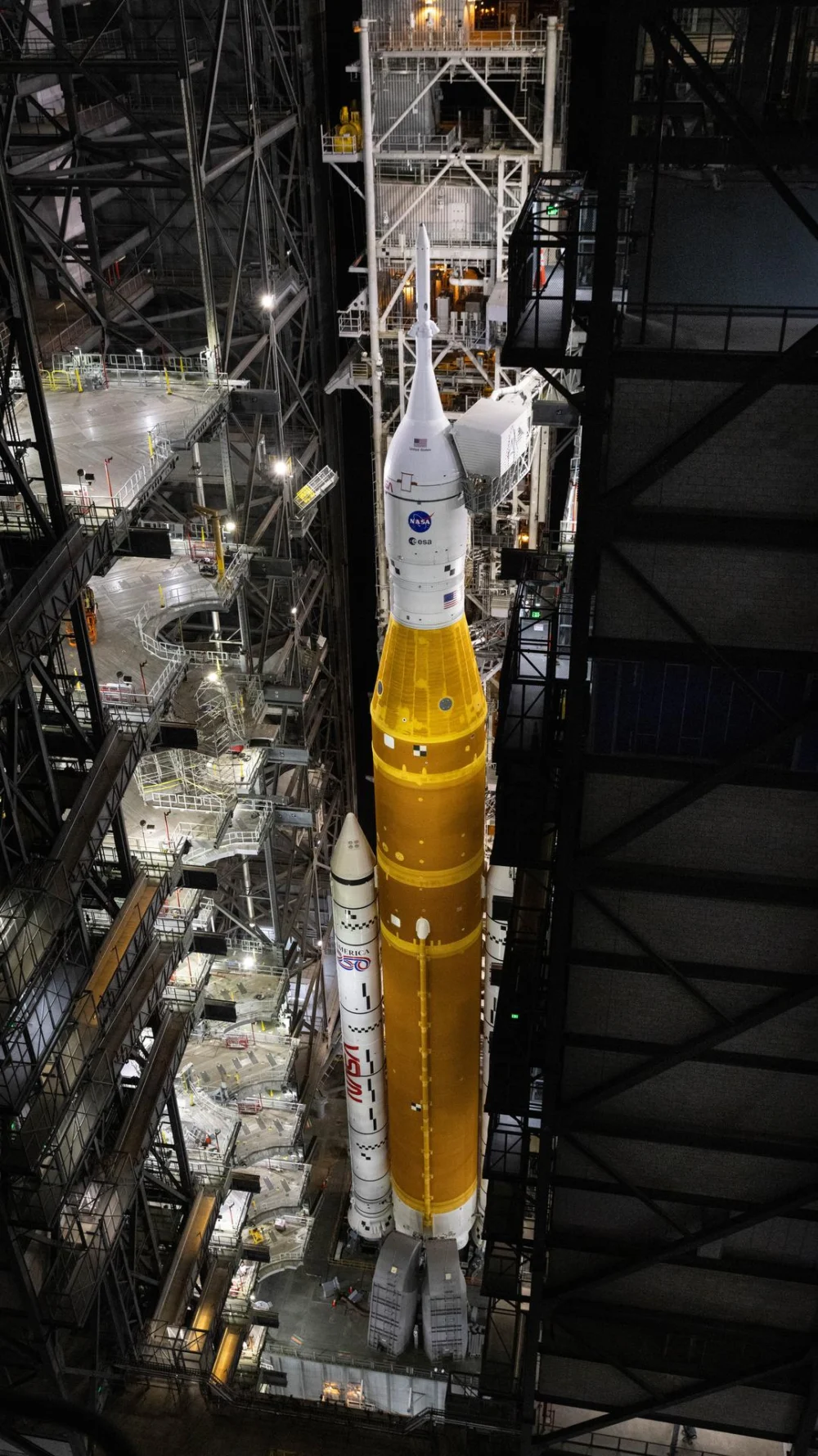
A cornerstone of NASA’s accelerated plan is the standardization of the SLS and Orion vehicle configuration. The agency will prioritize the "Block 1" configuration of the SLS, which comprises the core stage, two solid rocket boosters, and the Interim Cryogenic Propulsion Stage (ICPS) atop which the Orion spacecraft sits. This decision, as articulated by NASA Associate Administrator Amit Kshatriya, reflects a return to the methodical, safety-first principles that defined the Apollo program.
"After successful completion of the Artemis I flight test, the upcoming Artemis II flight test, and the new, more robust test approach to Artemis III, it is needlessly complicated to alter the configuration of the SLS and Orion stack to undertake subsequent Artemis missions," Kshatriya stated. He emphasized the importance of minimizing "development and production risk" and maximizing "learning left on the table" by maintaining a consistent flight configuration. This approach echoes Apollo’s step-by-step build-up of capability, where each mission incrementally advanced the program without introducing overly complex variables. "We want to keep testing like we fly and have flown," Kshatriya added, highlighting a deliberate focus on system reliability and crew safety as paramount to mission success.
This strategic choice implies a potential deferment or re-evaluation of the SLS Block 1B configuration, which would incorporate the more powerful Exploration Upper Stage (EUS) to enable larger payloads and direct trans-lunar injection for heavier components. While Block 1B remains a long-term goal for enhanced capabilities, the immediate focus on Block 1 underscores a pragmatic drive for speed and reliability, ensuring that the primary objective of returning astronauts to the lunar surface is met with minimal delay and maximum safety.
Artemis III: A Comprehensive Orbital Testbed
The newly defined Artemis III mission in 2027 will serve as a critical orbital testbed for future lunar operations. Its objectives are multifaceted and designed to de-risk key elements of lunar landing missions:
-
Commercial Lander Rendezvous and Docking: A primary goal is to conduct rendezvous and docking operations with one or both commercial Human Landing System (HLS) vehicles developed by SpaceX (Starship HLS) and Blue Origin (Blue Moon). This is a crucial step, as future lunar missions will rely on these commercially developed landers to transport astronauts from Orion in lunar orbit to the surface and back. Testing these complex orbital maneuvers and ensuring compatibility between the Orion spacecraft and the HLS vehicles in a controlled low Earth orbit environment will provide invaluable data and operational experience. Both SpaceX and Blue Origin have received substantial NASA contracts to develop their respective landers, with the Starship HLS selected for Artemis III and Blue Moon for a subsequent mission. This test flight allows for early, integrated validation.
-
In-Space Systems Checkout: The mission will undertake integrated checkouts of vital life support, communications, and propulsion systems, not just for Orion but also in conjunction with the docked commercial landers. This ensures seamless operation of critical infrastructure that sustains astronaut life and mission control links during prolonged deep-space missions and surface stays.
-
Extravehicular Activity (xEVA) Suit Tests: The new Extravehicular Activity (xEVA) suits, designed for enhanced mobility and performance on the lunar surface, will undergo rigorous testing during Artemis III. These next-generation suits are pivotal for enabling astronauts to conduct complex scientific and exploration tasks in the harsh lunar environment, offering improved flexibility, broader range of motion, and advanced life support compared to the Apollo-era suits. The test flight will provide the first opportunity to evaluate their functionality in a relevant space environment before a lunar landing.
NASA has indicated that further detailed reviews with industry partners will refine the specific objectives for the updated Artemis III mission, with details to be shared in the near future.
Geopolitical Imperative and Workforce Empowerment
Driving this accelerated timeline is a palpable sense of urgency, articulated by NASA Administrator Jared Isaacman. "NASA must standardize its approach, increase flight rate safely, and execute on the President’s national space policy," Isaacman asserted. His statement highlighted the increasing "credible competition from our greatest geopolitical adversary," a clear reference to China’s rapidly advancing space program, which includes its own ambitious plans for lunar exploration and potential human landings. The urgency to "move faster, eliminate delays, and achieve our objectives" reflects a broader national strategy to maintain technological superiority and leadership in the space domain.
To enable this ambitious acceleration, NASA is implementing a recently announced workforce directive. This initiative focuses on rebuilding core competencies within the civil servant workforce, fostering more in-house development work and side-by-side collaboration with Artemis partners. This approach aims to cultivate institutional knowledge, streamline decision-making, and enhance oversight, ultimately leading to a "safer, more reliable, and faster launch cadence." By empowering its internal teams and integrating them more deeply with commercial partners, NASA seeks to optimize efficiency and innovation across the program.
Artemis II: The Immediate Horizon
While the long-term vision for Artemis is being reshaped, immediate attention remains on the Artemis II mission. This mission, which will carry a crew of four astronauts on a flyby around the Moon, represents the first human journey to lunar orbit in over 50 years. It is designed to test Orion’s critical life support systems and demonstrate the crew’s ability to operate the spacecraft in deep space.
Recent developments saw the SLS and Orion spacecraft rolled to the Vehicle Assembly Building (VAB) on February 25 for necessary repairs ahead of the next launch opportunities in April. Teams are actively addressing a helium issue discovered on the Interim Cryogenic Propulsion Stage (ICPS), a critical component for Orion’s trans-lunar injection burn. Additionally, work includes replacing batteries in the flight termination system and conducting end-to-end testing for range safety requirements. These meticulous preparations are paramount to ensuring the safety of the crew and the success of this landmark mission.
Lori Glaze, acting associate administrator for Exploration Systems Development Mission Directorate at NASA Headquarters, expressed gratitude for Administrator Isaacman’s decisive action. "Our team is up to the challenge of a successful Artemis II mission, and soon thereafter, enabling a more frequent cadence of Moon missions," Glaze affirmed, reflecting the collective determination within NASA to meet these ambitious goals.
Industry Readiness and Broader Implications
Industry partners have largely welcomed NASA’s accelerated and standardized approach. Steve Parker, Boeing Defense, Space & Security president and CEO, reiterated his company’s pride in contributing to the Artemis mission. "The SLS core stage remains the world’s most powerful rocket stage, and the only one that can carry American astronauts directly to the moon and beyond in a single launch," Parker stated. He affirmed Boeing’s readiness, with its workforce and supply chain prepared to meet the increased production needs for SLS components, emphasizing the rocket’s origins and assembly across various NASA facilities.
The decision to standardize on Block 1, while providing immediate benefits in terms of launch cadence and reduced development risk, will necessitate careful management of ongoing Block 1B development efforts. Partners involved in the EUS will need to adjust their timelines and resource allocation, potentially impacting their long-term project planning. However, the clear roadmap provided by the new schedule offers a stable target for all stakeholders.
For commercial partners like SpaceX and Blue Origin, the new Artemis III test flight provides an invaluable early opportunity to demonstrate and refine their HLS capabilities in an operational environment. This early validation can de-risk future landing missions, accelerate their development cycles, and potentially open avenues for other commercial lunar activities.
The implications of NASA’s revitalized Artemis program extend beyond technological advancement. By establishing an enduring human presence on the Moon, the U.S. aims to unlock new scientific discoveries, develop sustainable resource utilization strategies, and serve as a proving ground for future human missions to Mars. The accelerated cadence not only underscores a renewed national imperative but also reinforces international collaboration, with partners like the European Space Agency (ESA) contributing the Orion Service Module, demonstrating a global commitment to humanity’s next giant leap. This bold, standardized, and accelerated path signifies NASA’s unwavering resolve to not just return to the Moon, but to stay, explore, and expand humanity’s reach further into the cosmos.