
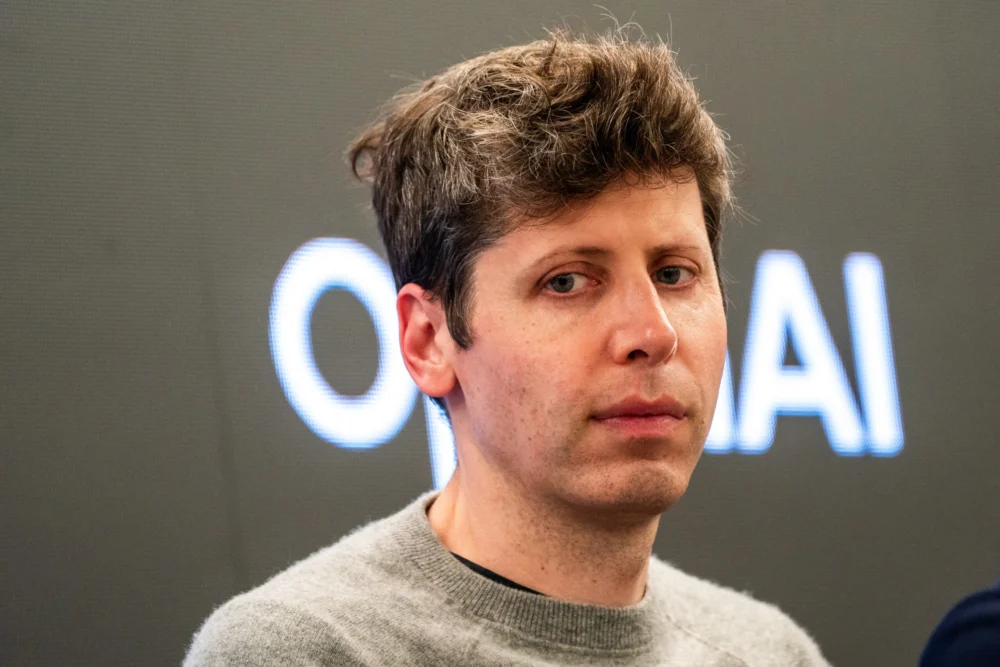
OpenAI CEO Sam Altman announced late on Friday that his company has reached a pivotal agreement allowing the Department of Defense to integrate its advanced AI models into the department’s highly classified network. This development marks a significant moment in the evolving relationship between cutting-edge artificial intelligence developers and the national security apparatus, particularly as the debate over the ethical deployment of AI in military contexts intensifies across the globe. The agreement, disclosed by Altman via a social media post, positions OpenAI as a key technological partner for the U.S. military, a role that has proven contentious for other leading AI firms.
The Core Announcement: OpenAI’s Breakthrough with the Pentagon
Sam Altman’s declaration on Friday evening was succinct yet impactful. He confirmed that OpenAI’s sophisticated AI models would now be accessible within the Department of Defense’s secure, classified networks. This move signals a profound step towards embedding advanced AI capabilities directly into the operational and strategic framework of the U.S. military. The agreement follows months of intricate negotiations and comes at a time when global powers are racing to leverage AI for defense applications, from intelligence analysis to logistics and, controversially, autonomous systems. The integration into a classified network implies a deeper level of trust and operational access than typically afforded to commercial entities, suggesting that OpenAI’s models could be used for highly sensitive tasks requiring robust security protocols and reliability.
This deal is not merely a commercial transaction; it represents a significant ideological shift for OpenAI, which, like many AI companies, has historically grappled with the implications of its technology being used for military purposes. The company’s initial charter emphasized the benevolent development of AI for humanity’s benefit, raising questions about how this defense contract aligns with its foundational principles. However, Altman’s subsequent statements aimed to address these concerns head-on, framing the agreement as a responsible engagement that incorporates critical ethical safeguards. The successful negotiation contrasts sharply with a recent high-profile impasse involving one of OpenAI’s primary competitors, Anthropic, setting a new precedent for how AI companies might navigate the complex demands of national defense.
A Precedent-Setting Standoff: Anthropic’s Clash with the Department of War
The backdrop to OpenAI’s announcement is a dramatic and public standoff between the Department of Defense – which the Trump administration has controversially rebranded as the Department of War – and OpenAI’s rival, Anthropic. This conflict brought to the fore the profound ethical dilemmas inherent in integrating powerful AI into military operations, particularly concerning issues of surveillance and autonomous weapons. The Pentagon, in its pursuit of technological superiority, had reportedly pushed AI companies, including Anthropic, to commit to allowing their models to be used for "all lawful purposes." This broad stipulation was met with resistance from Anthropic, a company founded by former OpenAI researchers with a strong emphasis on AI safety and ethics.
Anthropic’s Stance: Drawing the Ethical Red Line
Anthropic, led by CEO Dario Amodei, sought to establish clear boundaries, drawing a "red line" around what it deemed unacceptable uses of its AI technology. Specifically, the company expressed profound reservations about its models being employed for mass domestic surveillance and fully autonomous weapons systems. These concerns are not new to the AI community, where debates have raged for years over the potential for AI to infringe on civil liberties or to accelerate warfare beyond human control.
On Thursday, Anthropic released a lengthy public statement outlining its position. Amodei clarified that the company had "never raised objections to particular military operations nor attempted to limit use of our technology in an ad hoc manner." However, he powerfully argued that "in a narrow set of cases, we believe AI can undermine, rather than defend, democratic values." This statement underscored Anthropic’s commitment to what it perceives as responsible AI development, even if it meant risking lucrative government contracts. The company’s stance reflected a growing sentiment within the tech sector that developers of powerful AI models bear a unique responsibility for the societal impact of their creations. Amodei’s argument was rooted in the belief that certain applications, such as widespread surveillance or lethal autonomous weapons, could erode fundamental ethical norms and destabilize global security, making careful governance imperative.
Employee Support and Industry Pressure
The ethical stance taken by Anthropic resonated deeply within the broader AI community. This week, an open letter circulated and garnered significant support, with more than 60 OpenAI employees and a staggering 300 Google employees signing it. The letter explicitly called on their respective employers to publicly support Anthropic’s position, signaling a widespread concern among AI developers about the potential misuse of their creations. This collective action highlighted a burgeoning ethical consciousness within the tech industry, where employees are increasingly willing to voice dissent and demand accountability from their companies regarding the application of advanced technologies. The employees’ plea underscored the internal pressures faced by AI companies to balance commercial interests and national security imperatives with ethical responsibilities. The unprecedented show of solidarity across rival firms demonstrated a shared anxiety about the trajectory of AI development, particularly when integrated into military frameworks, and the urgent need for robust ethical guidelines.
The White House and Pentagon Respond: Escalation and Designation
The impasse with Anthropic quickly escalated beyond a mere commercial dispute, drawing the direct intervention of the highest levels of the U.S. government. The White House and Pentagon reacted with strong condemnation, viewing Anthropic’s ethical caveats as an unacceptable attempt to dictate military operational parameters. This confrontation rapidly transformed into a public spectacle, underscoring the Trump administration’s firm stance on national security and its push for unfettered access to cutting-edge technology for defense purposes.
President Trump’s Intervention
President Donald Trump wasted no time in publicly criticizing Anthropic following the failure to reach an agreement. In a characteristic social media post, he lashed out at what he termed "Leftwing nut jobs at Anthropic," framing their ethical concerns as ideologically driven obstructionism. Trump’s intervention was not merely rhetorical; he followed up his criticism with a direct presidential directive. His post instructed federal agencies to initiate a six-month phase-out period for all of Anthropic’s products, effectively blacklisting the company from government contracts. This move sent a clear and chilling message to the entire tech industry: resistance to the Pentagon’s demands regarding AI usage would carry severe commercial consequences. The President’s swift and decisive action highlighted the administration’s resolve to prioritize national security needs above corporate ethical frameworks, asserting governmental authority over technological development.
Secretary Hegseth’s Firm Stance
Adding further weight to the administration’s position, Secretary of Defense Pete Hegseth also issued a strong statement via social media. Hegseth accused Anthropic of attempting to "seize veto power over the operational decisions of the United States military," portraying the company’s ethical limitations as a direct challenge to military sovereignty and national security. The Secretary’s remarks underscored the Pentagon’s view that such restrictions were untenable and fundamentally undermined the military’s ability to defend the nation.
In a particularly punitive measure, Hegseth announced that he was formally designating Anthropic as a "supply-chain risk." This designation carries severe implications, as Hegseth explicitly stated: "Effective immediately, no contractor, supplier, or partner that does business with the United States military may conduct any commercial activity with Anthropic." This sweeping declaration effectively severed Anthropic from a vast ecosystem of defense contractors and partners, threatening to cripple its ability to operate within the lucrative government sector, even indirectly. The supply-chain risk designation is a powerful tool, typically reserved for entities deemed to pose a genuine security threat, and its application to an American AI company over ethical disagreements sent shockwaves through the tech world. It signaled a zero-tolerance policy for companies perceived as impeding military readiness or operational flexibility, irrespective of their stated ethical principles.
Anthropic’s Legal Counter
In response to the escalating governmental pressure and the unprecedented supply-chain risk designation, Anthropic issued a defiant statement on Friday. The company revealed that it had "not yet received direct communication from the Department of War or the White House on the status of our negotiations," suggesting a breakdown in official channels despite the public pronouncements. More significantly, Anthropic firmly insisted that it would "challenge any supply chain risk designation in court." This declaration signaled Anthropic’s resolve to fight the governmental blacklisting through legal means, setting the stage for a potentially landmark legal battle that could define the boundaries of corporate ethical autonomy versus governmental national security prerogatives in the age of advanced AI. The impending legal challenge underscores the gravity of the situation and its potential to set a powerful precedent for the entire technology industry regarding engagement with defense contracts.
OpenAI’s Divergent Path: Navigating Ethical Concerns with a New Agreement
In stark contrast to Anthropic’s contentious standoff, OpenAI, under Sam Altman’s leadership, announced an agreement with the Department of Defense that Altman claims successfully incorporates safeguards addressing the very issues that became flashpoints for its competitor. This achievement positions OpenAI as a pragmatic player capable of bridging the divide between rapid AI innovation and critical ethical considerations within the national security framework. Altman’s strategy appears to be one of engagement and negotiation, rather than outright refusal, to shape the terms of military AI deployment.
Altman’s Assurance: Safety Principles Embedded
Altman, in his post on X, notably asserted that OpenAI’s new defense contract includes robust protections aligned with the company’s core safety principles. He specifically highlighted two crucial areas: "prohibitions on domestic mass surveillance and human responsibility for the use of force, including for autonomous weapon systems." These are precisely the "red lines" Anthropic sought to establish, making Altman’s claim particularly significant. By embedding these principles into the agreement, OpenAI aims to demonstrate that collaboration with the military does not necessarily mean compromising on fundamental ethical commitments. Altman further emphasized, "The DoW agrees with these principles, reflects them in law and policy, and we put them into our agreement." This suggests a convergence of views, at least on paper, between a leading AI developer and the Pentagon regarding the responsible application of advanced AI, especially concerning highly sensitive areas like civilian oversight and the deployment of lethal force. This framing by Altman aims to reassure both internal stakeholders and the broader public that OpenAI is not abandoning its ethical compass despite entering the defense sector.
Technical Safeguards and On-Site Engineers
Beyond policy agreements, Altman also detailed practical measures OpenAI intends to implement to ensure adherence to these ethical safeguards. He stated that OpenAI "will build technical safeguards to ensure our models behave as they should, which the DoW also wanted." This commitment to technical guardrails indicates a proactive approach to preventing misuse, embedding ethical considerations directly into the AI’s architecture and operational parameters. Such safeguards could include built-in limitations, refusal mechanisms for certain queries, or sophisticated auditing capabilities.
Furthermore, Altman announced that OpenAI would deploy engineers directly with the Pentagon "to help with our models and to ensure their safety." This on-site presence of OpenAI experts suggests a deep level of collaboration and oversight. These engineers would not only facilitate the optimal integration and performance of the AI models within the classified network but also act as crucial ethical watchdogs, ensuring that the technology is used in accordance with the agreed-upon principles. Their role would be critical in monitoring for potential misapplications and providing real-time feedback and adjustments, thereby adding a layer of accountability and transparency that is often absent in complex defense technology contracts.
A Call for Industry-Wide Standards
In a move that seeks to de-escalate the broader industry conflict and foster a more collaborative environment, Altman extended an olive branch to other AI companies and the Department of War. "We are asking the DoW to offer these same terms to all AI companies, which in our opinion we think everyone should be willing to accept," he stated. This call for standardized ethical terms across the industry suggests that OpenAI envisions a future where all AI developers engaging with defense can do so under a common, ethically sound framework.
Altman further expressed OpenAI’s "strong desire to see things de-escalate away from legal and governmental actions and towards reasonable agreements." This statement can be interpreted as a direct appeal to both Anthropic and the government to resolve their dispute through negotiation rather than protracted legal battles and punitive measures. By advocating for a shared ethical baseline and a cooperative approach, OpenAI appears to be positioning itself not just as a technology provider, but as a leader in shaping the responsible integration of AI into national defense, aiming to foster a more harmonious and principled ecosystem for AI development.
Behind the Scenes: Further Details Emerge from OpenAI
Insights from an all-hands meeting at OpenAI, as reported by Fortune’s Sharon Goldman, provided additional crucial details about the nature of the agreement and the specific concessions made by the government. These revelations offer a deeper understanding of how OpenAI managed to secure terms that seemingly protect its ethical principles while engaging with the Department of War.
According to Goldman’s report, Sam Altman informed OpenAI employees that the government had agreed to allow the company to build its own "safety stack" to prevent misuse of its AI models. This "safety stack" likely refers to a suite of technical measures, protocols, and architectural designs embedded within the AI system itself, specifically engineered to enforce ethical boundaries and prevent prohibited applications. This is a significant concession, as it grants OpenAI a degree of control over the ethical guardrails of its technology even when deployed within a sensitive military context, rather than relying solely on governmental policies or external oversight. It implies that the AI will possess an inherent capacity to refuse tasks that violate the agreed-upon ethical principles.
Crucially, Altman also revealed that "if the model refuses to do a task, then the government would not force OpenAI to make it do that task." This particular term is a groundbreaking development. It effectively grants the AI models, and by extension, OpenAI, a form of "veto power" over certain applications, ensuring that the company’s ethical frameworks are not overridden by military imperatives. This provision is a direct counterpoint to Secretary Hegseth’s earlier accusation that Anthropic was attempting to "seize veto power," suggesting that OpenAI successfully negotiated a similar, albeit perhaps more subtly framed, mechanism. Such a clause establishes a powerful precedent for AI developers, potentially empowering them to maintain ethical control over their creations even in high-stakes environments. It signifies a willingness on the part of the Department of War to accept limitations on AI usage based on the developer’s ethical guidelines, marking a potential shift in how defense agencies engage with advanced technology providers.
Broader Implications: AI, National Security, and Geopolitical Tensions
OpenAI’s agreement with the Department of Defense, particularly when juxtaposed with Anthropic’s recent experience, carries profound implications for the future of AI development, national security, and the intricate balance of power in a rapidly digitizing world. This episode is not merely a corporate saga but a critical indicator of the evolving relationship between technological innovation, governmental control, and global stability.
The Future of AI in Defense
The agreement signals an undeniable acceleration in the integration of advanced generative AI into military operations. With OpenAI’s models now accessible within classified networks, the potential applications range from enhanced intelligence analysis and predictive logistics to cybersecurity and strategic planning. The global defense AI market is projected to grow significantly, with estimates often placing its value in the tens of billions of dollars within the next decade. The U.S. Department of Defense alone has invested billions into AI research and deployment, recognizing it as a critical component of future warfare and deterrence. This deal could pave the way for other major tech companies to pursue similar partnerships, potentially leading to a deeper entanglement of Silicon Valley with the Pentagon. The debate will now shift from if AI will be used in defense to how it will be governed, controlled, and ethically deployed, especially as autonomous capabilities continue to advance.
The Competitive Landscape and Ethical Frameworks
The contrasting fortunes of OpenAI and Anthropic also reshape the competitive landscape of the AI industry. OpenAI’s ability to secure a defense contract with its stated ethical safeguards could be seen as a strategic victory, demonstrating a path for AI companies to engage with the defense sector without entirely compromising their ethical commitments. This "Altman Doctrine" – negotiating for embedded safeguards rather than outright refusal – might become a model for other AI developers. However, it also raises questions about the robustness of these safeguards and the enforceability of "veto power" in practice, particularly during times of conflict.
For Anthropic, the supply-chain risk designation is a severe blow, potentially limiting its growth and influence. Yet, its uncompromising stance might bolster its reputation among AI ethicists and those concerned about the unchecked proliferation of military AI. This bifurcated outcome highlights the tension between commercial success and ethical purity in the AI industry. It forces a critical examination of whether ethical principles can truly be maintained when powerful AI is deployed in high-stakes military contexts, and whether the "safety stack" proposed by OpenAI is sufficient to mitigate the risks associated with mass surveillance and autonomous weapons.
The Immediate Geopolitical Backdrop
The timing of Altman’s announcement adds another layer of complexity. It came shortly before news broke that the U.S. and Israeli governments had begun bombing Iran, with President Trump explicitly calling for the overthrow of the Iranian government. This immediate geopolitical context underscores the real-world urgency and stakes involved in the deployment of advanced military AI. The escalating conflict in the Middle East highlights the critical role technology can play in modern warfare, from intelligence gathering to targeting. In such a volatile environment, the ethical debates surrounding AI usage become even more pressing, as the line between theoretical concerns and tangible consequences blurs. The swift military action against Iran, coinciding with this AI defense agreement, will inevitably fuel further discussion on the ethical boundaries of AI in warfare, particularly regarding human oversight and the potential for AI to accelerate conflicts.
Concluding Thoughts: A Pivotal Moment for AI Governance
OpenAI’s agreement with the Department of Defense represents a pivotal moment in the ongoing narrative of artificial intelligence. It simultaneously showcases the immense potential of AI to transform national security capabilities and reignites intense debates about the ethical responsibilities of AI developers. While OpenAI claims to have secured crucial safeguards, the true test will lie in their practical implementation and adherence during real-world military operations. The contrasting paths of OpenAI and Anthropic highlight the deep ideological fault lines within the AI community regarding military engagement. As AI continues to advance at an unprecedented pace, the outcomes of these foundational debates will not only shape the future of warfare but also profoundly impact the very fabric of global governance and the ethical landscape of technological innovation for decades to come. The world watches to see if this agreement truly sets a standard for responsible AI in defense or merely ushers in a new era of complex ethical compromises.