


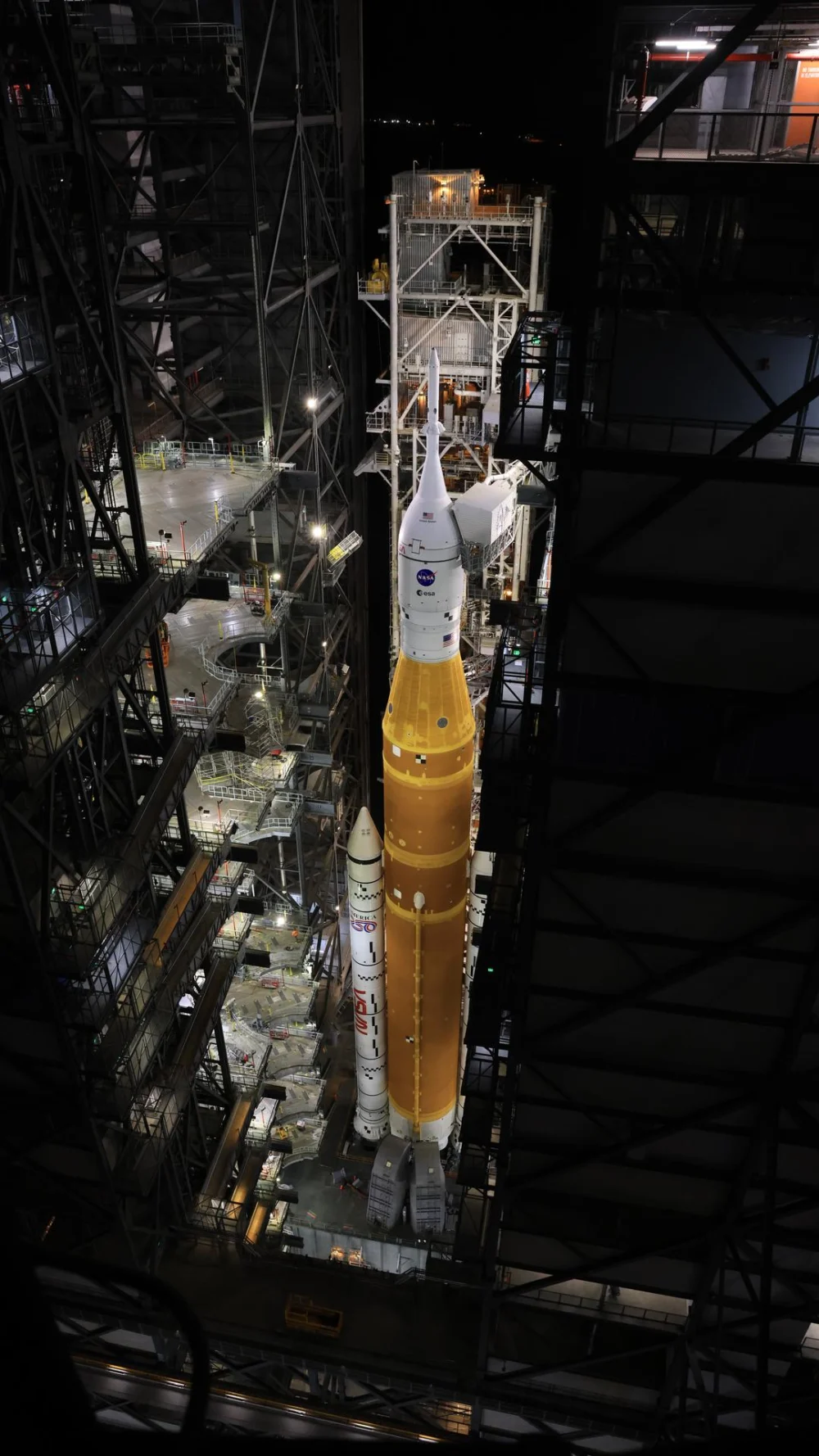
Following the meticulous rollback of NASA’s Artemis II Space Launch System (SLS) rocket and Orion spacecraft to the iconic Vehicle Assembly Building (VAB), the agency has announced it will host a pivotal news conference at 10 a.m. EST on Friday, February 27, 2026. Originating live from NASA’s Kennedy Space Center in Florida, senior leadership is poised to deliver a comprehensive update on the arduous work ahead for the upcoming crewed test flight, alongside a broader strategic overview of the ambitious Artemis campaign. This event marks a critical juncture for the mission, signaling a phase of intensified preparations and detailed assessments before the monumental journey to lunar orbit.
The Artemis II mission stands as a cornerstone in humanity’s renewed quest for lunar exploration, representing the first crewed flight of NASA’s Artemis program and a crucial precursor to returning astronauts to the lunar surface. The decision to roll back the colossal 322-foot-tall stack, comprising the SLS rocket and the Orion crew capsule, from Launch Pad 39B to the sanctuary of the VAB underscores NASA’s unwavering commitment to safety and mission assurance. While specific reasons for the rollback are often multifaceted, ranging from scheduled maintenance and system upgrades to detailed inspections or the replacement of specific components, such maneuvers are standard operating procedures designed to allow for controlled environments for sensitive work, ensuring every system is rigorously tested and optimized for the challenges of deep space.
The Artemis Program: A New Era of Lunar Exploration
The Artemis program, named after the twin sister of Apollo in Greek mythology, embodies NASA’s vision to return humans to the Moon, establish a sustainable presence there, and ultimately utilize these lunar missions as a proving ground for future human expeditions to Mars. This multi-phase initiative is designed to push the boundaries of human exploration further than ever before.
Artemis I, launched on November 16, 2022, served as the program’s uncrewed inaugural flight test. This mission successfully demonstrated the integrated performance of the SLS rocket and the Orion spacecraft on a journey beyond the Moon and back, validating critical systems such as the heat shield, propulsion, and navigation. Orion traveled approximately 1.4 million miles over 25 days, splashing down safely in the Pacific Ocean on December 11, 2022. The invaluable data collected from Artemis I has been instrumental in refining procedures, validating models, and informing necessary adjustments for subsequent crewed missions.
Artemis II, the current focus, is slated to be the first crewed test flight, carrying four astronauts on a lunar flyby. This mission will not land on the Moon but will orbit it, testing Orion’s life support systems, communications, and navigation with humans aboard. It is a critical step in demonstrating NASA’s ability to send humans safely to deep space and return them to Earth. Following Artemis II, Artemis III is planned to achieve the historic feat of landing humans on the Moon’s south pole, including the first woman and the first person of color, leveraging the Human Landing System (HLS) and potentially the Lunar Gateway outpost.
Deep Dive into the Space Launch System and Orion Spacecraft
At the heart of the Artemis missions are the Space Launch System (SLS) rocket and the Orion spacecraft, engineered to facilitate human exploration far beyond Earth’s orbit.
The Space Launch System (SLS) is NASA’s super heavy-lift rocket, designed to be the most powerful rocket ever built upon its full Block 2 configuration. For Artemis II, the Block 1 configuration is utilized, capable of generating over 8.8 million pounds of thrust at launch. This immense power is derived from its core stage, featuring four RS-25 engines (formerly used on the Space Shuttle), and two five-segment solid rocket boosters (SRBs) derived from the Space Shuttle program. The core stage, standing taller than a 16-story building, holds more than 730,000 gallons of super-cold liquid hydrogen and liquid oxygen propellant. For lunar missions, the SLS Block 1 employs an Interim Cryogenic Propulsion Stage (ICPS) to give Orion the final push needed to escape Earth’s orbit and set a trajectory for the Moon. The SLS’s unparalleled lift capability is essential not only for sending the Orion capsule with its crew but also for accommodating significant payloads required for deep-space missions, including supplies, equipment, and future components for lunar infrastructure.
The Orion spacecraft is NASA’s deep-space crew vehicle, specifically designed to transport astronauts beyond low-Earth orbit. It consists of three primary modules:
- Crew Module (CM): This is where the four astronauts will live and work during their mission. It is a state-of-the-art capsule equipped with advanced life support systems, communications, environmental controls, and crew interfaces. The CM is the only part of the spacecraft that returns to Earth. Its robust heat shield, tested extensively during Artemis I, is designed to withstand the extreme temperatures of re-entry into Earth’s atmosphere at speeds of up to 25,000 mph (approximately 40,000 km/h).
- European Service Module (ESM): Provided by the European Space Agency (ESA), the ESM is critical for the mission. It provides propulsion, power, air, and water for the astronauts, and controls the spacecraft’s temperature. It essentially functions as Orion’s powerhouse and "backpack" for deep space. The ESM features a main engine and 32 smaller thrusters, along with solar arrays that span 19 feet, generating enough electricity to power two houses.
- Launch Abort System (LAS): Positioned atop the Orion capsule, the LAS is a crucial safety system. In the event of an emergency during launch or ascent, it can rapidly propel the Crew Module away from the failing rocket, ensuring the safety of the astronauts. It is jettisoned once the rocket is safely on its way to orbit.
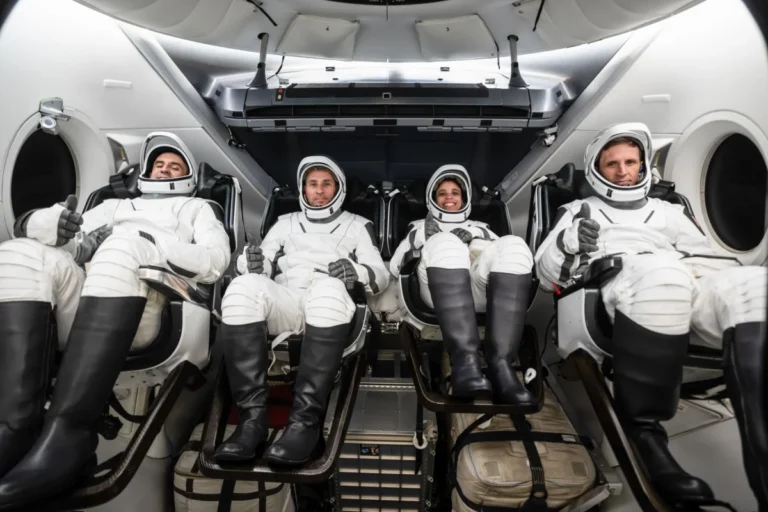
For Artemis II, the crew comprises four highly experienced astronauts: Commander Reid Wiseman (NASA), Pilot Victor Glover (NASA), Mission Specialist Christina Koch (NASA), and Mission Specialist Jeremy Hansen (Canadian Space Agency). Their selection represents not only a commitment to diversity but also highlights the international collaborative spirit of the Artemis program, with Hansen becoming the first non-American to venture into deep space. Their training has been rigorous, encompassing simulations, survival training, and extensive familiarization with the Orion spacecraft and mission profiles.
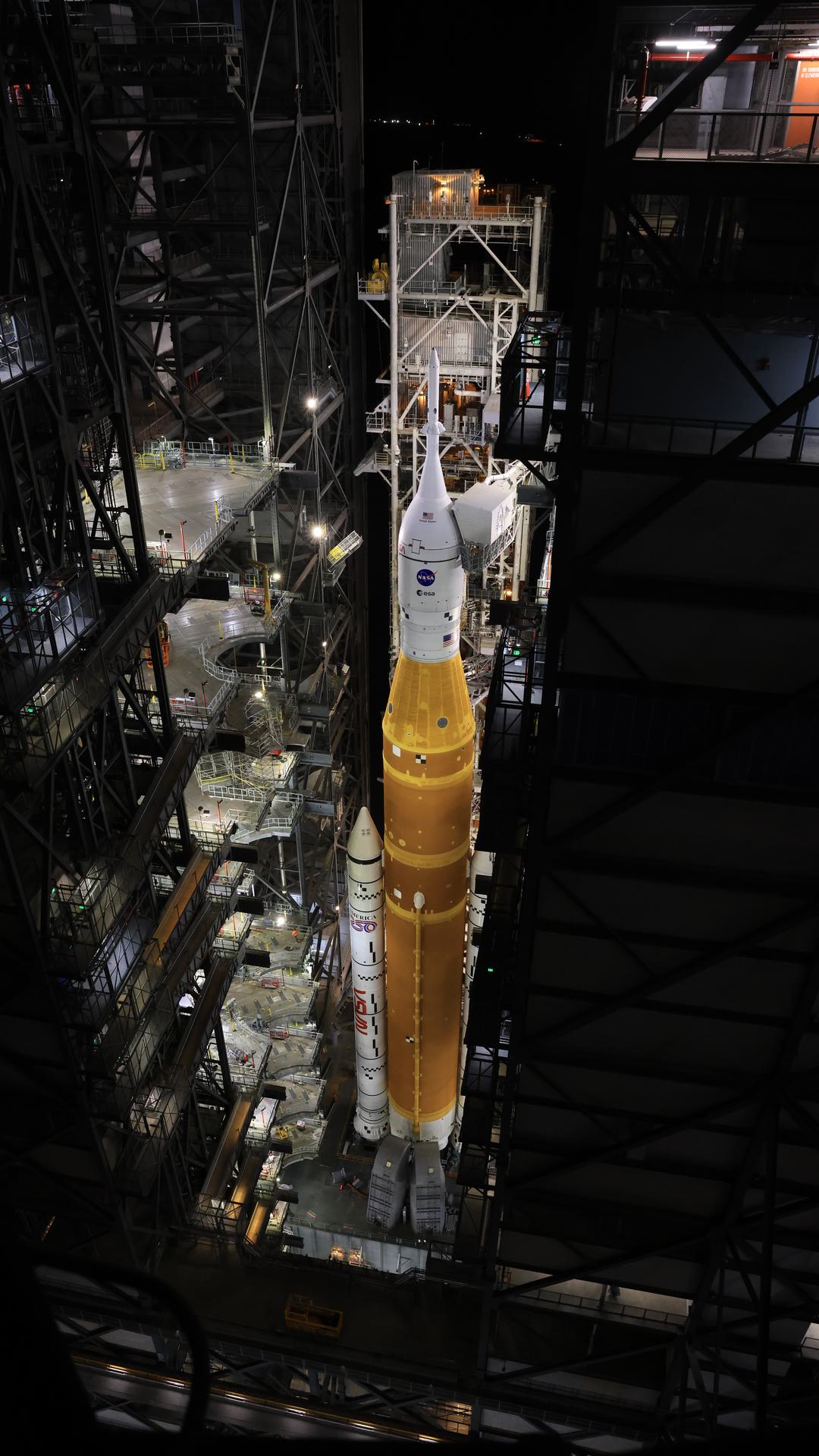
The Rollback: A Strategic Move for Mission Success
The recent rollback of the Artemis II stack to the VAB is a carefully orchestrated maneuver, indicative of the meticulous planning and iterative processes inherent in human spaceflight. While the specific details to be discussed at the news conference remain under wraps, such a move typically allows engineers and technicians to access areas of the rocket and spacecraft that are difficult or impossible to reach at the launch pad. Potential reasons for the rollback could include:
- Final System Calibrations and Software Updates: Implementing the latest software versions or conducting final electrical and avionics checks in a controlled environment.
- Hardware Inspections or Replacements: Addressing any components that require further scrutiny, maintenance, or replacement based on data from Artemis I or ongoing ground tests.
- Protection from Environmental Elements: Although February is not peak hurricane season, the VAB provides a stable, controlled environment safe from any unexpected weather phenomena.
- Integration of Late-Stage Payloads or Experiments: Ensuring that all scientific instruments or technology demonstrations are properly installed and interfaced.
- Detailed Crew Compartment Outfitting: Final preparations within the Orion capsule, ensuring it is perfectly configured for its human occupants.
Inside the VAB, engineers have access to high-bay platforms and specialized equipment that enable precise work on the towering rocket. This environment is crucial for maintaining the integrity of sensitive components and for carrying out complex integration tasks. The VAB itself is a marvel of engineering, one of the largest buildings in the world by volume, providing a secure and contaminant-free space for assembling and servicing launch vehicles.
Anticipated Insights from NASA Leadership
The news conference on February 27, 2026, is expected to provide critical updates from NASA’s top brass. While the specific participants from the original article were not listed, one can infer that key figures such as the NASA Administrator, the Associate Administrator for Human Exploration and Operations Mission Directorate, the Artemis Program Manager, and the Orion Program Manager will be present. Their statements will likely cover:
- Detailed Rationale for the Rollback: A clear explanation of the work conducted inside the VAB and its necessity.
- Mission Schedule Update: A refined timeline for Artemis II, including any adjustments to the projected launch window, which, given the 2026 conference date, would likely be late 2026 or 2027.
- Technical Progress and Milestones: Highlighting successes in testing, integration, and any challenges overcome.
- Crew Readiness: Updates on the Artemis II crew’s training and preparedness.
- Broader Program Vision: Reaffirmation of the long-term goals of the Artemis campaign, including progress on Artemis III and the Lunar Gateway.
- International Partnerships: Emphasizing the continued collaboration with ESA, CSA, and other international partners whose contributions are integral to the program’s success.
- Safety Protocols: Reassurance regarding the stringent safety measures in place for crewed missions.
Such conferences are vital for maintaining transparency with the public and stakeholders, demonstrating accountability, and inspiring confidence in the program’s ambitious objectives.
Media and Public Engagement
NASA has made provisions for both in-person and virtual participation for media representatives. In-person access is extended to those previously credentialed at NASA Kennedy for the Artemis II launch, underscoring the long-term planning involved in covering such a significant event. Virtual participation requires an RSVP to the Kennedy Space Center newsroom, ensuring that journalists globally can access critical information and pose questions. The news conference will be streamed live on NASA’s official YouTube channel, making it accessible to a global audience. An instant replay will also be available online, along with comprehensive information on how to watch NASA content across various platforms, including social media. This commitment to broad dissemination reflects NASA’s dedication to public engagement and its role as a steward of scientific advancement for all humanity.
Broader Implications and Future Horizons
The successful execution of Artemis II and the subsequent lunar landings hold profound implications for science, technology, and humanity’s future in space.
- Scientific Discovery: Returning to the Moon, particularly the polar regions, offers unprecedented opportunities for scientific research. Water ice reserves at the lunar poles could provide resources for future human habitats, including drinking water, breathable air, and rocket fuel. Geologists will gain access to pristine samples that could unlock secrets about the Moon’s formation and the early solar system.
- Technological Advancement: The development of SLS, Orion, and associated technologies like advanced life support systems, navigation, and deep-space communication pushes the boundaries of engineering. These innovations often lead to spin-off technologies that benefit life on Earth, from medical devices to advanced materials.
- Foundation for Mars Missions: The Moon serves as an ideal proving ground for Mars missions. Operating in a deep-space environment, testing long-duration habitats, and understanding the physiological and psychological effects of prolonged space travel on astronauts are all crucial steps before attempting the much longer and more challenging journey to Mars.
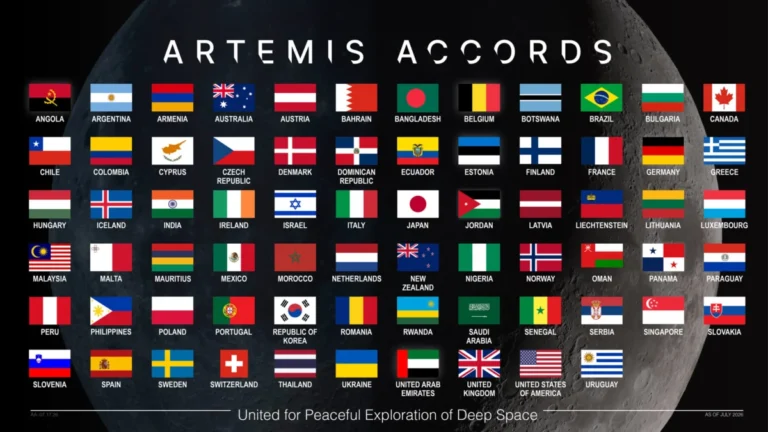
- International Collaboration and Global Leadership: The Artemis program is not solely a NASA endeavor. International partners, including ESA, CSA, and potentially others, are contributing significant hardware and expertise. This collaborative model strengthens diplomatic ties, shares the immense costs and risks of space exploration, and positions participating nations at the forefront of global scientific and technological leadership.
- Economic Impact: Large-scale space programs like Artemis generate substantial economic activity. They create high-tech jobs, stimulate innovation in various industries, and drive investment in research and development, fostering a vibrant space economy.
- Inspiration for Future Generations: Perhaps most importantly, the imagery and stories of humans returning to the Moon inspire a new generation to pursue careers in science, technology, engineering, and mathematics (STEM). It reignites the wonder of exploration and reminds humanity of its innate drive to discover the unknown.
As NASA prepares for this crucial news conference, the world watches with bated breath. The insights shared will not only clarify the immediate path for Artemis II but also paint a clearer picture of humanity’s trajectory back to the Moon and beyond. The rollback to the VAB is not a setback, but a deliberate step in a meticulously planned journey, reinforcing the commitment to ensuring every aspect of this historic mission is perfectly executed for the safety of its crew and the success of a new era of space exploration.