

The Middle East has plunged into a new, perilous phase of conflict following a massive wave of retaliatory attacks launched by Iran across the region, striking critical infrastructure in the United Arab Emirates, Bahrain, Oman, and Qatar. This unprecedented offensive, involving a barrage of ballistic missiles and drones, comes in direct response to a significant and ongoing air offensive by the United States and Israel that resulted in the death of Iran’s Supreme Leader on Saturday morning. The escalating hostilities have claimed at least two lives and injured twenty people, causing widespread damage, particularly to major international airports and vital economic hubs, and triggering one of the most severe disruptions to global travel since the onset of the Covid-19 pandemic.
Immediate Impact and Regional Fallout
The most immediate and devastating consequences of the Iranian strikes were felt in the United Arab Emirates, a nation widely regarded as a bastion of stability and a global commercial nexus. In Abu Dhabi, authorities confirmed a drone targeting Zayed International Airport (AUH) was successfully intercepted. However, the resulting "falling debris" proved fatal, killing one person and injuring seven others, underscoring the inherent dangers even in successful defense operations. AUH is a rapidly expanding international hub, crucial for both passenger and cargo traffic, and any disruption carries significant economic implications.
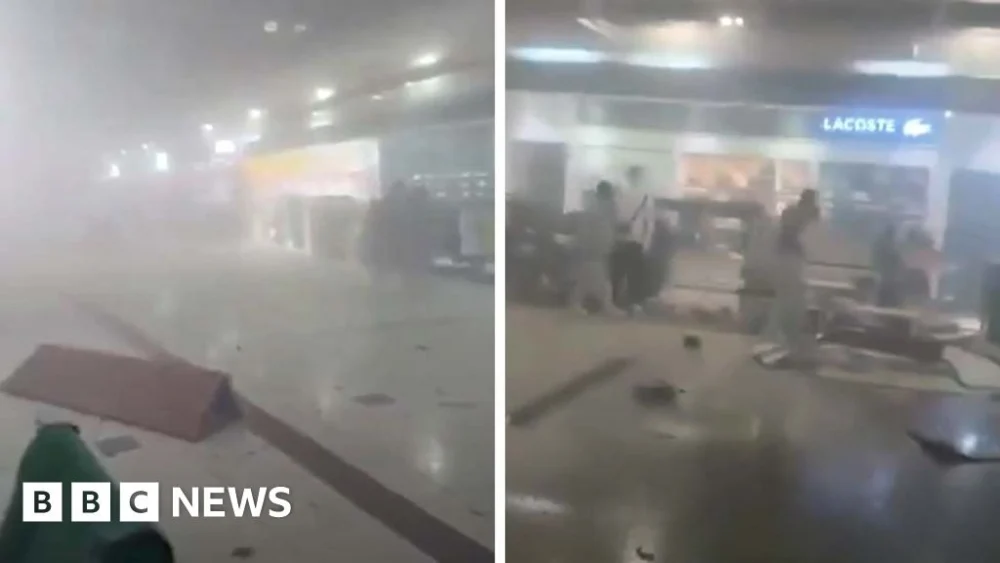
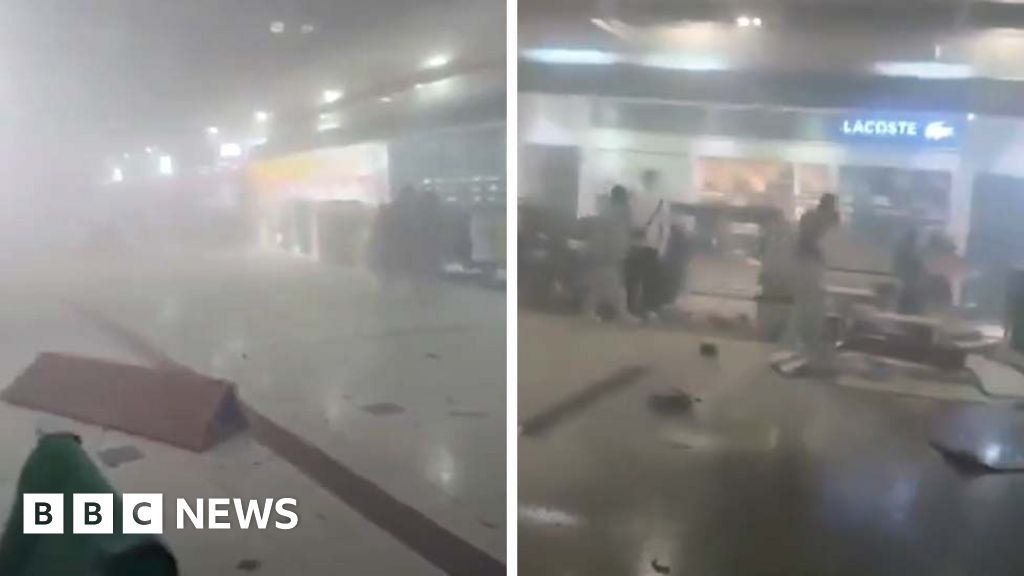
Further north, Dubai International Airport (DXB), which holds the distinction of being the world’s busiest airport by international passenger traffic, also sustained damage in what authorities vaguely described as an "incident." While specific details remained scarce, the incident resulted in injuries to four staff members, highlighting the direct threat posed to personnel at these critical facilities. The damage to DXB sent shockwaves through the global aviation industry, leading to the grounding of thousands of flights to and from the region. This unprecedented halt effectively severed a major artery in the global air travel network, impacting supply chains, tourism, and business connectivity on a grand scale. The scale of disruption rivals the early days of the pandemic, albeit driven by an entirely different, and arguably more volatile, set of circumstances.
The scope of Iranian targeting in Dubai extended beyond its airports, encompassing symbols of its modern luxury and economic prowess. The opulent Fairmont The Palm hotel, situated on Dubai’s iconic man-made archipelago, the Palm Jumeirah, was struck by a significant explosion on Saturday afternoon. Verified video footage circulated widely, depicting a raging fire and plumes of black smoke ascending into the sky, a stark visual representation of the conflict reaching the heart of Dubai’s high-profile tourism sector. Adding to the widespread damage, authorities also confirmed that debris from an intercepted drone caused a "minor fire" on the outer facade of the five-star Burj Al Arab hotel, another globally recognized landmark. These strikes on luxury targets appear to be a deliberate message, aimed at disrupting the economic stability and international image of these nations.
Economically, the Jebel Ali deep sea port, the ninth busiest container port globally and a crucial node in international trade, also suffered a fire in one of its berths due to debris from an "aerial interception." The strategic importance of Jebel Ali cannot be overstated; it serves as a gateway for goods into and out of the Middle East, Africa, and beyond. Damage to such a vital shipping hub threatens to create ripple effects across global supply chains, potentially leading to increased shipping costs and delays for a vast array of goods.
Eyewitness accounts from residents of Dubai painted a vivid picture of the intense aerial engagements. Becky Williams, a Dubai resident, recounted to the BBC, "I probably saw about 15 missiles being launched from behind my house yesterday," referring to the defensive projectiles fired by UAE authorities to intercept incoming Iranian threats. "You can hear the interceptions happening in the air," she added, highlighting the palpable tension and the close proximity of the conflict to civilian areas. Another 34-year-old Dubai resident offered a sobering perspective, stating, "What we’ve lived through over the past 24 hours is a fraction of what others have been living through in areas of conflict, so it puts things in perspective." This sentiment underscores the sudden and jarring reality of conflict for a populace accustomed to relative peace and prosperity.
Beyond the UAE, Bahrain also reported significant damage. The interior ministry confirmed that Bahrain International Airport was targeted and damaged by a drone. Unconfirmed reports on Sunday morning suggested that attacks in Bahrain were continuing, indicating a sustained and multifaceted assault. Significantly, Iran’s Islamic Revolutionary Guard Corps (IRGC) claimed responsibility for striking the headquarters of the US Navy’s Fifth Fleet, located in Bahrain’s capital, Manama. Huge plumes of black smoke were observed rising from an area near the base, though the extent of the damage or casualties at the US facility remained unconfirmed by US authorities. This direct targeting of a US military installation marks a dangerous escalation, bringing American forces directly into the crosshairs of the burgeoning conflict.
Even Oman, which has historically played a crucial role as a discreet mediator in US-Iran talks and had largely been spared from previous Iranian attacks, found itself targeted. Oman’s state news agency reported that the Duqm commercial port, a strategically important deep-water port with growing industrial and logistical significance, was struck by two drones, injuring one worker. This strike signals Iran’s willingness to extend its retaliatory reach across the entire Gulf region, further destabilizing an already volatile area.
Qatar, another Gulf state hosting US military bases, also bore the brunt of the Iranian offensive. Qatari officials, in a press conference overnight, revealed that Iran had launched 65 missiles and 12 drones on Saturday. While most were successfully intercepted by advanced defense systems, there was discernible damage, and eight people were reported injured by falling debris and shrapnel. These widespread attacks underscore the scale and sophistication of Iran’s retaliatory capabilities and its intent to project power across the region.
The Catalyst: Death of a Supreme Leader
The immediate trigger for this dramatic escalation was the death of Iran’s Supreme Leader, Ayatollah Ali Khamenei, in what Iran described as a "massive and ongoing attack" by the US and Israel. The exact details of the US-Israel air offensive launched on Saturday morning remain under wraps, but its outcome – the demise of Iran’s paramount spiritual and political authority – represents a monumental shift in the regional power dynamic. The Supreme Leader is the highest-ranking political and religious authority in Iran, wielding ultimate control over all state affairs, including its military and foreign policy. His death, especially under such circumstances, is perceived by Tehran as an act of war demanding an unequivocal and forceful response. The IRGC, a powerful branch of Iran’s military, vowed swift and crushing retaliation, a promise they have now demonstrably fulfilled. This event has fundamentally altered the calculus of conflict in the Middle East, pushing the region closer to a broader, more direct confrontation.
Economic Fallout and Global Repercussions
The ripple effects of these attacks extend far beyond the immediate damage and casualties. The grounding of thousands of flights, particularly from major hubs like DXB, represents a significant blow to the global aviation industry. Airlines face massive operational challenges, including rerouting, cancellations, and substantial financial losses. Passengers worldwide are stranded, and cargo shipments are delayed, impacting everything from perishable goods to critical manufacturing components. The sustained disruption to these vital air corridors could lead to a tangible slowdown in global trade and economic activity.
Concerns are also mounting over the potential impact on global energy markets. The Gulf region is the world’s primary source of oil and natural gas, and any instability directly threatens supply routes. While initial reports did not indicate direct hits on major oil production facilities, attacks on shipping infrastructure like Jebel Ali port and the general escalation of conflict in the Strait of Hormuz – a critical chokepoint for global oil transit – could send crude oil prices soaring. The uncertainty surrounding the future of regional stability will likely fuel speculation in commodity markets, adding another layer of economic anxiety.
The tourism sector, a cornerstone of Dubai’s economy and a significant contributor to the UAE’s GDP, faces immediate and severe challenges. The images of luxury hotels on fire and the general atmosphere of conflict will undoubtedly deter international visitors, potentially leading to a prolonged downturn in a sector that has only recently begun to recover from the pandemic. The long-term damage to the region’s image as a safe and luxurious destination could be substantial.
Regional Diplomacy and Shifting Alliances
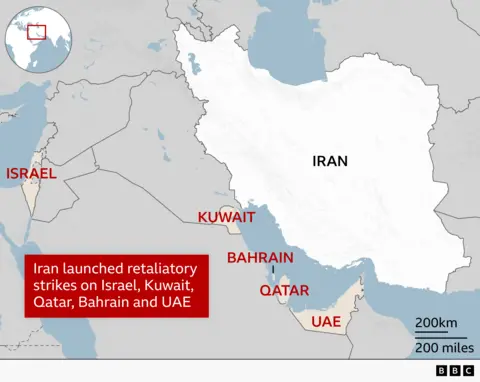
For years, several Gulf states, including the UAE, Bahrain, and Qatar, had made concerted efforts to ease tensions with Iran. These nations had engaged in back-channel diplomacy and initiated dialogue, aiming to de-escalate regional rivalries and foster a more stable environment. Crucially, they had consistently refused to allow the US to launch offensive attacks against Iran from their military bases, seeking to maintain a delicate balance and avoid being drawn into a direct conflict.
However, the current wave of Iranian strikes demonstrates that these diplomatic overtures and efforts at neutrality were insufficient to prevent direct military engagement on their soil. The targeting of their airports, economic infrastructure, and even US military assets within their borders places these nations in an increasingly precarious position. Their strategic alignment with the US, coupled with their geographic proximity to Iran, makes them vulnerable proxies in a larger geopolitical struggle. The failure of their de-escalation strategies raises profound questions about the future of regional diplomacy and whether these states can continue to walk a tightrope between powerful adversaries.
Statements and International Reactions
In the wake of the attacks, official statements from the affected nations have focused on condemning the aggression and reaffirming their commitment to national security. The UAE and Bahrain have emphasized their robust air defense capabilities while acknowledging the casualties and damage incurred. Qatar highlighted the successful interception rates but also confirmed injuries and minor damage, underscoring the severity of the threat. Oman, typically a quiet mediator, expressed deep concern over the attack on its port and called for an immediate cessation of hostilities.
From the international community, the reactions have been swift and largely condemnatory of Iran’s actions, while also urging de-escalation from all parties. The United Nations Secretary-General issued a statement expressing grave concern over the escalating violence, calling for maximum restraint and the protection of civilians and critical infrastructure. The European Union echoed these sentiments, emphasizing the need for diplomatic solutions to prevent a wider regional conflagration. The United States, while not directly confirming the US-Israel offensive that precipitated the crisis, condemned the Iranian attacks on its allies and reiterated its unwavering commitment to their security. Statements from Washington are expected to emphasize bolstering regional defense capabilities and exploring diplomatic avenues to stabilize the situation, though the immediate focus will be on assessing damage and ensuring the safety of US personnel and assets.
The Path Forward: An Uncertain Future
The violent death of Iran’s Supreme Leader and the subsequent, widespread retaliatory strikes have undeniably thrust the Middle East into an era of profound uncertainty. The regional security architecture, already strained by proxy conflicts and geopolitical rivalries, now faces the specter of direct state-on-state confrontation. The implications are far-reaching:
- Escalation Risk: The tit-for-tat nature of the attacks raises the immediate risk of further escalation, potentially drawing more regional and international actors into the conflict.
- Regional Stability: The long-term stability of the Gulf region, a critical artery for global trade and energy, is now seriously jeopardized. Foreign investment and tourism, key drivers of economic growth in states like the UAE, could face prolonged setbacks.
- US-Iran Relations: Any prospect of renewed dialogue or de-escalation between Washington and Tehran appears to have evaporated. The death of the Supreme Leader and Iran’s forceful response signify a hardening of positions and a likely continuation of adversarial policies.
- Global Impact: Beyond the immediate region, the conflict poses significant risks to global economic stability, particularly through its potential impact on oil prices, shipping lanes, and international aviation.
- Humanitarian Concerns: While the immediate casualties are contained, a prolonged conflict could lead to a humanitarian crisis, especially if civilian infrastructure becomes a sustained target.
The coming days and weeks will be crucial in determining whether the current escalation can be contained or if the Middle East is on the cusp of a much larger, more devastating conflict. The international community faces an urgent challenge to facilitate de-escalation and prevent further bloodshed, as the future not only for Iran but for the entire region hangs precariously in the balance.