


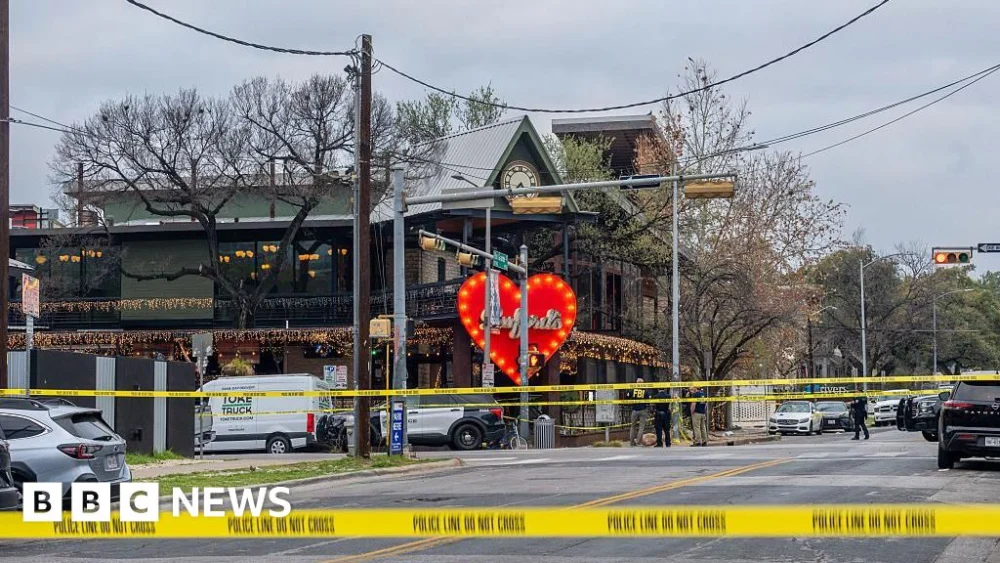
Austin, Texas, was plunged into shock and sorrow early Sunday morning following a brutal shooting incident outside a popular bar in the city’s bustling West Sixth Street entertainment district. The tragic event claimed the lives of two individuals and left fourteen others injured, with three reportedly in critical condition. The suspected gunman was also killed at the scene during a rapid and decisive intervention by law enforcement officers. Adding a grave dimension to the unfolding tragedy, the Federal Bureau of Investigation (FBI) has indicated that there may be a "nexus to terrorism" connected to the incident, prompting a multi-agency investigation that has captivated national attention.
The serenity of the pre-dawn hours on Sunday, typically reserved for the winding down of Austin’s vibrant nightlife, was shattered by the sound of gunfire. At approximately 2:00 AM Central Daylight Time (0800 GMT), Austin Police Department (APD) officers were dispatched to the vicinity of Buford’s bar, located on West Sixth Street, a popular thoroughfare known for its myriad of bars, restaurants, and live music venues. Reports flooded emergency lines describing a "male shooter" actively engaged in violence, creating immediate panic and chaos among patrons and passersby enjoying the late weekend hours.
A Detailed Chronology of the Fateful Morning
The incident unfolded with terrifying speed, painting a grim picture of deliberate aggression. West Sixth Street, a historic and lively area, was still teeming with people as the weekend night transitioned into Sunday morning. The district, a cornerstone of Austin’s "Live Music Capital of the World" identity, regularly draws large crowds, particularly on Saturday nights.
According to Austin Police Chief Lisa Davis, the assailant initiated his attack from a large SUV. Witnesses and security footage, which will undoubtedly be critical to the ongoing investigation, likely captured the suspect engaging his vehicle’s hazard lights, a seemingly innocuous action that belied the horror about to unfold. He then rolled down his window and began firing a pistol indiscriminately into the crowd gathered on the patio and sidewalk outside Buford’s bar. The initial volley of shots immediately caused confusion, panic, and a desperate scramble for cover among the unsuspecting victims. The suddenness and brutality of this initial assault speak to a calculated intent to inflict maximum harm.
Following this initial burst of violence, the suspect did not flee the scene. Instead, he parked his vehicle nearby, a chilling indication of his continued malicious intent. Exiting the SUV, he re-emerged armed with a rifle, a weapon with significantly greater range and destructive potential than the pistol he initially used. With the rifle in hand, he began walking back towards the bar, suggesting a grim determination to continue his rampage and escalate the level of carnage. This shift in weaponry and movement pattern is a critical element for investigators, indicating a sustained and evolving threat.
It was at this critical juncture that the swift and courageous actions of law enforcement proved pivotal. Three APD officers, who were already in the entertainment district as part of increased weekend security measures, converged on the scene. Their rapid deployment, which officials later confirmed took a remarkable 57 seconds from the first report, allowed them to intercept the armed suspect before he could inflict further harm with the rifle. The officers engaged the gunman at an intersection near the bar, bringing the confrontation to a decisive end. The suspect was shot and killed at the scene, neutralizing the immediate threat. This almost instantaneous response has been widely praised as a heroic act that undoubtedly prevented a far greater tragedy.
In the immediate aftermath, the scene transformed into a chaotic but highly organized emergency response zone. Paramedics, firefighters, and additional police units swarmed West Sixth Street. The area was cordoned off with police tape, and emergency medical services personnel began the arduous task of triaging and transporting the injured. The severity of the injuries varied, but the sheer number of casualties underscored the indiscriminate nature of the attack.
The Human Toll: Victims and Medical Response
The human cost of the violence was immediate and profound. Two individuals succumbed to their injuries at the scene or shortly thereafter, their lives tragically cut short. Their identities have not yet been released, pending notification of next of kin, but their loss casts a heavy shadow over the Austin community. In addition to the fatalities, fourteen people sustained injuries requiring hospitalization. Rob Luckritz, head of Austin-Travis County Emergency Management Services, confirmed that of those transported, three individuals were in critical condition, fighting for their lives in local medical facilities. The remaining eleven sustained injuries ranging from serious to minor, with many suffering from gunshot wounds, shrapnel injuries, and trauma from the ensuing stampede as people fled in terror.
The efficiency and professionalism of Austin’s emergency services were lauded by city officials. The rapid response time of 57 seconds was a testament to the integrated emergency planning and the dedication of first responders. Paramedics performed critical on-site stabilization before transporting victims to multiple area hospitals, including Dell Seton Medical Center and St. David’s Medical Center. Hospital staff were quickly mobilized to handle the influx of trauma patients, initiating emergency protocols to provide immediate care. The city’s robust emergency infrastructure, designed to handle large-scale events, played a crucial role in mitigating the severity of the crisis. Without such a rapid and coordinated response, the number of fatalities and critically injured individuals could have been significantly higher.
Unraveling the Motive: The FBI’s Terrorism Investigation
The most unsettling aspect of the ongoing investigation is the potential link to terrorism. Acting Special Agent in Charge Alex Doran, from the FBI’s San Antonio field office, publicly stated that there were "indications in the SUV and on the suspect that suggested a ‘nexus to terrorism’." This declaration immediately elevated the incident from a tragic mass shooting to one with potential national security implications. While Doran remained tight-lipped about the specific details, citing the early stages of the investigation, his statement implies that investigators uncovered evidence suggesting the attack was ideologically motivated, rather than purely criminal or a result of personal grievance.
A "nexus to terrorism" typically refers to evidence that an act of violence was committed in furtherance of political or social objectives, often by an individual or group motivated by extremist ideologies. This could involve written manifestos, digital communications, symbols, specific items found on the suspect or in his vehicle, or connections to known extremist groups or individuals. The FBI, as the lead federal agency for domestic terrorism investigations, would be meticulously analyzing every piece of evidence to understand the shooter’s mindset, motivations, and any potential affiliations.
The immediate search of the suspect’s SUV for explosives yielded negative results, alleviating fears of a secondary device or a larger, coordinated attack. However, the presence of a rifle and the suspect’s methodical return to the scene with it, after initially firing a pistol, indicates a clear intent to maximize casualties and create terror. This behavior, combined with the FBI’s statement, points towards a deliberate and premeditated act.
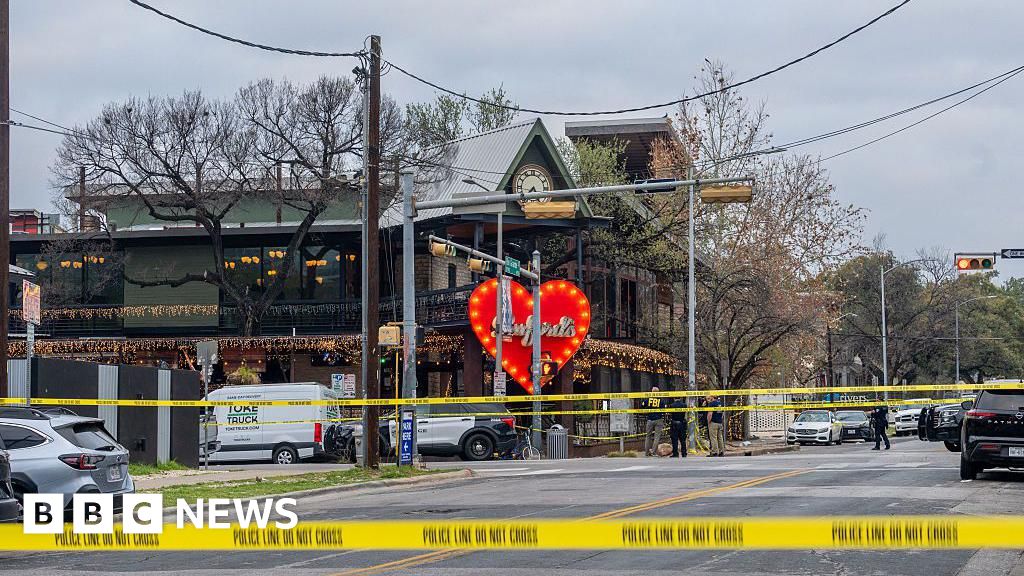
The investigation is a complex, multi-agency effort, involving the Austin Police Department, the FBI, the Bureau of Alcohol, Tobacco, Firearms and Explosives (ATF), and potentially other federal and state agencies. Their collective objective is to identify the suspect, establish his background, uncover his motives, and determine if he acted alone or had any collaborators. This process involves forensic analysis of the crime scene, examination of the weapons, digital forensics from any devices recovered, and extensive interviews with witnesses and potential associates. "We are committed to seeing this process through to the very end," Doran affirmed, emphasizing the thoroughness and dedication required for such a high-stakes investigation. The withholding of specific details is standard procedure in ongoing investigations, particularly when sensitive information could compromise intelligence gathering or future legal proceedings.
Official Response and Community Resilience
Austin city officials were quick to praise the rapid and effective response of emergency services. Austin Police Chief Lisa Davis highlighted that the department’s strategic deployment of increased police and emergency resources in the entertainment district during weekend hours was crucial. "Because of increased police and emergency resources in the entertainment area over the weekend, they were able to ‘rapidly’ respond to the scene," Davis stated, underscoring the foresight in public safety planning. This proactive approach undoubtedly played a significant role in limiting the number of casualties.
Austin Mayor Kirk Watson echoed these sentiments, expressing profound gratitude for the swift actions of first responders. "I’m very thankful for the speed," Mayor Watson remarked. "They definitely saved lives." His words encapsulated the city’s relief and admiration for the courage demonstrated by the officers who confronted the armed assailant. The Mayor also pledged the full support of the city government to the victims, their families, and the ongoing investigation, emphasizing Austin’s commitment to healing and ensuring public safety.
The incident sent ripples of shock and sorrow throughout the Austin community, a city celebrated for its inclusive and vibrant culture. Local residents and business owners on West Sixth Street expressed a mixture of grief, anger, and a resilient determination not to let fear overshadow their way of life. Community leaders and faith-based organizations quickly organized vigils and support services for those affected, offering solace and solidarity. The attack, occurring in such a popular and open public space, inevitably sparked conversations about safety in crowded urban environments and the pervasive threat of gun violence.
Austin’s Identity Under Scrutiny: Broader Implications
The shooting on West Sixth Street strikes at the heart of Austin’s identity. Known globally as a dynamic hub for technology, education, and especially culture, Austin prides itself on its welcoming atmosphere and bustling social scene. The entertainment districts, particularly West Sixth Street and the adjacent East Sixth Street, are economic engines and vital components of the city’s tourism industry, attracting millions of visitors annually. An incident of this magnitude, particularly with a potential terrorism link, casts a temporary shadow over this image and raises immediate concerns about public safety in open, accessible urban spaces.
The economic implications, though secondary to the human tragedy, cannot be ignored. Businesses in the affected area and potentially across the broader entertainment sector may experience a temporary downturn as patrons react to safety concerns. The city, however, has a strong track record of resilience, and efforts will undoubtedly be made to reassure both residents and tourists that Austin remains a safe and vibrant destination.
From a policy perspective, the incident is likely to reignite debates on gun control, especially in Texas, a state with some of the most permissive gun laws in the nation, including permitless carry. While the specific motives and legal acquisition of the weapons used are still under investigation, any discussion of public safety in the wake of such an event invariably includes the broader context of firearms access. It is crucial, however, for public discourse to remain factual and avoid premature conclusions while the investigation is ongoing.
Moreover, the "nexus to terrorism" adds another layer of complexity. If confirmed as an ideologically motivated attack, it underscores the persistent threat of domestic extremism in the United States. Law enforcement agencies face the immense challenge of monitoring and countering threats from individuals radicalized online or through various extremist narratives, often operating as "lone wolves" without direct command-and-control structures. This incident will likely prompt a review of intelligence gathering and threat assessment protocols at both local and federal levels, particularly concerning individuals who may harbor extremist views and access to firearms.
The psychological impact on witnesses, first responders, and the wider community will also be profound. Events of this nature can lead to post-traumatic stress, anxiety, and a general sense of unease. Providing adequate mental health support to those affected will be a crucial part of the city’s recovery efforts.
The Shadow of Gun Violence and Domestic Extremism
The Austin shooting, while unique in its specifics and potential terrorism link, occurs within a broader landscape of gun violence that plagues the United States. Mass shootings have become an increasingly frequent and devastating phenomenon, prompting continuous national debate about their causes and prevention. While each incident has its distinct characteristics, the common thread of readily available firearms and their use in acts of extreme violence remains a poignant concern.
The FBI’s involvement in investigating a "nexus to terrorism" for what initially appeared to be a standard mass shooting underscores the evolving nature of threats facing American communities. Domestic extremism, whether driven by white supremacy, anti-government ideologies, or other radicalized viewpoints, poses a significant and growing challenge. These acts, often perpetrated by individuals acting independently but inspired by broader movements, are particularly difficult to detect and prevent. The Austin investigation will provide critical insights into the contemporary profile of such threats and inform strategies for countering them.
As the investigation progresses, authorities will meticulously piece together the narrative of what transpired in Austin. The focus will remain on identifying the deceased suspect, understanding his motivations, and determining the full scope of any potential extremist ties. The community, while grieving, stands united in its resolve to support the victims, honor the fallen, and reinforce the spirit of resilience that defines Austin. The lessons learned from this tragic event will undoubtedly shape future public safety strategies and contribute to the ongoing national conversation about preventing such horrors from recurring. The commitment from all levels of law enforcement and government is clear: to ensure justice for the victims and to safeguard the peace and security of the community.