


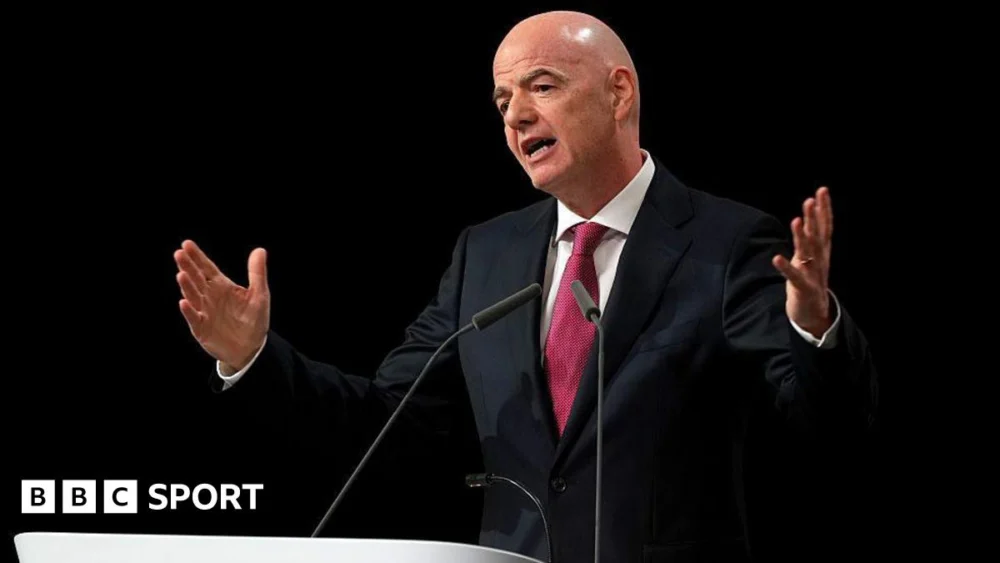
The global football community is grappling with a contentious proposal from FIFA President Gianni Infantino: players who deliberately cover their mouths while engaging in on-pitch confrontations with opponents should face immediate dismissal. Infantino’s assertive stance, revealed in an exclusive interview with Sky News, suggests a fundamental shift in how football authorities intend to tackle unsportsmanlike conduct and the potential for abuse during heated exchanges. This proposed measure stems from a growing concern over the opacity of player interactions during matches, particularly in the wake of a recent incident involving Benfica winger Gianluca Prestianni and Real Madrid’s Vinicius Jr.
The Prestianni-Vinicius Jr. Incident: A Catalyst for Change
The controversy that has brought this issue to the forefront occurred less than two weeks prior to Infantino’s remarks. During a high-stakes Champions League fixture, Argentinian prodigy Gianluca Prestianni, then representing Benfica, was observed raising his shirt over his mouth while speaking to Real Madrid’s Brazilian star Vinicius Jr. This action immediately drew scrutiny, raising suspicions about the nature of their exchange.
Subsequently, UEFA, the governing body for European football, provisionally banned Prestianni for one match, citing alleged use of racist language. Prestianni has vehemently denied these accusations. The ban, however, is pending the outcome of a full investigation by UEFA’s ethics and disciplinary inspector. This means the young winger could face further sanctions once the inquiry is complete, highlighting the severity with which such allegations are treated.
Infantino, while acknowledging that individual cases require thorough investigation by the relevant judicial bodies, emphasized the broader need for football to "act and be decisive" in implementing measures with a demonstrable "deterrent effect." This suggests a proactive approach rather than a reactive one, aiming to prevent such incidents from occurring in the first place.
FIFA’s Stance: Presumption of Guilt and Deterrence
Infantino articulated his rationale with stark simplicity: "If a player covers his mouth and says something, and this has a racist consequence, then he has to be sent off, obviously." He further elaborated on the proposed principle, stating, "There must be a presumption that he has said something he shouldn’t have said, otherwise he wouldn’t have had to cover his mouth." His reasoning is rooted in the belief that transparency is paramount in on-pitch communication during confrontations. "If you do not have something to hide, you don’t hide your mouth when you say something. That’s it, as simple as that."
This "guilty until proven innocent" approach, albeit in a specific context, signals a significant departure from traditional sporting justice, where the burden of proof often lies with the accuser. The rationale behind this proposed presumption is to create an environment where players are less inclined to engage in unsportsmanlike or offensive behaviour if they know their actions will be scrutinized more intensely. The visual act of covering one’s mouth during an argument is seen as an implicit admission of intent to conceal potentially offensive remarks.
The International Football Association Board (Ifab) and the Path Forward
The issue of players hiding their speech was a key topic of discussion at the International Football Association Board (Ifab) annual general meeting held in Wales over the weekend. Ifab, the body responsible for the Laws of the Game, is where any potential rule changes are formally debated and decided.
While no immediate agreement was reached at the Wales meeting, it was decided that consultations would commence to develop concrete measures aimed at preventing players from concealing their verbal exchanges. This indicates a collaborative approach, involving various stakeholders within the football world.
However, the urgency of the situation, particularly with the looming World Cup, means that a decision could be made sooner rather than later. FIFA Secretary General Mattias Grafstrom indicated that the FIFA Congress, scheduled for April 30th in Vancouver, would serve as a crucial platform for further discussion and potential agreement. "We want to continue the discussion and potentially come up with measures before the World Cup," Grafstrom stated on Saturday, highlighting the ambition to implement changes in time for the prestigious tournament.
Broader Implications and Stakeholder Reactions
The proposed measure has far-reaching implications for the conduct of football. If adopted, it would fundamentally alter the dynamic of player interactions during confrontations. Referees would be empowered, and indeed instructed, to interpret the act of covering one’s mouth as a strong indicator of misconduct, leading to a mandatory red card.
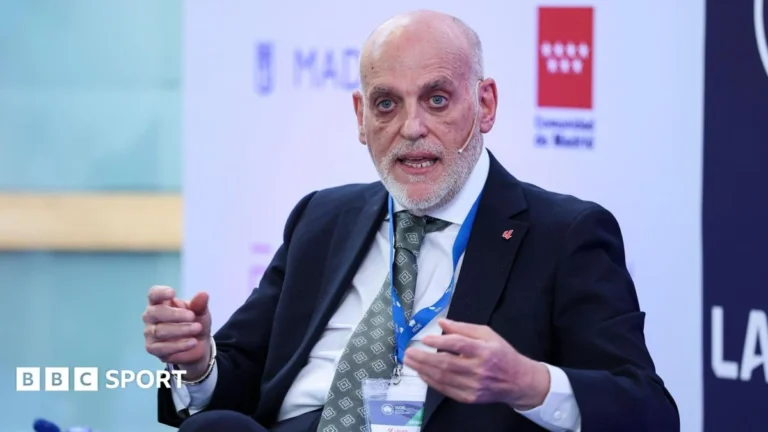
Mark Bullingham, the chief executive of The Football Association and a member of the Ifab board, acknowledged the need for further deliberation. He emphasized that "more discussion is needed to find the correct solution" and stressed the importance of consulting "the game more broadly" to avoid "any unforeseen circumstances." Bullingham echoed Infantino’s sentiment regarding the lack of legitimate reasons for covering one’s mouth during a confrontation, stating, "You can see when a player is talking to an opponent, there are very few circumstances where they should need to cover their mouth when they are confronting them."
However, he also cautioned against hasty decisions, stating, "We need to look at everything and make sure if we were going to bring in a rule change or a penalty that we’re not going to create further problems." This suggests a pragmatic approach, seeking to balance the desire for a cleaner game with the need for practical and fair enforcement.
Supporting Data and Contextual Background
The call for stricter measures against on-pitch verbal abuse is not without precedent. Racist incidents and other forms of abuse have plagued football for years, prompting various bodies to introduce sanctions and awareness campaigns. According to a 2023 report by the anti-discrimination group Kick It Out, reported incidents of discrimination in English football rose by 4% in the 2022-23 season, with online abuse and discriminatory chanting remaining significant concerns. While the proposed FIFA measure focuses on on-pitch communication, it reflects a broader societal concern about the pervasiveness of hate speech and the need for robust mechanisms to combat it.
The history of football has seen numerous instances where players have been accused of using offensive language, often with limited recourse for definitive proof due to the lack of clear audio or visual evidence. The visual cue of covering a mouth has long been a red flag for referees and spectators alike, often indicating an attempt to conceal offensive language. The current proposal seeks to formalize this observation into a concrete rule with severe consequences.
Timeline of Events and Future Prospects
- Recent Past: The Gianluca Prestianni and Vinicius Jr. incident occurs during a Champions League match, sparking debate.
- Less than two weeks ago: FIFA President Gianni Infantino gives an interview to Sky News, outlining his proposal for red cards for players covering their mouths.
- This past weekend: The International Football Association Board (Ifab) holds its annual general meeting in Wales. The issue is discussed, and it’s agreed that consultations will be held to develop measures. No immediate agreement is reached.
- April 30th: The FIFA Congress convenes in Vancouver. This is seen as the next key opportunity for a potential decision or formal proposal to be made.
- Summer (this year): The World Cup is scheduled to take place. FIFA aims to have measures in place before this major tournament.
The proposed rule change, if implemented, would require an amendment to the Laws of the Game, a process overseen by Ifab. The FIFA Congress has the authority to propose such amendments, which are then voted upon by member associations. The speed at which this proposal is moving suggests a strong will from FIFA’s leadership to address the issue decisively.
Analysis of Potential Impact and Challenges
The implications of Infantino’s proposal are significant. On one hand, it has the potential to create a powerful deterrent against verbal abuse and unsportsmanlike conduct on the field. By making the act of hiding one’s mouth a direct pathway to a red card, FIFA aims to foster an environment of greater accountability and respect. This could lead to a cleaner, more positive spectacle for fans and a safer environment for players.
However, challenges remain. The primary challenge lies in the subjective interpretation of intent. While Infantino’s reasoning is straightforward – "If you do not have something to hide, you don’t hide your mouth" – football is a game of intense emotions and split-second reactions. There might be instances where a player covers their mouth for reasons unrelated to offensive language, such as a sudden cough, a reaction to an injury, or even to communicate discreetly with a teammate. The proposed "presumption of guilt" could lead to controversial decisions and appeals.
Furthermore, the effectiveness of the "deterrent effect" will depend on consistent and fair application of the rule by referees. Training and clear guidelines will be crucial to ensure that the new measure is implemented uniformly across all matches and competitions. The ongoing consultations with various stakeholders, including players’ unions and coaches, will be vital in refining the proposal to mitigate potential unintended consequences.
The Football Association’s cautious approach, advocating for broader consultation, highlights the delicate balance required. While the intent to eradicate abuse is commendable, the method of achieving it needs to be robust, equitable, and practically implementable within the fast-paced and often chaotic environment of a football match. The coming weeks will be critical in determining whether this bold proposal will indeed reshape the conduct of players on the global football stage.