



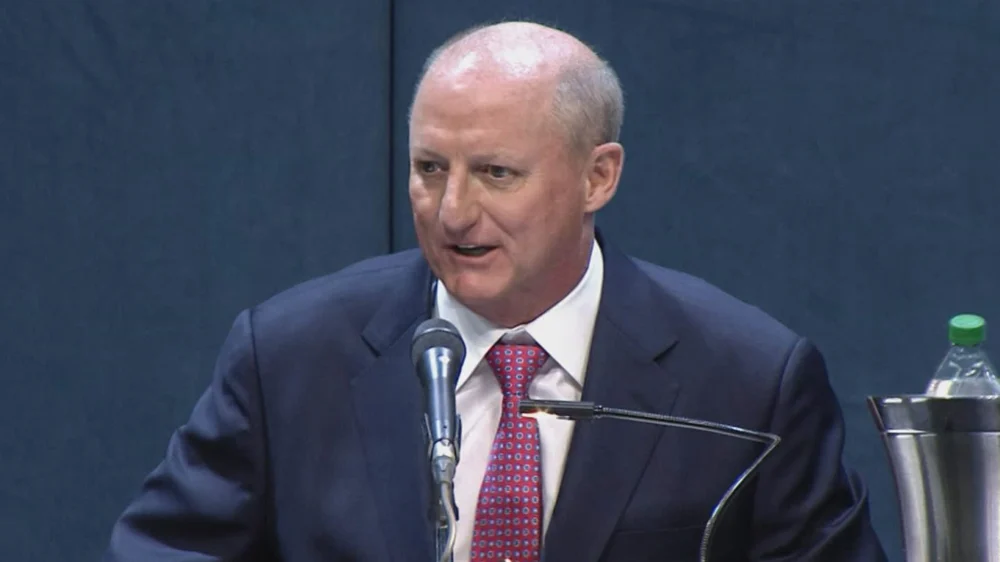
Berkshire Hathaway’s new chief executive, Greg Abel, has delivered a clear message of unwavering continuity and steadfast adherence to the conglomerate’s foundational principles in his inaugural annual shareholder letter. Released on Saturday, alongside Berkshire’s 2025 annual report and quarterly earnings, the missive served as Abel’s first official communication as CEO to the company’s vast investor base, aiming to assuage any concerns regarding the transition from the legendary Warren Buffett. Abel, 63, who officially assumed the CEO role at the start of 2026 following Buffett’s step-down from the top executive position, underscored his commitment to preserving Berkshire’s distinctive culture of financial conservatism and disciplined, long-term investing, declaring these tenets would continue "into perpetuity."
"I am honored by our Board’s decision to appoint me CEO of Berkshire and humbled to succeed Warren as I write my first annual letter to you," Abel penned, acknowledging the monumental shoes he steps into. "Warren is obviously a very hard act to follow." This statement, while recognizing the incomparable legacy of his predecessor, simultaneously set the tone for a leadership era characterized not by radical shifts, but by a meticulous guardianship of the strategies that have defined Berkshire Hathaway for decades. The letter, accompanying the company’s comprehensive annual report (accessible at berkshirehathaway.com/2025ar/2025ar.pdf) and detailed quarterly earnings (cnbc.com/2026/02/28/berkshire-hathaway-brka-q4-2025-earnings.html), laid out a robust framework of foundational values, promising to uphold the financial strength and strict capital discipline that have become synonymous with the Berkshire brand.
A Legacy of Prudence: The Fortress-Like Balance Sheet
Central to Abel’s vision for Berkshire’s future is the unwavering commitment to maintaining its "fortress-like balance sheet." This philosophy, deeply ingrained by Buffett, ensures the company’s financial foundation remains uncompromised, even amidst the most turbulent economic conditions. Abel articulated this commitment, stating, "We preserve this financial strength by using debt sparingly and prudently. Our substantial liquidity enables us to meet our obligations even under the most adverse conditions and to respond swiftly when opportunities arise." This strategic emphasis on financial strength is not merely a conservative stance; it is a proactive strategy designed to enable opportunistic action.
At the close of 2025, Berkshire Hathaway boasted an extraordinary cash pile of $373.3 billion. This staggering sum, often viewed by external observers as an underperforming asset, was explicitly framed by Abel as "strategic dry powder." This liquidity, he explained, is a critical enabler, allowing Berkshire to act decisively when compelling investment opportunities surface without ever jeopardizing its inherent resilience. The sheer scale of this cash reserve, which has grown significantly over recent years, reflects both the immense profitability of Berkshire’s diverse subsidiaries and the challenging environment for deploying capital at attractive valuations in a competitive market. Abel’s letter served to actively counter any interpretation that this substantial cash position signifies a retreat from investing, instead repositioning it as a testament to the company’s patient and disciplined approach to capital allocation.
This commitment to financial conservatism also extends to Berkshire’s long-standing policy on dividends. Abel confirmed that the company would continue its resistance to paying a cash dividend, a stance consistent with Buffett’s philosophy for decades. "Our approach to cash dividends continues to be that Berkshire will not pay dividends so long as more than one dollar of market value for shareholders is reasonably likely to be created by each dollar of retained earnings," Abel wrote, adding that this policy is subject to annual review by the board. This philosophy prioritizes the reinvestment of earnings into businesses and assets that can generate superior long-term returns for shareholders, rather than distributing cash that shareholders might then invest elsewhere, potentially less efficiently. Historically, this strategy has allowed Berkshire to compound capital at rates that have significantly outpaced market averages over long periods, creating immense value for its Class A and Class B shareholders.
The Bedrock of Investment: Patience and Concentration
Abel’s letter reinforced Berkshire’s unique investment philosophy, which applies a consistent, disciplined framework across all capital allocation activities, whether it involves acquiring an entire business, purchasing shares of a public company, or repurchasing its own stock. "We will assess value carefully, act patiently, and hold for the long term — preferably forever," he affirmed, echoing one of Buffett’s most famous investment tenets. This patient, value-driven approach contrasts sharply with the short-term focus prevalent in much of modern finance.
The conglomerate’s equity portfolio, a significant component of its overall asset base, will remain concentrated in a select group of high-quality American companies. Abel specifically highlighted Apple, American Express, Coca-Cola, and Moody’s as examples of businesses that Berkshire expects to compound value over decades. This list is notable not only for the companies it includes but also for a subtle omission: Bank of America, which ranked as Berkshire’s third-largest holding at the end of 2025, was not explicitly mentioned among the long-term compounders. While this absence does not necessarily signal an imminent divestment, it could suggest a nuanced shift in emphasis towards companies with more predictable, compounding growth trajectories, or simply a strategic decision to highlight a particular subset of holdings for illustrative purposes in his inaugural communication.
Abel confirmed that this concentrated approach, characterized by limited trading activity, would persist. However, he also introduced a critical caveat: Berkshire would "significantly adjust" a position if the long-term economic prospects of the underlying business were to fundamentally change. This pragmatic flexibility ensures that while Berkshire maintains its long-term orientation, it is not rigidly bound to underperforming assets indefinitely. This balanced approach allows for adaptability without succumbing to short-term market noise.
A key question that had lingered over the leadership transition—the direct oversight of Berkshire’s sprawling equity portfolio—was definitively answered. Abel declared his direct responsibility for this crucial function. "At Berkshire, equity investments are fundamental to our capital allocation activities; responsibility ultimately resides with me as CEO," he wrote. This clarification dispels any ambiguity, firmly placing the ultimate decision-making authority for the equity portfolio with the new chief executive.
While Abel assumes direct oversight, the existing investment managers will continue their roles. Ted Weschler will continue to manage approximately 6% of the portfolio. This allocation includes investments previously overseen by Todd Combs, another long-time investment lieutenant to Buffett and CEO of Geico, who recently departed Berkshire for a role at JPMorgan. Combs’ departure in late 2025 (reported by CNBC on December 8, 2025) marked a notable change in Berkshire’s inner circle, making Abel’s clear delineation of investment responsibilities all the more significant. Weschler and Combs were initially brought into Berkshire to eventually manage a larger portion of the portfolio and potentially succeed Buffett in investment management, making the clarity around Abel’s role crucial for investor confidence.
Decentralized Power and Unwavering Integrity
Beyond financial metrics and investment strategies, Abel also underscored other core values that underpin Berkshire’s enduring success: its decentralized management model and its "reputation for integrity." The decentralized structure, a hallmark of Buffett’s leadership, empowers the CEOs of Berkshire’s myriad subsidiary companies to operate with significant autonomy, fostering entrepreneurial spirit and accountability. This model has allowed Berkshire to efficiently manage a diverse portfolio of businesses ranging from insurance (Geico, General Re) and energy (Berkshire Hathaway Energy) to manufacturing, retail, and services (BNSF Railway, See’s Candies, Dairy Queen, Precision Castparts). Abel’s commitment to maintaining this structure signals his belief in its effectiveness for fostering robust performance across the conglomerate.
The emphasis on "reputation for integrity" is equally critical. In an era where corporate ethics are under constant scrutiny, Berkshire’s clean record and transparent dealings have been a competitive advantage. Abel’s reaffirmation of this value highlights its role not just as a moral imperative, but as a strategic asset that attracts high-quality management teams, fosters trust with business partners, and maintains investor confidence.
Greg Abel: The Steward for Decades to Come
Greg Abel, a Canadian executive born in Edmonton, Alberta, brings a quarter-century of experience within the Berkshire Hathaway ecosystem to his new role. His journey began in 2000 when Berkshire acquired MidAmerican Energy, where he had been instrumental in its growth. He rose through the ranks, becoming CEO of MidAmerican Energy (now Berkshire Hathaway Energy) in 2008. Prior to joining Berkshire, Abel worked at CalEnergy, where he transformed a relatively small geothermal firm into a diversified energy business, showcasing his operational acumen and strategic vision early in his career. His hands-on operational expertise and deep understanding of Berkshire’s subsidiary businesses are well-known internally, having overseen a vast network of CEOs reporting to him for many years.
In his letter, Abel articulated a vision for his tenure that aligns perfectly with Berkshire’s long-term orientation. He views his role not as a temporary custodian but as a dedicated steward, intending to guide Berkshire for decades to come. "Our owners’ time horizon extends beyond the tenure of any individual CEO," he wrote, setting a realistic yet ambitious tone. "I will not be your CEO for the next 60 years as simple arithmetic makes that — shall we say — an ambitious plan. However, 20 years from now, when I will have just a fraction of the tenure that Warren had, my intention is that you — or your descendants — will be proud that your company is even stronger." This statement directly addresses the challenge of following a leader who helmed the company for over half a century, while firmly planting his flag on a multi-decade commitment to growth and strengthening the enterprise.
Despite stepping down as CEO, Warren Buffett remains actively engaged as Chairman of Berkshire Hathaway. Abel noted that Buffett continues to come into the office five days a week, providing invaluable input and guidance. This continued active involvement ensures a smooth transition and allows Abel to draw upon Buffett’s unparalleled wisdom and experience, providing a stable bridge between eras.
A Distinct Communication Strategy: Quality Over Frequency
In another departure from typical Wall Street norms, Abel made it clear that Berkshire will not adopt the common cadence of quarterly earnings calls. This decision reinforces the company’s long-term focus and its disinterest in catering to the short-term demands of the market. "We concentrate on quality, not frequency. If a significant issue arises, you will hear from me, but it will not be through quarterly commentary, given our long-term horizon," he stated.
This communication strategy is a direct reflection of Berkshire’s investment philosophy. By eschewing quarterly calls, Abel signals that the company’s focus remains on fundamental business performance and long-term value creation, rather than managing quarterly expectations or engaging in frequent market commentary that can often distract from strategic goals. For long-term investors, this approach is likely to be welcomed as a continuation of Berkshire’s unique identity, while it may require a different analytical approach from short-term traders and analysts accustomed to more frequent corporate updates. The implications for investors are clear: Berkshire expects its shareholders to adopt a similarly patient, long-term perspective, trusting in the underlying strength of its businesses and the disciplined capital allocation strategy.
Broader Impact and Implications for Berkshire’s Future
Greg Abel’s inaugural shareholder letter is more than just a formality; it is a foundational document that sets the tone for his leadership and reassures a global investor base accustomed to Buffett’s direct and often philosophical communications. The message of continuity, reinforced by the emphasis on core Berkshire values, is designed to instill confidence that the conglomerate’s unique blend of operational excellence and astute capital allocation will persist.
The challenges for Abel are significant, including the deployment of Berkshire’s massive cash pile in an increasingly competitive investment landscape, identifying "elephant-sized" acquisitions that meet Berkshire’s stringent criteria, and navigating an evolving global economic environment without the daily public persona of Warren Buffett. However, his clear articulation of strategy, rooted deeply in the principles that built Berkshire, provides a strong blueprint.
The market’s initial reaction to the letter and the accompanying earnings, which included a $373.3 billion cash position at the end of 2025, suggests an appreciation for the consistency. While Berkshire’s Class A and Class B shares often react to overall market sentiment and specific earnings results, the underlying message of continuity is crucial for maintaining investor confidence in a post-Buffett CEO era. For many, Berkshire Hathaway is not just a stock but an institution, and Abel’s letter has affirmed his intention to preserve and strengthen that institution for future generations of shareholders. His commitment to a multi-decade tenure, coupled with Buffett’s continued presence as Chairman, positions Berkshire for a stable transition and continued adherence to the principles that have made it one of the most successful and admired companies in the world.