
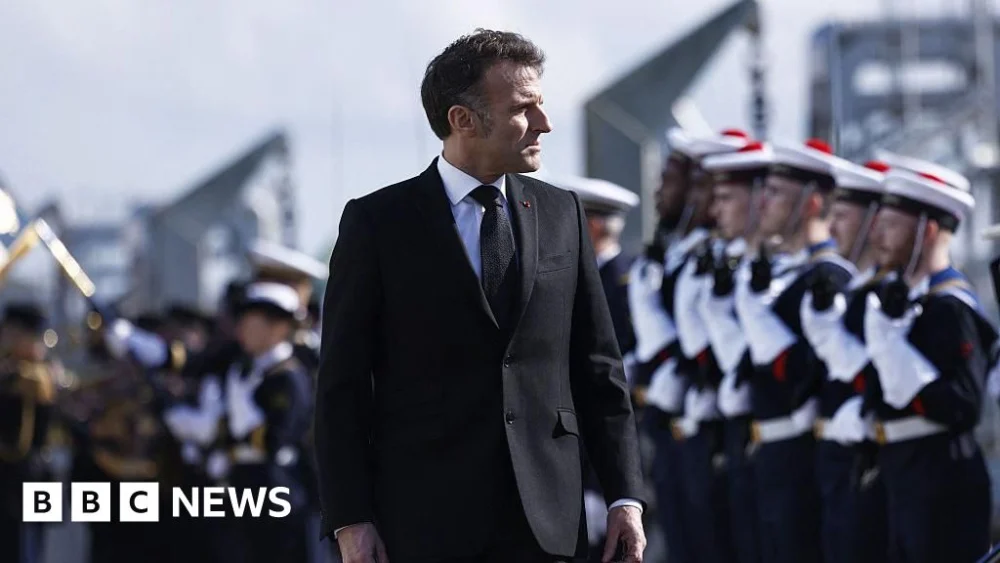
In a monumental shift for European security architecture, France has announced a significant bolstering of its nuclear arsenal and an unprecedented extension of its deterrence umbrella to cover several European nations. The strategic recalibration, unveiled by President Emmanuel Macron, signals a decisive response to a rapidly deteriorating global security landscape and a renewed commitment to European strategic autonomy. The move is poised to reshape defense dynamics on the continent, integrating French nuclear capabilities more deeply into a collective European security framework while asserting France’s leadership in an era defined by geopolitical volatility.
The President’s Bold Vision for European Security
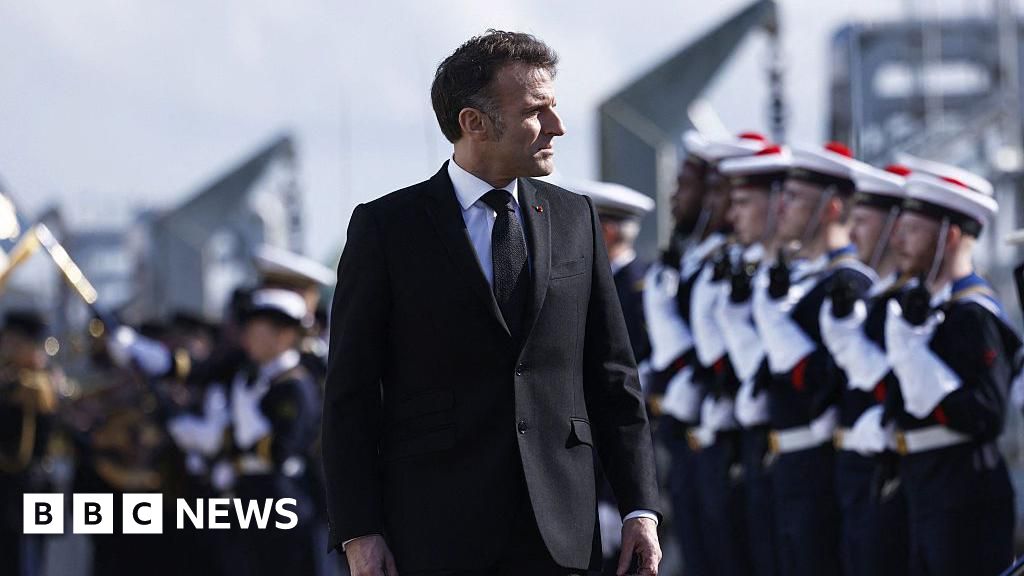
Speaking from the highly symbolic Ile Longue base near Brest, Brittany, in front of a formidable nuclear submarine, President Emmanuel Macron delivered a pivotal address outlining the cornerstones of France’s updated nuclear doctrine. The location, home to France’s fleet of nuclear-powered ballistic missile submarines (SSBNs), underscored the gravity and strategic depth of the pronouncements. Macron asserted that the coming decades would be characterized by the enduring relevance of nuclear weapons, declaring, "The next 50 years will be an era of nuclear weapons."
Central to his announcement was the decision to increase the number of French nuclear warheads, moving beyond the current estimated level of around 300. This expansion is coupled with a long-term modernization program, highlighted by the planned launch in 2036 of a new state-of-the-art nuclear-armed submarine, aptly named "The Invincible." This next-generation SSBN will represent a significant technological leap, ensuring the credibility and survivability of France’s sea-based deterrent for decades to come.
Crucially, President Macron revealed that eight other European countries have formally agreed to participate in this novel "advanced deterrence" strategy. These nations include the United Kingdom, Germany, Poland, the Netherlands, Belgium, Greece, Sweden, and Denmark. This coalition represents a diverse cross-section of European powers, from established military forces to traditionally neutral states now seeking stronger security assurances.
Reimagining the Force de Frappe for a United Europe
The operationalization of this advanced deterrence strategy involves a multi-faceted approach. Macron detailed that the participating European countries would be invited to engage in joint exercises utilizing France’s air-launched nuclear capacity, historically known as the force de frappe. This participation would provide invaluable insights into the operational complexities of nuclear deterrence and foster deeper military integration. Furthermore, the agreement allows for the potential hosting of French nuclear bomber air bases on the soil of these partner nations. This strategic dispersal of assets, Macron explained, would enable France’s Strategic Air Forces (FAS) to "spread out across the depth of the European continent… and thus complicate the calculations of our adversaries." Such a move would significantly enhance the survivability and responsiveness of the air-launched component of France’s deterrent.
Beyond direct nuclear involvement, the new doctrine also envisions shared development and deployment of "auxiliary" capacities. These include sophisticated space-based alarm systems designed to provide early warning of threats, advanced air defense systems capable of intercepting incoming drones and missiles, and the collaborative development of long-range conventional missiles. This comprehensive approach aims to create a layered defense system that both deters nuclear aggression and strengthens conventional defense capabilities across the continent.
Historical Roots and Modern Evolution of Gaullist Doctrine
Officials have described this policy shift as the most significant evolution in French strategic thinking since 1960, the year France first tested its atomic bomb. The original concept, defined by then-President Charles de Gaulle, established the force de frappe as an independent national deterrent, ensuring France’s sovereignty and strategic autonomy. This Gaullist doctrine was characterized by its insistence on France’s sole control over its nuclear weapons, an principle that remains fundamentally intact under the new "advanced deterrence" framework.
Despite the broader European involvement, the President of France will retain the exclusive decision-making authority over the deployment of a nuclear missile. This central tenet upholds the core principle of national sovereignty in nuclear matters. The overarching aim remains to present an "unacceptable price to be paid" for any adversary audacious enough to attack France or, now, its designated European partners.
Historically, France maintained a deliberate ambiguity regarding the precise definition of its "vital interests" – those interests an attack on which would trigger a nuclear response. While successive governments have hinted that these vital interests could extend to European concerns, Macron’s "advanced deterrence" strategy provides a more concrete, albeit still strategically vague, articulation of this expansion. In line with the inherent principles of deterrence, where certainty is often less effective than ambiguity in dissuading aggression, the exact parameters of this extended protection are not explicitly detailed. Further reinforcing this principle of calculated uncertainty, Macron announced that France would no longer publicly disclose the number of nuclear warheads in its possession, moving towards a more opaque posture akin to other nuclear powers.
The European Security Landscape: An Imperative for Change
The backdrop to this dramatic policy shift is an increasingly unstable and complex global strategic environment. The ongoing conflict in Ukraine, characterized by overt nuclear threats from Russia, has profoundly altered the security calculus for European nations. The war has highlighted the vulnerabilities of conventional defense and reignited debates about the efficacy of extended deterrence. Furthermore, the rise of other assertive global powers and the proliferation of advanced military technologies contribute to a climate of heightened insecurity.
For many European nations, particularly those on NATO’s eastern flank, the need for robust security guarantees has never been more pressing. While NATO provides a collective security umbrella, discussions around "European strategic autonomy" have gained traction, advocating for Europe’s capacity to act independently in defense and security matters. France, as the only nuclear power in the European Union and a long-standing advocate for a stronger European defense identity, is positioning itself at the forefront of this movement.
International Reactions and Endorsements
The announcement was met with swift and varied reactions across Europe and beyond. Poland’s Prime Minister Donald Tusk quickly endorsed the initiative, posting on X: "We are arming up together with our friends so that our enemies will never dare to attack us." This statement reflects the palpable sense of urgency and shared threat perception among Eastern European nations.
Significantly, shortly after Macron’s speech, France and Germany issued a joint announcement signaling "closer cooperation" in the field of nuclear deterrence. The joint text, signed by Macron and German Chancellor Friedrich Merz, stated that the two countries would "take the first steps this year, including German participation in French nuclear exercises… and the development of conventional capacities with European partners." This Franco-German alignment is particularly noteworthy, given Germany’s historical reluctance to engage directly with nuclear issues and its strong pacifist traditions. The statement also carefully clarified that "This cooperation will complement, not replace, Nato’s nuclear deterrent," a crucial distinction aimed at reassuring allies and preventing any perception of undermining the transatlantic alliance.
The United Kingdom, Europe’s other nuclear power, already has a cooperation agreement with France. Recent participation by UK officials in exercises by France’s Strategic Air Forces further underscores the deepening ties between the two nations on nuclear matters, even in a post-Brexit landscape.
While no immediate official statements emerged from NATO headquarters, the initiative is likely to be viewed with cautious optimism. NATO has long relied on the US nuclear umbrella, but calls for European allies to contribute more to collective defense have been persistent. France’s move, while distinct from NATO’s nuclear sharing arrangements, could be seen as strengthening the overall deterrence posture in Europe, provided it is well-coordinated and does not create divisions within the alliance.
Russia, predictably, is expected to react with strong condemnation, likely viewing the expansion as an escalatory step and further evidence of Western aggression. Such a response would align with Moscow’s consistent narrative regarding NATO expansion and European militarization.
France’s Nuclear Arsenal: A Detailed Look
France’s nuclear capabilities are primarily based on two components: sea-based and air-based deterrence.
The sea-based component, the most powerful and survivable, consists of four Triomphant-class nuclear-powered ballistic missile submarines (SSBNs), each capable of carrying 16 M51 submarine-launched ballistic missiles (SLBMs). Each M51 missile can carry multiple independently targetable re-entry vehicles (MIRVs), significantly multiplying the number of warheads deployed. The announcement of "The Invincible" for 2036 signifies the ongoing modernization of this crucial leg of the deterrent, likely indicating a new class of SSBNs with enhanced capabilities.
The air-based component, the force aéroportée, relies on Rafale fighter jets equipped with ASMPA (Air-Sol Moyenne Portée Amélioré) medium-range air-to-surface missiles. These missiles have a range of up to 500 km and can carry a single nuclear warhead. The ability to conduct exercises with European partners and potentially host air bases on their territory would significantly enhance the operational flexibility and reach of this airborne component, making it harder for adversaries to neutralize.
Implications for NATO and European Strategic Autonomy
The French initiative carries profound implications for both NATO and the broader concept of European strategic autonomy. By explicitly extending its nuclear deterrence to other European states, France is taking a concrete step towards building a more robust and independent European defense capacity. This aligns with Macron’s long-standing advocacy for a Europe capable of defending itself without absolute reliance on the United States.
However, the "complement, not replace" caveat regarding NATO is critical. France has historically maintained its nuclear independence from NATO’s integrated military command, even though it rejoined NATO’s command structure in 2009. The new policy seeks to enhance European security within the existing framework of transatlantic alliances, rather than directly challenging it. The participation of NATO members like Germany, Poland, and the Netherlands in French nuclear exercises could foster greater interoperability and shared understanding of deterrence concepts, potentially strengthening the European pillar within NATO.
The move also highlights the varying degrees of commitment to European defense among EU members. While eight nations have signed on, others might remain hesitant due to non-proliferation concerns, budgetary constraints, or a preference for the established NATO framework. This could lead to a multi-speed Europe on defense, with a core group pursuing deeper integration in strategic deterrence.
The Non-Proliferation Debate and Global Impact
France’s decision to increase its warhead count and cease public disclosure of its arsenal size marks a departure from recent trends among some nuclear powers towards greater transparency. This shift, driven by the perceived need to enhance deterrence credibility in a more dangerous world, could draw criticism from non-proliferation advocates. They might argue that such moves could inadvertently encourage other states to pursue or expand their own nuclear capabilities, complicating global disarmament efforts.
However, proponents will argue that France, as a recognized nuclear weapon state under the Nuclear Non-Proliferation Treaty (NPT), is acting within its rights and responsibilities to ensure collective security in the face of escalating threats. They would contend that the primary driver for this decision is external aggression, particularly from Russia, and that a credible deterrent is the most effective means of preventing nuclear conflict. The careful phrasing of "advanced deterrence" and the emphasis on retaining French presidential control are likely designed to mitigate concerns about proliferation or a dilution of accountability.
Economic and Industrial Dimensions
The expansion and modernization of France’s nuclear arsenal will entail significant financial investment. The development of a new SSBN class, the increase in warhead production, and the upgrades to air-launched capabilities will require substantial allocation of resources over many years. This commitment will also have considerable industrial implications, boosting France’s defense industry and potentially fostering collaborative defense projects with participating European nations, particularly in the "auxiliary capacities" like space-based systems and long-range missiles. This could further solidify France’s position as a leading defense industrial power in Europe.
Looking Ahead: Challenges and Prospects
The implementation of France’s "advanced deterrence" strategy will not be without its challenges. Operationalizing joint exercises, establishing potential air bases, and ensuring seamless coordination among eight diverse nations will require extensive diplomatic and military efforts. The delicate balance between strengthening European defense and reassuring transatlantic allies will need continuous management. Furthermore, the long-term financial commitments will demand sustained political will.
Nevertheless, President Macron’s bold initiative marks a turning point in European security. By offering its nuclear deterrent as a cornerstone of collective European defense, France is attempting to forge a more resilient and strategically autonomous continent in an increasingly perilous world. The success of this ambitious vision will depend on the continued commitment of all participating nations and their collective resolve to navigate the complex geopolitical currents of the 21st century.