


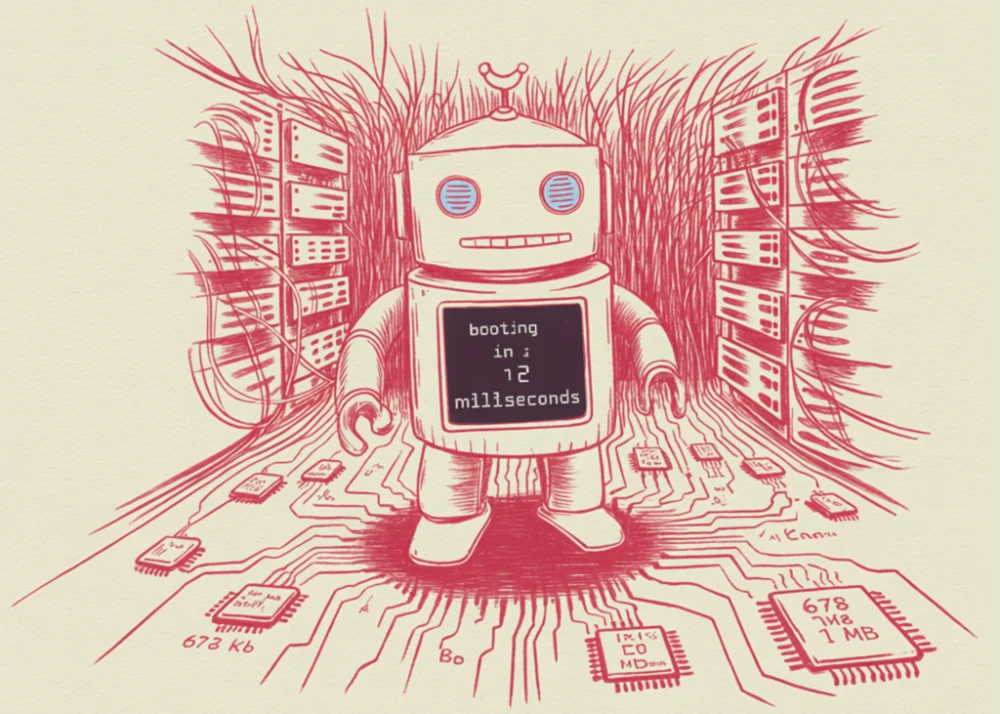
The rapid evolution of artificial intelligence has largely been defined by an "abundance mindset," where developers rely on high-level, managed languages like Python, Go, and TypeScript to build complex agentic frameworks. While these ecosystems provide a wealth of libraries and ease of use, they bring significant architectural baggage in the form of heavy runtimes, virtual machines, and non-deterministic garbage collectors. NullClaw, a groundbreaking new project in the AI orchestration space, is challenging this paradigm by delivering a full-stack AI agent framework implemented entirely in Raw Zig. By stripping away the abstractions that define modern software development, NullClaw has achieved a compiled binary size of just 678 KB and a functional memory footprint of approximately 1 MB of RAM, marking a potential turning point for edge computing and resource-constrained AI deployments.
The Rise of Agentic AI and the Problem of Software Bloat
To understand the significance of NullClaw, one must first look at the current state of AI agents. Since the explosion of Large Language Models (LLMs), the industry has shifted toward "agentic" workflows—systems where an AI model is given tools, memory, and the autonomy to complete multi-step tasks. Frameworks such as LangChain, AutoGPT, and CrewAI have become the industry standards, but they are almost exclusively built on Python.
Python’s popularity in AI is undisputed, yet it is notoriously resource-intensive. A simple Python-based agent often requires hundreds of megabytes of RAM just to initialize the interpreter and load basic dependencies. When deployed in a cloud environment, this overhead is a manageable cost; however, as the industry moves toward "Edge AI"—deploying intelligence directly onto sensors, drones, and industrial machinery—this bloat becomes a terminal bottleneck. NullClaw addresses this by moving down the stack, utilizing Zig, a general-purpose programming language designed for robustness, optimality, and maintainability.
A New Benchmark in Resource Allocation
The primary value proposition of NullClaw is its radical efficiency. In a series of local machine benchmarks conducted in February 2026 on macOS arm64 hardware (normalized for 0.8 GHz edge environments), NullClaw demonstrated performance metrics that dwarf existing alternatives.
When compared to OpenClaw (TypeScript), which requires over 1 GB of RAM and a startup time exceeding 500 seconds on low-power hardware, NullClaw’s 1 MB RAM usage and sub-8-millisecond startup time represent a different class of engineering. Even when compared to ZeroClaw, a high-performance framework written in Rust, NullClaw maintains a significant lead. While ZeroClaw offers a 3.4 MB binary and a startup time under 10 milliseconds, NullClaw’s 678 KB binary and even lower latency suggest that Zig’s "no hidden control flow" philosophy allows for optimizations that even Rust’s sophisticated borrow checker might struggle to match in terms of raw size.
The economic implications of these metrics are profound. Traditional agent implementations often require hardware on par with a Mac Mini (approx. $599) to run effectively. NullClaw, by contrast, is designed to run on virtually any $5 hardware, including low-power Linux boards and microcontrollers. This 100-fold reduction in hardware costs could democratize the deployment of autonomous agents in sectors like agriculture, where thousands of low-cost sensors could each host a local agent.
Architectural Innovation: The Vtable Interface Pattern
Despite its minimalist footprint, NullClaw is not a "toy" project or a hard-coded script. Its architecture is built around modularity and extensibility, utilizing the vtable (virtual method table) interface pattern. In low-level programming, a vtable allows for dynamic dispatch, enabling the system to call the correct functions for a specific object at runtime without needing a heavy object-oriented runtime.
In the context of NullClaw, every major subsystem—including LLM providers (such as OpenAI, Anthropic, or local Llama instances), communication channels, external tools, and memory backends—is implemented as a vtable interface. This allows developers to swap components via simple configuration changes. A developer could, for instance, switch an agent from using a cloud-based GPT-4o model to a local GGUF model running on a neighboring chip without recompiling the entire NullClaw engine.
This modularity also extends to the Model Context Protocol (MCP). By supporting MCP through its interface pattern, NullClaw ensures it can integrate with the broader ecosystem of AI tools and data sources, maintaining compatibility with the latest industry standards while remaining lightweight.
Memory Management and the RAG Challenge
One of the most difficult hurdles for edge-based AI is Retrieval-Augmented Generation (RAG). RAG typically requires a vector database to store and retrieve relevant information, a process that usually demands significant memory and processing power. NullClaw tackles this by implementing a hybrid vector and keyword memory search directly within its 1 MB footprint.
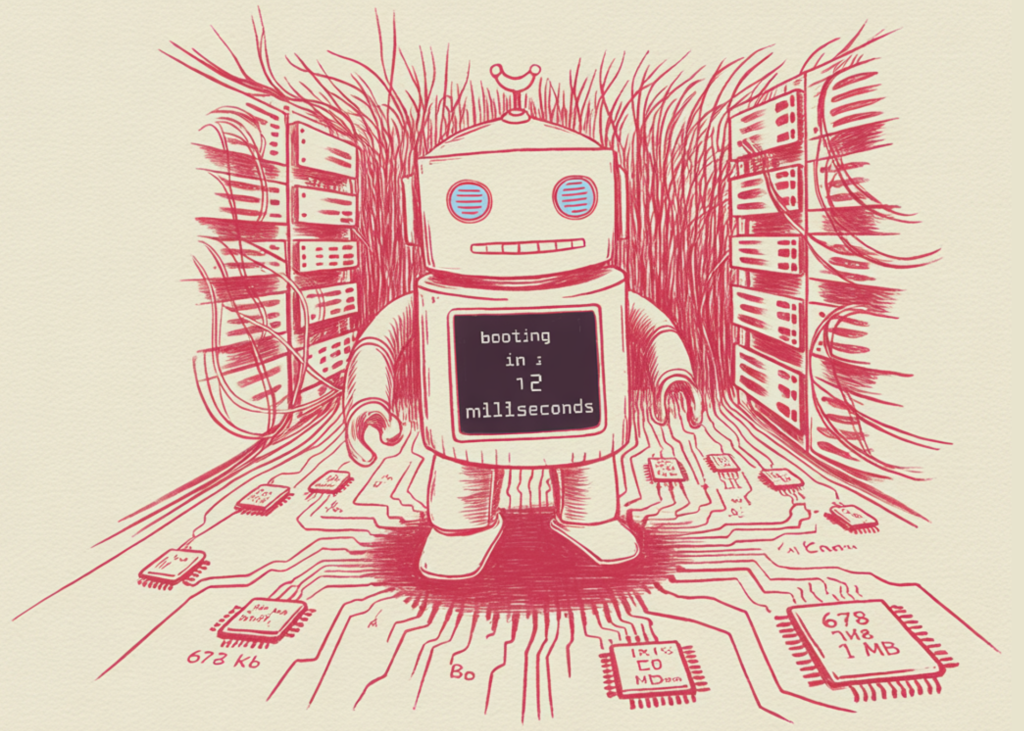
By managing memory manually—a core feature of Zig—NullClaw avoids the unpredictable pauses associated with garbage collection. The framework uses a custom-tailored approach to data indexing that prioritizes high-density storage. This allows the agent to perform sophisticated memory retrieval tasks without relying on external, heavy-duty vector databases like Pinecone or Milvus, which would be impossible to run on a microcontroller.
Furthermore, security is baked into this low-level design. Rather than relying on external security layers that add latency, NullClaw utilizes Zig’s compile-time safety features and explicit memory allocation. This minimizes the attack surface for common vulnerabilities like buffer overflows, which are a frequent concern in C-based embedded systems.
Native Hardware Peripheral Support
NullClaw’s lack of a heavy runtime makes it uniquely suited for direct hardware interaction. Unlike Python-based agents that must communicate with hardware through multiple layers of abstraction (and often significant latency), NullClaw provides native support for hardware peripherals.
The framework is compatible with:
- STM32: Allowing for high-speed industrial automation and robotics.
- Arduino: Enabling DIY enthusiasts and educators to build intelligent hardware.
- Raspberry Pi: Providing a middle ground for more complex edge computing tasks.
This native support means a NullClaw agent can read a temperature sensor, process the data through an LLM to determine if a cooling system needs adjustment, and trigger a physical actuator—all within a single, unified execution environment. The "intelligence" is no longer a separate entity from the "machine"; they are one and the same.
Engineering Reliability and Validation
A common critique of low-level implementations is that they are prone to instability and developer error. NullClaw counters this argument with a rigorous engineering validation process. Despite having only about 110 source files, the project includes over 3,230 tests. This high test-to-code ratio ensures that the manual memory management and vtable logic are robust and free from regressions.
The project also adheres to a "zero-dependency" philosophy. Beyond libc, the framework does not rely on third-party libraries that could introduce security vulnerabilities or unexpected behavior. This makes the binary highly portable and predictable, a critical requirement for mission-critical industrial applications.
Timeline and Evolution of the Project
The development of NullClaw follows a clear trend in the software industry toward "de-bloating."
- Early 2023: The "Agent Summer" sees the rise of Python-based frameworks like AutoGPT. Performance is secondary to capability.
- Mid 2024: Developers begin feeling the "Python Tax." Projects like ZeroClaw (Rust) and PicoClaw (Go) emerge to provide faster alternatives for production environments.
- Late 2025 – Early 2026: NullClaw is introduced as the logical conclusion of this optimization path. By choosing Zig over Rust or Go, the developers prioritize the absolute minimum resource floor, targeting the $5 hardware market.
Broader Impact and Industry Implications
The emergence of NullClaw signals a shift in how the industry views "Intelligence." If an AI agent can run in 1 MB of RAM, the barrier to entry for embedding AI into every aspect of the physical world essentially vanishes.
From a factual analysis standpoint, NullClaw’s existence suggests three major trends:
- The End of the Python Monopoly: While Python will remain the language of research and data science, the "deployment" phase of AI is moving toward systems languages like Zig and Rust.
- Hyper-Local AI: By reducing the cost of deployment to $5 per unit, enterprises can move away from centralized cloud AI, reducing latency and increasing privacy by keeping data on-device.
- Sustainability in AI: The environmental impact of AI is often measured in the massive power consumption of data centers. Frameworks like NullClaw, which require orders of magnitude less power to run on the edge, offer a more sustainable path forward for the mass adoption of AI.
As the project continues to gain traction on platforms like GitHub, the developer community is watching closely. The success of NullClaw could inspire a new generation of "raw" software—applications that bypass the convenience of managed runtimes in favor of the raw performance and efficiency required for the next billion connected devices. For now, NullClaw stands as a testament to what is possible when modern AI logic meets classic, low-level engineering discipline.