


A significant federal court ruling has opened the door for thousands of American businesses to receive refunds for tariffs that were recently invalidated by the Supreme Court. On Wednesday, the US Court of International Trade directed Customs and Border Protection to initiate the refund process for duties imposed by former President Donald Trump under the International Emergency Economic Powers Act (IEEPA). This decision marks a substantial legal and financial setback for the administration’s past trade policies and injects both relief and uncertainty into the nation’s import landscape.
The Court’s Landmark Decision and Its Immediate Impact
Judge Richard Eaton, presiding over the US Court of International Trade, issued a clear directive, stating that "All importers of record whose entries were subject to IEEPA duties are entitled to the benefit" from the Supreme Court’s recent ruling. This pronouncement solidifies the entitlement of businesses to reclaim the tariffs they paid, which an estimated $130 billion (approximately £97 billion) had been collected from. While the specific mechanism and timeline for these refunds remain somewhat opaque, the legal clarity provided by Judge Eaton’s order is a crucial step forward for the affected companies.
The ruling stemmed from a case initiated by Atmus Filtration, a Tennessee-based filtration company, which sought to recover the tariffs it had paid. However, Judge Eaton’s decision extends far beyond this single plaintiff, asserting that he will be the sole judge to hear all cases pertaining to these specific tariff refunds. This consolidation aims to streamline the process and ensure consistent application of the law across a multitude of claims. The implications are vast, affecting a wide array of industries that imported goods subject to these IEEPA-based levies.
Background to the Tariffs: A Presidential Gambit Under IEEPA
The tariffs in question were a hallmark of former President Trump’s aggressive trade agenda. Introduced under the International Emergency Economic Powers Act (IEEPA), these duties were initially justified by the administration as necessary measures to address perceived national economic emergencies and unfair trade practices, particularly those related to China, Mexico, and Canada. The IEEPA, enacted in 1977, grants the President broad authority to regulate international commerce during times of declared national emergency. Historically, this power has been primarily utilized for imposing sanctions against hostile foreign governments or individuals, freezing assets, and controlling financial transactions during crises, rather than as a tool for widespread trade protectionism.
The Trump administration’s application of IEEPA to impose tariffs represented a novel and controversial interpretation of the statute. These duties, which varied but often started at 10% and in some instances climbed significantly higher, were applied to a broad spectrum of imported goods. This strategy generated considerable revenue for the US Treasury, an estimated $130 billion, but also imposed substantial costs on American businesses and consumers, who ultimately bore the burden of these import taxes. Companies frequently absorbed these costs, passed them on to consumers through higher prices, or sought to diversify their supply chains, often at significant expense.
A notable expansion of this tariff strategy came last April, when the administration announced "Liberation Day" tariffs on dozens of countries. These duties, with rates starting at 10% and in some cases soaring towards 50%, were designed to exert pressure on international trading partners. The announcement triggered a flurry of trade negotiations as nations scrambled to secure lower rates in exchange for promises of increased investment or other economic concessions.
The Supreme Court’s Intervention and the Limits of Executive Power
The legal challenge to these tariffs gained momentum, culminating in the Supreme Court’s decision last month to strike them down. While the specific legal reasoning was not fully detailed in the provided context, such rulings typically center on the interpretation of executive authority and the separation of powers. Legal experts widely anticipate that the Supreme Court found the administration’s use of IEEPA for imposing broad trade tariffs exceeded the powers granted by Congress under the Act. The IEEPA is intended for genuine national emergencies threatening national security or the economy, not as a general mechanism for adjusting trade policy.
This Supreme Court judgment specifically invalidated the IEEPA-based tariffs, including those previously announced on goods from Mexico, Canada, and China that cited emergency powers. The ruling underscored a critical constitutional principle: that while the President possesses significant executive authority, these powers are not without limits and must be exercised within the bounds defined by congressional statutes. The decision was hailed by many as a reassertion of legislative authority over trade policy, traditionally a domain where Congress holds primary constitutional power.
Business Reactions and Calls for Swift Action
The federal judge’s order has been met with significant relief and optimism from the American business community, which has long grappled with the financial strain and uncertainty caused by the tariffs. Dan Anthony, a spokesperson for "We Pay the Tariffs," a coalition of small businesses formed specifically to advocate for these refunds, lauded the decision as a resounding "victory."
"American small businesses have waited long enough," Anthony declared in a statement. "A full, fast, and automatic refund process is what these businesses are owed and anything less is unacceptable." His remarks encapsulate the frustration felt by many companies that have paid billions in duties, often impacting their profit margins, investment plans, and competitiveness. The coalition’s demand for a "fast and automatic" process highlights the practical challenges of recovering these funds, especially for smaller enterprises that may lack the resources to navigate complex bureaucratic procedures.
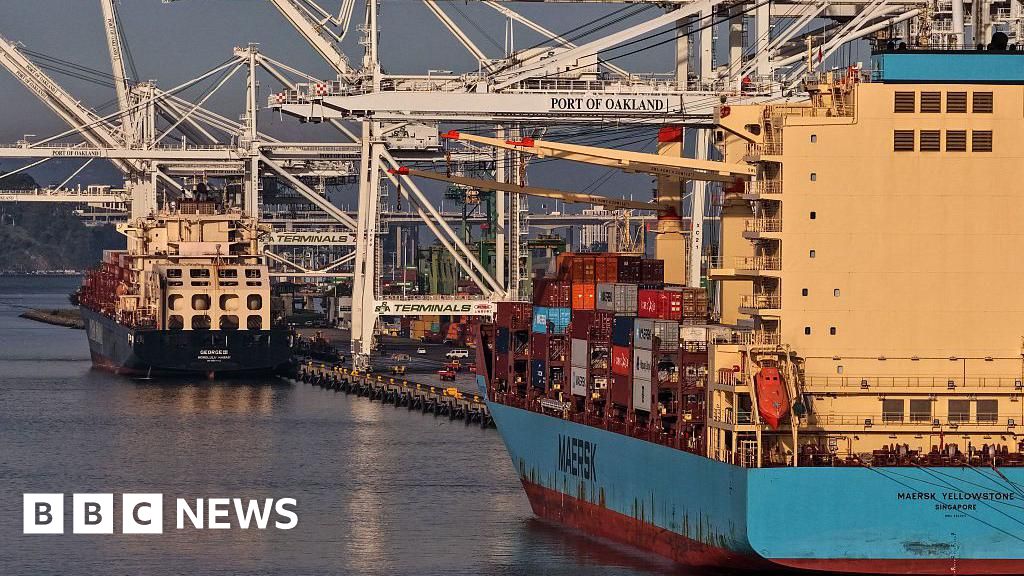
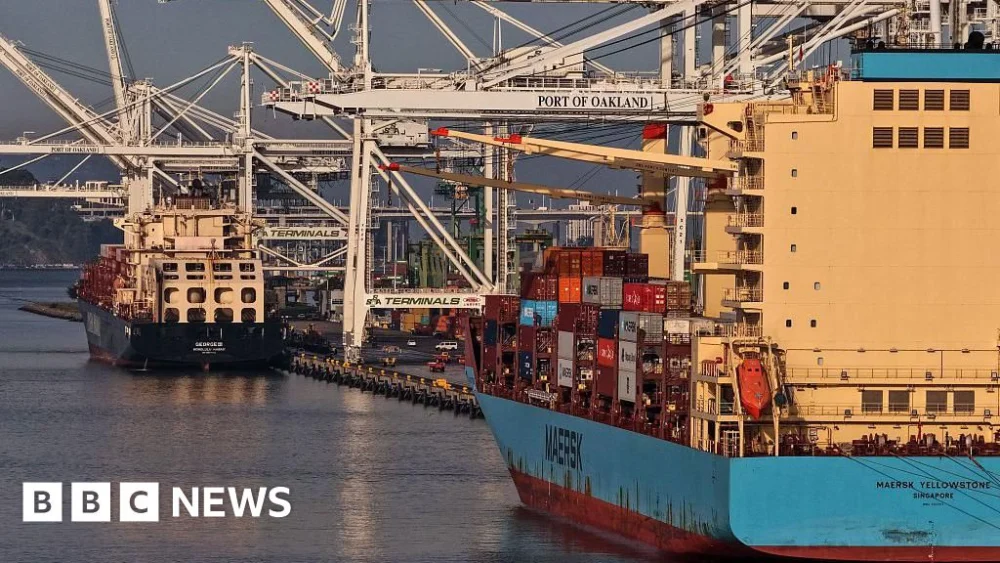
Major corporations, including the global transportation and postal giant FedEx, had already initiated lawsuits seeking full refunds of the tariffs. These lawsuits, filed in anticipation of or following the Supreme Court’s decision, demonstrate the substantial financial stakes involved. For companies like FedEx, which handle vast volumes of international freight, the cumulative impact of these tariffs on their operations and their clients’ businesses has been immense. The court’s ruling provides a clear legal basis for these and potentially thousands of other claims to proceed.
The general sentiment among business associations and industry groups is one of cautious optimism. While the refund order is a positive development, concerns linger regarding the administrative hurdles involved in processing such a large volume of refunds and the potential for delays. Many businesses are eager to reinvest these recovered funds into operations, hiring, or expansion, which could provide a much-needed boost to economic activity.
The Path Forward: New Tariffs and Lingering Uncertainty
Despite the clarity on refunds for past tariffs, significant questions continue to loom over the future of US import tax policies. The current administration, under President Donald Trump, has already moved to replace the invalidated IEEPA tariffs with new import taxes. Treasury Secretary Scott Bessent recently indicated that the US was "likely" to implement a 15% global tariff this week, an increase from a previously discussed 10%. This statement followed conflicting signals from President Trump regarding the new rate, underscoring the dynamic and sometimes unpredictable nature of the administration’s trade policy.
This proposed 15% global tariff is explicitly intended to serve as a replacement for the IEEPA tariffs that the Supreme Court struck down. Its implementation would represent a continuation of the administration’s strategy to use tariffs as a primary tool for trade negotiation and domestic economic protection. However, the legal basis and scope of this new global tariff will undoubtedly face scrutiny, particularly in light of the Supreme Court’s recent intervention limiting presidential tariff authority.
The "Liberation Day" tariffs, announced earlier last year and targeting dozens of countries with rates up to 50%, also remain a point of discussion. While the Supreme Court’s judgment struck down some administration tariffs citing emergency powers (which likely included elements of "Liberation Day" tariffs if they relied on IEEPA), the broader strategy of using high tariffs to compel trade concessions appears to persist. The ongoing push for such duties signals a commitment to reshaping global trade relationships through assertive economic measures, even as the legal frameworks for doing so are being challenged and redefined.
Economic Implications and Legal Precedent
The economic implications of the refund order are substantial. The return of $130 billion to businesses could provide a significant liquidity injection, potentially stimulating investment, job creation, and economic growth across various sectors. For many small and medium-sized enterprises, these refunds could mean the difference between struggling and thriving, allowing them to recover from the financial strain of the tariffs. However, the exact timing and efficiency of the refund process will be critical in determining the actual economic impact. Delays or bureaucratic complexities could diminish the immediate benefits.
From a legal perspective, the Supreme Court’s decision, followed by the Court of International Trade’s enforcement order, establishes an important precedent. It reinforces the principle that presidential authority, even in matters of national emergency, is not absolute and is subject to judicial review and congressional intent. This could constrain future administrations from unilaterally imposing broad trade tariffs under the guise of emergency powers, compelling them to seek clearer legislative authorization for such measures. It highlights the delicate balance of power within the US government and the judiciary’s role in upholding constitutional limits.
The "murky" payment process is a key challenge. Customs and Border Protection will need to develop a robust and transparent mechanism to identify eligible importers, verify their claims, and disburse the refunds efficiently. This will likely involve extensive data reconciliation and communication with thousands of businesses, a process that could be prone to administrative delays and potential disputes. Industry observers are calling for proactive measures from the government to ensure a smooth and equitable distribution of funds.
Looking Ahead: Trade Policy in Flux
The landscape of US trade policy remains in a state of flux. While the refund order provides closure on a contentious chapter of tariff policy, the introduction of new global tariffs indicates a continued commitment to a protectionist trade agenda. The interplay between executive actions, judicial oversight, and congressional prerogatives will continue to shape how the US engages with the global economy.
Businesses, both domestic and international, will need to closely monitor these developments, adapting their supply chains, pricing strategies, and investment decisions accordingly. The legal challenges to trade policies are likely to continue as administrations seek to implement their agendas and businesses defend their interests. The recent court decisions serve as a powerful reminder of the checks and balances inherent in the American political system and the enduring importance of legal precedent in defining the boundaries of governmental power. The path to a stable and predictable trade environment for US businesses appears to be a long and winding one, characterized by ongoing legal battles and policy shifts.