


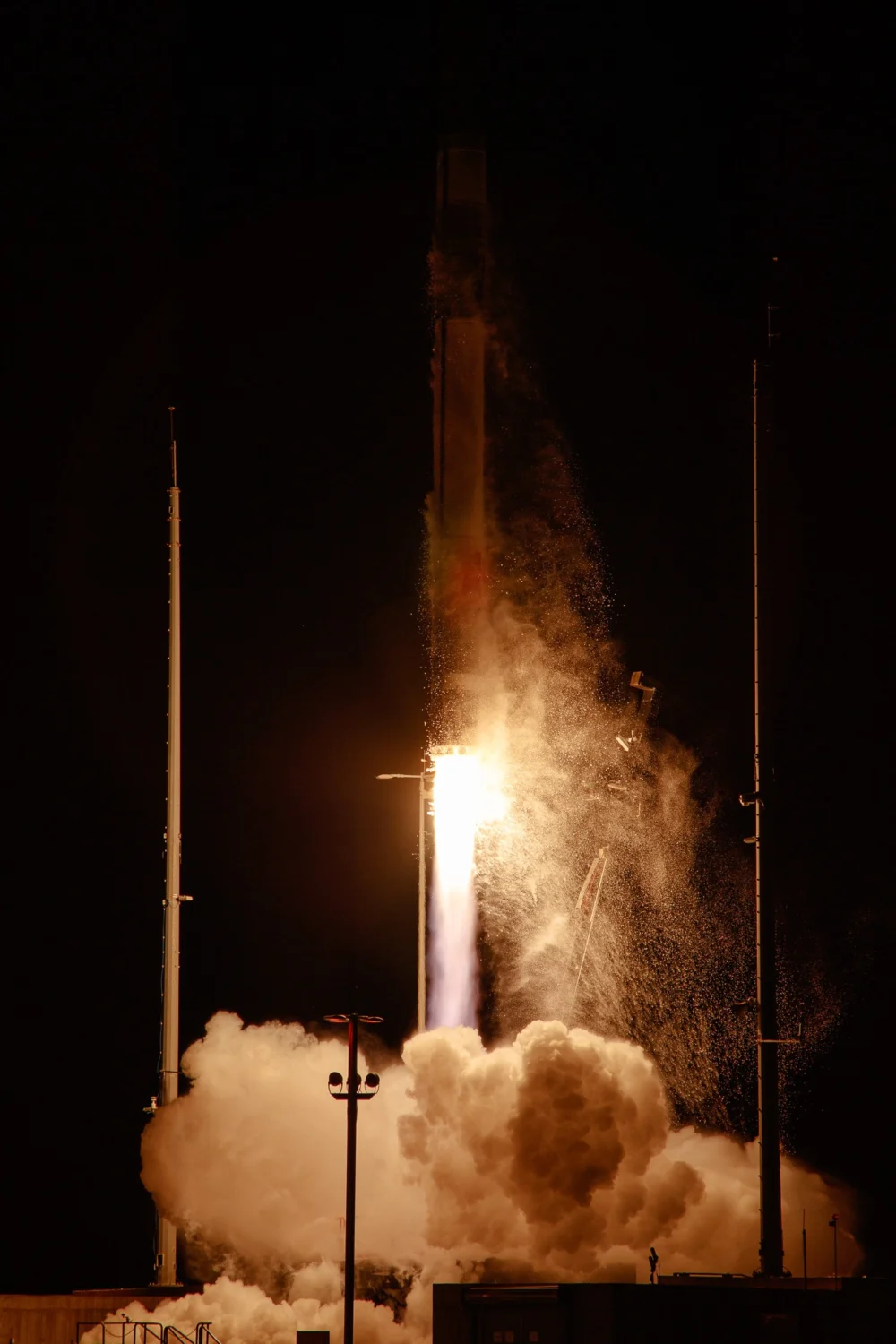
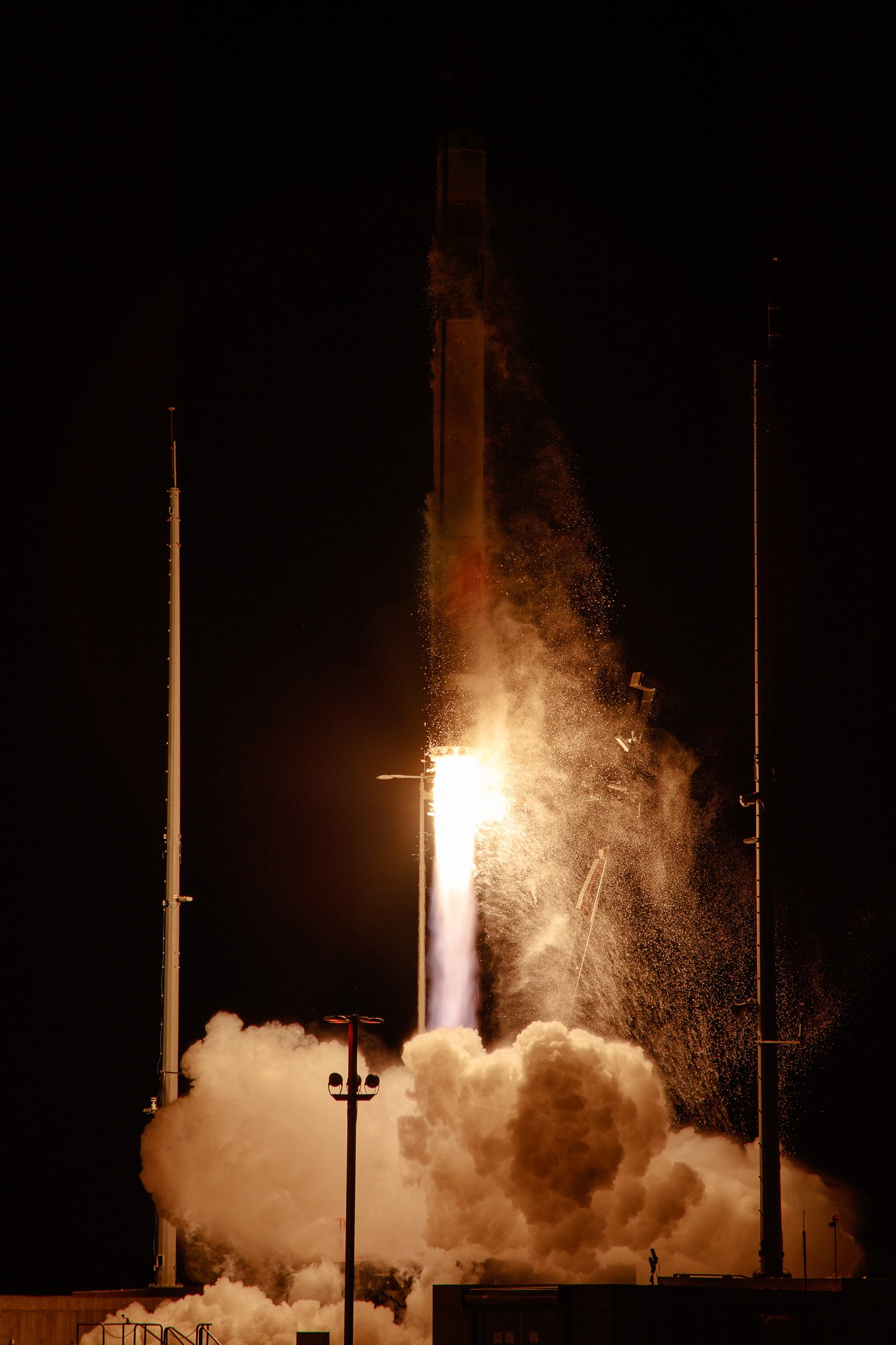
On February 27, 2026, a significant milestone in national security and aerospace technology was achieved as NASA’s Wallops Flight Facility provided critical support for the Rocket Lab HASTE suborbital launch from the company’s Launch Complex 2 in Virginia. This mission, named "Cassowary Vex," was executed on behalf of the Department of Defense’s Defense Innovation Unit (DIU) and involved the successful flight of a sophisticated hypersonic test platform, marking a crucial step forward in the United States’ efforts to advance its hypersonic capabilities. The collaborative effort underscored the growing reliance on commercial space partners and the indispensable role of national launch ranges in facilitating cutting-edge defense research and development.
The Cassowary Vex Mission: A Strategic Imperative
The Cassowary Vex mission represented a key objective within the DIU’s broader strategy to accelerate the fielding of advanced technologies for the U.S. military. Hypersonic flight, defined by speeds exceeding Mach 5 (five times the speed of sound), presents both immense strategic potential and significant technological challenges. Vehicles operating at such velocities can traverse vast distances in minutes, offering unparalleled speed and maneuverability that could revolutionize military strike capabilities, reconnaissance, and even space access. However, the extreme conditions encountered during hypersonic flight – including intense heat, immense aerodynamic pressures, and complex plasma formation – demand rigorous testing and data collection to refine designs, materials, and guidance systems.
The DIU, established to bridge the gap between commercial innovation and military application, leverages private sector agility to rapidly develop and deploy solutions for critical defense needs. Their involvement in the Cassowary Vex mission exemplifies this approach, utilizing Rocket Lab’s specialized HASTE (Hypersonic Accelerator Suborbital Test Electron) vehicle to provide a dedicated, high-cadence testbed for advanced hypersonic prototypes. The successful flight of the test platform allows DIU and its partners to gather invaluable telemetry and performance data, validating theoretical models and informing the design of future operational hypersonic systems.
Rocket Lab’s HASTE: A Dedicated Hypersonic Testbed
Rocket Lab’s HASTE vehicle is a purpose-built variant of its proven Electron rocket, specifically designed to meet the unique demands of hypersonic suborbital testing. The standard Electron has earned a reputation for reliability and rapid launch cadence in the small satellite market. HASTE leverages this heritage, incorporating modifications to optimize it for suborbital trajectories that simulate the conditions experienced by hypersonic vehicles. These modifications typically involve adjustments to the second stage and fairing to accommodate larger, heavier test articles and to achieve specific apogees and velocities crucial for hypersonic flight validation.
The development of HASTE by Rocket Lab signifies a strategic pivot for the company, expanding its offerings beyond orbital launches to cater to the burgeoning national security and defense sector’s need for flexible, responsive, and cost-effective hypersonic test capabilities. By providing a dedicated platform, Rocket Lab enables government agencies like DIU to conduct iterative testing cycles more frequently and affordably than traditional, larger-scale launch vehicles or wind tunnel facilities can offer. This agility is vital in the fast-paced development landscape of hypersonic technology, where rapid prototyping and validation are paramount. Previous missions involving HASTE, though often classified, have demonstrated its efficacy in delivering payloads to precise suborbital flight paths, allowing for the controlled release and testing of experimental hypersonic gliders or propulsion systems under real-world conditions. The success of Cassowary Vex further solidifies HASTE’s position as a critical asset in the national hypersonic development ecosystem.
NASA Wallops Flight Facility: The Backbone of Range Operations
NASA’s Wallops Flight Facility on Virginia’s Eastern Shore played an instrumental role in the Cassowary Vex mission, providing comprehensive range services essential for the safe and successful execution of the launch. Wallops is a unique national asset, serving as a multi-user spaceport that supports a diverse array of missions, from scientific research sounding rockets to commercial resupply missions to the International Space Station, and increasingly, national security launches.
For the Cassowary Vex mission, Wallops supplied a suite of critical services, including:
- Tracking: Utilizing sophisticated radar and optical tracking systems to monitor the HASTE vehicle’s trajectory in real-time, ensuring it adhered to its planned flight path.
- Telemetry: Receiving and processing vast amounts of data transmitted from the rocket and its payload throughout the flight, providing engineers with vital information on performance, health, and test article behavior.
- Range Safety: A paramount responsibility, involving constant monitoring of the flight path against predefined safety corridors and the capability to terminate the mission if it deviates dangerously, protecting populated areas and critical infrastructure.
- Launch Infrastructure: Providing the physical launch pad, associated ground support equipment, and integration facilities at Launch Complex 2, which is operated by Rocket Lab but integrated into Wallops’ broader range safety and operational framework.
Wallops’ strategic location offers access to various orbital inclinations and large ocean downrange areas, making it ideal for both orbital and suborbital missions, particularly those involving sensitive defense payloads. The facility’s experienced personnel, state-of-the-art equipment, and rigorous safety protocols are foundational to enabling both commercial partners and other government agencies to conduct high-stakes missions with confidence. This collaboration highlights NASA’s dual role: advancing scientific exploration while also supporting national security imperatives through its unparalleled infrastructure and expertise.
A Chronology of Hypersonic Development and the Path to Cassowary Vex
The journey to missions like Cassowary Vex is rooted in decades of aerospace research, but the recent acceleration in hypersonic development began in earnest in the mid-2010s, spurred by advancements from peer competitors and a recognition of the technology’s strategic importance.
- Early 2000s-2010s: Initial research and demonstrator programs, often focusing on scramjet propulsion and glide bodies, yield mixed results but establish foundational knowledge. Programs like HTV-2 (Hypersonic Technology Vehicle 2) push the boundaries of materials and aerodynamics.
- Mid-2010s: Increased global focus on hypersonics as major powers demonstrate progress. The U.S. Department of Defense intensifies its investment and reorganizes efforts to streamline development.
- 2018-2020: DIU formally establishes programs aimed at leveraging commercial innovation for hypersonic testing, recognizing the need for more frequent and agile test opportunities. Rocket Lab, among other commercial launch providers, begins exploring dedicated suborbital solutions.
- 2021-2023: Rocket Lab develops and refines the HASTE concept, modifying its Electron vehicle. Initial, often unannounced, test flights of HASTE variants or similar dedicated test platforms occur, validating the vehicle’s capabilities for high-speed suborbital trajectories.
- 2024-2025: DIU’s hypersonic programs mature, with multiple commercial and government partners developing specific test articles requiring flight validation. Mission planning for "Cassowary Vex" and similar tests begins, involving detailed coordination between DIU, Rocket Lab, and NASA Wallops. Payload integration, flight profile simulations, and range safety approvals become central activities.
- February 27, 2026: The Cassowary Vex mission launches from Wallops Launch Complex 2. The HASTE vehicle successfully carries the DIU hypersonic test platform to its designated altitude and velocity, where the test article performs its programmed maneuvers or data collection sequence before impacting a predetermined oceanic recovery zone (or dissipating if expendable).
- Post-Launch: Immediate telemetry review and preliminary data analysis begin, followed by more extensive post-flight assessment over weeks and months to fully understand the performance of the hypersonic test platform and inform future design iterations.
Statements and Reactions: A Unified Message of Progress
While specific detailed statements from the Department of Defense, DIU, or Rocket Lab regarding the classified aspects of the Cassowary Vex mission are typically limited, the successful completion of such a mission inherently elicits a unified message from all parties involved.
A representative from the Defense Innovation Unit would likely emphasize the mission’s success as a testament to the DIU’s innovative acquisition model. "The Cassowary Vex mission represents a critical step forward in accelerating our nation’s hypersonic capabilities," a hypothetical DIU spokesperson might state. "By partnering with agile commercial entities like Rocket Lab and leveraging the unparalleled support of NASA Wallops, we are rapidly gaining invaluable flight data that is essential for maintaining our technological advantage and ensuring national security." The statement would underscore the importance of rapid, iterative testing in developing complex systems.
From Rocket Lab’s perspective, the successful HASTE launch further validates its strategic entry into the defense sector. A Rocket Lab executive might remark, "HASTE was designed to meet this exact need: a responsive, dedicated platform for critical hypersonic flight testing. The flawless execution of the Cassowary Vex mission demonstrates HASTE’s reliability and our commitment to supporting the vital work of the Department of Defense. We are proud to contribute to advancing U.S. capabilities in this crucial domain."
NASA Wallops Flight Facility officials would likely highlight their foundational role in enabling such complex missions. "Our team at Wallops is dedicated to providing world-class range services, ensuring the safety and success of every launch, whether for scientific research or national security," a NASA Wallops Director could comment. "The Cassowary Vex mission is a prime example of effective collaboration between government agencies and commercial industry, leveraging our national assets to achieve strategic objectives. We remain a key enabler for the future of aerospace and defense innovation."
Collectively, these inferred statements convey confidence in the technology, the collaborative model, and the strategic direction of U.S. defense modernization efforts.
Broader Impact and Implications
The successful Cassowary Vex mission carries significant implications across several domains:
- National Security Enhancement: The primary implication is the direct advancement of U.S. hypersonic capabilities. Data gathered from such tests is crucial for developing operational hypersonic weapons, reconnaissance vehicles, and defensive systems. This progress contributes to maintaining a credible deterrent posture and a technological edge against peer competitors who are also actively pursuing hypersonic technologies.
- Validation of Commercial Partnerships: The mission reinforces the Department of Defense’s strategy of utilizing commercial space companies for critical national security requirements. This model often provides greater flexibility, lower costs, and faster development cycles compared to traditional defense contractors. It validates the commercial space industry’s maturity and its ability to meet stringent military standards.
- Strengthening NASA Wallops’ Role: The sustained demand for launches like Cassowary Vex further solidifies NASA Wallops Flight Facility’s position as a vital national asset. It underscores its unique capabilities as a multi-user range capable of supporting diverse missions, from scientific payloads to classified defense tests, and its importance in fostering innovation through public-private partnerships.
- Technological Innovation: The data obtained from hypersonic test flights is invaluable for advancing fundamental scientific understanding and engineering. It drives innovation in materials science (e.g., thermal protection systems), aerothermodynamics, guidance, navigation, and control systems, and propulsion technologies (e.g., scramjets). This knowledge has potential spillover effects into commercial aerospace and other high-tech sectors.
- Economic Impact: The increasing cadence of such launches supports jobs and economic growth in the aerospace sector and the regions surrounding launch facilities like Wallops. It creates demand for specialized engineering, manufacturing, and operational services.
- Future of Hypersonic Testing: The success of Cassowary Vex suggests a growing demand for dedicated, responsive suborbital test capabilities. This could lead to increased production and utilization of vehicles like HASTE, fostering a more dynamic and iterative approach to hypersonic system development, potentially leading to more rapid fielding of next-generation technologies.
In conclusion, the Cassowary Vex mission, supported by NASA Wallops Flight Facility and executed by Rocket Lab for the Defense Innovation Unit, represents more than just a single launch. It is a powerful illustration of a sophisticated, collaborative ecosystem at work, pushing the boundaries of aerospace technology to meet critical national security objectives. The insights gained from this flight will undoubtedly shape the future trajectory of hypersonic development for years to come, affirming the strategic importance of investing in agile commercial partnerships and robust national infrastructure.