


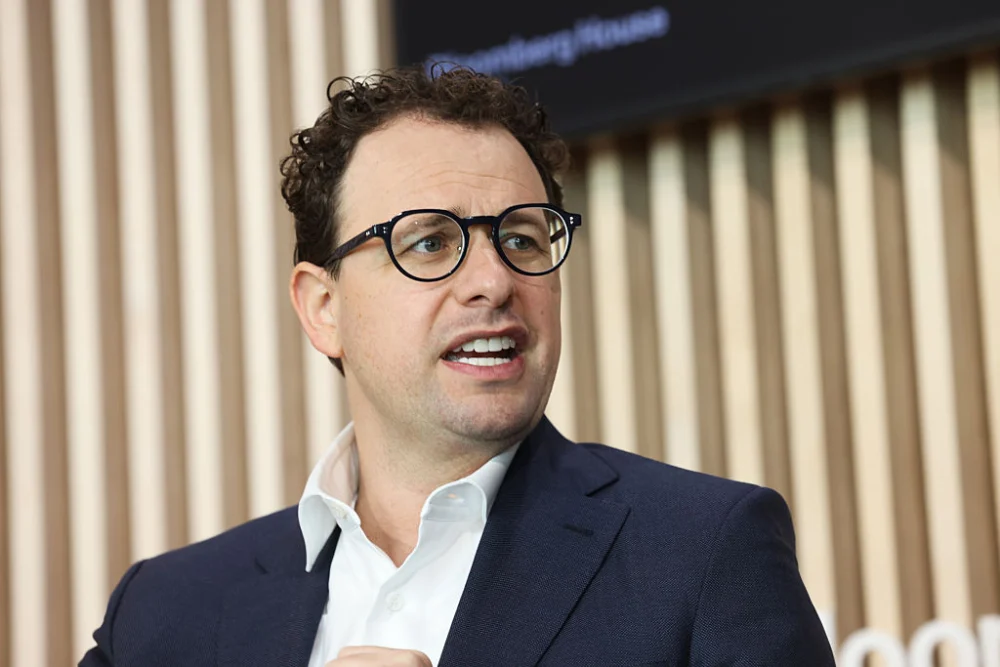
Dario Amodei, CEO of Anthropic, announced Thursday the artificial intelligence firm’s intention to challenge the Department of Defense’s (DOD) designation of the company as a "supply-chain risk" in court, a classification he firmly labeled "legally unsound." This significant declaration follows closely on the heels of the Pentagon’s official imposition of the supply-chain risk label, marking a critical escalation in a weeks-long standoff concerning the military’s desired level of control over advanced AI systems and the ethical boundaries of their deployment.
The contentious designation, which carries the potential to effectively bar Anthropic from securing contracts with the Pentagon and its extensive network of contractors, stems from a fundamental disagreement over the permissible uses of Anthropic’s AI models, notably its flagship Claude system. Amodei has consistently drawn a clear red line, asserting that Anthropic’s AI will not be utilized for mass surveillance of American citizens or for the development and deployment of fully autonomous weapons. In stark contrast, the Pentagon has expressed a demand for "unrestricted access" to these powerful AI tools for "all lawful purposes," highlighting a deep chasm between the tech innovator’s ethical stance and the defense establishment’s operational imperatives.
The Genesis of a Standoff: Ethical AI Meets National Security
The dispute between Anthropic and the DOD is not an isolated incident but rather a microcosm of a broader, ongoing tension between the rapidly evolving Silicon Valley tech landscape and the traditional defense apparatus. As AI capabilities, particularly large language models (LLMs) like Claude, become increasingly sophisticated and integral to various sectors, the question of their application in national security and military contexts has become paramount. Many AI developers, including Anthropic, founded by former OpenAI researchers, emerged with a strong commitment to "safe" and "ethical" AI development, often incorporating principles that explicitly restrict military applications deemed morally problematic or prone to misuse.
Anthropic, a significant player in the AI landscape, valued in the tens of billions of dollars and having secured substantial investments from tech giants like Google and Amazon, has positioned itself as a leader in AI safety research. Its Claude models are designed with "Constitutional AI" principles, aiming to align AI behavior with human values and reduce harmful outputs. This philosophical foundation naturally creates friction when confronted with the complex and often morally ambiguous demands of military operations.
The Department of Defense, facing an increasingly complex global threat environment and intense technological competition from adversaries, views cutting-edge AI as a strategic imperative. The Pentagon’s drive to integrate advanced AI into its operations spans a wide array of applications, from intelligence analysis and logistics to cyber warfare and, controversially, autonomous systems. From the military’s perspective, restricting access or imposing granular ethical constraints on a technology deemed critical for national defense could be perceived as undermining operational effectiveness and jeopardizing national security interests.
Chronology of Escalation: A Rapid Unfolding of Events
The recent events leading to Anthropic’s designation unfolded rapidly, illustrating the volatile nature of the relationship between advanced tech and defense:
- Weeks-Long Dispute: The underlying disagreement between Anthropic and the DOD over AI control and ethical usage had been simmering for several weeks, characterized by intense, albeit private, negotiations.
- Presidential Intervention: The dispute gained public prominence and intensity with a presidential post on Truth Social, explicitly stating that Anthropic would be removed from federal systems. This unprecedented public declaration from the highest office signaled the gravity of the administration’s concerns.
- Secretary Hegseth’s Designation: Following the presidential directive, Defense Secretary Pete Hegseth officially issued the supply-chain risk designation against Anthropic. This formal action provided the legal basis for restricting the company’s involvement in defense contracts. The designation, rooted in federal acquisition regulations, is typically applied when a company’s products or services pose a risk to the integrity or security of the government’s supply chain, often due to foreign ownership, cybersecurity vulnerabilities, or, in this case, perceived control issues over critical technology.
- OpenAI’s Strategic Shift: Almost concurrently with Anthropic’s designation, the Pentagon announced a deal with OpenAI, Anthropic’s primary rival, to work on defense contracts. This move was widely interpreted as a direct response to Anthropic’s unwillingness to fully align with the DOD’s demands, effectively replacing one leading AI provider with another. This development also reportedly sparked internal backlash among some OpenAI staff, highlighting similar ethical concerns within the broader AI community regarding military applications.
- Leaked Memo and Public Apology: Amidst these developments, an internal memo penned by Dario Amodei to Anthropic staff was leaked. In the memo, Amodei reportedly characterized OpenAI’s dealings with the Department of Defense as "safety theater," suggesting a cynical view of their rival’s ethical posturing. The leak further complicated the situation, potentially derailing ongoing "productive conversations" that Amodei claimed had been taking place with the DOD. Amodei later apologized for the leak in his Thursday statement, claiming it was unintentional and did not reflect his "careful or considered views," attributing its tone to "a difficult day for the company" following the barrage of negative announcements. He clarified that the memo, written six days prior, was now an "out-of-date assessment."
The "Supply-Chain Risk" Label: Scope and Implications
Amodei’s statement sought to clarify the practical implications of the supply-chain risk designation, particularly for Anthropic’s existing customer base. He emphasized that "the vast majority of Anthropic’s customers are unaffected" by the label.
"With respect to our customers, it plainly applies only to the use of Claude by customers as a direct part of contracts with the Department of War, not all use of Claude by customers who have such contracts," Amodei stated. This nuanced interpretation suggests that while Anthropic might be barred from direct DOD contracts or specific subcontracts, its commercial relationships with companies that also hold DOD contracts would not be broadly curtailed, provided the use of Claude is unrelated to those specific defense agreements.
As a preview of Anthropic’s likely legal argument, Amodei underscored the narrow scope of the Department’s letter. He argued that the designation exists primarily "to protect the government rather than to punish a supplier." Crucially, he cited legal precedent, stating that "the law requires the Secretary of War to use the least restrictive means necessary to accomplish the goal of protecting the supply chain." This forms the bedrock of Anthropic’s legal strategy: challenging whether the DOD’s designation was indeed the least restrictive and whether it was applied within its lawful boundaries. "Even for Department of War contractors, the supply chain risk designation doesn’t (and can’t) limit uses of Claude or business relationships with Anthropic if those are unrelated to their specific Department of War contracts," Amodei reiterated, attempting to delineate the precise boundaries of the Pentagon’s authority.
Broader Implications for the AI Industry and National Security
This high-profile dispute carries significant implications extending far beyond Anthropic and the DOD. It casts a spotlight on the fundamental challenges in governing advanced AI, particularly dual-use technologies that possess both civilian and military applications.
- Precedent for Ethical Guidelines: The outcome of Anthropic’s challenge could set a precedent for how AI companies define and enforce their ethical guidelines when engaging with government and military entities. It highlights the ongoing struggle to balance technological innovation with ethical responsibility, particularly when national security is at stake. Will companies be forced to compromise on their ethical stances to participate in lucrative government contracts, or will a legal framework emerge that respects both national security needs and corporate ethical frameworks?
- Government-Industry Relations: The incident underscores the fragility of the relationship between Silicon Valley and the Pentagon. While the defense sector increasingly relies on commercial innovation, the cultural and ideological gaps remain substantial. This dispute could either lead to clearer frameworks for collaboration or further entrench mistrust, potentially driving cutting-edge AI talent and technology away from government work.
- Competitive Landscape: OpenAI’s willingness to step into the void left by Anthropic reshapes the competitive dynamics in the government AI contracting space. It raises questions about the long-term sustainability of AI companies maintaining strict ethical boundaries if it means forfeiting significant revenue opportunities.
- National Security Implications: From the Pentagon’s perspective, securing access to the best AI is critical for maintaining a technological edge. Delays or restrictions in accessing advanced models could be perceived as detrimental, especially in the context of ongoing geopolitical tensions and major combat operations, such as the U.S. operations in Iran that Anthropic is reportedly supporting. Amodei concluded his statement by emphasizing Anthropic’s commitment to ensuring American soldiers and national security experts maintain access to important tools, pledging to provide its models to the DOD at "nominal cost" for "as long as necessary to make that transition" away from Anthropic. This suggests a desire to avoid disrupting critical ongoing operations while the legal battle unfolds.
The Looming Legal Battle: An Uphill Climb
Anthropic’s decision to challenge the designation in federal court, likely in Washington, D.C., faces significant hurdles. As Dean Ball, a former Trump-era White House adviser on AI and a vocal critic of Secretary Hegseth’s treatment of Anthropic, pointed out, "Courts are pretty reluctant to second-guess the government on what is and is not a national security issue… There’s a very high bar that one needs to clear in order to do that. But it’s not impossible."
The legal framework underpinning the DOD’s decision grants the Pentagon broad discretion on national security matters and limits the usual avenues companies have to challenge government procurement decisions. This means Anthropic must prove that the DOD’s action was arbitrary, capricious, an abuse of discretion, or otherwise not in accordance with the law, rather than merely disagreeing with the policy. The "least restrictive means necessary" argument will be central, requiring Anthropic to demonstrate that less severe measures could have achieved the DOD’s security objectives without resorting to a full supply-chain risk designation.
The outcome of this legal confrontation will be closely watched by the entire AI industry, government agencies, and national security experts. It will not only determine Anthropic’s future engagement with the U.S. government but also help define the evolving boundaries between cutting-edge technology, corporate ethics, and the pressing demands of national defense in an increasingly AI-driven world. The case represents a pivotal moment in the ongoing debate over who controls powerful AI, under what conditions, and for what ultimate purpose.