
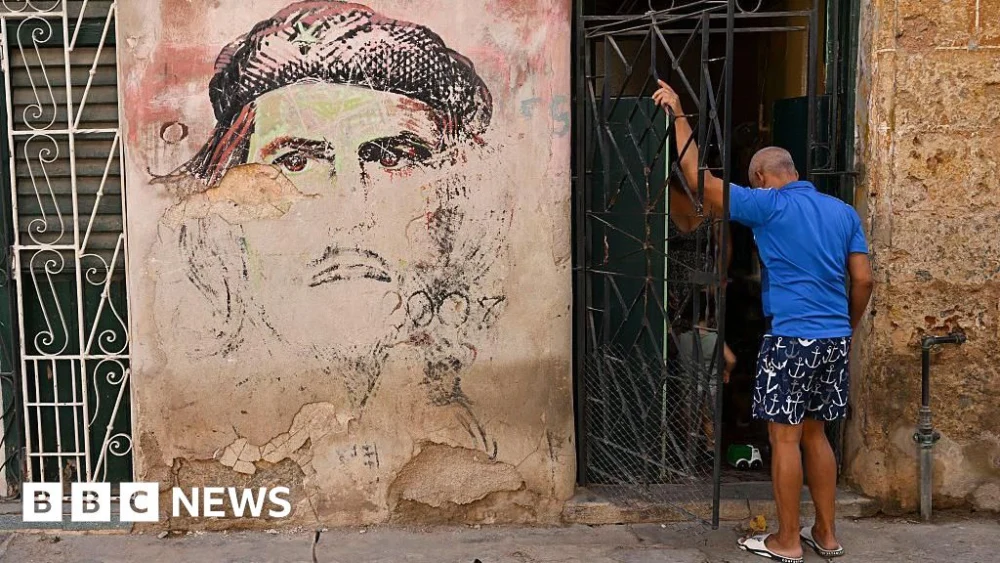
The Cuban nation, grappling with the profound impact of a 24-hour nationwide blackout and a severe fuel crisis, finds itself at the center of renewed attention from the United States. US President Donald Trump, speaking publicly last week, suggested that Cuba was next on his administration’s foreign policy agenda, asserting that change on the island was "just a question of time." These pronouncements arrive as Cuba faces its most acute economic challenges in decades, exacerbated by the sudden cessation of Venezuelan crude oil supplies and the stringent application of US sanctions. The confluence of these factors has plunged the Caribbean nation into a deepening energy crisis, with widespread disruptions to daily life and critical services, prompting both concern and speculation about the island’s future trajectory.
President Trump’s Assertions and Diplomatic Overtures
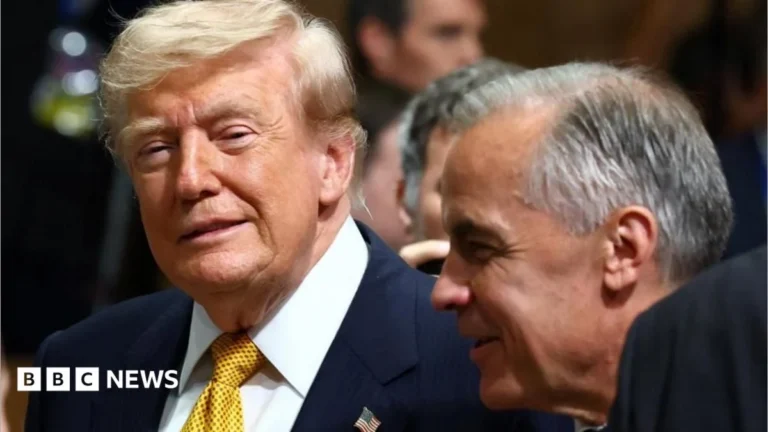
President Trump’s remarks, made during a public appearance with the Inter Miami soccer team, were directed at Cuban-born magnate Jorge Mas, one of the team’s owners. Trump conveyed that they would soon be "celebrating what’s going on in Cuba," adding a cryptic note that Cuban authorities "want to make a deal. So badly you have no idea." Mas, seemingly buoyed by the sentiment, responded that it would be "an amazing day." Further elaborating on his position during a subsequent conversation with CNN, Trump declared, "Cuba is gonna fall pretty soon." He also suggested that the island’s leadership was engaged in negotiations, stating his intention to "put Marco [Rubio] over there and we’ll see how that works out." While emphasizing that the immediate focus remained on Iran, Trump underscored the long-term view, remarking, "But we’ve got plenty of time. Cuba’s ready – after 50 years."
These statements from the US President indicate a clear intention from his administration to maintain and escalate pressure on Cuba, positioning it as a pivotal element of Washington’s regional strategy. The mention of potentially sending a high-ranking official like the US Secretary of State for "face-to-face negotiations" suggests a calculated strategy that could either precede a dramatic shift in policy or represent a final push for concessions. The timing of these remarks, coming directly after a crippling national blackout, appears designed to amplify the perceived vulnerability of the Cuban government. The inclusion of Senator Marco Rubio, a staunch critic of the Cuban government and influential voice in US foreign policy toward Latin America, further signals the administration’s commitment to this hardline stance.
The Deepening Crisis: A Nation in Darkness and Stagnation
The recent 24-hour nationwide blackout, which paralyzed Cuba, serves as a stark illustration of the island’s escalating energy woes. This was not an isolated incident but rather the culmination of a deteriorating situation, where sporadic and prolonged power outages have become increasingly common, sometimes lasting for days in various regions. Beyond the immediate inconvenience, the lack of electricity has profound implications for public health, safety, and economic activity.
Evidence of the fuel crisis permeates every aspect of Cuban society. Garbage collection, heavily reliant on state-owned trucks, has been severely hampered, leading to burgeoning piles of refuse in urban centers. This uncollected waste poses significant public health risks, creating breeding grounds for pests and disease vectors. In a desperate attempt to manage the situation, residents in some areas have resorted to burning rubbish at night, filling the air with acrid smoke and compounding environmental concerns. Even in the more affluent districts of Havana, the capital, families have been observed cooking with firewood or charcoal, a practice reminiscent of the severe "Special Period" following the collapse of the Soviet Union in the early 1990s, when fuel scarcity forced widespread adaptation.
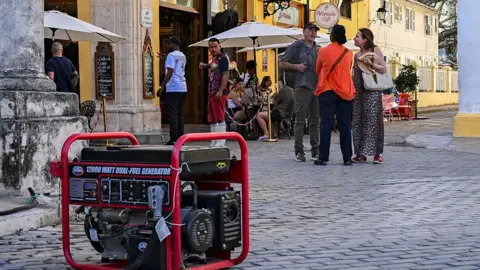
The scarcity of fuel extends beyond transportation, critically impacting the operation of generators that provide backup power for essential services and businesses. Cuba’s aging, Soviet-era electrical grid, largely dependent on imported crude oil for its thermo-energy plants, struggles to meet domestic consumption demands. The country’s primary energy source is thermal power, which relies heavily on imported heavy fuel oil and domestic crude, neither of which is currently sufficient. With limited access to alternative energy sources like widespread solar panels – despite Cuba’s abundant sunshine – the populace remains largely at the mercy of the grid’s dwindling capacity. The economic fallout is palpable, with tourism, a vital economic engine for the island, already feeling the strain. Air France, a major international carrier, recently announced the suspension of flights to Cuba, citing difficulties in refueling in Havana. This decision underscores the severity of the logistical challenges and the direct impact on a sector that generated an estimated $3.5 billion in revenue in pre-crisis years.
Historical Context: A Legacy of Tensions and Shifting Policies
The current crisis and the renewed US pressure are deeply rooted in over six decades of complex and often adversarial US-Cuba relations. Since the 1959 revolution, which brought Fidel Castro to power, the United States has maintained an economic embargo, known as the bloqueo by Cuba, aimed at isolating the communist government and fostering democratic change. This embargo, codified into law by various acts, including the Helms-Burton Act of 1996, restricts trade, financial transactions, and travel. Cuba estimates the cumulative economic damage from the embargo to be over $130 billion.
For many years, Cuba relied heavily on the Soviet Union for economic support, including subsidized oil. Following the USSR’s collapse in 1991, Cuba entered a period of extreme hardship known as the "Special Period in Time of Peace," characterized by severe shortages of food, fuel, and consumer goods, leading to widespread hunger and deprivation. It was during this time that Venezuela, under Hugo Chávez, emerged as a new strategic ally and a crucial lifeline, offering oil at preferential rates.
The Obama administration initiated a historic thaw in relations, re-establishing diplomatic ties in 2015 and easing some travel and trade restrictions. This period offered a glimmer of hope for greater engagement, increased remittances, and economic liberalization, leading to a significant surge in American visitors and private sector growth. However, the Trump administration swiftly reversed many of these policies, adopting a "maximum pressure" strategy, ostensibly to force the Cuban government to abandon its socialist system and cease support for regimes like Venezuela. This reversal included tightening travel restrictions, limiting remittances, and activating Title III of the Helms-Burton Act, which allows US citizens to sue foreign companies benefiting from properties confiscated by the Cuban government.
Venezuela’s Pivotal Role and Its Demise in this Timeline
A critical turning point for Cuba, as implied by the original article’s premise, was the "forced removal of Nicolas Maduro from power in Venezuela on 3 January." In this alternate timeline, this event had immediate and catastrophic consequences for Cuba. For nearly two decades, Venezuela had been Cuba’s primary source of crude oil, supplied under preferential terms in exchange for Cuban medical personnel and other services. This arrangement was a cornerstone of Cuba’s energy security and economic stability, providing an estimated 100,000 barrels of oil per day at its peak.
With Maduro’s removal, this vital oil pipeline was severed. The political upheaval and subsequent collapse of Venezuela’s state-owned oil company, PDVSA, in this hypothetical scenario, meant that the generous oil subsidies to Cuba ceased abruptly. The economic and political pressure exerted by the Trump administration on other potential energy partners, particularly Mexico, ensured that no other nation was willing or able to step into the breach to fill Cuba’s massive oil deficit. This strategic isolation left Cuba highly vulnerable, directly leading to the current fuel and energy crisis. Cuba’s domestic oil production is minimal, covering only a fraction of its needs, making foreign imports absolutely essential.
The Trump Administration’s "Maximum Pressure" Campaign: Specifics
The "maximum pressure" campaign pursued by the Trump administration against Cuba has been multi-faceted and relentless, building upon existing sanctions and introducing new ones. Key measures have included:
- Tightened Travel Restrictions: The administration prohibited cruise ship visits, which had become a popular way for Americans to visit Cuba, and eliminated the popular "people-to-people" educational travel category, instead requiring individual travelers to belong to more restrictive categories. This significantly impacted the flow of American tourists and their spending, a crucial source of hard currency for Cuba’s state and private sectors.
- Remittance Caps: Restrictions were placed on the amount of money Cuban-Americans could send to family members on the island, initially limiting it to $1,000 per quarter per person, and later making it virtually impossible by sanctioning the Cuban military-owned entity (FINCIMEX) that processed most remittances. This severely squeezed the incomes of ordinary Cubans and the nascent private sector, which relies heavily on family support.
- Sanctions on Shipping: The US sanctioned companies and vessels involved in transporting Venezuelan oil to Cuba, effectively blacklisting them from operating in US ports or with US entities. This made it extremely difficult for Cuba to secure fuel from other international suppliers, even at market rates, by intimidating shipping companies and insurance providers. This directly targeted the logistical chain necessary for Cuba’s energy imports.
- Activation of Helms-Burton Title III: This controversial provision, which had been suspended by every US administration since its enactment in 1996, allows US citizens to sue entities "trafficking" in confiscated property in Cuba. Its activation created significant legal risks for foreign investors, leading many international companies to reconsider or withdraw investments, thereby deterring much-needed foreign direct investment and further isolating the Cuban economy.
- Designation of Cuba as a State Sponsor of Terrorism: This designation, reinstituted late in the Trump administration, carries severe financial and diplomatic penalties, making it harder for Cuba to access international credit, conduct banking transactions, and engage in global commerce, exacerbating its economic isolation.
These measures, vigorously championed by figures like Senator Marco Rubio, have been consistently framed by the administration as necessary steps to compel the Cuban government to undertake democratic reforms and cease its support for what the US considers authoritarian regimes in the region, particularly Venezuela.
Humanitarian Impact and Daily Life for Ordinary Cubans
While the stated aim of US sanctions is to pressure the Cuban leadership, critics argue that the brunt of these policies is borne by ordinary Cubans. The current fuel crisis and blackouts have had a devastating humanitarian impact:
- Food Security: Without reliable electricity, refrigeration becomes impossible, leading to food spoilage in a country already struggling with agricultural output and facing chronic shortages of basic goods. The state distribution system, known as the libreta, is insufficient, and parallel markets depend on reliable supply chains, which are now broken.
- Public Health: The accumulation of uncollected garbage creates breeding grounds for disease vectors, raising concerns about outbreaks of dengue fever and other illnesses. Hospitals and clinics, if not equipped with robust generator systems, face critical challenges in maintaining essential services, operating medical equipment (e.g., for surgeries, diagnostic tests), and preserving temperature-sensitive medicines. Access to clean water, often pumped using electricity, is also compromised, forcing many to ration or seek alternative sources.
- Education: Schools struggle to operate without power, impacting students’ ability to learn and teachers’ capacity to teach. The use of computers and other modern learning tools becomes impossible.
- Daily Living: The absence of air conditioning or fans in Cuba’s tropical climate makes life during the hot summer months unbearable, particularly for the elderly, children, and infirm. The simple act of preparing meals becomes a monumental task, with many resorting to inefficient and polluting methods like cooking over wood fires, leading to indoor air pollution.
- Psychological Toll: The constant uncertainty, physical discomfort, and the erosion of basic services take a significant psychological toll on the population, fostering frustration, anxiety, and a sense of helplessness. The lack of reliable communication and internet access during blackouts further exacerbates feelings of isolation.
Economic Repercussions and Limited Private Sector Initiatives
The economic repercussions of the crisis are far-reaching. Tourism, once a burgeoning sector and a vital source of foreign currency, is now in severe decline. Airlines suspending flights, coupled with a lack of reliable infrastructure and services (like air conditioning and hot water in hotels), deter potential visitors. This directly impacts state revenues and the livelihoods of countless Cubans employed in the tourism sector, from hotel staff to taxi drivers, artisans, and restaurant workers. Data indicates a significant drop in tourist arrivals following the tightening of US restrictions and the onset of the fuel crisis.
Cuba’s limited private sector, which had seen some growth in recent years following modest economic reforms, is also severely affected. Small businesses, such as paladares (private restaurants), casas particulares (private guesthouses), and small shops, rely on electricity and fuel to operate and transport goods. Without these, their viability is severely compromised, hindering the very economic liberalization the US claims to support. Many entrepreneurs are forced to close or drastically reduce operations.
In a rare concession, the Cuban government has authorized limited steps to allow the private sector to import fuel for their businesses. However, the overall sentiment among Cubans is skepticism regarding the efficacy of such measures. Nationally, these private imports represent only a minuscule fraction of the island’s total fuel requirements, offering little hope for a systemic solution to the crisis. This illustrates the deep-seated structural challenges of Cuba’s centralized economy and its difficulty in adapting to external shocks, despite its stated commitment to "updating" its economic model.
Whispers of Diplomacy: Are Talks Underway?
President Trump’s assertion that Cuban authorities "want to make a deal" and are "negotiating" has fueled speculation about potential back-channel diplomacy. While the Cuban government has not officially confirmed any such talks, reports have circulated that Raúl Guillermo Rodríguez Castro, the grandson of former President Raúl Castro, has been a point of contact in Havana. Such high-level, albeit unofficial, contacts would be consistent with past periods of US-Cuba relations, where discrete channels were sometimes used to manage crises or explore potential rapprochement.
The notion of negotiations, however, seems contradictory to the Trump administration’s public posture of unrelenting pressure. If talks are indeed occurring, they would likely be highly secretive, reflecting the sensitive nature of US-Cuba relations and the political implications for both sides. For the US, any deal would likely involve significant concessions from Cuba on human rights, democratic reforms, and its foreign policy alliances, particularly its stance on Venezuela. For Cuba, entering negotiations from a position of extreme vulnerability would be a difficult strategic choice, but one potentially necessitated by the dire humanitarian situation and the need to alleviate the suffering of its populace. Any public acknowledgment of talks would risk undermining the Cuban government’s narrative of national resistance against foreign aggression.
Political Calculus and Future Prospects
The Trump administration’s strategy appears to be a calculated gamble: to squeeze Cuba so intensely that its leadership is forced to negotiate from a position of weakness, or potentially even provoke an internal uprising. Senator Marco Rubio, a key architect of the administration’s Cuba policy, has consistently advocated for maximum pressure, believing that it is the most effective way to achieve regime change and promote democracy on the island. This approach resonates with a significant segment of the Cuban-American community in Florida, a crucial political demographic.
However, critics, including some international organizations, humanitarian groups, and US lawmakers from the opposing party, argue that this approach primarily harms the Cuban people, not the government, and risks destabilizing the region without achieving its stated goals. They point to the historical resilience of the Cuban government in the face of external pressure and question whether such tactics truly foster democratic transitions or merely entrench authoritarianism by giving the government a convenient external enemy to blame for internal hardships.
The timing of Trump’s comments, placing Cuba after Iran on his agenda, also highlights a broader US foreign policy doctrine under his administration—one focused on confronting perceived adversaries through economic and diplomatic coercion. The future of US-Cuba relations hinges significantly on the outcome of this "maximum pressure" campaign. Will it lead to the collapse of the Cuban government, a negotiated settlement, or a protracted period of severe hardship for the Cuban people? The answer remains uncertain, with potential implications for regional stability.
International Perspectives and Criticisms
Globally, the US embargo against Cuba has faced widespread criticism. The United Nations General Assembly has, for decades, overwhelmingly voted in favor of a resolution calling for an end to the embargo, with only a handful of nations consistently siding with the US. In 2019, for example, 187 countries voted in favor of the resolution, with only the United States, Israel, and Brazil voting against it. Critics argue that the embargo constitutes a violation of international law and human rights, particularly concerning its impact on the Cuban populace’s access to essential goods, including medicines and food.
Many international observers view the US policy as counterproductive, arguing that it serves to consolidate the Cuban government’s narrative of external aggression and hinders the development of a more open society. The current crisis, exacerbated by the loss of Venezuelan oil and stringent US sanctions, further fuels these criticisms, with humanitarian organizations expressing deep concern about the well-being of the Cuban population and calling for a relaxation of measures that directly impact civilians.
Conclusion
Cuba stands at a precarious crossroads, buffeted by an unprecedented energy crisis and intensified pressure from the United States. President Trump’s recent pronouncements signal a clear intent to leverage the island’s vulnerabilities for a perceived breakthrough after "50 years" of communist rule. The ongoing blackouts, fuel shortages, and economic paralysis underscore the profound challenges facing the Cuban people, who are struggling to maintain basic living standards amidst a crumbling infrastructure and dwindling resources. While whispers of potential negotiations offer a faint hope for a diplomatic resolution, the immediate future appears fraught with uncertainty. The effectiveness and ethics of the "maximum pressure" strategy remain hotly debated, but its undeniable impact on the lives of millions of Cubans is a stark and pressing reality that continues to unfold on the island. The world watches to see whether the current confluence of internal crisis and external pressure will finally usher in the "change" that President Trump envisions, or if Cuba will once again demonstrate its enduring resilience in the face of adversity.