


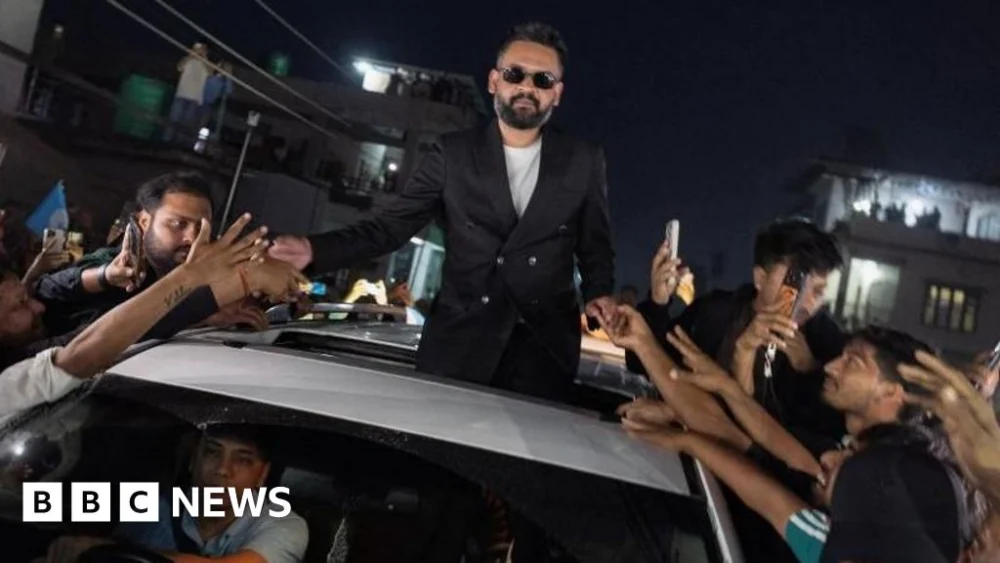
Kathmandu, Nepal – In a momentous electoral upset that has sent reverberations across Nepal’s political establishment, popular rapper Balendra Shah, 35, has decisively defeated former Prime Minister KP Sharma Oli, 72, in the nation’s general election. The official confirmation from Nepal’s Election Commission on Saturday revealed Shah garnered an overwhelming 68,348 votes against Oli’s 18,734 in the parliamentary constituency, securing a victory that heralds a new era for the Himalayan republic. This outcome is not merely a change in representation but a profound statement from a populace, particularly its burgeoning youth, demanding radical reform and an end to decades of entrenched political power.
The general election, held on Thursday, marked the first national vote since the tumultuous youth-led protests of September 2025, which saw widespread unrest and ultimately led to the downfall of the then-incumbent government. This election was framed as a pivotal contest between Nepal’s long-standing political elite and a burgeoning generation of politicians, personified by Shah, who resonate deeply with angry, digitally native Gen Z voters hungry for tangible change. Shah, who had previously served as the mayor of Kathmandu, strategically resigned from his mayoral post in January to directly challenge Oli in his parliamentary stronghold. His victory is now set to position his nascent Rastriya Swatantra Party (RSP) at the helm, with Shah poised to assume the prime ministership.
A Nation’s Cry for Change: The Roots of Discontent
Nepal’s political history has been characterized by periods of instability, transitions from monarchy to republic, and a revolving door of coalition governments often led by a familiar cast of veteran politicians. For decades, figures like KP Sharma Oli, representing established parties such as the Communist Party of Nepal (Unified Marxist-Leninist – CPN-UML), have dominated the political discourse and held sway over the country’s governance. However, beneath the surface, a growing tide of disillusionment has been brewing, particularly among the youth who often feel disenfranchised and unrepresented by the traditional political class. Issues such as rampant unemployment, endemic corruption, and a perceived lack of opportunities have fueled a desire for fresh leadership and innovative solutions.
The tipping point for this widespread discontent arrived in September 2025. Then-Prime Minister KP Sharma Oli’s government controversially banned several social media platforms, citing concerns over national security and misinformation. This move, however, was widely interpreted as an attempt to stifle dissent and control public discourse, especially among the digitally savvy youth. The ban ignited a furious backlash, sparking what became known as the "Gen Z demonstrations" – a series of large-scale, often violent, protests that swept across the nation.
The September 2025 Uprising: A Catalyst for Political Awakening
The social media ban, which primarily targeted platforms like TikTok and X (formerly Twitter), was met with immediate and fierce resistance. Millions of Nepalis, particularly the younger demographic, relied on these platforms not only for communication and entertainment but also as crucial tools for political organization and expression. The government’s justification that these platforms were breeding grounds for "misinformation and social disharmony" was largely dismissed by protesters who viewed it as an authoritarian overreach. The protests quickly escalated beyond the initial grievance, evolving into a broader critique of Nepal’s political system and its perceived failures.
A significant theme that emerged during these demonstrations was the condemnation of "nepo babies" – a term borrowed from global pop culture but adapted to criticize the children and relatives of powerful politicians who were seen to benefit disproportionately from the country’s political system, often securing positions of influence without merit. This symbolism of class inequality and dynastic politics resonated deeply with ordinary citizens struggling with economic hardship. Protesters voiced their frustration over the lack of meritocracy, the concentration of power within a few families, and the systemic corruption that they believed stifled progress and opportunity for the majority.
The demonstrations turned increasingly confrontational, leading to tragic loss of life. A total of 77 individuals were killed during the protests, a stark reminder of the intensity of the public’s anger and the state’s response. A subsequent BBC investigation revealed a chilling order issued by the country’s police chief authorizing lethal force against thousands of unarmed protesters, drawing widespread condemnation from human rights organizations and international observers. It was during this volatile period that Balendra Shah emerged as a vocal supporter of the protesters, openly criticizing Oli and, at one point, famously labeling him a "terrorist" who had "betrayed his country." Shah’s solidarity with the youth and his unequivocal condemnation of the government’s actions cemented his image as an authentic voice for the aggrieved.
Balen Shah: From Hip-Hop Icon to Political Leader
Balendra Shah, popularly known as Balen, had already carved out a significant identity long before his political ascendancy. For several years, he has been a prominent figure in the Nepali hip-hop scene, using his music as a platform for social commentary and cultural expression. One of his most notable songs, "Balidan" (Sacrifice), a powerful track reflecting on sacrifice in the Nepali language, garnered millions of views on YouTube, establishing him as an influential voice among young Nepalis. His transition from a cultural icon to a political force began with his successful mayoral campaign for Kathmandu, where he served as an independent. His tenure as mayor, though brief, demonstrated his ability to connect with voters and mobilize support outside traditional party structures.
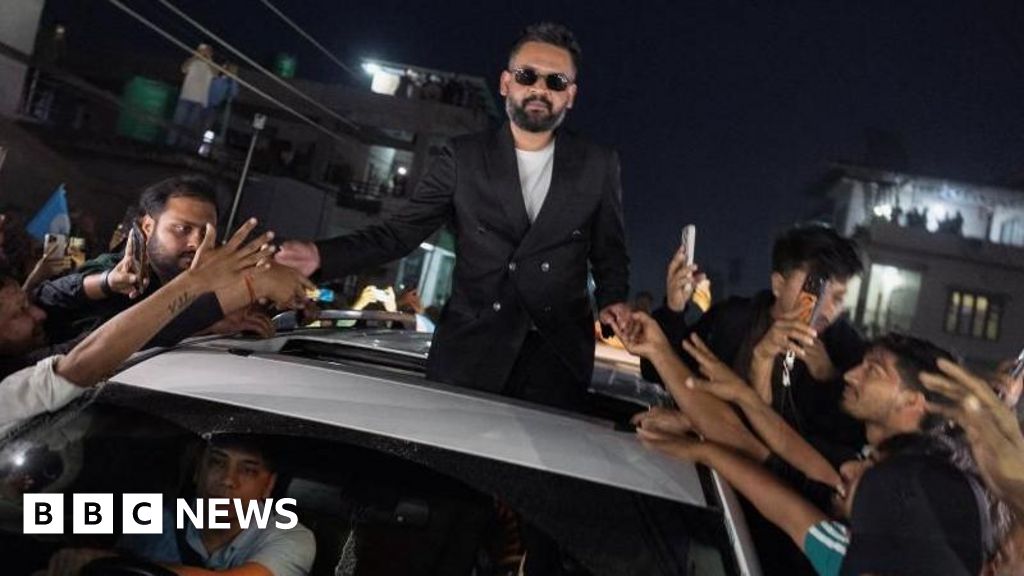
Shah’s political journey embodies the aspirations of a new generation. While he has typically maintained a distance from mainstream media, during his recent campaign trail, he offered a rare insight into his philosophy in an interview with the Financial Times, stating his intention to be "the candidate for all of Nepal." This inclusive message, coupled with his background as an outsider untainted by the political establishment, resonated strongly with a populace weary of traditional politicians.
The RSP’s Vision: A Manifesto for a New Nepal
The Rastriya Swatantra Party (RSP), under Shah’s leadership, unveiled its comprehensive manifesto in February, meticulously crafted to address the core grievances of the Nepali populace. At the heart of their economic agenda is a bold pledge to create 1.2 million jobs within the next five years. This commitment directly targets Nepal’s chronic unemployment problem, which has historically pushed millions of its citizens to seek opportunities abroad, often under challenging conditions. The RSP aims to significantly reduce forced migration by fostering domestic economic growth and creating sustainable livelihoods within the country.
Beyond job creation, the RSP’s economic blueprint includes ambitious targets to elevate Nepal’s per capita income from its current level of approximately $1,447 to an impressive $3,000 within five years. This would entail more than doubling the country’s Gross Domestic Product (GDP) to an estimated $100 billion, a significant leap from its current size. To achieve these targets, the party has outlined plans for investment in infrastructure, technology, and human capital development. Furthermore, recognizing the pressing need for social welfare, the RSP has pledged to establish robust social safety nets, including comprehensive healthcare insurance for the entire population, aiming to alleviate financial burdens on families and ensure access to essential services. These pledges represent a stark contrast to the often incremental or unfulfilled promises of previous administrations, offering a vision of rapid, transformative change.
The Decisive Power of the Youth Vote
A critical factor in Shah’s unprecedented victory was the mobilization of Nepal’s youth. The general election saw the participation of an estimated 800,000 first-time voters, a demographic bloc that proved to be both enthusiastic and decisive. These young voters, largely belonging to Gen Z, represent a demographic that is digitally literate, globally aware, and deeply frustrated with the status quo. They are less bound by traditional party loyalties or caste-based voting patterns and are more inclined to support candidates who offer genuine change and represent their aspirations for a modern, prosperous Nepal.
The election results underscore a fundamental shift in the country’s political dynamics. For decades, Nepali politics has been dominated by a few established parties and their veteran leaders, often leading to political gridlock and a lack of accountability. The outcome of this election, however, strongly suggests that the younger generation has successfully convinced a significant portion of the electorate that it is indeed time for a new, untested generation to take the reins and shape their future. This represents a clear rejection of the old guard and a resounding endorsement of fresh perspectives and unconventional leadership.
Implications and the Road Ahead
Balendra Shah’s victory carries profound implications for Nepal’s political trajectory. It signals a powerful mandate for change, challenging the deeply entrenched patronage networks and power structures that have defined Nepali politics for so long. For the traditional parties, this outcome serves as a stark wake-up call, highlighting their failure to adapt to evolving voter expectations and address the concerns of a rapidly growing, politically aware youth demographic.
However, the path ahead for Prime Minister-elect Shah and the RSP will undoubtedly be fraught with challenges. Governing a diverse nation like Nepal, navigating complex geopolitical relations, and implementing ambitious economic reforms will require more than just popular appeal. Shah will need to build a strong, cohesive government, forge alliances across the political spectrum, and demonstrate pragmatic leadership to translate his electoral promises into tangible results. The experience of governing, which differs significantly from campaigning, will test his administrative capabilities and his party’s organizational strength.
Political analysts view Shah’s victory as part of a broader global trend where non-traditional candidates, often from outside the political establishment, are gaining traction by tapping into public frustration with conventional politics. "This is a watershed moment for Nepal," commented Dr. Surya Sharma, a Kathmandu-based political observer. "It demonstrates the immense power of the youth vote and the deep desire for a departure from dynastic and traditional politics. Shah’s challenge now is to consolidate this mandate and deliver on the high expectations he has set." The world will be watching closely as Nepal embarks on this new chapter, led by a rapper-turned-prime minister, as it seeks to redefine its future and address the aspirations of a generation yearning for a better tomorrow.