



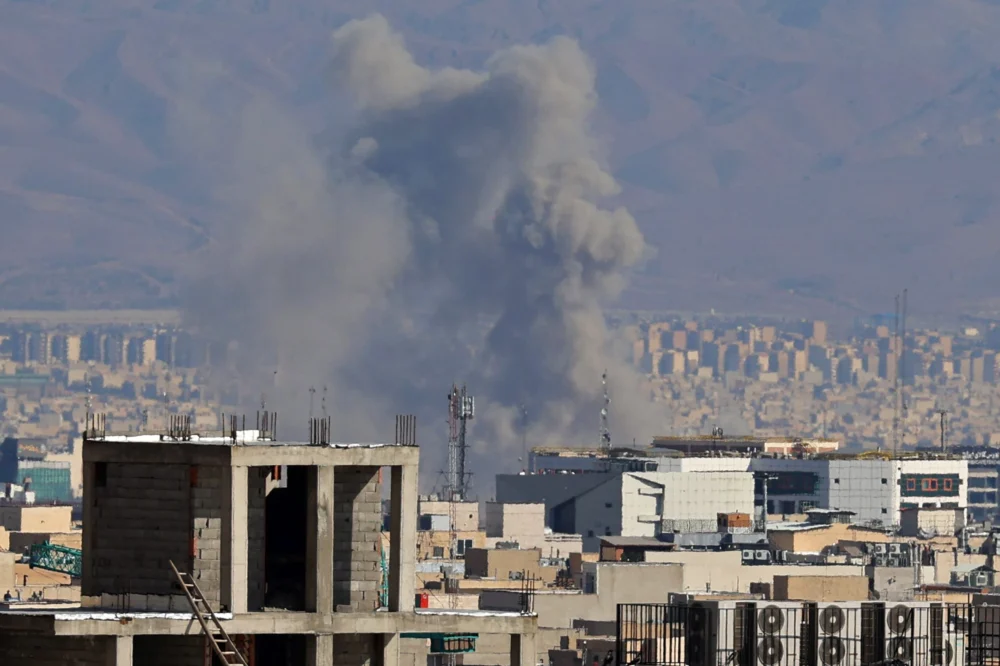
In recent years, a significant migration of capital has seen investors increasingly channel funds into emerging markets, driven by the persistent quest for robust stock gains and a strategic desire for diversification beyond the highly concentrated U.S. equity landscape, particularly the S&P 500. However, the recent escalation of the U.S.-Iran military conflict has dramatically reshaped this investment calculus, casting a stark spotlight on the inherent concentration risks within emerging market portfolios, where performance often hinges on a select few stocks, many of which are deeply intertwined with the burgeoning artificial intelligence (AI) sector. This geopolitical flashpoint has prompted a critical re-evaluation of strategies, pushing regions like Latin America into sharper focus as a potential balancing force against established, yet increasingly volatile, Asian dominance.
The Peril of Concentration: Asia’s Dominance and Tech Vulnerability
The iShares MSCI Emerging Markets ETF (EEM), a widely referenced benchmark for the asset class, has demonstrated commendable performance, posting a 29% gain in 2025 and maintaining a modest positive trajectory into 2026. Yet, a closer inspection of its underlying holdings reveals a pronounced geographical and sectoral imbalance. The ETF remains heavily weighted towards Asia, with China, South Korea, India, and Taiwan collectively accounting for over three-quarters of the index’s total weight. Furthermore, a substantial portion of its top constituents are technology giants, including Taiwan Semiconductor Manufacturing Company (TSMC) and Samsung, emblematic of the global AI boom.
Malcolm Dorson, a senior emerging markets portfolio manager and head of the active investment team at ETF provider Global X, articulated this concern clearly on CNBC’s "ETF Edge." He highlighted that "If you look at the index within emerging markets, it’s still roughly 80% Asia," a configuration he characterized as presenting "a lot of concentration risk." This regional skew is further compounded by a significant sectoral bias, with the overall EM index dedicating more than 30% of its weighting to the technology sector. While this exposure has historically fueled growth, it simultaneously amplifies susceptibility to sector-specific downturns or geopolitical disruptions impacting the tech supply chain.
Geopolitical Shocks and Market Repercussions: The South Korean Case Study
The fragility of this concentrated exposure was vividly demonstrated by the extreme volatility witnessed in South Korean stocks following the outbreak of the U.S.-Iran military conflict. The nation’s benchmark KOSPI index experienced its worst single-day decline ever on Wednesday, as investor anxieties surged over potential disruptions to global energy supplies. This concern was particularly acute for Asia’s industrial powerhouses, where the production of advanced memory chips—a cornerstone of the AI revolution—relies heavily on energy-intensive manufacturing processes. The prospect of higher energy costs or outright shortages immediately translated into significant selling pressure.
The ensuing market chaos saw the iShares MSCI South Korea ETF (EWY) plunge close to 13% within the week. However, in a testament to the market’s underlying resilience and perhaps a degree of short-covering, the KOSPI staged a dramatic rebound on Thursday, recording its best single-day performance since the 2008 financial crisis. This whipsaw action underscores the heightened sensitivity of these markets to external shocks.
The scale of the volatility in South Korean equities is also tied to their preceding meteoric rise. Companies like SK Hynix, a major player in the memory chip sector and a top holding in broad emerging market indexes, saw its stock price surge by an astounding 274% last year. Similarly, Samsung, another tech behemoth, recorded gains of 125% over the same period. Such phenomenal returns had attracted a substantial influx of retail investors, making these stocks particularly vulnerable to sharp corrections once confidence wavered. The rapid accumulation of gains meant that any significant negative catalyst could trigger widespread profit-taking and margin calls, exacerbating downward movements.
Energy Market Upheaval: A Global Ripple Effect
The U.S.-Iran military conflict immediately translated into a dramatic surge in global oil prices, sending shockwaves through financial markets worldwide. By Friday, Brent crude futures had breached the critical $90 per barrel mark, while U.S. West Texas Intermediate (WTI) crude futures were rapidly approaching that threshold. Over the course of the week, WTI crude advanced by more than 30%, and Brent crude futures climbed nearly 26%. This sudden and significant spike in energy costs has profound implications, particularly for energy-importing nations heavily reliant on stable and affordable fuel supplies for their industrial and technological sectors.
The ripple effects of this energy squeeze were quickly observed in Asia. China, for instance, reportedly instructed its domestic oil refining companies to suspend all exports of diesel and gasoline. This move, aimed at conserving national energy stockpiles amid escalating geopolitical uncertainty, serves as a tangible indicator of the region’s vulnerability. Energy market experts have warned that other Asian nations might soon follow suit with similar measures to safeguard their energy security, potentially disrupting global trade flows and exacerbating inflationary pressures. The increased cost of energy directly impacts manufacturing, transportation, and consumer prices, posing a significant headwind to economic growth, especially for economies heavily invested in energy-intensive industries like advanced semiconductor production.
The Strategic Imperative: Diversification Through a "Barbell Approach"

Despite the pronounced risks highlighted by the recent market turbulence, leading ETF investing strategists caution against abandoning emerging markets altogether. Many macroeconomic factors, including favorable demographics, rising middle-class consumption, and ongoing structural reforms, are expected to sustain the outperformance of these markets over the longer term. Instead, the consensus points towards a more sophisticated and balanced investment strategy.
Malcolm Dorson advocated for a "barbell approach" to investment, emphasizing the necessity of balancing exposure across different types of emerging markets rather than concentrating heavily on a single region or sector. He contended that investors seeking to maintain international exposure, especially in the wake of recent events, should critically examine Latin America as a robust counter-balance to their existing Asian market allocations. "I think you need to have both," Dorson affirmed, underscoring the complementary nature of these diverse regions.
Latin America: A Compelling Counter-Balance
The investment case for Latin America as a strategic diversifier rests on several compelling pillars:
-
Commodity Linkage: Countries such as Argentina, Brazil, and Colombia possess economies deeply intertwined with global energy and commodities markets. Unlike the tech-centric economies of Northeast Asia, these nations are often net exporters of raw materials, including oil, gas, metals, and agricultural products. Consequently, rising commodity prices, such as the recent surge in oil, can provide a significant "additional tailwind" for their economies. Dorson estimated that "25 to 33% of the story should be that attractiveness of getting exposure to commodities," highlighting the direct positive correlation between global commodity demand and the economic health of these nations. This natural hedge against geopolitical events that drive up commodity prices makes Latin America an attractive component of a diversified emerging market portfolio.
-
Political Reform Momentum: Beyond commodities, many Latin American nations are actively pursuing ambitious political and fiscal reform agendas. From efforts to streamline government bureaucracy and improve ease of doing business to initiatives aimed at attracting foreign direct investment, these reforms hold the potential to unlock significant economic growth. Investors are closely monitoring these developments, as successful reforms could translate into improved governance, enhanced macroeconomic stability, and a more favorable environment for businesses. Dorson noted that "All eyes are on political change that could drive fiscal reform," suggesting that such shifts could particularly benefit financial services sector stocks across the region, which often thrive in environments of increased stability and economic activity. Examples include Brazil’s ongoing efforts to control inflation and reform its pension system, and Argentina’s new administration signaling aggressive fiscal adjustments and market-friendly policies.
-
Attractive Valuations: A key quantitative advantage for Latin American equities lies in their significantly discounted valuations compared to U.S. stocks. While the S&P 500, represented by ETFs like Vanguard’s S&P 500 ETF (VOO), currently trades at a price-to-earnings (P/E) ratio of approximately 28, the broader emerging markets ETF (VWO) trades at a P/E ratio of 18. This disparity is even more pronounced when focusing on specific Latin American markets, where many equities trade at P/E ratios roughly half those seen in the S&P 500. Such attractive valuations suggest a greater potential for capital appreciation, offering a buffer against market volatility and a compelling entry point for long-term investors.
Broader Implications and The Path Forward
The recent market dislocations serve as a potent reminder of the complex interplay between geopolitics, economic fundamentals, and investment strategy in emerging markets. The historical trajectory of emerging markets has always been characterized by cycles of boom and bust, often influenced by global economic conditions, commodity prices, and political stability. The current environment, marked by an accelerating AI revolution and heightened geopolitical tensions, demands a nuanced and adaptable approach from investors.
The concentration of capital in a few Asian tech giants, while rewarding during periods of rapid growth, introduces systemic risks that can be exacerbated by external shocks. The reliance on complex global supply chains for critical components and the energy-intensive nature of advanced manufacturing make these regions particularly sensitive to disruptions in energy markets or trade relations.
Conversely, Latin American economies, with their foundational links to commodities and their pursuit of structural reforms, offer a distinct and less correlated investment profile. While they carry their own set of risks, including political instability, inflation, and currency volatility, their current valuation discounts and potential tailwinds from rising commodity prices and domestic reforms present a compelling case for strategic allocation.
In this evolving landscape, a well-constructed emerging market portfolio necessitates a conscious effort to diversify across geographies and sectors. This means not only embracing the growth potential of Asian technology but also recognizing the counter-cyclical and commodity-driven strengths of Latin America. The "barbell approach" advocated by experts like Malcolm Dorson is not merely a tactical maneuver but a fundamental re-calibration of risk management within the dynamic world of emerging market investing. As global uncertainties persist, a balanced and resilient portfolio, capable of navigating both technological booms and geopolitical storms, will be paramount for sustained long-term success.