



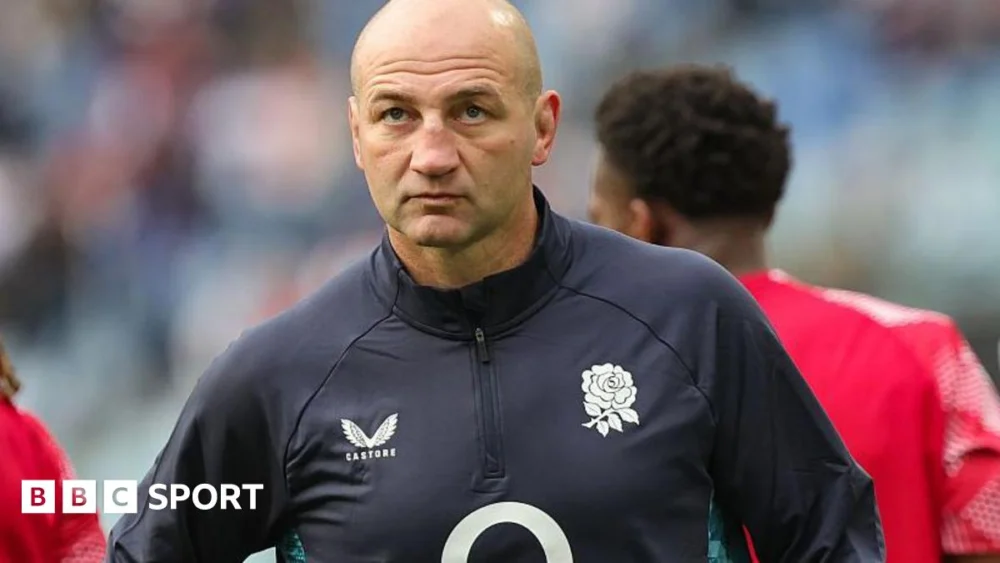
Rugby Football Union (RFU) chief executive Bill Sweeney has publicly reaffirmed his support for England head coach Steve Borthwick, despite a deeply disappointing Six Nations campaign that has seen the team languish in fifth place. While Borthwick retains the backing of his superiors for now, Sweeney confirmed that a comprehensive review of the tournament’s shortcomings will commence immediately following England’s final-round fixture against France on Saturday. This commitment to a thorough examination signals a recognition of the significant underperformance and the need for tangible improvements.
The recent string of results has been a stark contrast to the team’s previous 12-match winning streak, a period that had generated considerable optimism. However, successive defeats to Scotland, Ireland, and, most alarmingly, Italy – the first ever loss to the Azzurri in the tournament’s history – have effectively ended England’s title aspirations and ignited widespread debate regarding Borthwick’s tenure. The unprecedented nature of the Rome defeat, in particular, has amplified calls for accountability and a clear roadmap for future success.
"After a 12-match winning run, these past three results have been hugely disappointing, and we feel that just as much as everyone else," stated Sweeney in a candid admission that acknowledged the widespread dissatisfaction among fans and stakeholders. This sentiment underscores the gravity of the situation and the collective disappointment felt within the RFU. The chief executive’s remarks aim to provide a degree of reassurance to supporters while simultaneously setting the stage for a period of intense introspection and strategic recalibration.
Sweeney emphasized the ongoing commitment to the coaching staff and the players, stating, "Steve and his coaching team are working tirelessly to make improvements, and we remain fully committed to supporting them and the players as they face France this weekend and then look ahead to the Nations Championship." This declaration of continued support, particularly in the immediate lead-up to a crucial fixture against a formidable French side, highlights the RFU’s desire to avoid further destabilization. The upcoming Nations Championship, a newly introduced international competition, is seen as a vital platform for England to demonstrate progress and rebuild confidence.
However, this support is not being offered without the promise of rigorous evaluation. Sweeney elaborated on the process of addressing the current challenges: "Part of that support is being open about what hasn’t gone right during this Six Nations and making sure everyone has a clear sense of how we move through those challenges together. That’s something we’ll be talking through and working on in the days and weeks ahead." This signals a commitment to transparency and a collaborative approach to identifying the root causes of the team’s struggles. The "days and weeks ahead" will likely involve extensive debriefs, data analysis, and strategic planning sessions.
The RFU’s objective is clear: to understand and rectify the underlying issues. "We will work together to understand and rectify why we have been unable to meet the expectations and anticipation going into these games," Sweeney pledged. This statement directly addresses the gap between pre-tournament hopes and the on-field reality. It suggests a methodical approach to pinpointing specific areas of weakness, whether they lie in tactical execution, player performance, preparation, or a combination of factors.
The expectations of the England fanbase are a significant consideration for the RFU. Sweeney acknowledged this by stating, "England fans rightly expect a team that learns and grows through adversity, and we’re confident this group will do everything they can to deliver that." This is a direct appeal to the loyal supporters, assuring them that their passion and expectations are understood and valued. The emphasis on learning and growing through adversity suggests a belief in the resilience of the current squad and coaching setup.
A Troubled Six Nations Campaign: A Chronology of Disappointment
England’s Six Nations journey this year has been a stark departure from the positive trajectory established in the latter half of 2023. The team’s campaign began with a hard-fought victory against Italy in Rome, a match that, in retrospect, would foreshadow later struggles. This was followed by a significant away defeat to Scotland at Murrayfield, a fixture that has historically been a barometer of England’s strength and resilience. The subsequent home loss to Ireland, one of the tournament’s dominant forces, was perhaps more expected, but the manner of the defeat further exposed vulnerabilities.
The nadir of the campaign, however, arrived in the third round with the unprecedented loss to Italy. Prior to this fixture, England had enjoyed a remarkable record against the Azzurri, having won their previous 32 encounters in the Six Nations. The 23-18 defeat in Rome was not just a statistical anomaly; it represented a significant psychological blow and a tangible indicator of the team’s current standing. This result, more than any other, triggered widespread calls for immediate change and cast a long shadow over Borthwick’s leadership.
Performance Metrics and Underlying Concerns
The statistics from the Six Nations paint a concerning picture for England. While specific detailed data for the entire tournament would require access to post-match reports, general trends from the key defeats highlight areas of concern. In the loss to Scotland, England struggled with discipline, conceding a significant number of penalties, which allowed the Scots to control territory and momentum. Against Ireland, the forward pack, a traditional strength for England, was outplayed in crucial periods, impacting set-piece dominance and the ability to secure possession.
The defeat to Italy was particularly alarming in its statistical breakdown. England conceded 23 points, a significant tally against a team that had previously struggled defensively. Crucially, Italy’s tactical execution and ability to capitalize on England’s errors were evident. The breakdown area, often a battleground for possession, saw Italy gain a crucial edge. Furthermore, England’s attacking fluency was stifled, with a lack of consistent penetration and clinical finishing contributing to their inability to overcome the deficit.
Borthwick’s Defence and the Road Ahead
Following the demoralizing loss to Italy, Steve Borthwick remained resolute, defending his position and the direction of the team. When directly questioned about his suitability for the head coach role, the 46-year-old responded with a clear affirmation: "Absolutely," he stated, indicating his unwavering belief in his ability to lead England. He acknowledged the current difficulties but stressed the importance of learning from them. "Right now this is a tough period, but what we will do is learn from it and make sure we are stronger going forward," he asserted.
Borthwick candidly admitted the severity of the team’s current predicament. "It is tough right now and we are not hiding away from the fact it is tough," he said, acknowledging the reality of the situation and the dissatisfaction it has generated. This honesty, while not assuaging immediate concerns, suggests a coach who is not shying away from the challenges at hand.
Broader Implications and the Future of English Rugby
The RFU’s decision to back Borthwick, while initiating a review, carries significant implications for the future of English rugby. The success or failure of this review and the subsequent implementation of any changes will be critical in determining the team’s trajectory leading into the 2027 Rugby World Cup. A period of instability or a lack of clear direction could further derail progress.
The performance in the Six Nations has also highlighted the growing strength and competitiveness of other European nations. Scotland and Italy, in particular, have demonstrated significant advancements, posing a serious challenge to the traditional hierarchy. This shift in the European landscape necessitates a strategic and adaptable approach from England to remain at the pinnacle of the sport.
The RFU’s commitment to understanding and rectifying the issues is crucial. The review process will need to be thorough, objective, and transparent, involving a deep dive into all aspects of the team’s performance, from coaching strategies and player development to scouting and tactical innovation. The ultimate goal is to restore England to a position of consistent competitiveness, capable of challenging for major honours. The coming weeks will be pivotal in shaping the narrative of English rugby and determining whether the current leadership can navigate this challenging period successfully. The focus now shifts to the match against France, where England will aim to end their Six Nations campaign on a more positive note, while simultaneously preparing for the intense scrutiny and strategic planning that will follow.