


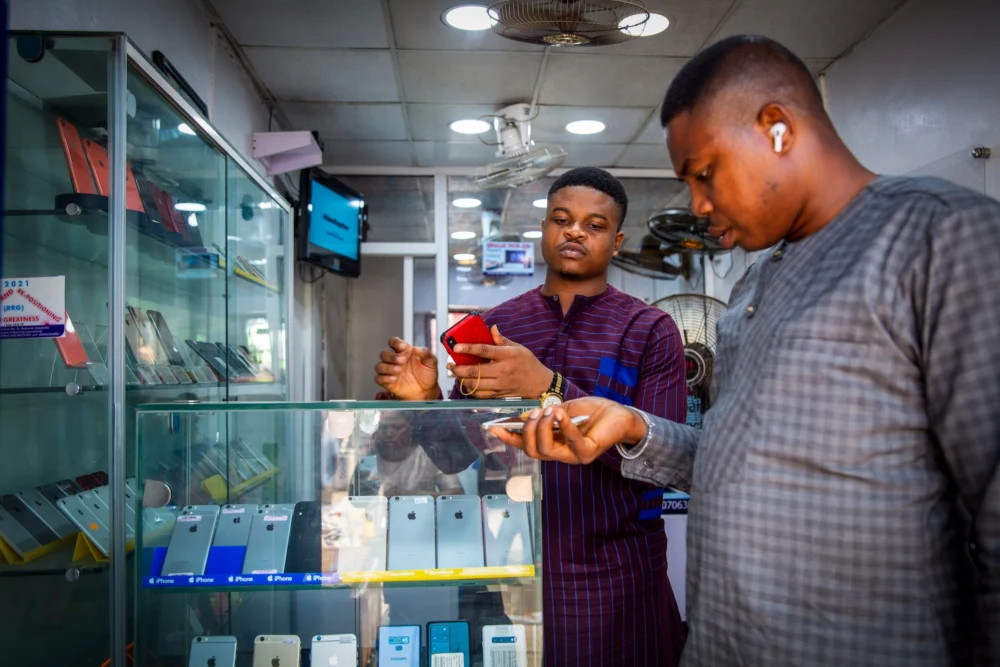
A significant initiative to bring ultra-low-cost 4G smartphones, priced around $40, to emerging markets, particularly in Africa, is rapidly gaining momentum. This ambitious push, spearheaded by a powerful coalition of telecom operators, device manufacturers, and industry advocacy groups like the GSMA, aims to connect tens of millions more people online, narrowing the persistent global digital divide. However, the path to achieving this price point at scale is fraught with challenges, including rising component costs, thin profit margins, and complex governmental tax policies, leading to critical questions about the feasibility and sustainability of such an endeavor.
The announcement, made this week at the Mobile World Congress (MWC) in Barcelona – a pivotal global event for the mobile industry – highlighted the GSMA’s intensified efforts through its Handset Affordability Coalition. The coalition is actively collaborating with major African mobile operators, including industry giants such as Airtel, Axian Telecom, Ethio Telecom, MTN Group, Orange, and Vodafone. This concerted effort also involves engagement with numerous smartphone manufacturers to pilot these ultra-affordable 4G devices across six key African markets: the Democratic Republic of the Congo, Ethiopia, Nigeria, Rwanda, Tanzania, and Uganda. The primary objective is to make internet-enabled devices more accessible and, in doing so, bring an estimated additional 20 million people online, unlocking vast socio-economic potential.
The Pervasive Digital Divide and the $40 Imperative
The digital divide represents a critical barrier to economic development and social inclusion in many parts of the world, particularly in developing markets. While mobile broadband coverage has expanded significantly across Africa, millions remain unconnected, often not due to a lack of network access, but because the cost of internet-enabled devices remains prohibitively high. For many households in these regions, a smartphone is still considered a luxury item rather than an essential tool, even as its potential for education, healthcare, financial services, and entrepreneurship is undeniable.
According to reports from the International Telecommunication Union (ITU) and the World Bank, while mobile network coverage reaches over 80% of the global population, only about 50% are active internet users. In Sub-Saharan Africa, specifically, smartphone penetration rates lag significantly behind global averages. Data from Statista indicates that as of 2023, smartphone penetration in Africa stood at approximately 44%, compared to a global average exceeding 80%. This gap directly translates into missed opportunities for digital literacy, financial inclusion, and participation in the burgeoning digital economy.
The GSMA’s Handset Affordability Coalition, formed precisely to address this disparity, identifies the $30-$40 price point as a critical threshold. This target is not arbitrary but is based on extensive GSMA intelligence research into affordability metrics and purchasing power parity in these markets. Alix Jagueneau, the group’s head of external affairs, emphasized this, stating, “The $30-$40 price point is an ambition, based on GSMA intelligence research on affordability and is to be understood as a best effort intent.” This price, it is believed, aligns with the disposable income levels of a significant portion of the unconnected population, making smartphone ownership a realistic prospect for the first time.
The GSMA’s Coalition and Pilot Program
The initiative is currently in its nascent stages, with intensive commercial negotiations underway between mobile operators and over 15 smartphone manufacturers. Of these, seven companies have already expressed keen interest in supporting the ambitious project. The goal is to develop devices that not only meet the targeted price range but also offer a functional user experience on 4G networks, ensuring access to essential online services. The selected pilot countries – the Democratic Republic of the Congo, Ethiopia, Nigeria, Rwanda, Tanzania, and Uganda – represent diverse market conditions and demographic profiles, providing valuable insights into the viability and scalability of the program.
These African mobile operators stand to gain substantially from the initiative. A surge in smartphone adoption would translate directly into increased data consumption, higher Average Revenue Per User (ARPU) over time, and the potential to offer new digital services, driving long-term business growth. For manufacturers, while profit margins on individual units might be minimal, the opportunity to tap into a massive, underserved market could lead to significant economies of scale and market share gains in the long run.
Economic Realities: Thin Margins and Soaring Component Costs
Despite the clear demand and strategic importance, the journey to a $40 smartphone is fraught with significant economic and technical hurdles. Industry analysts are cautious, pointing out that current market conditions, particularly concerning component costs, make achieving such a low price point extremely challenging.
Ahmad Shehab, a research analyst at Counterpoint Research, articulated these concerns, stating, “Pushing smartphones priced in the $30-$40 range could have been historically feasible when memory costs were significantly lower.” He highlighted that devices at this price would inevitably come with extremely basic specifications, offering minimal internal storage and RAM, and consequently, very thin profit margins for manufacturers. Furthermore, securing low-capacity memory components can be difficult as global suppliers increasingly prioritize the production of higher-capacity chips, driven by demand from more lucrative mid-range and premium smartphone segments. This shift in supply chain focus makes it harder and potentially more expensive to source the basic components needed for ultra-low-cost devices.
The stark contrast between the target price and current market realities underscores the challenge. Counterpoint Research data indicates that the average selling price (ASP) of smartphones in the Middle East and Africa stood at approximately $188 in the fourth quarter of 2025. This figure is nearly five times the targeted $40 price point, highlighting the substantial gap that needs to be bridged. While a few niche brands might have achieved ASPs below $40, Shehab noted that "these sales volumes remain negligible and are largely absent from major global vendors," indicating that such models have yet to achieve widespread commercial success or significant market presence.
The Crucial Role of Government Policy: Taxation and Import Duties
Beyond manufacturing complexities, governmental policies, particularly concerning taxation and import duties, play a pivotal role in determining the final retail price of smartphones. In many developing markets, smartphones are often categorized as luxury items, subjected to significant import duties and taxes. Jagueneau explained that these levies can add as much as 30% to the handset price in some markets, effectively pushing devices out of reach for the target demographic.
The GSMA is actively engaging with governments in the pilot countries and beyond, advocating for policy reforms that would reduce or remove such taxes on entry-level smartphones. “We believe there is an urgency for the public sector to address this part of the equation for digital inclusion purposes,” Jagueneau urged. She welcomed South Africa’s proactive step last year, where it removed a 9% luxury excise duty on smartphones priced below R2,500 (approximately $150), urging other nations to adopt similar measures to foster digital inclusion.
As of now, none of the six pilot countries have committed to reducing import duties or taxes on entry-level smartphones. This underscores the need for ongoing dialogue and collaboration between the GSMA, mobile operators, and national governments. Development banks, donors, and other financial institutions could also play a critical role in de-risking investments for mobile operators and manufacturers, potentially by offering subsidies or innovative financing schemes that make the upfront cost more manageable for consumers.
Lessons from the Past: The Android One Experience
The current push for ultra-affordable smartphones is not unprecedented. Previous attempts to democratize smartphone access in emerging markets offer valuable lessons and highlight the inherent difficulties. In 2014, Google launched its Android One initiative with a similar goal: to promote affordable, high-quality smartphones running a stock Android experience in markets like India, Pakistan, Bangladesh, and Indonesia. The program later expanded to Africa in 2015.
Android One aimed to provide a consistent, up-to-date software experience on budget hardware, promising timely security updates and minimal bloatware. Despite initial enthusiasm, the initiative struggled to achieve widespread adoption and market dominance for entry-level smartphones. Several factors contributed to its limited success, including intense competition from local brands offering even lower-cost devices, a lack of strong marketing and distribution support in some regions, and the inherent challenges of balancing cost with performance expectations. While Google continued the program in some markets for several years, including Japan, it never became the dominant platform for affordable smartphones it had envisioned.
Jagueneau acknowledged these past challenges, emphasizing that the current effort demands "coordinated action across operators, manufacturers, and governments." This multi-stakeholder approach, learning from previous initiatives, is seen as crucial for overcoming the complex web of technical, economic, and policy barriers.
A Phased Timeline Towards Digital Inclusion
Despite the complexities, the GSMA remains optimistic about the initiative’s prospects. While commercial discussions with smartphone makers are ongoing and no specific manufacturers have been publicly confirmed yet, the group hopes that initial proof-of-concept devices could be produced within the current year. This would pave the way for early consumer offerings to potentially reach the pilot markets by late 2026.
This timeline indicates a carefully phased approach, allowing for iterative development, testing, and refinement of both the devices and the associated commercial models. The success of the initial pilots will be critical in demonstrating the viability of the $40 smartphone concept and attracting broader participation from manufacturers and governments.
Broader Socio-Economic Impact and the Path Forward
The potential impact of successfully deploying $40 smartphones at scale across Africa cannot be overstated. Beyond simply connecting people, increased smartphone penetration can be a powerful catalyst for socio-economic development. It facilitates greater financial inclusion by enabling access to mobile banking, digital payments, and micro-lending services, which are critical in regions with limited traditional banking infrastructure. It can revolutionize education by providing access to online learning platforms and digital resources, bridging educational gaps. In healthcare, it can enable telemedicine, health information dissemination, and data collection, improving public health outcomes. Furthermore, it empowers small businesses and entrepreneurs by opening up e-commerce opportunities and access to market information.
The initiative represents a critical battlefront in the global effort to achieve universal digital inclusion. While the challenges are formidable, the collective resolve of the GSMA, leading mobile operators, and interested manufacturers, coupled with the urgent need for governmental policy support, offers a glimmer of hope. The success of this ambitious project could fundamentally transform the digital landscape of Africa, empowering millions and unlocking a new era of growth and opportunity across the continent. The coming months will be crucial as negotiations progress and the first tangible prototypes begin to emerge, setting the stage for what could be a pivotal moment in the history of global connectivity.