

The burgeoning demand for artificial intelligence infrastructure is driving a significant shift in construction logistics, with developers turning to specialized temporary housing solutions to accommodate the vast workforce required for these colossal projects. These "man camps," a term historically associated with remote resource extraction industries, are now becoming a critical component in the rapid deployment of next-generation AI data centers across the United States. This strategic pivot addresses the unique challenges of constructing massive, energy-intensive facilities often in rural or undeveloped areas, where existing housing infrastructure is insufficient to support a temporary influx of thousands of skilled laborers.
The Unprecedented Scale of the AI Data Center Boom
The exponential growth of artificial intelligence, particularly generative AI and large language models (LLMs), has ignited an unprecedented construction boom in the data center industry. These AI models require immense computational power, translating into a need for vast server farms, sophisticated cooling systems, and robust power grids. Industry analysts estimate that investments in AI data centers could reach hundreds of billions of dollars globally in the coming years, with some projections citing figures as high as $700 billion for the U.S. market alone. This scale necessitates a rapid build-out that often outpaces the capabilities of traditional construction models.
The typical AI data center can consume as much electricity as a small city, demanding not only massive land parcels but also proximity to high-voltage transmission lines and often, abundant water resources for cooling. Such requirements frequently push these developments into remote or semi-rural locations where land is cheaper, power is more accessible, and community opposition might be less pronounced. However, these very locations pose a significant logistical hurdle: how to house and support thousands of workers for construction periods that can span months or even years.
A Historical Precedent: From Oil Fields to Digital Frontiers
The concept of temporary, self-contained worker villages, or "man camps," is not new. Its origins are deeply rooted in the history of large-scale industrial and resource extraction projects. These camps gained prominence in the 19th and early 20th centuries during railway construction, dam building, and logging operations, providing shelter for itinerant workforces in often harsh and isolated environments.
More recently, the model was perfected and widely adopted during the North American oil and gas booms, particularly in regions like North Dakota’s Bakken Shale and West Texas’s Permian Basin. During these periods, tens of thousands of workers flooded sparsely populated areas, overwhelming local housing markets, driving up rents, and straining public services. Man camps emerged as an efficient, albeit sometimes controversial, solution. They offered centralized housing, catering, and essential amenities, allowing energy companies to rapidly mobilize and demobilize large crews without permanently altering local communities or relying on scarce local resources.
These camps, often modular in design, could be erected quickly and scaled to demand. They provided a controlled environment, ensuring workers were housed close to job sites, reducing commute times, and facilitating operational efficiency. The success of this model in the energy sector has now made it an attractive blueprint for the equally demanding and geographically challenging construction of AI data centers.
The Dickens County Case Study: A Glimpse into the Future
A prime example of this emerging trend is unfolding in rural Dickens County, Texas. What was once planned as a Bitcoin mining facility is now being converted into a colossal 1.6-gigawatt data center, a testament to the shifting priorities in digital infrastructure. This massive facility, which will demand power equivalent to a significant metropolitan area, requires a substantial construction workforce.
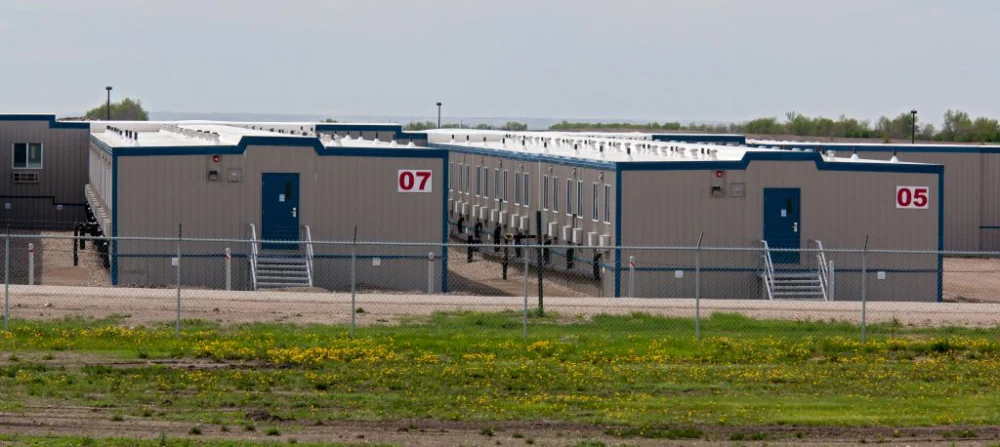
To accommodate these hundreds, potentially thousands, of temporary laborers, developers are relying on a dedicated man camp. As reported by Bloomberg, workers at this site are housed in modular gray units, part of a comprehensive village designed to meet their daily needs. The camp offers a range of amenities aimed at providing a degree of comfort and community in an otherwise isolated setting. These typically include a fully equipped gym, a laundromat, various game rooms for recreation, and a cafeteria that often provides cooked-to-order meals, such as grilled steaks, to boost morale and cater to varied tastes. Such facilities are crucial for retaining workers in demanding, often remote jobs.
The development in Dickens County underscores several key aspects of the AI boom: the immense scale of power consumption, the conversion of existing digital infrastructure (like former Bitcoin mines) to new AI uses, and the logistical challenges of deploying a large workforce in areas not equipped for such an influx.
Target Hospitality: The Architect of Temporary Communities
At the forefront of providing these specialized housing solutions is Target Hospitality, a company that has significantly leveraged its experience in the oil and gas sector to capitalize on the AI data center construction boom. Target Hospitality has secured multiple contracts for the Dickens County camp alone, collectively valued at $132 million. These contracts encompass not only the construction of the modular living units but also the ongoing operation and maintenance of the entire village, including catering, cleaning, and facilities management. The camp is projected to house more than 1,000 workers at its peak, highlighting the sheer volume of labor required for such projects.
Troy Schrenk, Target Hospitality’s chief commercial officer, has publicly articulated the company’s strategic focus on this burgeoning market. He described the U.S. data center construction boom as "the largest, most actionable pipeline I’ve ever seen," signaling the company’s aggressive pursuit of contracts in this sector. This statement reflects a broader industry trend where specialized service providers are adapting their capabilities to meet the unique demands of new economic drivers. Target Hospitality’s expertise in rapid deployment, modular construction, and comprehensive site management makes it a natural fit for developers facing tight deadlines and remote site challenges.

The company’s business model revolves around providing turnkey solutions for remote workforce housing. This includes everything from initial site assessment and camp design to installation, catering, laundry services, recreation facilities, and security. By offering a full suite of services, Target Hospitality allows data center developers to offload complex logistical challenges, enabling them to focus on core construction and technological deployment.
A Controversial Portfolio: The Dilley Immigration Processing Center
However, Target Hospitality’s extensive portfolio also includes operations that have drawn significant scrutiny and controversy. The company owns and operates the Dilley Immigration Processing Center in Texas, a facility used to house families detained by Immigration and Customs Enforcement (ICE). This dual role places Target Hospitality in a unique and ethically complex position, managing both the comfortable, amenity-rich housing for highly paid construction workers and a facility for vulnerable asylum-seeking families.
The Dilley center, like many privately run immigration detention facilities, has been the subject of numerous allegations regarding substandard conditions. Court filings and reports from human rights organizations have detailed concerns about the quality of food, with claims of worms and mold being found in meals. Furthermore, there have been allegations that the center has failed to adequately accommodate children with allergies and special dietary needs, leading to suffering and health complications. These reports paint a stark contrast to the on-demand steak grills and recreational facilities offered at the Dickens County man camp.
This juxtaposition raises significant questions about corporate responsibility, ethical consistency, and the broader implications of private companies profiting from diverse and sometimes conflicting sectors. For Target Hospitality, managing public perception while operating both essential infrastructure for the tech industry and controversial government detention facilities presents a continuous challenge. Stakeholders, including investors, tech companies partnering with Target, and the general public, may increasingly scrutinize this dual operational footprint.
Operational Dynamics and Worker Welfare in Modern Man Camps
Modern man camps, whether for oil workers or AI data center builders, are designed for efficiency and containment. They aim to provide a self-sufficient ecosystem that minimizes interaction with local communities while maximizing worker productivity and retention. Beyond basic lodging and food, these camps typically include:
- Medical Facilities: On-site clinics or first-aid stations are often crucial, given the potential for industrial accidents and the remoteness of many sites.
- Security: Controlled access, fencing, and security personnel are standard to ensure worker safety and protect valuable equipment.
- Transportation: Shuttles to and from job sites, and sometimes to nearby towns for essential errands, are common.
- Communication: Internet access, often satellite-based, and phone services are vital for workers to stay connected with families.
- Recreation: In addition to gyms and game rooms, some larger camps may feature sports courts, communal lounges, or even organized events.
While these amenities aim to improve worker morale and living conditions, concerns about worker welfare in such isolated environments persist. Issues such as social isolation, mental health challenges, limited access to diverse cultural or recreational activities, and potential for burnout are often cited by labor advocates. The temporary nature of the work and the transient lifestyle can also strain family relationships and community ties. Companies like Target Hospitality are increasingly challenged to balance operational efficiency with comprehensive worker support services that address these potential pitfalls.
Broader Economic and Social Implications
The rise of man camps for AI data center construction carries significant economic and social implications:
-
Economic Impact:
- Job Creation: While temporary, these projects create thousands of construction jobs, drawing workers from across the country.
- Local Economic Strain (or Relief): In very remote areas, the impact on local economies might be minimal, as camps are self-contained. However, in slightly less isolated regions, even temporary populations can strain local infrastructure like roads, emergency services, and small businesses, while simultaneously providing some revenue streams.
- Real Estate: The construction boom can temporarily inflate local rental markets in surrounding towns, even if workers are housed in camps.
- Investment Flows: The significant capital investment in data centers represents a broader shift in national infrastructure priorities.
-
Social Impact:
- Community Integration: Man camps are designed to be largely separate from local communities, minimizing both positive and negative integration. This can prevent the cultural clashes or strain on social services sometimes seen with traditional boomtowns, but also limits any potential positive cultural exchange or long-term community development.
- Worker Lifestyle: The "camp life" is a distinct social phenomenon, fostering camaraderie among workers but also potentially leading to feelings of detachment from broader society.
- Environmental Footprint: While the camps themselves are temporary, the massive data centers they enable have significant long-term environmental impacts related to energy consumption, water usage, and electronic waste. The construction phase also involves substantial resource consumption and waste generation.
The Future Outlook: Sustainable Solutions for a Rapidly Evolving Industry
As the AI revolution continues its rapid trajectory, the demand for data centers is only expected to intensify. This raises critical questions about the long-term sustainability and ethical considerations of relying on temporary worker villages.
- Innovation in Housing: Will future iterations of these camps incorporate more sustainable building materials, energy-efficient designs, or even more integrated community features?
- Worker Support: There’s a growing imperative for companies to invest more deeply in worker welfare programs, mental health support, and pathways for skill development that can translate beyond temporary assignments.
- Regulatory Oversight: Given the scale and nature of these projects, and the precedent set by the oil and gas industry, there may be increasing calls for regulatory oversight regarding living conditions, labor practices, and environmental impact of both the camps and the data centers they support.
- Ethical Scrutiny: The ethical concerns surrounding companies like Target Hospitality’s diverse operational portfolio will likely remain a point of discussion, prompting questions about corporate values and public accountability.
The reliance on man camps for AI data center construction is a pragmatic solution to an immediate logistical challenge. However, as the industry matures, the focus will likely broaden beyond mere efficiency to encompass comprehensive sustainability, ethical governance, and the well-being of the thousands of individuals who are literally building the future of artificial intelligence. The evolution of these temporary communities will be a critical indicator of how responsibly the tech industry addresses its physical footprint and its human capital needs.