
In a significant humanitarian development drawing international attention, five members of the Iranian women’s national football team have been granted humanitarian visas by the Australian government. This decision follows a highly publicized incident where the players declined to sing their national anthem during the AFC Women’s Asian Cup, sparking fears for their safety upon potential return to Iran. The swift action by Australian authorities underscores the nation’s commitment to human rights and offers a lifeline to athletes facing political repercussions for acts of conscience.
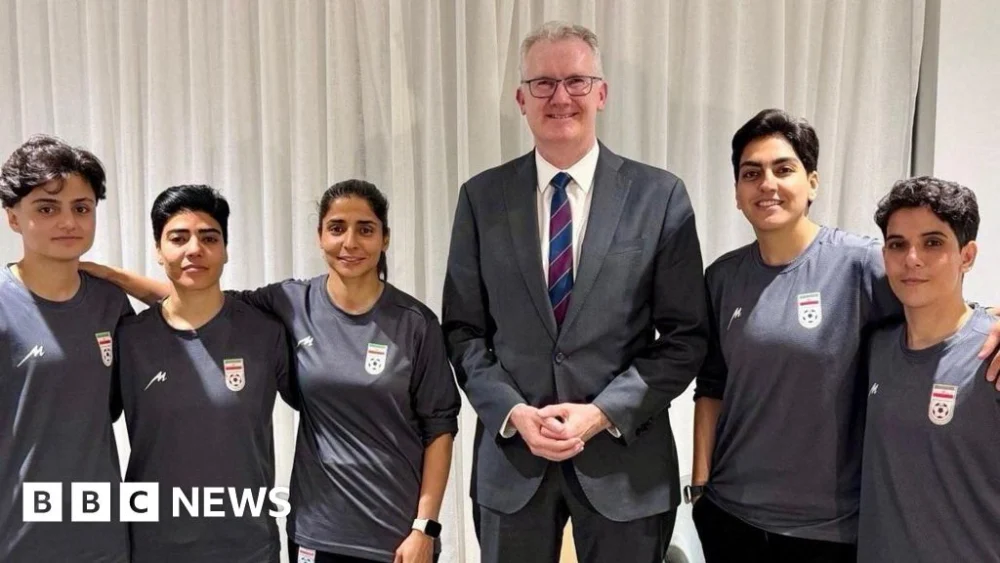
The announcement came early on Tuesday from Australia’s Immigration Minister Tony Burke, who confirmed that the women were moved to a safe location by Australian police and their applications for humanitarian visas were processed expeditiously. Prime Minister Anthony Albanese later reiterated the government’s support, highlighting Australia’s embrace of the "plight of these brave women." This move not only provides immediate protection for the athletes but also sends a strong message regarding the protection of individuals whose lives or freedom may be at risk due to political expression.
A Silent Protest Echoes Globally
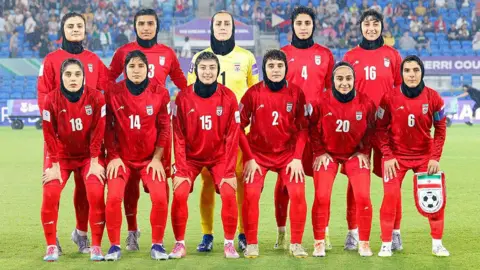
The pivotal moment occurred last week during the Iranian team’s match against South Korea in the AFC Women’s Asian Cup, held on Australia’s Gold Coast. As the national anthem played, several players visibly refrained from singing, a silent yet powerful act of defiance that resonated far beyond the football pitch. This gesture was widely interpreted as a protest against the Iranian government, amidst ongoing domestic discontent and a history of repression against dissent. The act quickly garnered significant attention from human rights activists, Iranian diaspora communities, and international media, who understood the profound risks associated with such a public display of non-compliance within Iran’s socio-political landscape.
The immediate aftermath in Iran was characterized by sharp criticism. Conservative commentators were quick to condemn the team’s actions, with one particularly scathing remark labeling them "wartime traitors" and advocating for severe punishment. Such accusations are not trivial in Iran, where political dissent can lead to harsh penalties, including imprisonment and even capital punishment, particularly for those deemed to have undermined national symbols or interests. For athletes, who often serve as national representatives, any deviation from prescribed patriotic conduct can result in bans, imprisonment, or pressure on their families. The stakes for these women, therefore, were exceptionally high.
Mounting Fears and Community Mobilization
As the tournament progressed and the team’s elimination from the Asian Cup drew near, concerns for the players’ safety intensified. Supporters in Australia, particularly within the vibrant Iranian-Australian community, began to mobilize, fearing that the women would face severe reprisals if forced to return home. These concerns were not unfounded; Iranian athletes have a documented history of facing punitive measures for political statements, refusing to compete against Israeli opponents, or failing to adhere to strict dress codes and behavioral expectations while representing the country abroad.
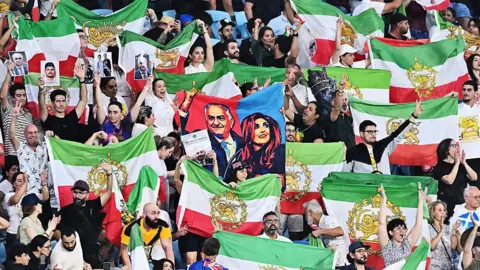
The groundswell of support culminated in dramatic scenes outside the stadium on the Gold Coast on Sunday evening. Hundreds of passionate supporters surrounded the Iranian Lionesses’ team coach, chanting "save our girls" and displaying banners with messages like "Stay Safe in Australia. Talk to Police" and "If your home is not safe – mine is." These demonstrations, though at times chaotic, highlighted the deep emotional connection and urgent pleas for intervention from the community. Some supporters even attempted to impede the bus’s progress, a testament to their desperation to prevent the team’s departure. Inside the bus, players were observed with a mix of expressions—some smiling and waving, others appearing solemn, with one even closing the curtains, perhaps reflecting the immense pressure and uncertainty they faced.
The gravity of the situation was further underscored by activists like Craig Foster, a former captain of the Australian men’s football team and a prominent human rights advocate. Foster, who played a key role in helping the Afghanistan women’s team flee the Taliban in 2021, voiced "very reasonable and serious concerns for their safety." He emphasized the right of athletes in FIFA-regulated tournaments to external support and safety, free from coercion.
Australia’s Swift Humanitarian Response
The Australian government, alerted to the escalating crisis and the palpable fear among the players and their supporters, initiated a rapid response. Immigration Minister Tony Burke confirmed that talks had been ongoing for several days, indicating a concerted effort behind the scenes to address the delicate situation. On Monday, as the team was preparing for their scheduled flight home, it became clear that five women explicitly sought to remain in Australia.
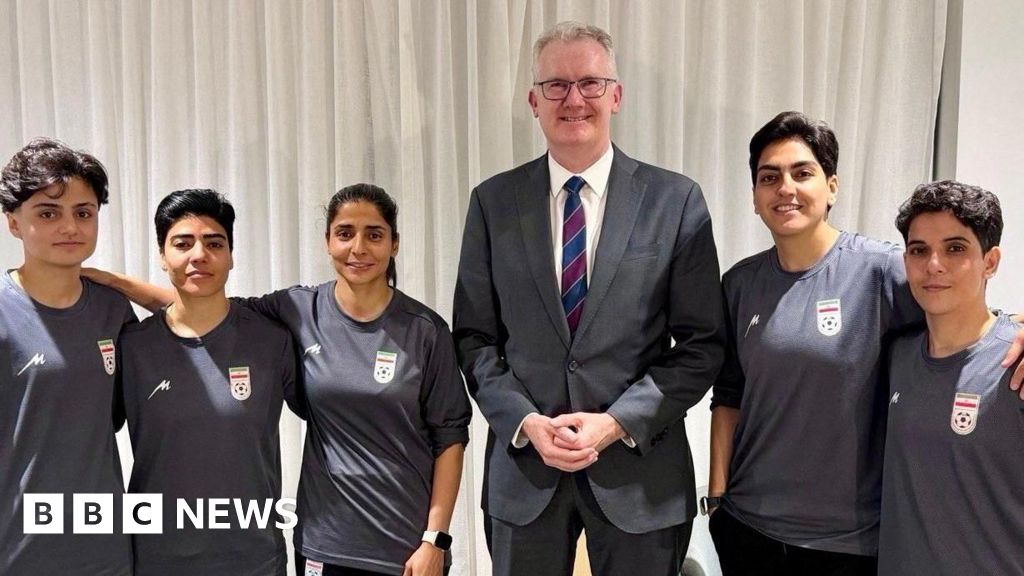
In a carefully coordinated operation, these five players—identified as Fatemeh Pasandideh, Zahra Ghanbari, Zahra Sarbali, Atefeh Ramazanzadeh, and Mona Hamoudi—left their hotel and were escorted to a safe location by Australian police. Minister Burke personally met with them at this undisclosed location, underscoring the high-level attention given to their plight. He then signed off on their applications for humanitarian visas, a process that was completed in the early hours of Tuesday morning, approximately 01:30 local time.
Burke clarified the players’ stance, stating, "They want to be clear they are not political activists. They are athletes who want to be safe." This distinction is crucial, as it frames their request for asylum as a pursuit of personal safety rather than a direct political confrontation, potentially mitigating some of the diplomatic fallout. The humanitarian visa program in Australia offers permanent protection to refugees and individuals in humanitarian need, granting them the right to live, work, and study in the country. This provides a comprehensive pathway for the players to rebuild their lives in Australia without fear of persecution.
Furthermore, Minister Burke extended the same opportunity to other members of the Iranian squad, stating, "I say to the other members of the team, the same opportunity is there. Australia has taken the Iranian women’s soccer team into our hearts. These women are tremendously popular in Australia." This open invitation reflects Australia’s broader humanitarian principles and acknowledges the difficult choices faced by the entire team, some of whom may have family in Iran and could face different pressures.
International Dynamics and Trump’s Intervention
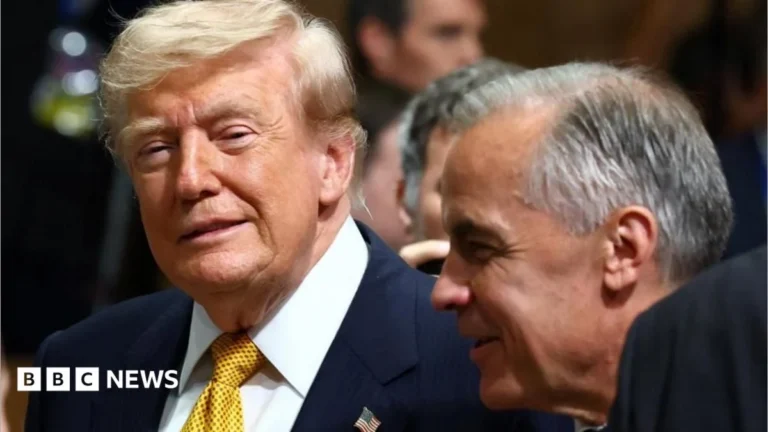
The unfolding drama also caught the attention of international political figures, most notably former US President Donald Trump. On Monday, Trump took to his Truth Social platform, initially demanding that Australia "give asylum" to the women and adding, "The US will take them if you won’t." Around an hour later, he posted again, claiming to have spoken to Australian Prime Minister Anthony Albanese and stating that "five have already been taken care of, and the rest are on their way."
While Trump’s involvement added a layer of geopolitical intrigue, his administration had previously implemented stringent asylum policies, including putting all asylum decisions on hold and stopping immigrant visas for citizens from dozens of countries, including Iran. His posts also alluded to the complex reality that some players might feel compelled to return to Iran due to fears for their families’ safety back home, even if offered asylum abroad. Regardless of the political motivations behind his statements, Trump’s intervention undeniably amplified the international spotlight on the situation.
The Broader Plight of Iranian Athletes
This incident is not an isolated event but rather a stark illustration of the ongoing challenges faced by Iranian athletes, particularly women, who operate under the strictures of the Islamic Republic. For years, Iranian sports figures have found themselves caught between nationalistic expectations and personal freedoms. Female athletes, in particular, face additional layers of control, including mandatory dress codes (such as the hijab) and restrictions on their public appearances and interactions.
The initial silent protest by the Iranian women’s football team was not the first time Iranian athletes have defied official narratives. There have been numerous instances of Iranian athletes refusing to compete against Israeli opponents in international competitions, often under immense pressure from authorities, leading to sanctions from international sports bodies. Moreover, some male athletes have also used international platforms to express dissent or have sought asylum after refusing to return to Iran. The case of the Iranian women’s team highlights a growing trend of athletes using their visibility to protest, even at great personal risk.
Human rights advocates like Zaki Haidari, Refugee Rights Advocate at Amnesty International Australia, stressed the moral leadership role for Australia in such situations, especially coinciding with discussions around International Women’s Day and the broader fight for freedom, equality, and gender persecution. The decision to grant visas resonates deeply within this context, offering a tangible example of support for women’s rights and freedom of expression.
Implications and Future Outlook
The Australian government’s decision to grant humanitarian visas to the five Iranian women’s football players carries significant implications. Firstly, it reaffirms Australia’s commitment to its humanitarian obligations and its role as a refuge for those facing persecution. It sets a precedent, or at least reinforces one, for how the nation responds to individuals, particularly public figures like athletes, whose safety is jeopardized due to political or human rights concerns.
Secondly, the incident will undoubtedly have diplomatic repercussions. While Australia’s actions are driven by humanitarian principles, Iran’s government is likely to view the granting of asylum as an interference in its internal affairs and a political act. This could strain bilateral relations, although Australia has historically balanced its diplomatic ties with its human rights advocacy.
Thirdly, for the remaining members of the Iranian team, the situation remains precarious. While Minister Burke extended an open invitation, the complexities surrounding family ties in Iran mean that choosing to stay might not be a straightforward decision for everyone. The pressure from authorities on the families of athletes who seek asylum abroad is a well-documented tactic used by the Iranian government to compel their return. This creates an agonizing dilemma for athletes, weighing their personal safety against the well-being of their loved ones.
The dramatic events on the Gold Coast, from the silent anthem protest to the humanitarian visa grants, serve as a powerful reminder of the intersection of sports, politics, and human rights. It highlights the courage of athletes who choose to speak out, the vital role of international advocacy, and the responsibility of host nations to provide sanctuary when lives are at risk. As the five players begin their new lives in Australia, and the fate of their teammates remains uncertain, this saga will continue to resonate as a poignant chapter in the ongoing struggle for freedom and safety for Iranian athletes. The global community will be watching how this unfolds, hoping that the humanitarian spirit shown by Australia will encourage other nations to stand in solidarity with those who dare to defy oppression.