


The aviation infrastructure of the United States is facing a critical inflection point as the partial federal government shutdown enters its fourth week, triggering a surge in Transportation Security Administration (TSA) officer absences and resulting in unprecedented delays at major metropolitan airports. As federal employees, including approximately 51,000 TSA screening officers, miss their first full paychecks, the financial strain is manifesting in "acute staffing shortages" that threaten to disrupt the national airspace system. From Houston to New Orleans, and extending to major hubs like Miami and Atlanta, the ripple effects of the budgetary impasse in Washington D.C. are now being felt directly by the traveling public.
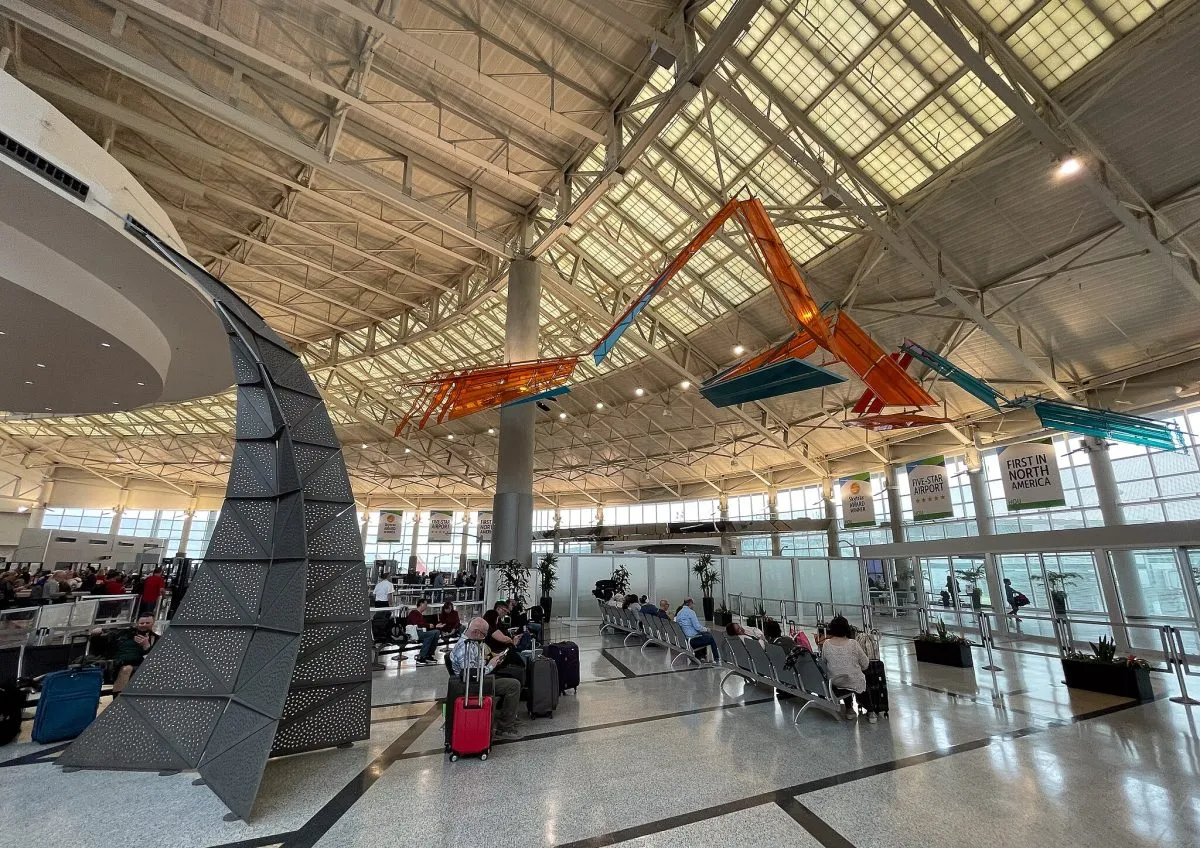
At Houston’s William P. Hobby Airport, the situation reached a state of urgency on Sunday when airport officials issued a formal advisory recommending that passengers arrive at least four hours prior to their scheduled departure times. This recommendation, which doubles the standard two-hour window, followed reports of security wait times exceeding three hours during peak periods on Monday. The logistical bottleneck is not an isolated incident but rather a symptom of a growing trend of unscheduled absences among the TSA workforce, often referred to as "sick calls," as officers struggle to cover commuting costs and childcare without a steady income.
The Financial Strain on Essential Personnel
The core of the current crisis lies in the "essential" designation of TSA screening officers. Under the Anti-Deficiency Act, federal employees deemed essential to the safety of life and the protection of property are required to report for duty during a lapse in government appropriations, despite the suspension of their pay. For a workforce that earns an average starting salary of roughly $35,000 to $40,000 per year, the absence of a single paycheck can be catastrophic.
Reports from across the country indicate that many TSA agents are facing a choice between reporting to a job that is not currently paying them or seeking temporary, alternative employment to meet immediate financial obligations like rent and groceries. While the TSA leadership has maintained that security standards have not been compromised, the depletion of the available workforce has forced the consolidation of checkpoints and the closure of specific screening lanes, directly contributing to the mounting queues seen by travelers.
A Chronology of the Shutdown and Its Impact on Aviation
The current partial government shutdown began at midnight on December 22, 2018, following a legislative deadlock over funding for a proposed wall along the U.S.-Mexico border. While the initial days of the shutdown occurred during the busy holiday travel season, the impact on airport operations was initially mitigated by pre-existing staffing schedules and the momentum of the fiscal year’s end. However, as the calendar turned to January, the duration of the lapse began to erode the resilience of the federal workforce.
By the second week of January, the TSA began reporting a noticeable uptick in unscheduled absences. On January 6, the agency reported a nationwide "call-out" rate of 4.8%, compared to 3.1% on the same day the previous year. By mid-January, that figure escalated significantly. On a recent Monday, the national unscheduled absence rate hit 7.6%, a stark contrast to the 3.2% recorded a year prior.
In response to these shortages, major airports have had to implement emergency contingencies. Miami International Airport was forced to close one of its terminals early for several days to redistribute its limited TSA staff to more high-traffic areas. Similarly, at Louis Armstrong New Orleans International Airport, lines for security screenings have stretched deep into the terminal lobby, prompting local officials to warn travelers of "fluid" situations where wait times can spike without prior notice.
Regional Data and Statistical Overview
The impact of the staffing shortage is not uniform, with some airports experiencing significantly higher disruption than others. According to data released by the TSA and various port authorities, the following hubs have seen the most substantial impacts:
- Houston (HOU & IAH): As noted, Hobby Airport (HOU) has seen waits of up to 180 minutes. George Bush Intercontinental (IAH) also reported the temporary closure of a security checkpoint in Terminal B due to staffing levels.
- Atlanta (ATL): Hartsfield-Jackson Atlanta International, the world’s busiest airport, reported wait times exceeding 90 minutes during Monday morning rushes, with lines winding through the atrium and into baggage claim areas.
- Miami (MIA): The airport shuttered Terminal G for three days as a proactive measure to ensure that Terminals H and J remained fully operational with adequate staffing.
- Washington D.C. (IAD & DCA): Airports in the nation’s capital have remained relatively stable but have seen a 20% increase in average wait times during morning peak hours.
Nationwide, the TSA screened 1.93 million passengers on a recent Sunday. While 99.1% of those passengers waited less than 30 minutes, the "outlier" airports—those serving as major regional connectors—are bearing the brunt of the staff shortages, creating a "bottleneck effect" that can cause flight delays and missed connections across the entire aviation network.
Official Responses and Union Advocacy
The response from official channels has been a mix of reassurance regarding safety and urgent pleas for a legislative resolution. TSA Administrator David Pekoske has praised the "professionalism" of the workforce, acknowledging the extreme financial pressure they are under. To alleviate some of the immediate stress, the TSA recently announced it would provide a $500 bonus to officers who worked during the holiday travel period and at least one day’s worth of pay, though this is viewed by many as a temporary measure that does not address the long-term instability of the shutdown.
The American Federation of Government Employees (AFGE), the union representing TSA officers, has been more vocal about the risks. Hydrick Thomas, president of the TSA council within the AFGE, stated that the situation is becoming "untenable."
"The officers are not calling out because they want to; they are calling out because they have to," Thomas said in a recent press briefing. "They cannot afford the gas to get to work. They cannot afford to pay for childcare while they are at work not getting paid. We are seeing a dedicated workforce being pushed to its breaking point."
Furthermore, aviation industry groups, including the Air Line Pilots Association (ALPA) and the Association of Flight Attendants (AFA), have sent letters to Congress and the White House expressing "grave concerns" about the safety and security of the aviation system. They argue that a distracted and understaffed security force creates vulnerabilities that could be exploited, regardless of the agency’s insistence that screening protocols remain rigorous.
Broader Economic and Security Implications
The implications of the TSA staffing crisis extend far beyond the inconvenience of long lines. The aviation industry is a primary driver of the U.S. economy, contributing over $1.6 trillion in total economic activity and supporting millions of jobs. Persistent delays at security checkpoints can lead to a decrease in consumer confidence, a reduction in discretionary travel, and significant operational costs for airlines that must deal with delayed departures and the rebooking of thousands of passengers who miss their flights due to security queues.
From a security perspective, the "human factor" is the most significant concern. Security experts point out that TSA officers are trained to look for anomalies and suspicious behavior—a task that requires high levels of focus and mental clarity. Financial stress is a well-documented "stressor" that can degrade cognitive performance. If an officer is worried about an impending eviction or how to feed their family, their ability to perform high-stakes security screenings may be compromised.
Moreover, there is the long-term threat of "brain drain." The TSA has historically struggled with high turnover rates. A prolonged shutdown could lead to a mass exodus of experienced officers to the private sector, leaving the agency with a younger, less experienced workforce once the government eventually reopens. The cost of recruiting and training thousands of new agents would likely far exceed the short-term budgetary "savings" sought by the shutdown.
Looking Ahead: The Uncertainty of the Air Travel Landscape
As the shutdown continues with no clear resolution in sight, the TSA is exploring further contingency plans. This includes the possibility of utilizing "National Deployment Forces"—teams of officers who are sent to various airports to bolster staffing during emergencies. However, these forces are also composed of federal employees who are not being paid, and their deployment involves additional travel and lodging costs that the agency must struggle to cover under current budget constraints.
For travelers, the advice remains consistent: arrive early, check airport websites for real-time wait updates, and remain patient with frontline staff. However, the four-hour arrival recommendation at Houston Hobby serves as a stark reminder of the fragility of the nation’s infrastructure when political gridlock interferes with essential operations.
The current situation at America’s airports is more than a logistical hurdle; it is a live demonstration of the interconnectedness of federal policy and daily civilian life. Until a budget agreement is reached and the TSA workforce is compensated, the "acute staffing shortages" are likely to persist, and the lines at security checkpoints will continue to serve as a visible barometer of the ongoing crisis in Washington.