

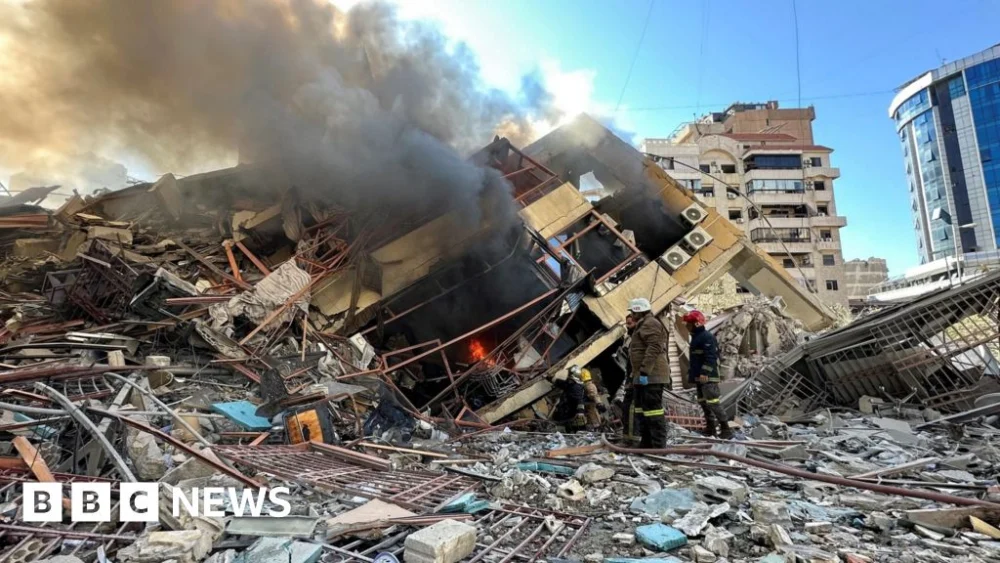
Lebanese President Joseph Aoun has formally called for direct negotiations with Israel as part of a comprehensive proposal aimed at de-escalating and ultimately ending the intensifying conflict with the Iran-backed militant group Hezbollah, while simultaneously delivering unusually pointed criticism of the group for exacerbating national instability. The unprecedented overture comes as Lebanon grapples with a deepening humanitarian crisis and widespread destruction, driven by a recent surge in Israeli military operations.
A Nation on the Brink: Aoun’s Urgent Appeal
President Aoun’s spokesperson confirmed to the BBC that Lebanon stands prepared for negotiations, contingent upon an immediate cessation of Israeli military fire across its borders. The call was articulated during a virtual meeting with senior European Union officials on Monday, where Aoun unveiled a four-point plan designed to forge "permanent security and stability arrangements on our borders." This diplomatic initiative highlights the severe pressure on Beirut to halt a conflict that has displaced hundreds of thousands and inflicted catastrophic damage on the nation. The proposal signifies a pivotal moment in the protracted, often indirect, hostilities between the two states, signaling Lebanon’s desperate search for a viable path to peace amidst internal divisions and external pressures.
The four-point framework put forth by President Aoun is structured around a sequence of critical steps:
- Complete Truce: An immediate and comprehensive ceasefire across all fronts.
- Hezbollah Disarmament: The complete disarmament of Hezbollah, effectively neutralizing its military capabilities.
- International Assistance for LAF: Substantial international support for the Lebanese Armed Forces (LAF) to enable them to assert full control over "areas of tension" and secure the nation’s borders.
- Direct Negotiations: The simultaneous initiation of direct negotiations between Lebanon and Israel, under international sponsorship, to implement the aforementioned plan.
A statement accompanying the proposal underscored the urgency and the expectation of a concerted international effort to bring stability to the volatile border region. This comprehensive approach acknowledges the multifaceted nature of the conflict, addressing both immediate hostilities and the underlying issues of armed non-state actors within sovereign territory.
Israel’s Stance and Regional Dynamics
Initial reactions from Israeli officials have been guarded, showing little public inclination to back direct negotiations at this juncture. The Israeli government has yet to issue an official comment on President Aoun’s proposal, maintaining a posture that suggests a continued focus on military objectives. This reticence is consistent with Israel’s long-standing position regarding the presence and activities of Hezbollah.
Speaking on Tuesday, Joshua Zarka, Israel’s ambassador to France, reiterated his country’s core demand. "At this stage, I’m not aware of any decision to enter negotiations to end this war," he stated, adding unequivocally, "What would end it is the disarmament of Hezbollah – and that is a choice for the Lebanese government." This statement underscores Israel’s primary condition for de-escalation: the effective neutralization of Hezbollah’s military threat, which it views as a fundamental prerequisite for any lasting peace or security arrangement. This sentiment echoes a recent message from Israeli Prime Minister Benjamin Netanyahu on the social media platform X, where he directly addressed the Lebanese government, asserting: "It is your responsibility to enforce the ceasefire agreement and it is your responsibility to disarm Hezbollah." The consistent messaging from Jerusalem indicates that the onus remains firmly on Beirut to address the armed group within its borders.
Hezbollah: A State Within a State and the Deepening Crisis
President Aoun’s critique of Hezbollah was particularly sharp and uncharacteristic for a Lebanese head of state, highlighting the severe internal pressures the group’s actions are imposing on the country. Referring to Hezbollah as an "armed faction," Aoun accused the Shia Muslim militia and political movement of disregarding Lebanon’s national interests and the lives of its citizens. He went further, alleging that Hezbollah desires the "collapse of the Lebanese state under aggression and chaos." These remarks represent a significant departure from the customary cautious rhetoric employed by Lebanese leaders when addressing Hezbollah, a group that wields immense political, social, and military power, often described as a state-within-a-state.
The Lebanese government had, only last week, declared Hezbollah’s military operations illegal. However, the declaration serves more as a symbolic protest than an enforceable mandate, as the Lebanese state currently lacks the institutional capacity, military strength, and political unity required to disarm such a deeply entrenched and heavily armed organization. Hezbollah’s arsenal and operational capabilities far exceed those of the official Lebanese Armed Forces in many respects, making any unilateral attempt at disarmament by Beirut a highly perilous and potentially destabilizing endeavor. The president’s call for international assistance for the LAF directly acknowledges this critical deficit in state power.
A Chronology of Renewed Escalation
The current surge in hostilities represents a significant breakdown of a previous ceasefire agreement. A US and French-mediated ceasefire, agreed upon between Israel and Lebanon in November 2024, had largely failed to hold, with Israel continuing near-daily strikes in Lebanon. These operations, according to Israeli intelligence, were aimed at preventing Hezbollah from rearming and rebuilding its presence along the border and within Lebanese territory, particularly in its southern strongholds and Beirut’s southern suburbs.
The current, more intense phase of the conflict was triggered by a specific regional event. Two days after the commencement of a joint US-Israeli attack on Iran and the subsequent killing of Iran’s Supreme Leader, Ayatollah Ali Khamenei, Hezbollah dramatically escalated its involvement. The group launched a barrage of rockets and drones into northern Israel, claiming retaliation for Khamenei’s death and the ongoing Israeli strikes. This move, however, was vehemently criticized by President Aoun, who described it not as a defensive measure but as a "deliberate ambush set for Lebanon and its army," designed to provoke and draw the Israeli military into a deeper incursion into Lebanese territory.
This escalation provided Israel with the justification, in its view, to launch a broader and more aggressive campaign against Hezbollah. This campaign has included repeated air strikes targeting infrastructure and personnel in Beirut’s southern suburbs—a known Hezbollah stronghold—and other strategic locations, alongside commando raids inside Lebanese territory. Israel has explicitly stated that this campaign will persist until Hezbollah is effectively disarmed and its military threat neutralized. Hezbollah, for its part, has remained defiant, vowing to continue its attacks against Israel, "whatever the cost." This intractable stance from both sides underscores the immense challenge to any peace initiative.
The Devastating Human Cost and Humanitarian Crisis
The past nine days alone have witnessed a dramatic increase in casualties and displacement, painting a grim picture of the human toll. According to figures compiled by the United Nations, the escalating conflict has resulted in the displacement of more than 700,000 people across Lebanon, a staggering figure that includes an estimated 200,000 children. These displaced populations are facing dire conditions, with many lacking basic necessities, shelter, and access to essential services. President Aoun grimly articulated the suffering, stating that "Some of them are on the roads. They have no shelter and not even the most basic necessities of life."
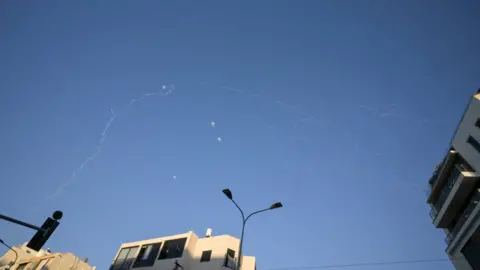
The Lebanese health ministry reports that at least 486 people have been killed in Israeli attacks in Lebanon since the renewed escalation. The scale of destruction is immense, with critical infrastructure, residential areas, and public services severely impacted. On the Israeli side, the military has confirmed the deaths of two Israeli soldiers in combat operations in southern Lebanon, highlighting the direct engagement of ground forces in the conflict.
The story of Ahmed al-Halabi, a father of two from the Dahieh area of south Beirut, offers a poignant glimpse into the personal tragedy unfolding. His family was forced to flee their home in the dead of night as missiles rained down nearby. "We were running away from the bombing! There’s no safety!" he recounted to the BBC, his voice heavy with fear and despair. "I have little kids and the living conditions were already bad. You can only imagine how it is during wartime. I just want to keep my kids safe." Ahmed and his extended family are now among the thousands sheltering in a school in central Beirut, repurposed as an emergency refuge. The psychological impact on children is particularly severe. "This is the second time my kids have experienced this and they have developed psychological trauma. The adults can live with this. The kids cannot," he lamented, underscoring the long-term scars of conflict. The humanitarian community is struggling to meet the escalating needs, with resources stretched thin and access often hampered by ongoing hostilities. International aid organizations have issued urgent appeals for funding and safe corridors to deliver assistance to those most affected.
Broader Implications and the Path Forward
The current crisis in Lebanon is not merely a bilateral conflict; it is deeply interwoven with broader regional geopolitical dynamics. Hezbollah’s role as a key proxy for Iran places the conflict squarely within the wider shadow war between Iran and its allies on one side, and Israel and its Western partners on the other. The timing of Hezbollah’s entry into the conflict, following the joint US-Israeli attack on Iran and the death of Khamenei, underscores this interconnectedness. Any resolution to the Lebanese-Israeli front would inevitably require considering these larger regional power struggles.
President Aoun’s call for negotiations, coupled with his unprecedented criticism of Hezbollah, signals a profound recognition within the Lebanese leadership of the unsustainable trajectory of the current conflict. It represents an attempt to reclaim a degree of national agency from the grip of a powerful non-state actor and to prevent Lebanon from being completely consumed by regional proxy wars. However, the path to peace is fraught with immense obstacles. The deeply entrenched positions of Israel and Hezbollah, the internal divisions within Lebanon, and the complex web of regional alliances make any swift resolution highly improbable.
For any peace plan to succeed, it would require significant and sustained international pressure and mediation. The involvement of the European Union, as sought by President Aoun, along with the continued engagement of the United States and France, would be crucial in brokering a comprehensive agreement. Such an agreement would need to address not only the immediate cessation of hostilities but also the fundamental issues of Lebanese sovereignty, border security, and the future role of armed groups within the state. Without a clear commitment from all parties, and robust international guarantees, Lebanon risks remaining a battlefield in a larger, unresolved regional conflict, with its people continuing to bear the brunt of the devastation. The coming weeks will test the resolve of all actors and determine whether President Aoun’s diplomatic gambit can pave the way for a desperately needed path towards stability.