


For years, the SEC and the Commodity Futures Trading Commission (CFTC) operated as wary rivals, often clashing in federal court over whether specific digital assets constituted securities or commodities. This ambiguity created a "regulatory moat" that many industry participants argued stifled innovation and drove domestic firms toward offshore jurisdictions. However, under the current administration’s mandate to establish the United States as a global hub for digital finance, Chairman Atkins signaled that the era of fragmentation is over.
A New Era of Regulatory Coherence
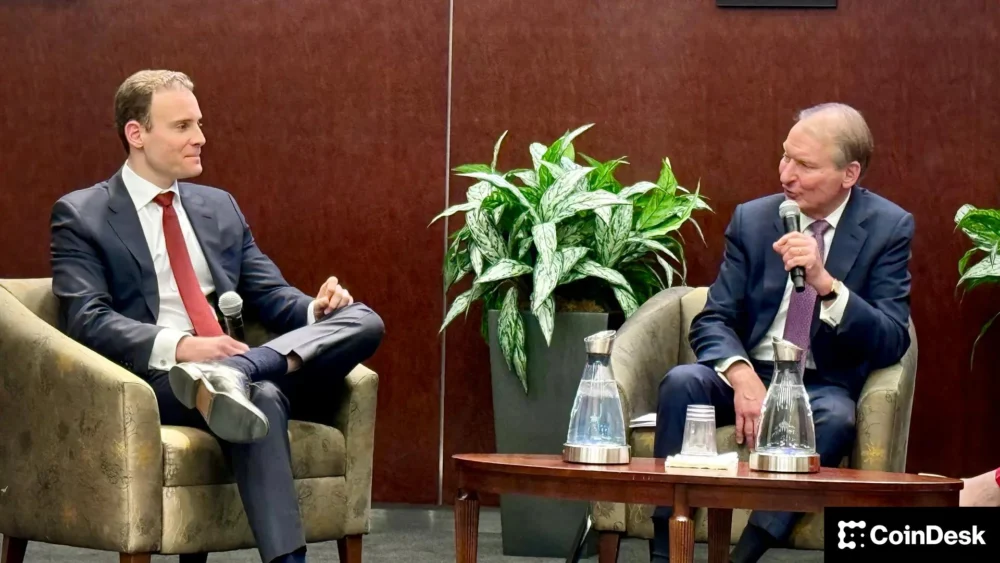
In remarks prepared for the conference, Atkins characterized the shift as the dawn of a "golden age of regulatory coherence." The centerpiece of this initiative is a formal harmonization framework that moves beyond mere communication between agency heads. Instead, the SEC and CFTC are integrating their operational workflows. This includes the directive for staff from both agencies to hold joint meetings with firms during the product development and application phases.
"More than aligning our rules, a harmonized framework also demands coordinating our responses to the firms that operate within it, including those that have questions of interpretation or request exemptive relief," Atkins stated. He emphasized that the burden of navigating the complex web of U.S. financial law should no longer rest solely on the shoulders of the private sector. By aligning the two agencies, the federal government aims to provide a "single window" for financial innovation.
To facilitate this, a new "harmonization" website has been launched. This digital portal allows firms to request coordinated discussions with both the SEC and CFTC simultaneously. The goal is to prevent the "ping-pong" effect, where a company is sent back and forth between the SEC’s headquarters in Washington, D.C., and the CFTC’s offices, often receiving conflicting guidance on the same product.
Historical Context and the Shift in Policy
The friction between the SEC and CFTC is rooted in the statutory definitions of the 1930s and 1970s. The SEC, governed by the Securities Act of 1933 and the Securities Exchange Act of 1934, utilizes the "Howey Test" to determine if an asset is an investment contract. Conversely, the CFTC oversees the derivatives and commodities markets under the Commodity Exchange Act.
Between 2021 and 2024, the SEC pursued a "regulation by enforcement" strategy, initiating dozens of lawsuits against major crypto exchanges and token issuers. During this period, the CFTC often claimed jurisdiction over the same assets, leading to a fractured legal landscape. The arrival of the Trump administration in 2025 brought a shift in philosophy. President Trump’s executive orders prioritized the "clarification and promotion" of digital assets, leading to the appointment of Paul Atkins at the SEC and Michael Selig at the CFTC—both of whom have expressed a commitment to market-friendly policies.
This new partnership is not merely a verbal agreement; it is a structural overhaul. The proposed MoU is expected to codify how the agencies share information, conduct joint examinations, and collaborate on enforcement actions. By doing so, the agencies hope to eliminate the legal "gray zones" that have persisted since the inception of Bitcoin in 2009.
Streamlining Examinations and Enforcement
One of the most significant practical changes for crypto firms involves the oversight of "dually regulated entities." Many large-scale financial institutions operate in both the securities and commodities markets. Previously, these firms were subject to separate, often redundant, examinations from both the SEC and the CFTC. These exams involve thousands of hours of staff time and significant legal expenditures.
Under the Atkins plan, coordinated exam planning will become the standard. "Shared supervisory findings, subject to assurances of confidentiality, should be the norm rather than the exception," Atkins noted. This move is expected to drastically reduce the compliance burden on firms like Coinbase, Kraken, and traditional Wall Street banks that have entered the crypto space, such as BlackRock and Fidelity.
Furthermore, the agencies will coordinate on enforcement. In the past, a single firm might face simultaneous but separate lawsuits from both agencies for the same underlying conduct. The new framework seeks to harmonize these actions, ensuring that penalties are not duplicative and that legal resolutions provide finality across the entire federal regulatory spectrum.

The Vision for Financial "Super-Apps"
A key pillar of Atkins’ vision is the accommodation of "super-apps"—all-in-one financial platforms that allow users to trade stocks, crypto, and derivatives within a single interface. Currently, the back-end requirements for such apps are prohibitively complex because they must satisfy two different sets of regulatory requirements and reporting standards.
Atkins compared the desired regulatory environment to the technology world, where super-apps integrate services invisibly. "The user does not toggle between separate systems to complete related tasks," he explained. "Instead, integration occurs invisibly behind the scenes."
By creating a path for these apps, the SEC and CFTC are signaling that they will allow for more seamless consumer experiences. This could pave the way for a new generation of American fintech companies to compete with international giants like WeChat Pay or Grab, which have already successfully integrated diverse financial services into single platforms.
Broader Economic Implications and Industry Reaction
The move toward harmonization is expected to have a profound impact on the U.S. economy. According to data from various industry think tanks, regulatory uncertainty in the U.S. has cost the domestic crypto industry an estimated $10 billion in lost venture capital and thousands of high-tech jobs over the last five years. By providing a clear roadmap, the SEC and CFTC are looking to recapture that lost growth.
Market analysts suggest that institutional capital, which has been "sitting on the sidelines" due to legal risks, may now begin to flow more freely into the digital asset space. The approval of spot Bitcoin and Ethereum ETFs in 2024 was a precursor to this, but the harmonization of the broader market—including decentralized finance (DeFi) and prediction markets—could lead to a multi-trillion dollar expansion of the regulated crypto market.
While industry reactions have been largely positive, some consumer advocacy groups have raised concerns. Critics argue that "harmonization" could be a euphemism for "deregulation," potentially weakening the protections that have made U.S. markets the most trusted in the world. However, Atkins maintains that the goal is not to lower standards, but to apply them more efficiently.
Parallel Developments at the CFTC
The SEC’s announcement coincides with similar moves from the CFTC. Also speaking on Tuesday, CFTC Chairman Michael Selig highlighted a wide-ranging crypto agenda that includes new rules for DeFi and prediction markets. Selig’s progress on guidance for DeFi developers is seen as a crucial component of the broader harmonization effort.
The CFTC is reportedly working on a framework that distinguishes between decentralized protocols and the centralized entities that may profit from them. By aligning this framework with the SEC’s view on securities, the agencies hope to create a comprehensive rulebook that covers everything from stablecoins to governance tokens.
Timeline of Recent Regulatory Milestones
To understand the speed of this transition, it is helpful to look at the timeline of events leading up to today’s announcement:
- January 20, 2025: President Trump is inaugurated and immediately issues an executive order directing agencies to "reduce regulatory barriers" for the digital asset industry.
- February 2025: Paul Atkins is confirmed as SEC Chairman; Michael Selig is confirmed as CFTC Chairman.
- January 29, 2026: Atkins and Selig issue a joint statement pledging a "united front" on crypto regulation.
- February 2026: The SEC and CFTC begin pilot programs for joint staff meetings with fintech firms.
- March 10, 2026: Chairman Atkins formally announces the MoU and the "harmonization" website at the FIA conference.
Conclusion: A Shift in the Global Landscape
The decision by the SEC and CFTC to integrate their regulatory efforts marks a pivotal moment in the history of U.S. financial oversight. For the first time, the two most powerful market regulators are prioritizing cooperation over jurisdiction.
As the "harmonization" initiative takes root, the focus will shift to the implementation of these policies. The success of the "golden age of regulatory coherence" will depend on whether the agencies can maintain this level of cooperation across different political cycles and in the face of the inevitable market volatility that defines the crypto sector. For now, the message to the financial world is clear: the U.S. government is no longer speaking with two voices, but with one unified vision for the future of digital finance.