


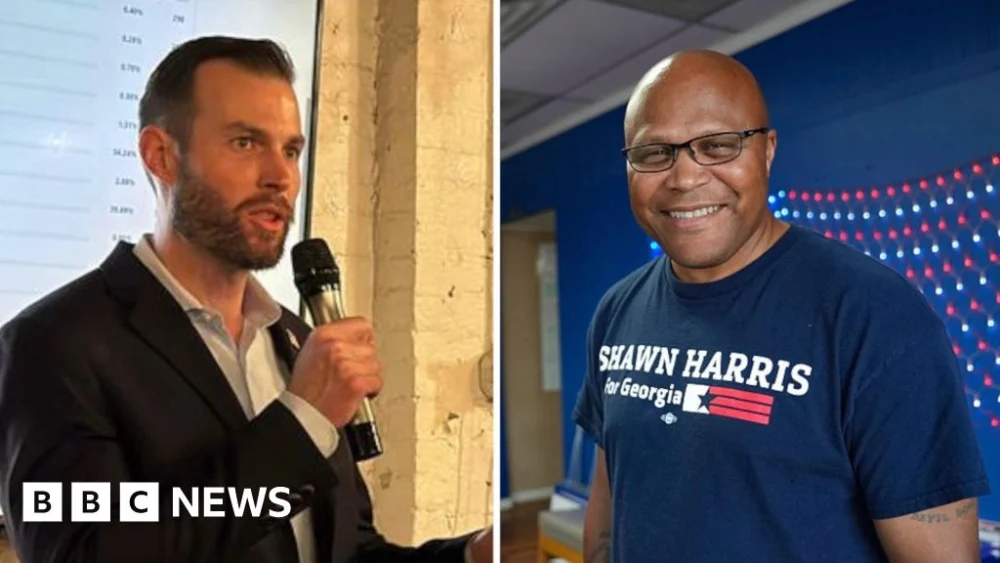
The special election to fill the vacant seat in Georgia’s 14th Congressional District is projected to proceed to a runoff election on April 7, following Tuesday night’s balloting where none of the 17 candidates managed to secure the requisite majority of votes. The contest, which serves as an early litmus test for former President Donald Trump’s enduring influence and the broader political climate heading into the crucial November midterm elections, will now see Republican Clay Fuller face off against Democrat Shawn Harris.
The projection, confirmed by the BBC’s US partner CBS, sets the stage for a concentrated two-week sprint in a district that has historically been a Republican stronghold. The outcome will not only determine who represents the district for the remainder of the current term but will also offer insights into voter sentiment in a politically charged environment.
The Road to Runoff: A Crowded Field and Divided Votes
Tuesday’s election presented voters in Georgia’s 14th Congressional District with a daunting choice from a packed ballot. A total of 17 candidates—a mix of Republicans, Democrats, and independents—vied for the opportunity to serve. This crowded field ultimately led to a fragmentation of votes, particularly on the Republican side, preventing any single candidate from achieving the more than 50% threshold required by Georgia law to win outright.
Democrat Shawn Harris, a retired Army Brigadier General and local farmer, surprisingly emerged as the top vote-getter on Tuesday night. His strong performance is widely attributed to the splintering of the Republican base among numerous hopefuls, allowing him to consolidate Democratic votes and draw support from independents or disaffected Republicans. Meanwhile, Clay Fuller, a former district attorney and the recipient of President Donald Trump’s "complete and total endorsement," secured the second runoff spot, demonstrating the power of the former president’s backing even in a crowded race. The runoff mechanism, a common feature in Georgia’s electoral system, ensures that the eventual winner holds a clear mandate from a majority of participating voters, but it also necessitates an intense, condensed campaign period.
Profiles of the Contenders
The two candidates now embarking on this abbreviated runoff campaign bring distinct backgrounds and political approaches to the forefront, each aiming to galvanize their respective bases while attempting to sway undecided voters.
Clay Fuller: Trump’s Chosen Champion
Republican Clay Fuller enters the runoff with the powerful backing of former President Donald Trump, an endorsement that has proven to be a significant asset in securing his place in the final two. Fuller, a former district attorney, has aligned his campaign closely with Trump’s "America First" agenda, advocating for policies that resonate deeply with the conservative electorate of Georgia’s 14th District. His platform echoes many of Trump’s priorities, including a strong stance on border security and mass deportation, a focus on increased domestic manufacturing to boost local economies, and a tough-on-crime approach emphasizing law and order.
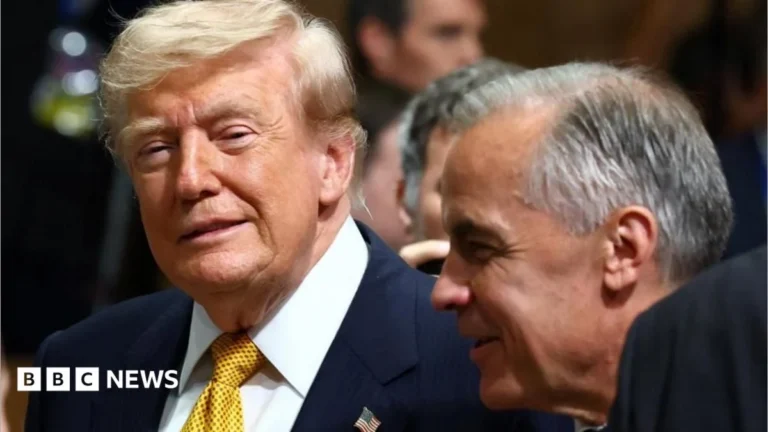
Trump’s support for Fuller was not merely a symbolic gesture; it was actively promoted through a Truth Social post and a rally held in Rome, Georgia, last month. Following Tuesday’s results, Trump reiterated his endorsement on Truth Social, urging his supporters to "finish it off" for Fuller, framing the race as vital for the "MAKE AMERICA GREAT AGAIN!!!" movement. On election night, Fuller himself underscored the profound impact of the former president’s involvement, stating, "For those of you who questioned how important Donald J Trump is to this country, to Georgia 14, and the state of Georgia, you see what this man means to this community, what he means to the people in this country, and what he means to the MAGA movement." This sentiment reflects a strategy to coalesce the Republican vote around Trump’s favored candidate, leveraging the former president’s enduring popularity among the district’s conservative base. Fuller’s background, including his military service, also appeals to a segment of the electorate that values experience and a commitment to conservative principles.
Shawn Harris: A Democrat’s Bid in Red Territory
Democrat Shawn Harris represents a different political tradition and approach, presenting himself as a consensus builder in a district often characterized by its fervent partisanship. A retired Army Brigadier General and a local farmer, Harris brings a distinguished service record and a grounded community presence to his campaign. His unexpected lead in the initial round of voting underscores a potential desire among some voters for a different kind of representation, one that emphasizes collegiality and a focus on local issues over national political firestorms.
Harris’s campaign has sought to project a "more positive" personality, advocating for a representative who would "speak kindly" to all constituents, regardless of their political affiliation. This approach aims to appeal not only to the district’s Democratic minority but also to independent voters and potentially moderate Republicans who may be weary of the divisive rhetoric that has often characterized national politics. Following the Tuesday results, Harris articulated his strategy for the runoff, stating his campaign would continue to "stay true to what we’ve been doing." He expressed a desire to reach out to all voters, saying, "Everybody who voted for any other candidate […] I want to talk to every last one of them, and say: ‘Give me a chance.’" This inclusive message is crucial for a Democrat attempting to flip a historically red seat. National Democratic figures have also rallied behind Harris, with former presidential candidate Pete Buttigieg congratulating him on X and pledging to campaign with him, signaling the broader party’s interest in supporting a competitive race in a challenging district.
The Shadow of Marjorie Taylor Greene
The special election to replace former Congresswoman Marjorie Taylor Greene inevitably unfolds under the long shadow of her distinctive and often controversial political tenure. Her departure from office in January created the vacancy, prompting this special election, and her larger-than-life persona continues to loom over the district’s political landscape.
A Vacated Seat and a Contentious Legacy
Marjorie Taylor Greene, who represented Georgia’s 14th Congressional District for nearly six years, cultivated a national profile marked by bombastic committee appearances, a willingness to embrace and promote conspiracy theories, and staunch support for hardline immigration policies. Her tenure was characterized by intense media scrutiny and frequent controversy, including being stripped of her committee assignments by the Democratic-controlled House in 2021 due a history of inflammatory remarks. While the original article does not specify why she vacated her seat, her public profile and subsequent actions suggest a continued engagement in national political discourse, perhaps seeking influence beyond a direct congressional role, or due to strategic decisions aligning with her political ambitions. Her impact on the district’s national image was undeniable, making the choice of her successor a critical moment for how the district wishes to be represented moving forward. Voters are implicitly tasked with choosing whether to elect a candidate who continues in a similar vein or one who seeks a different path.
The Trump-Greene Rift: A Political Divorce
Adding another layer of intrigue to the electoral context is the highly publicized rift between Marjorie Taylor Greene and former President Donald Trump. Despite being one of Trump’s most prominent and vocal backers during much of her time in Congress, their relationship fractured over the contentious issue of the Epstein files. Greene aggressively pushed for legislation demanding the government release its trove of documents related to Jeffrey Epstein, a move that reportedly went against Trump’s preferences at the time. Despite Trump’s initial opposition, Congress eventually passed the Epstein Files Transparency Act, and Trump signed it into law under sustained political pressure.
This clash, rather than a temporary disagreement, appears to have caused a lasting schism. Since leaving office, Greene has notably used her X account to publicly criticize Trump, particularly regarding the US and Israel’s military operation against Iran. This political divorce between two figures previously seen as ideologically inseparable adds a complex dynamic to the current special election. While Trump has unequivocally endorsed Fuller, the lingering questions about loyalty and political alignment among the MAGA base, some of whom may still hold allegiance to Greene, subtly influence the narrative. The runoff will thus also be a test of whether Trump’s current endorsements can entirely supersede past alliances and personal loyalties within his movement.
Georgia’s 14th Congressional District: A Republican Stronghold
To fully appreciate the significance of the upcoming runoff, it is crucial to understand the political and demographic landscape of Georgia’s 14th Congressional District. This region is not merely Republican-leaning; it is one of the most reliably conservative districts in the state, making Shawn Harris’s performance particularly noteworthy.
Demographic and Political Landscape
Georgia’s 14th Congressional District is situated in the northwestern part of the state, encompassing a largely rural and exurban area. It includes parts of communities like Rome, Dalton, and Calhoun. Demographically, the district is predominantly white and has a strong evangelical Christian population, factors that typically correlate with conservative voting patterns. Economically, it has a mix of agricultural interests, manufacturing, and smaller service industries.
Historically, this district, and the regions it comprises, has been a Republican bastion. In the 2020 presidential election, Donald Trump carried the district with a significant margin, often exceeding 70% of the vote, far outpacing his statewide performance. Congressional elections in the district have similarly seen overwhelming victories for Republican candidates, with Democratic challengers often struggling to break through double-digit percentages. This deeply ingrained conservatism makes Harris’s achievement of leading the first round of voting a remarkable feat, highlighting the potential impact of a fractured opposition and a highly motivated, albeit smaller, Democratic base. The challenge for Harris in the runoff, however, remains immense, as the Republican vote is now expected to consolidate around Fuller.
The Mechanics of a Georgia Runoff
Georgia is one of a handful of states that requires a candidate to win an absolute majority of votes (50% plus one) to secure victory in a general or special election. If no candidate reaches this threshold, the top two vote-getters proceed to a runoff election. This system is designed to ensure that the elected representative has a clear mandate from a majority of the electorate, rather than winning with a plurality in a multi-candidate race.
Historically, runoffs in Georgia have often seen lower voter turnout compared to the initial election. This can be attributed to voter fatigue, less media attention, and the perception that the outcome is predetermined in heavily partisan districts. However, lower turnout can also create opportunities for highly motivated campaigns to mobilize their base more effectively. Georgia has a notable history of high-stakes runoffs, particularly in recent U.S. Senate races that captured national attention and saw massive outside spending. While this congressional special election may not draw the same level of national financial investment, the principle of concentrated voter mobilization in a short period remains key. Both Fuller and Harris face the immediate challenge of re-energizing their supporters and convincing voters who backed other candidates to switch their allegiance within a condensed two-week timeframe leading up to April 7.
Voter Voices and Campaign Dynamics
The diverse range of voters who cast their ballots on Tuesday, and those who will return for the runoff, reflect the complex political currents at play within the district. Their motivations and perspectives offer a window into the broader campaign dynamics.
Republican Voters’ Perspective
For many Republican voters in Georgia’s 14th District, the endorsement of Donald Trump served as a crucial guidepost. Marsha Miles, interviewed outside a polling place in Rome, articulated this sentiment, stating she "would have voted for Fuller anyway," but Trump’s endorsement solidified her choice, signaling he was the "right choice." Beyond the presidential nod, Miles also cited Fuller’s "morals, what he stands for, and his military service" as compelling reasons for her support, indicating a desire for a candidate whose character and background align with conservative values. Teresa Lumsden, who attended Fuller’s election night party, echoed the strong alignment with Trump’s platform, calling Fuller "the perfect choice for representation in this area" due to his commitment to priorities like mass deportation, increased domestic manufacturing, and a tough-on-crime stance.
The challenge for the Fuller campaign now lies in consolidating the Republican vote. With 15 other candidates, many of whom were Republicans, on the initial ballot, a significant portion of the GOP base voted for someone other than Fuller. These voters must now be persuaded to rally behind the Trump-endorsed candidate, overcoming any previous preferences or allegiances. The campaign’s ability to unite these various factions of the Republican Party will be critical to Fuller’s success in the runoff.
Democratic Hopes and Crossover Appeal
Democrats in the district, while a minority, are energized by Shawn Harris’s strong showing and are hoping to make a historic breakthrough. Sheila Hutchings, a Democrat voter, expressed her desire for "a more positive" personality who would "speak kindly" to all constituents, regardless of party affiliation. This reflects a longing for a more unifying style of leadership after years of divisive political rhetoric.
Harris’s campaign is strategically positioned to capitalize on this sentiment, aiming to not only mobilize the Democratic base but also to appeal to independent voters and potentially even disaffected Republicans who might be open to a less confrontational approach. His background as a retired brigadier general and a local farmer could lend him credibility and a sense of pragmatism that transcends traditional party lines. His message of reaching out to every voter, regardless of their initial choice, is designed to build a broad coalition. The Democratic Party’s national support, as evidenced by Pete Buttigieg’s planned campaigning, signals a belief that Harris has a viable path to victory, even in a district that has long been considered out of reach. This race is seen by many as an opportunity to test the waters for Democratic competitiveness in traditionally red territories.
Implications Beyond the District
The special election runoff in Georgia’s 14th Congressional District carries implications that extend far beyond its geographical boundaries, offering critical insights into the national political landscape ahead of the November midterm elections.
A Barometer for Trump’s Influence
This runoff is an undeniable test of former President Donald Trump’s continued endorsement power. In a post-presidency era, with Trump facing numerous legal challenges and speculation about his future political moves, his ability to sway voters and dictate outcomes within the Republican Party remains a central question. Fuller’s success in securing a runoff spot, largely on the strength of Trump’s endorsement, reaffirms the former president’s significant sway. However, the need for a runoff itself, and the fact that a Democrat led the initial vote count, suggest that Trump’s endorsement, while potent, is not an automatic guarantor of an outright victory, especially in a crowded field. The April 7 outcome will be closely scrutinized by political strategists and pundits across the country as a barometer for how effectively Trump can translate his endorsements into definitive wins for the "MAGA movement" in crucial races leading up to the midterms. A decisive victory for Fuller would validate Trump’s kingmaker status, while a tighter race or an unexpected outcome could signal potential limits to his influence.
National Political Signposts
For both national parties, the Georgia 14th runoff serves as an early signpost for the upcoming midterm elections. For Democrats, Harris’s strong showing in a deep-red district provides a glimmer of hope that they can compete, or at least force Republicans to expend resources, in areas traditionally considered safe. It could encourage more aggressive targeting of similar districts if it suggests a broader voter fatigue with extreme partisanship or a willingness to consider more moderate, consensus-oriented candidates. The involvement of national figures like Pete Buttigieg underscores the Democratic Party’s strategic interest in this race, viewing it as an opportunity to build momentum and demonstrate competitiveness.
For Republicans, the runoff highlights the potential pitfalls of a fractured base and the critical importance of party unity. While the district is reliably conservative, the initial vote split could be a warning sign for other races where multiple Republican candidates vie for support. The party will be keen to see if the various Republican factions can coalesce behind Fuller, proving their ability to unite when faced with a Democratic challenger. The race also plays into the ongoing internal debate within the Republican Party about its future direction—whether to fully embrace the Trump-aligned wing or to seek a broader appeal.
The Short Term, Long Game
The winner of the April 7 runoff faces a unique and immediate challenge: they will serve out the remainder of Marjorie Taylor Greene’s term, which concludes in January. This means a relatively short tenure in Congress, during which they will need to quickly establish themselves, understand legislative processes, and begin serving constituents. However, the electoral cycle dictates that this brief service will be immediately followed by the need to campaign again for their own full term in Congress in the November midterms. This dual demand—governing for a short period while simultaneously fundraising and campaigning for a longer term—presents significant logistical and strategic hurdles. The winner will need to demonstrate effectiveness and secure voter trust quickly, all while navigating the complexities of a new campaign cycle, adding another layer of intensity to what is already a high-stakes political contest. The short term is merely a prelude to a longer political battle for sustained representation.
As the April 7 runoff approaches, all eyes will be on Georgia’s 14th Congressional District. The outcome will not only determine its immediate congressional representation but will also offer crucial insights into the evolving dynamics of American politics, from the enduring power of presidential endorsements to the strategies both major parties will employ in the pivotal elections that lie ahead.