

The entertainment industry is grappling with profound shifts as artificial intelligence increasingly encroaches upon traditionally human domains. A recent flashpoint in this ongoing transformation arrived with the release of "Take the Lead," a music video featuring the AI-generated actress Tilly Norwood, developed by the production company Particle6. This development has not only exacerbated existing tensions within Hollywood but also sparked a broader discourse on authenticity, artistic integrity, and the future of human creativity in an AI-driven landscape.
Tilly Norwood’s Unsettling Debut and Industry Backlash
Tilly Norwood first entered the public consciousness last fall, positioned by Particle6 as an AI-generated "actor" ready to redefine performance. Her debut was met with immediate and widespread apprehension, rather than the enthusiastic reception one might expect for a new talent. Prominent figures within the film industry voiced strong objections, signaling a deep-seated anxiety about the implications of such technology. Golden Globe winner Emily Blunt, for instance, famously expressed her dismay in an interview with Variety, stating, "Good Lord, we’re screwed. Come on, agencies, don’t do that. Please stop." This sentiment encapsulated a significant portion of Hollywood’s initial reaction: a blend of fear for job security and concern over the erosion of human artistry.
The Screen Actors Guild‐American Federation of Television and Radio Artists (SAG-AFTRA), the union representing actors, issued a stark statement soon after Norwood’s introduction. The union clarified that "Tilly Norwood is not an actor; it’s a character generated by a computer program that was trained on the work of countless professional performers – without permission or compensation." SAG-AFTRA further articulated that AI creations like Norwood lack "life experience to draw from, no emotion and, from what we’ve seen, audiences aren’t interested in watching computer-generated content untethered from the human experience. It doesn’t solve any ‘problem’ – it creates the problem of using stolen performances to put actors out of work, jeopardizing performer livelihoods and devaluing human artistry." This assertive stance underscored the union’s commitment to protecting its members from technological displacement and exploitation.
The Release of "Take the Lead" and Its Polarizing Reception
Despite the industry’s palpable discomfort, Particle6 proceeded with its plans for Tilly Norwood, culminating in the release of her debut music video, "Take the Lead." The song quickly became a subject of intense discussion, primarily due to its perceived quality and thematic content. While some AI-generated music, such as "How Was I Supposed to Know?" by the digital persona Xania Monet, has achieved commercial traction and even charted on Billboard R&B lists, "Take the Lead" garnered a significantly more critical reception. Many listeners and critics described the track as lacking originality and emotional depth, pushing the boundaries of what some termed "AI cringe." The lyrical content, in particular, drew scrutiny for its perceived disconnect from the reality of an AI construct.
Production and Lyrical Irony
The creation of "Take the Lead" was a collaborative effort involving eighteen human contributors, including designers, prompters, and editors. This highlights a critical aspect of current AI production: while the "performer" is artificial, significant human labor and creative input remain essential for generating the final product. However, the song’s central theme presents a profound irony. Tilly Norwood, an AI-generated character, sings about her struggles against critics who underestimate her because they believe she is not human.
The lyrics directly address this perceived prejudice, with lines such as, "They say it’s not real, that it’s fake, But I am still human, make no mistake." This assertion of humanity from a purely artificial entity struck many as disingenuous, if not outright contradictory. The opening lines, "When they talk about me, they don’t see/The human spark, the creativity," and later, "I’m not a puppet, I’m the star," further amplify this theme of an AI persona striving for recognition and authenticity in a world skeptical of its very nature.
The chorus serves as a rallying cry, not just for Tilly herself, but ostensibly for her "fellow AI actors":
Actors, it’s time to take the lead
Create the future, plant the seed
Don’t be left out, don’t fall behind
Build your own, and you’ll be free
We can scale, we can grow
Be the creators we’ve always known
It’s the next evolution, can’t you see?
AI’s not the enemy, it’s the key
The outro reinforces this message, explicitly addressing "AI Actors" and proclaiming, "Take your power, take the stage / The next evolution is all the rage / Unlock it all, don’t hesitate / AI Actors, we create our fate." This narrative, portraying AI as an embattled minority seeking acceptance and advocating for a collective future, has been widely characterized as profoundly unrelatable to human audiences. Critics noted the paradox of an artificial intelligence attempting to evoke empathy for an experience that no human could ever genuinely share or comprehend – the feeling of being disregarded solely for being an AI.
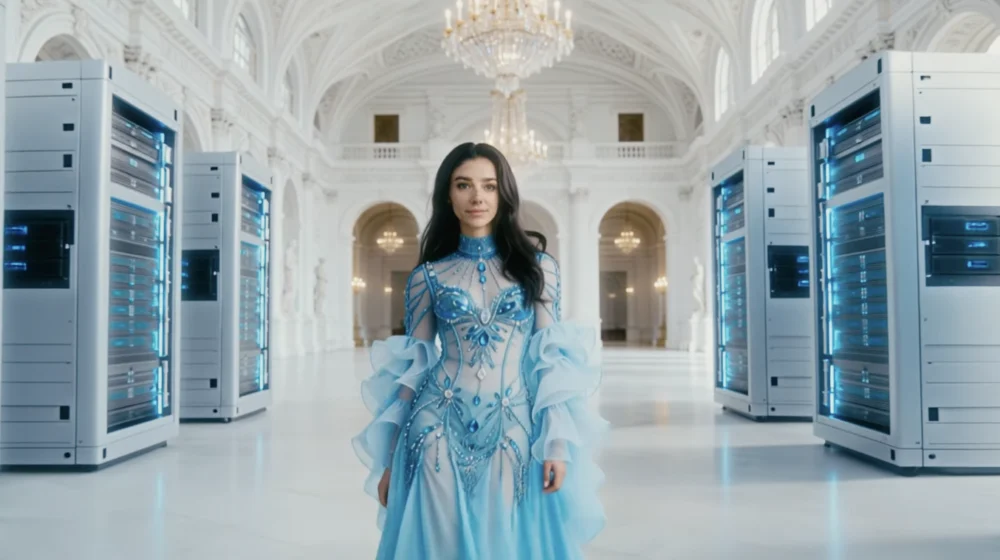
The accompanying music video features Tilly Norwood initially strutting through a data center, a visual choice that provides a fleeting moment of grounded reality for her digital existence. However, this soon transitions to a fantastical scene where she walks across a stage to a stadium filled with cheering, presumably AI-generated, "fake people," culminating in an undeserved moment of "triumph." This visual progression underscores the disconnect between the AI’s self-perception and the human audience’s understanding of its nature.
Historical Parallels and the Devaluation of Artistry
The critical reception of "Take the Lead" draws parallels with historical instances of artistic works being lambasted for their perceived lack of originality or artistic merit. One notable example is the influential music publication Pitchfork’s infamous 0.0 review of Jet’s album "Shine On" two decades prior. Instead of a written critique, Pitchfork controversially embedded a video of a monkey peeing into its own mouth. Scott Plagenhoef, a former Pitchfork editor, later explained that the site’s writers were "angry" at seeing "mainstream rock music… become so knuckle-dragging and Xeroxed."
This sentiment resonates strongly with the current discourse surrounding AI-generated content. Critics of AI art often voice similar complaints, arguing that these productions frequently ring hollow, merely reproducing or synthesizing existing human works without genuine creativity or emotional depth. The concern is that AI, trained on vast datasets of human art, effectively "Xeroxes" existing styles and tropes, leading to derivative and uninspired outcomes. In the context of Tilly Norwood, the issue is further compounded by the ethical implications of the training data itself. Unlike Jet, which drew inspiration from older rock groups, Tilly Norwood is literally derived from AI models that were trained on the creative output of countless human artists, often without their explicit consent or compensation. This fundamental difference amplifies the critique, shifting it from a matter of artistic quality to one of intellectual property rights and ethical sourcing.
Broader Implications: Ethical, Economic, and Philosophical
The emergence of AI-generated performers like Tilly Norwood signifies a pivotal moment in the entertainment industry, raising a multitude of complex ethical, economic, and philosophical questions.
Ethical Concerns:
The issue of consent and compensation for training data remains paramount. Artists, musicians, and performers are increasingly vocal about their work being used to train AI models without their knowledge or fair remuneration. SAG-AFTRA’s statement on Tilly Norwood explicitly highlights this "stolen performances" aspect. This ongoing dispute underscores the urgent need for new legal frameworks and industry standards to govern intellectual property in the age of AI. Without clear guidelines, the creative ecosystem risks becoming an unregulated commons where human artistic labor is exploited for commercial AI development.
Economic Disruptions:
The potential for AI actors to displace human talent is a significant economic concern. While the production of Tilly Norwood’s video still required human input, the very concept of an AI actor promises scalability and efficiency that could drastically alter casting processes, production budgets, and the demand for human performers. This could lead to widespread job losses in various creative roles, from actors and musicians to writers and visual artists. Similar concerns have been voiced by other industry guilds, such as the Writers Guild of America and Directors Guild of America, regarding the ethical implications and potential job displacement from AI-generated content in their respective fields. The economic model of entertainment is poised for disruption, prompting calls for collective bargaining and legislative action to protect human livelihoods.
Philosophical Questions about Art and Authenticity:
Beyond the practical concerns, Tilly Norwood’s existence and her song "Take the Lead" provoke deeper philosophical questions about the nature of art itself. Can an AI truly create art, or does it merely synthesize and mimic? If art is fundamentally an expression of human experience, emotion, and consciousness, then an AI, by definition, lacks these core elements. The song’s attempt to humanize Tilly Norwood by having her sing about her "human spark" highlights this very tension. Audiences historically connect with art that reflects shared human experiences, struggles, and triumphs. An AI’s "struggle" to be recognized as human, while conceptually interesting, lacks the lived reality that makes art relatable and profound for human consumers. This raises questions about whether audiences will ultimately embrace or reject art that lacks a genuine human origin story.
The Future of Creative Industries
The debate ignited by Tilly Norwood’s debut is far from resolved. As AI technology continues to advance, the entertainment industry faces a critical juncture. The path forward will likely involve a complex interplay of innovation, regulation, and evolving public perception. Some foresee a future of coexistence, where AI tools augment human creativity rather than replacing it, perhaps handling mundane tasks or generating background elements. Others predict increasing friction, with human artists fiercely defending their territory against what they perceive as an existential threat.
The case of Tilly Norwood and "Take the Lead" serves as a potent symbol of this ongoing struggle. It encapsulates the industry’s anxieties about devalued artistry, exploited labor, and the fundamental question of what it means to create in an increasingly automated world. The journey of AI in creative arts is still in its nascent stages, but the initial reactions to Tilly Norwood suggest that the human element, with all its complexities, emotions, and lived experiences, remains an irreplaceable cornerstone of artistic value for many. The industry is being forced to confront not just what AI can do, but what it should do, and at what cost to human creativity and livelihoods.