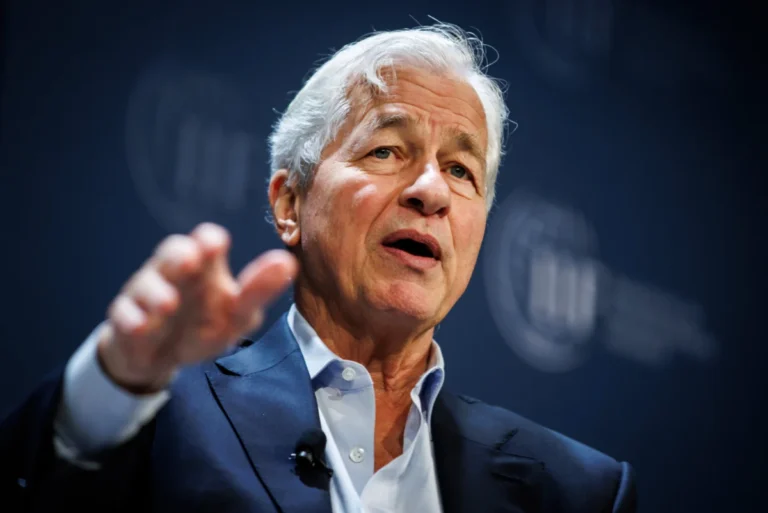



Three years ago, on the precipice of a burgeoning financial crisis, JPMorgan Chase found itself at a pivotal crossroads. What began as a routine celebration of a colleague’s retirement in New York City on March 9, 2023, quickly transformed into an urgent strategic deliberation for Doug Petno, co-head of JPMorgan’s commercial and investment bank. His boss, CEO Jamie Dimon, redirected him to a critical call with federal regulators, posing a stark question that would resonate throughout the financial world: Was JPMorgan interested in acquiring Silicon Valley Bank (SVB)?
The Unraveling of Silicon Valley Bank: A Systemic Shock
The inquiry arrived amidst the escalating panic gripping the West Coast’s startup ecosystem. For decades, Silicon Valley Bank had been the undisputed banking partner for technology startups and venture capital firms, fostering an intimate understanding of their unique financial needs. Its tailored services, from venture debt to specialized accounts, made it an indispensable fixture in the innovation economy. However, this niche focus also embedded a critical vulnerability.
SVB’s business model relied heavily on a concentrated base of deposits from startups, many of which were uninsured and prone to rapid withdrawal. During the era of ultra-low interest rates, SVB had invested a significant portion of these deposits into long-dated, fixed-income securities. As the Federal Reserve aggressively raised interest rates in 2022 to combat inflation, the market value of these bonds plummeted, creating substantial unrealized losses on SVB’s balance sheet. Simultaneously, a downturn in the tech sector meant startups were burning through cash faster and raising less new capital, leading to increased deposit withdrawals.
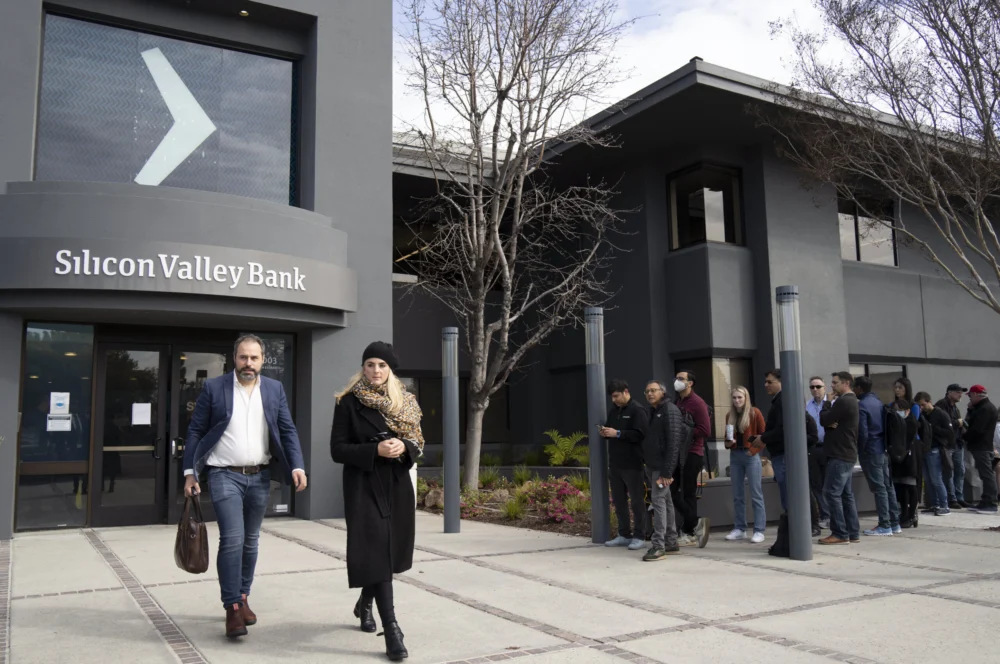
The situation spiraled on March 8, 2023, when SVB announced a massive $1.8 billion loss from a bond sale and a plan to raise capital. This news triggered widespread alarm among its client base. Venture capital firms, key influencers in the startup world, advised their portfolio companies to withdraw funds immediately. What followed was an unprecedented bank run: on March 9 alone, an estimated $42 billion, or roughly a quarter of SVB’s total deposits, was withdrawn. This staggering outflow left the bank with a negative cash balance, rendering it insolvent.
The California Department of Financial Protection and Innovation, in coordination with the Federal Deposit Insurance Corporation (FDIC), seized SVB on March 10, 2023, marking the second-largest bank failure in U.S. history at the time, only surpassed by Washington Mutual in 2008. The collapse sent shockwaves through the global financial system, igniting fears of contagion and prompting swift, decisive action from regulators to backstop all deposits, insured and uninsured, to prevent a broader crisis.
JPMorgan’s Deliberation: A Strategic Non-Acquisition
Amidst this turmoil, JPMorgan Chase, a financial titan with a robust balance sheet and a reputation for navigating crises, found itself in a unique position. Over that tense weekend, Jamie Dimon, Doug Petno, and other senior leaders meticulously weighed the prospect of acquiring the beleaguered SVB. The bank had just hemorrhaged $42 billion in deposits, and while its client base was highly desirable, the underlying financial health and potential liabilities presented significant risks.
Ultimately, JPMorgan decided against the acquisition. This decision was informed not just by the financial complexities of SVB’s balance sheet but also by an unexpected surge in new client acquisitions. As the startup community grappled with the uncertainty surrounding SVB, thousands of its former clients, along with others seeking stability, initiated a massive "flight to safety" towards established, systemically important institutions like JPMorgan. Petno recounted the extraordinary influx: "We had three years’ worth of incoming clients in a weekend. Onboarding teams were opening up accounts around the clock." This organic growth provided a clear signal: the market was ripe for a new, reliable player in startup banking.
Building a New Frontier: JPMorgan’s Innovation Economy Business
Emboldened by this overwhelming demand, Petno recognized a significant vacuum in the market. While SVB had collapsed, and nimble fintechs like Brex, Ramp, and Mercury had carved out niches, no single institution offered the comprehensive suite of services, global reach, and stability that a major bank like JPMorgan could provide. "We went to our board and said, ‘there’s a vacuum in the market,’" Petno revealed. "At that very moment, everybody saw the opportunity."
JPMorgan was not entirely new to the startup space. It had quietly initiated a startup banking business in 2016, recognizing the growing importance of the tech sector. However, this earlier iteration primarily focused on larger, more mature startups, and was hampered by a perceived lack of digital agility and a branch-centric approach that often frustrated younger founders. Venture capitalists and founders frequently noted that opening an account could be a lengthy process, and resolving issues often required time-consuming branch visits – a stark contrast to the instant, digital-first experiences offered by fintech rivals. "They want to go to the website to open an account, and if it’s more than 15 minutes, they’re done," Petno acknowledged.
The SVB crisis served as a powerful catalyst for JPMorgan to re-evaluate and aggressively expand its commitment. The bank moved swiftly to address its previous shortcomings. A critical step was the strategic hiring of key talent from SVB, most notably John China, who had served as President of SVB Capital. China, alongside Andrew Kresse, now co-leads JPMorgan’s revitalized innovation economy business, bringing invaluable domain expertise and client relationships. This influx of specialized talent, combined with JPMorgan’s existing infrastructure, allowed for rapid acceleration.
The First Republic Acquisition: Consolidating Market Share
Just weeks after the SVB crisis, the banking sector faced another significant challenge with the unraveling of First Republic Bank. Similar to SVB, First Republic catered to a high-net-worth client base, including many in the tech community, and experienced a rapid erosion of deposits. On May 1, 2023, JPMorgan Chase emerged as the winning bidder in a government-backed auction for First Republic, absorbing its deposits, assets, and branches. This acquisition, another testament to JPMorgan’s role as a consolidator in times of crisis, further bolstered its presence in the tech and innovation economy sectors. The deal added approximately $104.7 billion in deposits and $212 billion in assets, significantly expanding JPMorgan’s client base and operational capabilities within the startup and high-net-worth segments.
The dual events of SVB’s collapse and First Republic’s acquisition proved transformative for JPMorgan’s nascent innovation economy division. Leveraging the fresh insights gained from the market dislocations and integrating First Republic’s operational strengths, JPMorgan doubled its revenue from startup banking in 2023. The bank has since quadrupled its total client base in this segment to nearly 12,000, supported by a dedicated team of 550 bankers across both coasts. These bankers draw upon the vast resources of the broader JPMorgan Chase enterprise, providing a seamless experience for founders, venture capital investors, and their portfolio companies.
Beyond Traditional Banking: A Holistic Ecosystem Approach
JPMorgan’s strategic pivot into startup banking extends far beyond merely securing deposits. For a bank with over $180 billion in revenue last year and an annual tech budget nearing $20 billion, serving the innovation economy is a multifaceted growth strategy. It’s about securing future revenue streams from lucrative investment banking services for burgeoning companies, but also about staying intimately connected to the cutting edge of technological development.
The firm views its startup clients and VC investors not just as customers, but as invaluable sources of insight and innovation. JPMorgan itself faces complex challenges in areas like cybersecurity, artificial intelligence, and quantum computing. By banking the companies at the forefront of these fields, JPMorgan gains a unique vantage point, enabling it to identify and potentially integrate solutions developed by its clients. Petno highlighted this symbiotic relationship, noting that when a JPMorgan client announces AI-related cutbacks or efficiencies, the bank often dispatches a team to investigate their methodologies. While often finding that factors like over-hiring and inefficient processes contribute more to layoffs than AI implementation, these inquiries provide critical learning opportunities for JPMorgan’s own massive operations.
The Digital Imperative and the "Killer App"
Despite the rapid expansion and revenue growth, Petno remains focused on enhancing JPMorgan’s digital offerings for startups. He recognizes that the younger generation of founders demands a seamless, intuitive digital banking experience that rivals the simplicity of their own tech products. The bank is actively developing what Petno describes as a "killer app" – a sophisticated digital solution designed to leapfrog competitors and solidify JPMorgan’s position as the preferred banking partner for the innovation economy.
This digital transformation is crucial in a competitive landscape that includes not only the revitalized SVB (now owned by First Citizens Bank) but also the nimble fintechs Mercury and Ramp, as well as established players like Stifel and Customers Bank. The recent acquisition of Brex by Capital One for $5.15 billion in January underscores the intense interest and consolidation occurring in this specialized market.
JPMorgan’s ultimate vision is to become the definitive "one-stop shop" for founders throughout their entire entrepreneurial journey. This means providing not just core banking accounts but also a comprehensive suite of services, from early-stage seed funding advice to complex international expansion strategies, ultimately guiding companies through their initial public offering (IPO) and beyond. By cultivating relationships with promising startups from their earliest stages, JPMorgan aims to provide invaluable investment banking counsel as they grow, capturing a larger share of the financial services market.
"Once you’re onboarded, you can never outgrow JPMorgan, from unicorn all the way to a Magnificent 7," Petno asserted, encapsulating the bank’s ambition to be an enduring partner for the world’s most innovative companies. This strategic move, born out of crisis, positions JPMorgan not just as a financial services provider but as an integral part of the global innovation ecosystem, shaping the future of both finance and technology.