



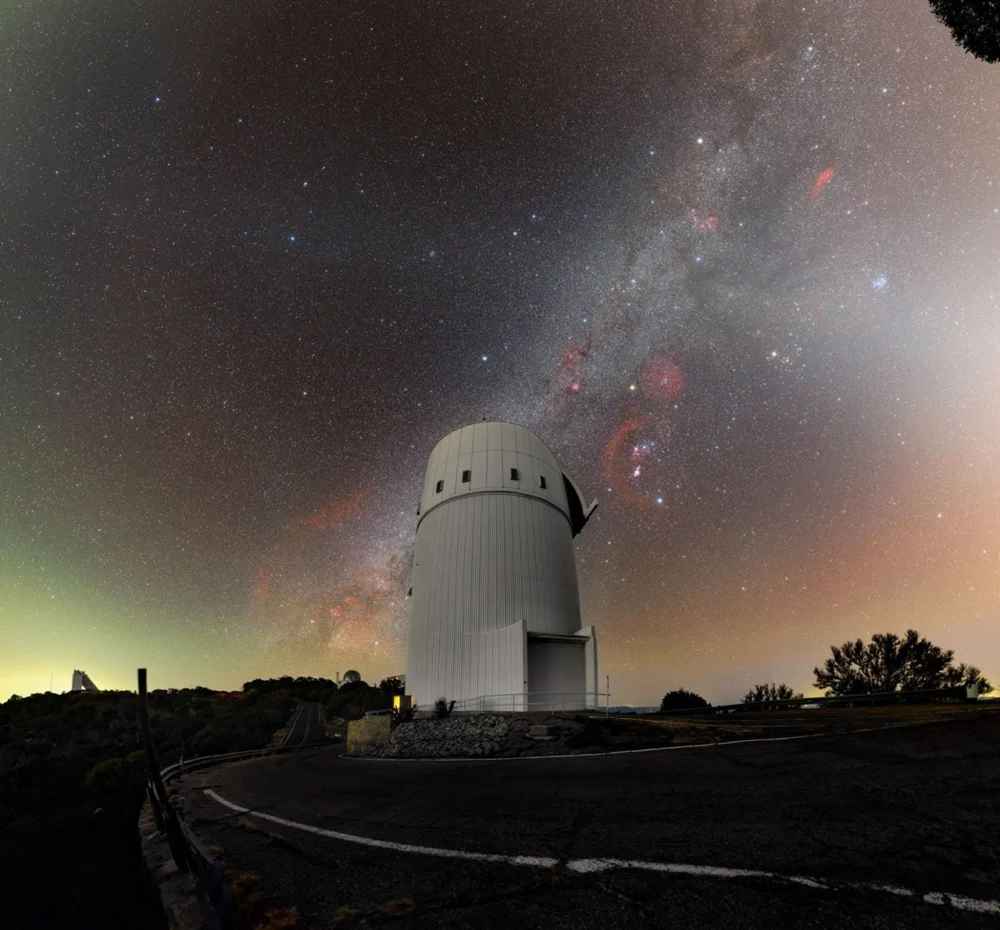
The Daily Minor Planet, a prominent citizen science initiative dedicated to the discovery and tracking of celestial bodies, has announced a significant expansion of its data processing capabilities. Moving beyond its established nightly feed from the Catalina Sky Survey’s Mt. Lemmon telescope in Arizona, the project’s science team is now actively incorporating and processing images obtained from the Bok 2.3-meter telescope located at Kitt Peak National Observatory. This strategic integration is poised to revolutionize the project’s ability to identify and confirm near-Earth objects (NEOs) – asteroids whose orbital paths bring them within close proximity to Earth – as well as enhance the understanding of the broader asteroid population. The move marks a pivotal moment for the project, leveraging the Bok telescope’s superior observational depth and its strategic focus on the ecliptic plane, the region of sky where the majority of asteroids and comets reside.
The Imperative of Planetary Defense and Near-Earth Objects
The discovery and characterization of Near-Earth Objects (NEOs) represent a critical aspect of modern astronomical research and planetary defense strategies. NEOs are defined as asteroids and comets with perihelion distances (closest approach to the Sun) less than 1.3 astronomical units (AU), meaning their orbits can intersect or come very close to Earth’s orbit. While the vast majority of these objects pose no immediate threat, the potential for a significant impact event – such as the Chelyabinsk meteor event in 2013, which caused widespread damage and injuries despite being a relatively small object – underscores the importance of comprehensive sky surveys. Global efforts, spearheaded by organizations like NASA’s Planetary Defense Coordination Office (PDCO) and numerous international observatories, are continuously working to catalog at least 90% of NEOs larger than 140 meters in diameter, considered the threshold for objects capable of causing regional devastation. Smaller objects, while less catastrophic, can still pose significant risks, making the detection of fainter and more numerous bodies a high priority. The Daily Minor Planet project, by engaging the public, directly contributes to this global imperative.
The Daily Minor Planet: A Collaborative Discovery Platform
Launched as a Zooniverse project, The Daily Minor Planet has, since its inception, offered a unique opportunity for individuals worldwide to contribute to cutting-edge astronomical research from the comfort of their homes. Zooniverse, the world’s largest platform for people-powered research, hosts a multitude of citizen science projects across various scientific disciplines. The Daily Minor Planet specifically tasks volunteers with reviewing sequences of astronomical images to identify moving objects – the tell-tale signs of asteroids or other minor planets. This crowdsourcing model has proven remarkably effective, allowing for the rapid and efficient processing of vast quantities of data that would overwhelm traditional scientific teams. The project’s original data stream came from the Catalina Sky Survey (CSS), a NASA-funded project dedicated to discovering and tracking NEOs, utilizing telescopes like the 1.5-meter Mt. Lemmon telescope, which has been a prolific discoverer of NEOs for decades. Volunteers examine images from Mt. Lemmon, looking for subtle streaks or dots that shift position across multiple frames, indicating the movement of a celestial body against the static background of stars. This initial phase of the project successfully engaged thousands of volunteers, leading to numerous confirmed detections and classifications.
The Bok Telescope: Unlocking Deeper and Wider Views
The integration of data from the Bok 2.3-meter telescope signifies a substantial upgrade in the project’s observational power. Operated by the University of Arizona’s Steward Observatory, the Bok telescope is a versatile instrument primarily used for wide-field surveys and spectroscopy. Its larger aperture, compared to the Mt. Lemmon telescope, allows it to gather significantly more light, translating directly into the ability to detect fainter objects. The project’s science team estimates that Bok data reveals objects roughly two to three times as faint as those observable through the Mt. Lemmon telescope. This increased sensitivity is crucial because fainter objects often correspond to smaller asteroids, more distant ones, or those with lower albedos (reflectivity). Detecting a wider range of these objects provides a more complete picture of the asteroid population, improving statistical models for impact probabilities and offering new targets for scientific study.
Furthermore, a critical advantage of the new Bok data is its predominant focus on the ecliptic. The ecliptic is the imaginary plane in space containing Earth’s orbit around the Sun, and it is along this plane that most of the solar system’s planets, asteroids, and comets are found. By concentrating observational efforts on the ecliptic, the Bok telescope data maximizes the probability of encountering these celestial bodies. The project team explicitly anticipates that this deeper, ecliptic-focused coverage will substantially increase the number of main-belt asteroids that can be recovered and confirmed. Main-belt asteroids reside primarily between the orbits of Mars and Jupiter, and their study provides invaluable insights into the early solar system. More importantly for planetary defense, this enhanced coverage is expected to bring a fresh wave of near-Earth asteroid candidates into the Daily Minor Planet’s purview, allowing for earlier detection and subsequent follow-up observations to refine their orbits.
The Indispensable Role of Human Pattern Recognition
While advanced astronomical software excels at processing vast amounts of data and identifying clear, unambiguous signals, it frequently struggles with the nuances presented by very faint objects. In images with low signal-to-noise ratios, faint asteroids can appear as subtle smudges, barely distinguishable from background noise, cosmic rays, or instrumental artifacts. This is where the unique capabilities of human cognition become indispensable. The human brain, with its unparalleled capacity for pattern recognition and its ability to discern subtle anomalies amidst complex and noisy backgrounds, far surpasses current automated algorithms in this specific task. Volunteers, by carefully examining sequences of images and looking for consistent, albeit faint, movement patterns, can identify objects that software might mistakenly dismiss as noise. This inherent human advantage makes the contributions of citizen scientists to this expanded search "more valuable than ever," as articulated by the project team. The added challenge presented by these fainter Bok subjects is also expected to be met with a greater sense of reward for the volunteers, knowing they are pushing the boundaries of discovery.
A Chronology of Citizen Science and Discovery
The evolution of The Daily Minor Planet project reflects a broader trend in scientific research:
- Early 2000s: The Catalina Sky Survey (CSS) gains prominence, becoming a leading ground-based survey for NEOs, using telescopes like the Mt. Lemmon 1.5-meter telescope.
- Late 2000s – Early 2010s: The Zooniverse platform emerges as a powerful tool for citizen science, demonstrating the effectiveness of crowdsourcing for projects like Galaxy Zoo.
- Launch of The Daily Minor Planet: The project is initiated on Zooniverse, leveraging daily data from the Catalina Sky Survey. This allows a continuous stream of fresh images for volunteers to analyze, mirroring the ongoing nature of astronomical surveys.
- Period of Operation: For several years, volunteers diligently analyze Mt. Lemmon data, contributing to the identification and confirmation of numerous minor planets and NEO candidates. The project builds a dedicated community.
- Scientific Assessment: The project’s science team likely conducted assessments of data throughput, detection rates, and the limitations of the existing Mt. Lemmon data, particularly regarding fainter objects and ecliptic coverage.
- Decision to Expand: Driven by scientific objectives to push the detection limits and improve ecliptic coverage, a decision is made to integrate data from the Bok 2.3-meter telescope, a more powerful instrument. This would have involved technical development to adapt the image processing pipelines for the new data format and characteristics.
- Recent Integration: The announcement of Bok data integration marks the successful completion of this development phase, making the new, deeper images available to the citizen science community.
Inferred Reactions and Official Statements
While direct quotes are not provided, the implications of this expansion would undoubtedly elicit positive reactions from various stakeholders:
From the Daily Minor Planet Science Team (e.g., Project Lead David Fulsd):
"We are absolutely thrilled to integrate data from the Bok 2.3-meter telescope into The Daily Minor Planet. This represents a monumental leap forward in our capabilities. The Bok’s ability to peer deeper into space, revealing objects two to three times fainter than what we’ve previously observed, combined with its strategic focus on the ecliptic, promises an unprecedented surge in new discoveries. We anticipate a significant increase in both main-belt asteroid confirmations and, crucially, fresh candidates for near-Earth objects. This expansion underscores the invaluable contribution of our citizen scientists. Their innate ability for pattern recognition is simply unmatched by software when it comes to these challenging, faint detections, making their role more critical and rewarding than ever before. We invite everyone to join us in this exciting new chapter of discovery."
From Steward Observatory/Kitt Peak National Observatory:
"The University of Arizona’s Steward Observatory is proud to contribute the Bok 2.3-meter telescope’s data to The Daily Minor Planet project. Our mission includes advancing our understanding of the solar system and supporting planetary defense efforts. This collaboration exemplifies how powerful professional telescopes, when combined with the collective intelligence of citizen scientists, can accelerate the pace of discovery and enhance our ability to identify potentially hazardous asteroids. The Bok telescope’s unique capabilities are perfectly suited for this task, and we look forward to the significant scientific outcomes this partnership will yield."
From Zooniverse:
"Zooniverse is delighted to see The Daily Minor Planet project continue to grow and evolve, now incorporating data from the Bok telescope. This expansion highlights the power of citizen science to tackle complex, large-scale scientific challenges. By providing accessible tools for volunteers to engage with real astronomical data, Zooniverse empowers individuals to make tangible contributions to planetary defense and our understanding of the cosmos. The Daily Minor Planet serves as an exemplary model of how collaboration between leading observatories, dedicated science teams, and a passionate public can drive groundbreaking research."
Broader Impact and Future Implications
The integration of Bok telescope data into The Daily Minor Planet carries significant implications across several domains:
Enhanced Planetary Defense: The primary and most immediate impact is the bolstered capacity for planetary defense. Earlier detection of NEOs, especially smaller and fainter ones, provides more time for detailed follow-up observations, precise orbital determination, and, if necessary, the development of mitigation strategies. While the project primarily identifies candidates for professional astronomers to confirm, increasing the pool of potential NEOs is a vital first step in safeguarding Earth.
Advancements in Asteroid Science: Beyond immediate threats, the deeper and ecliptic-focused coverage will provide a richer dataset for understanding the overall population of asteroids. This includes main-belt asteroids, which are relics from the early solar system. More comprehensive catalogs allow astronomers to refine models of solar system formation and evolution, study asteroid families, and investigate the physical properties of these diverse celestial bodies.
Validation and Growth of Citizen Science: This expansion further validates the efficacy and growing sophistication of citizen science. It demonstrates that public engagement can move beyond simple classification tasks to contribute to highly technical and critical scientific endeavors like planetary defense. The "challenging and rewarding" nature of the new data sets is likely to attract new volunteers and retain existing ones, fostering a stronger and more engaged community around astronomical research. It also showcases the adaptability of citizen science platforms to integrate with cutting-edge professional astronomical observatories.
Potential for Future Collaborations: The success of this integration could pave the way for similar collaborations with other telescopes and surveys. As astronomical data archives grow, the need for human intelligence in vetting and classifying data will only increase, making citizen science projects like The Daily Minor Planet increasingly vital. The project’s "daily" refresh rate ensures a continuous flow of new mysteries for volunteers to unravel, fostering an ongoing sense of engagement and discovery within the scientific community and the broader public. The continuous cycle of observation, data processing, citizen analysis, and professional confirmation represents a robust model for astronomical discovery in the 21st century.