




The burgeoning landscape of online prediction markets, once celebrated for their potential to aggregate collective intelligence and offer novel hedging opportunities, is now facing intense scrutiny following a surge in what critics describe as "gruesome" wagers on geopolitical conflicts and even the demise of world leaders. This escalating controversy has ignited a fierce debate over the regulatory framework governing these platforms, with advocates for stricter oversight demanding a crackdown on activities they deem unseemly, potentially illegal, and fraught with national security risks. The core of the contention lies in the nature of "event contracts" – financial instruments that allow users to speculate on future outcomes, ranging from sports results and economic indicators to, more recently and alarmingly, the timing of military actions or the "ousting" of foreign heads of state.
The Rise of Prediction Markets and Their Controversial Expansion
Over the past year, prediction markets have witnessed an explosive growth, facilitating more than $44 billion in trades. This surge is particularly notable in the United States, a nation where sports betting remained largely illegal until 2018 and political gambling was off-limits for years until a legal shift in 2024. Firms like Kalshi and Polymarket have spearheaded this expansion, drawing in a diverse user base, including individuals like Stew, a 35-year-old from Montana, who initially engaged with sports bets on apps like Kalshi. However, the scope of these platforms has rapidly broadened far beyond conventional wagering. Users can now speculate on a dizzying array of events, from local election outcomes and Federal Reserve interest rate decisions to, bizarrely, the year of Jesus Christ’s return.
The catalyst for their widespread adoption in the U.S. was arguably the 2024 presidential campaign. A pivotal legal victory paved the way for these platforms to accept bets on election outcomes, and their display of shifting odds, notably tilting towards Donald Trump, significantly boosted their profile and user engagement. This period solidified their position as alternative barometers of public sentiment and potential outcomes, distinct from traditional polling. However, this mainstream acceptance has now been overshadowed by the emergence of profoundly disturbing wagers linked to ongoing geopolitical tensions, particularly those involving Iran, Venezuela, and Israel.
The Anatomy of ‘Gruesome’ Wagers and Regulatory Red Lines
The concerns escalated dramatically with bets appearing on the "ousting" of Iran’s Ayatollah Ali Khamenei by a specific date, or the probability of nuclear detonation in relation to the Iran conflict. These types of markets, often initiated by users based on cryptic online reports – such as elevated pizza deliveries near the Pentagon, as Stew noted before placing his $10 bet on Khamenei – push the boundaries of what is considered ethically acceptable and legally permissible.

Under existing U.S. financial regulations, trading on contracts involving war, terrorism, assassination, or other illegal activities is explicitly prohibited. Despite these clear directives, firms have processed millions of such trades, raising serious questions about enforcement and oversight. Polymarket, a company headquartered in New York but operating on a limited basis within the U.S., reportedly hosted over $500 million in bets related to the Iran conflict alone. At its peak, one market even offered odds on the chance of a nuclear detonation – a stark illustration of the perilous nature of some of these predictions. While Polymarket eventually removed this market after public outcry on social media, other controversial options, such as predicting when U.S. forces might enter Iran, remained active. Polymarket has not responded to requests for comment on these specific issues.
Similarly, Kalshi, which boasts its status as a "regulated exchange," initially hosted the market on Khamenei’s potential ouster, drawing $54 million in trades before its eventual cancellation. The company stated that U.S.-regulated entities are barred from "having a market directly settling on someone’s death." Kalshi, which also did not respond to a request for comment for this article, has sought to distance itself from the most controversial war bets, claiming they are primarily occurring on unregulated exchanges outside the U.S. This distinction, however, does little to assuage critics who argue that the very existence of such markets, regardless of their host’s regulatory status, creates a dangerous precedent.
A Deep Dive into Regulatory Ambiguity and Battle Lines
The controversy surrounding these "gruesome" bets has exposed a fundamental disagreement over how prediction market firms should be classified and regulated. Unlike traditional gaming firms, which typically set their own odds, prediction market companies function more akin to stock exchanges. They facilitate peer-to-peer betting, allowing users to trade "event contracts" against each other on the likelihood of future events. This unique design has enabled the Commodities Futures Trading Commission (CFTC), a national financial regulator, to assert oversight, categorizing these contracts as financial instruments rather than simple bets.
However, critics, including a growing chorus of state regulators and consumer advocacy groups, contend that this classification is a convenient legal maneuver. They argue that prediction markets are essentially sophisticated gambling operations attempting to bypass the stricter rules, higher taxes, and more stringent licensing requirements faced by traditional gaming firms, which are regulated by individual states. This semantic battle – whether these platforms are "financial exchanges" or "gambling operations" – is central to the broader regulatory struggle.
"You have now opened up gambling basically on almost anything and it has turned into this very, very gruesome type of thing on the death of a head of state," asserted Craig Holman, a government affairs lobbyist at the Public Citizen advocacy group. Public Citizen recently filed a formal complaint regarding these bets, underscoring the severity of their concerns. Ben Schiffrin, director of securities policy at Better Markets, an organization advocating for financial reforms, echoed this sentiment: "Nobody is saying that gambling shouldn’t be allowed. What the states are saying and other advocates are saying is things that are gambling should be regulated as gambling."
Ethical Quandaries and National Security Implications

Beyond the regulatory debate, the ethical and national security implications of these war-related bets are profound. Critics warn of the potential for "war profiteering," where individuals might financially benefit from human suffering and geopolitical instability. The existence of such markets could also create a "moral hazard," incentivizing individuals to hope for, or even attempt to influence, outcomes that align with their financial interests, no matter how catastrophic.
The most serious concern revolves around national security risks, particularly the potential for insider trading and corruption. Suspiciously timed bets related to military operations in regions like Israel, Venezuela, and Iran have already triggered alerts to consumers about insider trading risks. Advocacy groups have formally urged the administration to more rigorously enforce existing rules against wagering on war, fearing that individuals with privileged information could exploit these markets for illicit gains, potentially compromising sensitive intelligence or even influencing events. The aggregation of information through such markets, while sometimes touted as a benefit, could also be exploited by state actors or malicious groups seeking to gauge sentiment or even manipulate outcomes.
A Shifting Political and Legal Landscape
The path to a comprehensive crackdown, however, remains fraught with challenges. The Biden administration had initially taken a hard line on the sector, proposing a ban on sports and politics-related event contracts. This regulatory initiative, aimed at reining in the burgeoning market, stalled following a court defeat and the 2024 election of Donald Trump, whose administration historically favored a lighter regulatory touch across various industries.
Indeed, the CFTC, under new leadership, recently announced its decision to withdraw the proposed ban on sports and election-related contracts. Furthermore, the CFTC has sided with prediction market firms in the numerous legal battles they are now facing at the state level. Michael Selig, a former chairman of the Commodity Futures Trading Commission under the Trump administration, defended the prediction market firms in a recent opinion piece, condemning the state-level legal challenges as "overzealous." He argued that event contracts serve "legitimate economic functions," allowing businesses to hedge against risks triggered by various events. Selig emphasized that "Americans like the product and want to participate," while also acknowledging the necessity for platforms to adhere to established rules. This stance highlights the ideological divide within regulatory bodies regarding the true nature and utility of these markets.
The legal battles unfolding across the U.S. are a direct consequence of this regulatory ambiguity. States are increasingly asserting their right to regulate these companies as traditional gaming firms, challenging the CFTC’s primary oversight claim. Even some Republicans, alongside traditional gaming firms, have voiced concerns. The established gambling industry has stepped up its lobbying efforts, enlisting influential figures like Mick Mulvaney, a savvy former Trump official, to advocate their case in Washington, arguing for a level playing field and consistent regulation across all forms of wagering.
Industry Responses and Future Outlook
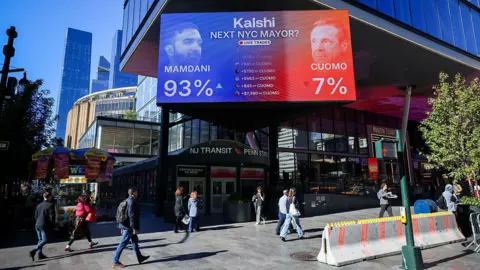
Under mounting pressure, prediction market firms have begun to implement measures to address some of the criticisms. Polymarket, for instance, has announced steps to more formally police suspicious activity. Kalshi, leveraging its "regulated exchange" status, has become more vocal about its efforts to combat insider trading. The company recently disclosed that it had opened 200 investigations over the last year and announced punishments in two cases of insider trading, signaling a more proactive approach to market integrity.
The cancellation of the $54 million market surrounding Khamenei’s potential ouster by Kalshi was a significant development. In a series of public statements, the firm explained its decision, clarifying that it does not "list markets directly tied to death," a carve-out it claimed was always part of its terms. Kalshi further promised to enhance the clarity of its terms from the outset, acknowledging that it had "learned a lot" from the incident.
However, this decision was not without its own controversy, sparking outrage among some users, including Stew, who received a refund for his bet. Stew expressed skepticism, noting that the firm had initially "buried" those rules and that their explanation seemed disingenuous, given the limited "realistic methods" for Khamenei to leave office. While Stew received his refund, his experience underscores the growing pains of these platforms and the difficulty in retroactively applying or clarifying rules. He articulated the sentiment of many users and critics alike, stating, "They call it contract trading, which I guess technically speaking, that’s what it is. But if we’re all being honest here, it’s still betting."
The future of prediction markets in the U.S. remains uncertain. While proponents argue for their utility in aggregating information and providing hedging mechanisms, the ethical and national security concerns raised by "gruesome" war bets cannot be ignored. The ongoing regulatory tug-of-war between federal and state authorities, coupled with the industry’s attempts at self-regulation, will shape whether these platforms evolve into legitimate financial instruments or face a more stringent crackdown, fundamentally redefining the boundaries of what Americans are allowed to bet on. The debate is not merely about gambling; it’s about the very principles of market integrity, public morality, and national security in an increasingly interconnected and volatile world.